Removing Blood Stains with Enzyme Cleaners: The Science of Protease and Cold Water
Table of Contents
Things You'll Learn From This Article:
- Cold water is your first move with any blood stain; hot water makes it set permanently.
- Rinse blood from the back of the fabric so water pushes it out instead of driving it deeper in.
- Blood is mostly protein, so regular soap isn’t enough—enzyme cleaners are what actually break it down.
- Enzyme cleaners need time and moisture to work; rushing the wash often leaves residue behind.
- Let enzyme-treated fabric stay damp and slightly warm (not hot) so the enzymes keep working.
- Hydrogen peroxide is useful for leftover blood on white fabrics because it lifts and bleaches at the same time.
- Always test hydrogen peroxide on a hidden spot first, since it can fade colored fabrics.
- If you’re stuck without enzyme cleaner, cold salt water can help pull blood out temporarily.
- Dried blood has to be rehydrated first; long cold soaks work better than scrubbing.
- Patience beats force—scrubbing hard can damage fabric without removing the stain.
- Meat tenderizer can help with very stubborn dried blood because it contains strong protein‑breaking enzymes.
- Mattresses and upholstery need light moisture only; soaking them spreads stains and causes rings.
- Keep enzyme-treated mattress or furniture spots damp with a towel, then blot—don’t rub.
- Avoid steam cleaners or hot extractors on blood stains; heat locks the proteins in place.
- Dry treated mattress or upholstery areas quickly with cool air to prevent mold.
- Chlorine bleach and fresh blood don’t mix—it can turn the stain into permanent rust.
- Oxygen bleach is safer for whitening, but only after the blood proteins are fully removed.
- Never put a blood-stained item in the dryer until you’re sure the stain is completely gone.
- Air dry and check in good light; if you still see it, treat again while the fabric is damp.
- Multiple cold washes are safer than one hot dry cycle that ruins your chances.
Blood is one of the most challenging stains because it is designed by evolution to bond permanently. The proteins in blood clot and stick on contact with air, making it an excellent adhesive. The iron in hemoglobin acts as a dye that can permanently color fabric if treated incorrectly.
But blood follows predictable chemistry. Keep it cold, keep it wet, and let enzymes do the work. These three principles drive every successful blood removal.
This guide covers the molecular biology behind blood stains and provides practical protocols for everything from fresh accidents to old dried marks on mattresses and upholstery.
The Molecular Anatomy of Blood Stains
Blood is not a simple liquid. It is a complex biological fluid containing multiple protein types, each with different behaviors.
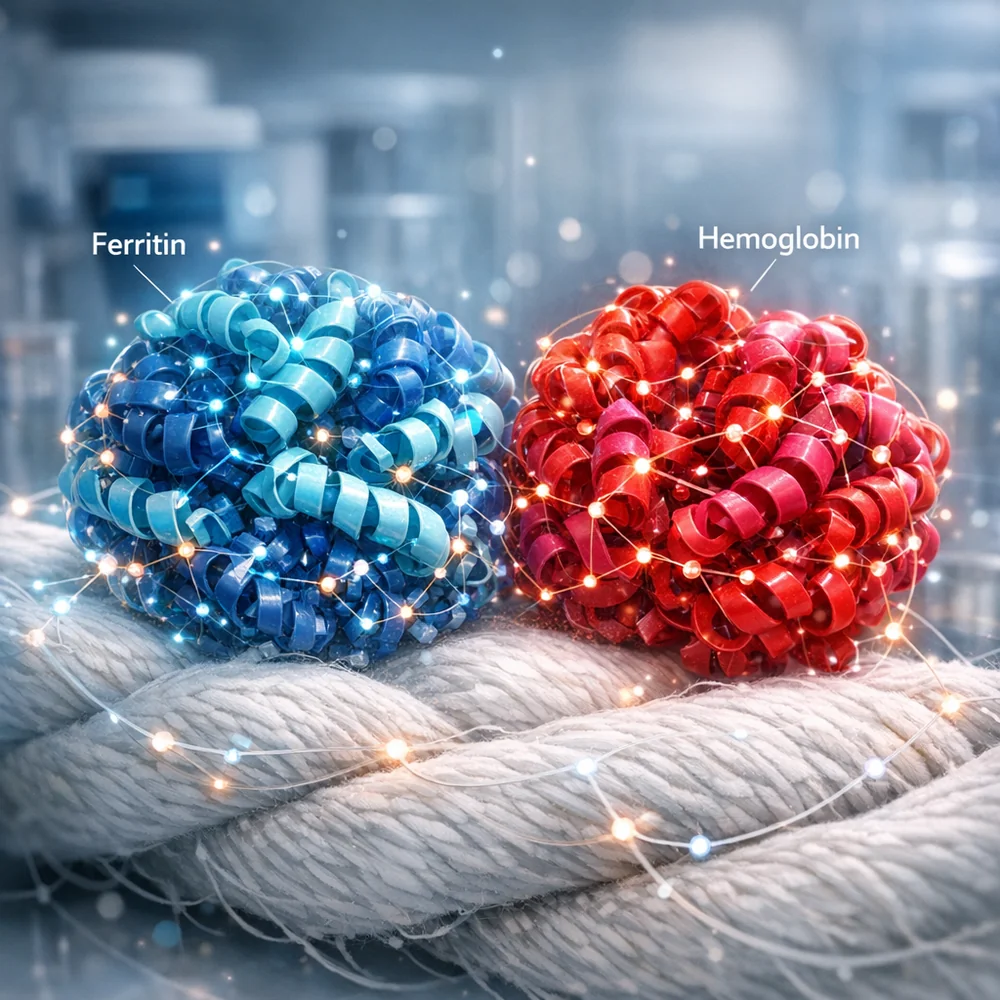
Hemoglobin is the most visible component, the iron-containing protein that gives blood its red color. Each hemoglobin molecule contains four iron atoms wrapped in protein chains. These iron atoms are responsible for both the color and many of the problems that arise during removal.
Albumin and globulin proteins contribute to the stiffening and adhesive properties of dried blood. Fibrinogen converts to fibrin during clotting, creating a tough mesh network that glues the stain to fabric. This clotting mechanism is why blood becomes increasingly difficult to remove as it dries.
Understanding that you are dealing with multiple protein types explains why blood requires a multi-step approach. No single treatment addresses all the components effectively.
The Bottom Line Blood contains hemoglobin, albumin, and fibrin proteins that each require different treatment. Multi-step approaches work best.
Why Cold Water Is Non-Negotiable
The most important rule in blood removal is absolute: use cold water only for the initial treatment. This is not a suggestion. It is chemistry.
Blood proteins like hemoglobin and albumin are held together by weak hydrogen bonds. Hot water provides enough energy to break these bonds, causing the proteins to unfold and tangle together in a new, insoluble form. This is called denaturation.
Think about cooking an egg. The clear albumin turns white and solid. That transformation is permanent. The same thing happens when hot water touches blood on fabric. The proteins “cook” into the fiber and become chemically bonded to it.
The denaturation process exposes reactive chemical groups that were hidden inside the folded protein structure. These groups form covalent bonds with fabric fibers that are essentially permanent. On cotton, the protein bonds with hydroxyl groups on the cellulose chains. On synthetics, similar bonding occurs with the polymer structure.
Cold water keeps the proteins in their native, soluble form. Rinsing from the back of the fabric uses water pressure to push the blood out rather than driving it deeper. Continue until the water runs clear.
The temperature threshold is approximately 104°F (40°C). Above this point, denaturation accelerates rapidly. Stay well below this limit for initial treatment.
The Bottom Line Hot water permanently bonds blood proteins to fabric. Always start with cold water to keep the stain removable.
How Protease Enzymes Work
Once you have flushed out the liquid blood, microscopic protein residue remains trapped in the fiber weave. This is where enzyme detergents become essential.
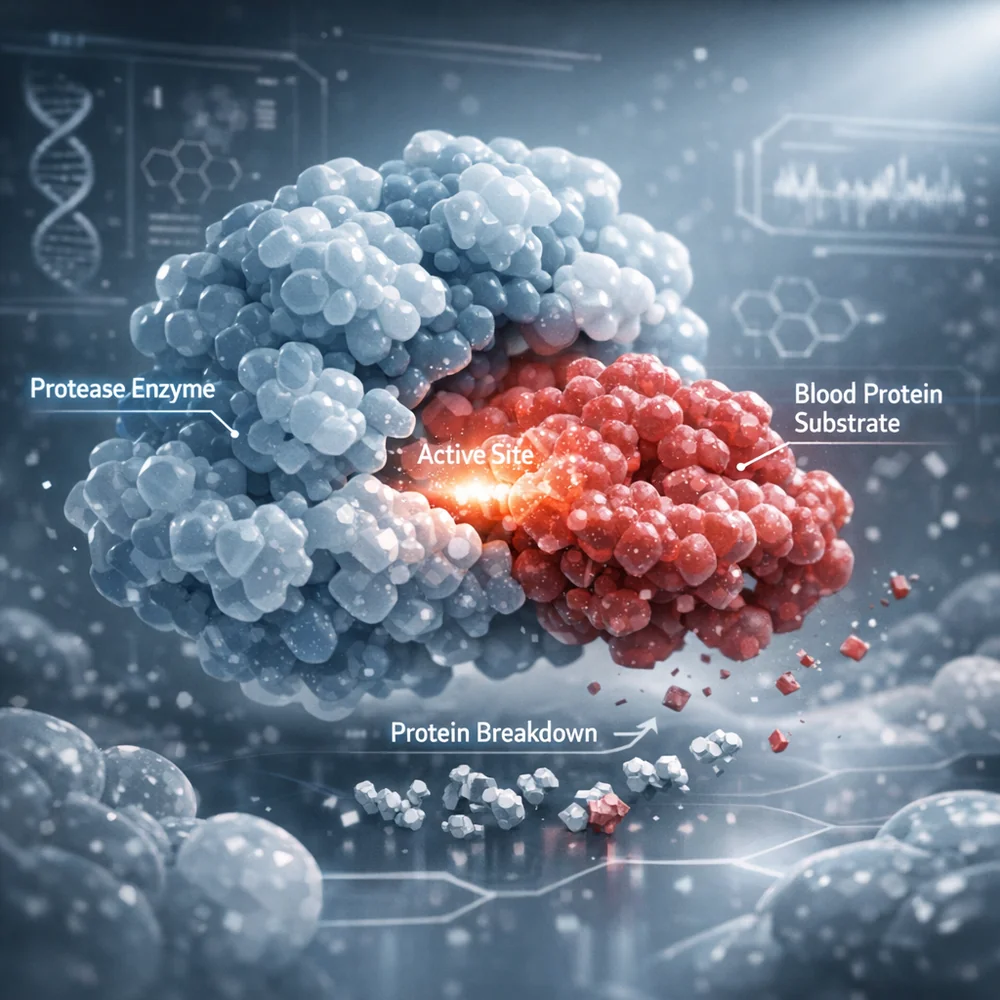
Protease enzymes are biological scissors that cut protein chains at specific points. They insert water molecules into the peptide bonds holding the proteins together, breaking the large, sticky mass into small, water-soluble amino acids that rinse away easily.
The process is called hydrolysis. Each protease enzyme has an “active site” shaped to recognize specific amino acid sequences. When the enzyme encounters its target sequence, it catalyzes the breaking of the peptide bond. The enzyme then releases and moves on to the next target. A single enzyme molecule can break thousands of bonds during its lifetime.
This approach is gentler than scrubbing and far more effective. Laundry enzymes work at the molecular level where brushes cannot reach. The key is giving them time to work. A quick wash often finishes before the enzymes complete their job.
Enzyme activity depends on temperature and moisture. They work best in warm (not hot) conditions between 85°F and 95°F (30°C to 35°C). They require water to function and become inactive when the fabric dries. Cover treated areas with damp towels to maintain enzyme activity during extended dwell times.
The Bottom Line Protease enzymes cut blood proteins into water-soluble fragments. Give them dwell time to work through the fabric.
The Hydrogen Peroxide Trick
Hydrogen peroxide creates a dramatic bubbling reaction when it contacts blood. This is not just visual theater. The bubbles are oxygen gas being released by a reaction with catalase, an enzyme naturally present in blood.
This rapid oxygen release physically dislodges blood particles trapped deep in the fabric weave. The mechanical lifting action reaches places that surface scrubbing cannot.
Simultaneously, the peroxide bleaches the chromophores (color-causing structures) in the remaining hemoglobin. This double action of lifting and whitening makes hydrogen peroxide exceptionally useful for final cleanup on white fabrics.
The chemistry involves oxidation of the porphyrin ring in hemoglobin. This ring structure is responsible for the red color. When peroxide attacks these rings, it breaks the conjugated double bond system that produces visible color. The result is a colorless breakdown product.
Use standard 3% hydrogen peroxide from any pharmacy. Higher concentrations work faster but carry increased risk of fabric damage. Apply drop by drop to the stain and let the bubbling action work for a few minutes before blotting.
Use caution on colored fabrics. Peroxide can bleach sensitive dyes. Always test in a hidden area first.
The Bottom Line Hydrogen peroxide lifts blood particles through bubbling and bleaches residual color. Use carefully on colored fabrics.
Salt Water as Emergency Treatment
When enzyme cleaners are not available, a salt water solution provides surprisingly effective emergency treatment.
Mix about one tablespoon of salt per cup of cold water. The salt creates an osmotic pull that draws blood proteins out of the fabric and into the surrounding water. Soak for at least 30 minutes, then rinse with fresh cold water.
The osmotic principle is straightforward. Water molecules move from areas of low solute concentration to areas of high solute concentration. The salty water has a much higher concentration of dissolved ions than the blood-soaked fabric. Water flows out of the fabric, carrying dissolved blood components with it.
This works best as a pre-treatment to buy time before you can apply enzymes. Salt prevents the stain from setting deeper while you get proper supplies.
The Bottom Line Salt water creates osmotic pressure that draws blood out of fabric. Effective emergency pre-treatment when enzymes are unavailable.
Dried Blood Requires Rehydration
Old, dried blood is much harder to remove because the proteins have dehydrated into a hard, crusty lattice. Water cannot penetrate this crust quickly enough for a normal wash cycle to be effective.
When blood dries, fibrinogen cross-links into a tough fibrin network. This is the same clotting mechanism that stops bleeding from wounds. On fabric, this network creates a waterproof barrier that protects the interior of the stain.
The solution is a long cold water soak. You need to slowly rehydrate the dried proteins, returning them to a flexible state where enzymes can attack them. Add an enzyme presoak solution and leave the garment for several hours or overnight.
Once rehydrated, the standard enzyme protocol works normally. Patience replaces scrubbing as your primary tool.
For extremely stubborn dried spots, make a paste with meat tenderizer and cold water. The papain or bromelain enzymes in tenderizer are high-concentration proteases that break down even resistant protein residue. Commercial tenderizer works because it contains the same enzyme families used in laundry products, just in different concentrations.
The Bottom Line Dried blood needs hours of cold soaking to rehydrate before enzymes can work. Meat tenderizer paste provides concentrated protease for stubborn spots.
Mattress Blood Stains
Mattresses cannot be machine washed, which makes blood removal trickier. The goal is enzymatic digestion in place, without saturating the foam.
Spray enzymatic cleaner onto the stain and let it sit for at least 20 minutes. Cover with a damp towel to keep the area moist while the enzymes work. Then blot the residue with a clean, damp cloth using a press-and-lift motion.
Avoid steam cleaners or hot water extractors. High heat sets blood proteins permanently into mattress foam, where they cannot be removed. The porous structure of polyurethane foam actually makes heat-setting worse because the proteins bond throughout the foam’s cellular structure.
Speed dry the area with a fan or cool-setting hair dryer. Trapped moisture in mattresses leads to mold growth, which creates problems far worse than the original stain.
The Bottom Line Spray enzymatic cleaner on mattress stains, let sit 20+ minutes, then blot. Never use heat. Dry thoroughly.
Upholstery Without Water Rings
Removing blood from furniture requires moisture control. Too much water pushes dissolved blood into the padding and creates visible rings as the water evaporates.
Use a light misting of enzyme spray rather than saturating the area. Blot immediately with a dry white cloth using a press-and-lift motion. Work from the outside edge toward the center to prevent spreading.
Water rings form when dissolved substances migrate to the edge of the wet area as it dries. The concentration of material at the edges creates a visible ring. By using minimal moisture and drying quickly, you prevent this migration.
Use a cool-setting hair dryer to accelerate evaporation and prevent ring formation.
The Bottom Line Minimal moisture prevents water rings on upholstery. Mist lightly, blot immediately, dry quickly.
Never Use Chlorine Bleach on Fresh Blood
It is tempting to reach for bleach when facing a blood stain, but this is a mistake. Chlorine bleach reacts with iron in blood to form iron oxide, which is rust. You will trade a red blood stain for a permanent yellow rust mark.
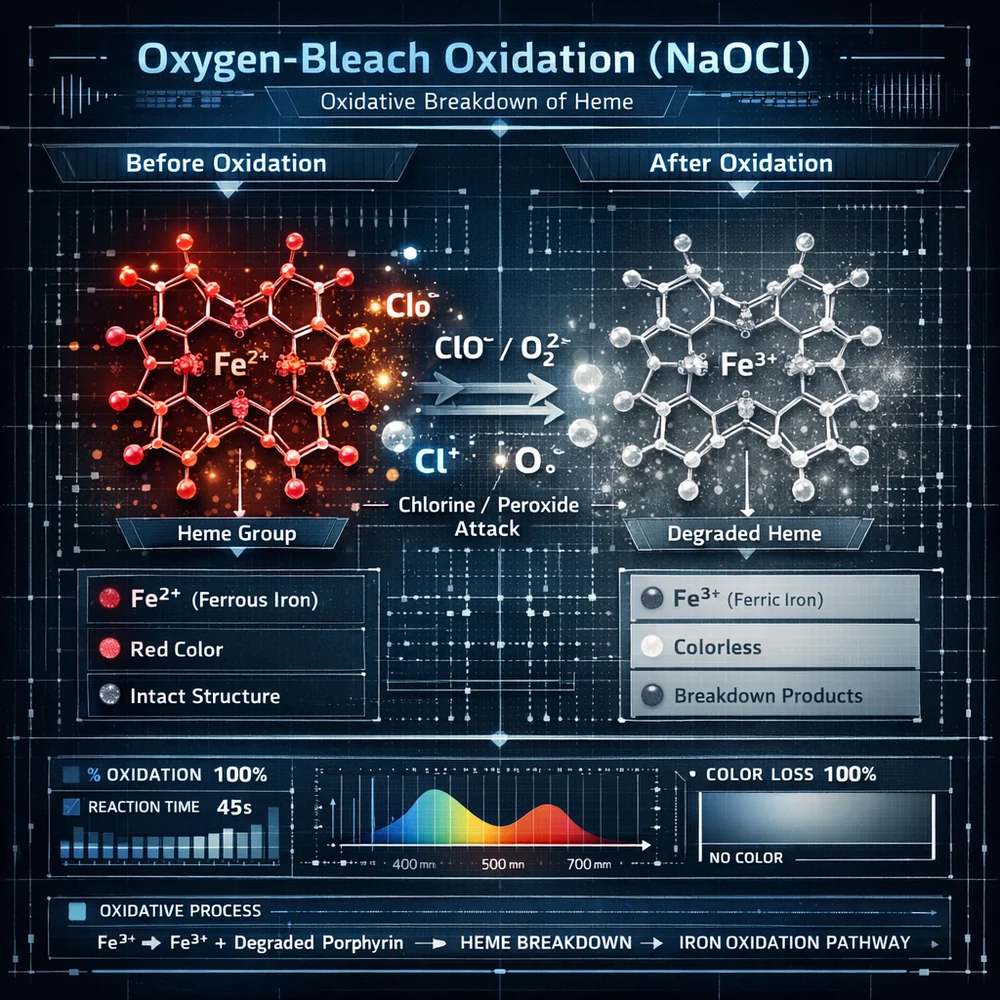
The chemistry is straightforward. Chlorine is a strong oxidizer that converts ferrous iron (Fe2+) in hemoglobin to ferric iron (Fe3+). Ferric iron forms stable oxide compounds that give rust its characteristic yellow-orange color. These iron oxides are essentially permanent on fabric.
Use oxygen bleach (sodium percarbonate) instead for whitening. It operates through a different chemical pathway that does not trigger iron oxidation.
Apply bleach only after the protein has been completely removed. Bleach is for final whitening, not for initial protein removal.
The Bottom Line Chlorine bleach creates permanent yellow rust stains on blood. Use oxygen bleach after protein removal.
Never Dry Until Verified
The clothes dryer is where blood stains become permanent. The high heat finishes any denaturation that cold treatment prevented.
Always air dry blood-stained items and inspect them in good lighting before putting them in the dryer. If any trace of the stain remains, retreat while the fabric is damp.
Repeat enzyme treatment as many times as necessary. It is better to wash five times cold than to dry once and fail.
The Bottom Line Dryer heat permanently sets any remaining blood residue. Air dry and verify complete removal before finishing.
Conclusion
Blood removal follows simple principles: cold water preserves protein solubility, enzymes disassemble the protein structure, and heat must be avoided until the stain is completely gone.
Patience and chemical precision replace scrubbing and hot water. With protease enzymes and proper temperature control, even intimidating blood stains become manageable problems.
References
- Journal of Forensic Sciences. “Bloodstain Aging: Molecular Transitions and Solubility.” Wiley
- American Cleaning Institute. “Protein-Based Stain Removal Science.” https://www.cleaninginstitute.org/
- Textile Research Journal. “Enzymatic Hydrolysis of Albumin on Cotton.” Sage Journals
- Consumer Reports. “Mattress Maintenance and Biological Stains.” https://www.consumerreports.org/
- Royal Society of Chemistry. “Catalase-Mediated Peroxide Decomposition.” RSC Education