Removing Paint from Clothes: Latex and Oil Solutions
Table of Contents
Things You'll Learn From This Article:
- The first thing to figure out is whether the paint is latex (water-based) or oil-based, because each one needs a different removal method.
- Acting fast makes a huge difference—wet paint is much easier to remove than paint that has already dried and hardened.
- If water cleaned the brush, the paint was latex; if you needed paint thinner or mineral spirits, it was oil-based.
- Dried latex paint won’t come off with water, but rubbing alcohol can soften it so you can scrub it away.
- Higher‑strength rubbing alcohol (like 91%) works better than weaker versions for dried latex paint.
- Oil-based paint needs mineral spirits or turpentine, not alcohol or water, to dissolve it.
- Applying solvent from the back of the fabric helps push paint out instead of spreading it deeper into the fibers.
- Scraping off thick, dried paint first makes solvents work better and reduces how much chemical you need.
- Freezing clothes with thick paint blobs can make the paint brittle so it snaps off more easily.
- Tough fabrics like denim can handle heavy scrubbing and stronger treatments, while delicate fabrics need a gentler approach.
- Some solvents can melt synthetic fabrics, so testing on a hidden seam can prevent permanent damage.
- Spray paint is harder to remove because it sinks deep into fabric and often needs stronger solvents and repeated treatments.
- Hot vinegar can soften stubborn paint on durable work clothes when harsher chemicals aren’t ideal.
- Never put clothes in the dryer until you’re sure the paint is completely gone, since heat can set the stain permanently.
- For expensive, delicate, or “dry clean only” clothes, professional dry cleaning is often the safest option.
Paint on your clothes happens to everyone who has ever picked up a brush. Whether you were updating a room or working on a craft project, splatter and drips are part of the process. The good news is that most paint stains are removable if you understand the chemistry involved.
The critical first step is identifying what type of paint you are dealing with. Latex and oil-based paints have completely different chemical structures, and treating one with the wrong solvent can make the stain worse or even damage your fabric.
Latex vs Oil-Based Paint Chemistry
Before you reach for any cleaning product, you need to diagnose the stain. The two main categories of paint behave completely differently and require opposite treatment approaches.
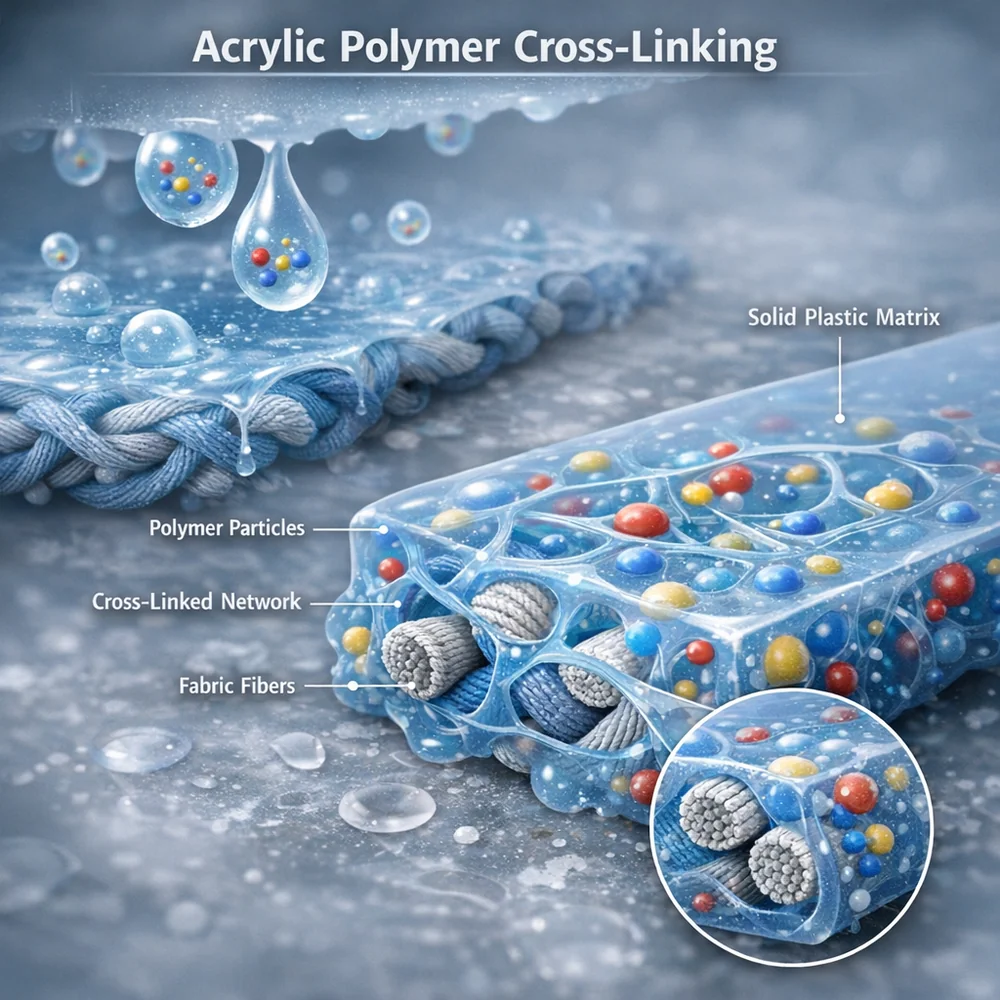
Latex and acrylic paints are water-based. Most interior wall paints and craft paints fall into this category. They consist of pigment suspended in water with acrylic or vinyl binders. While wet, they clean up easily with water. Once dry, they cure into a flexible, plastic-like film that becomes waterproof.
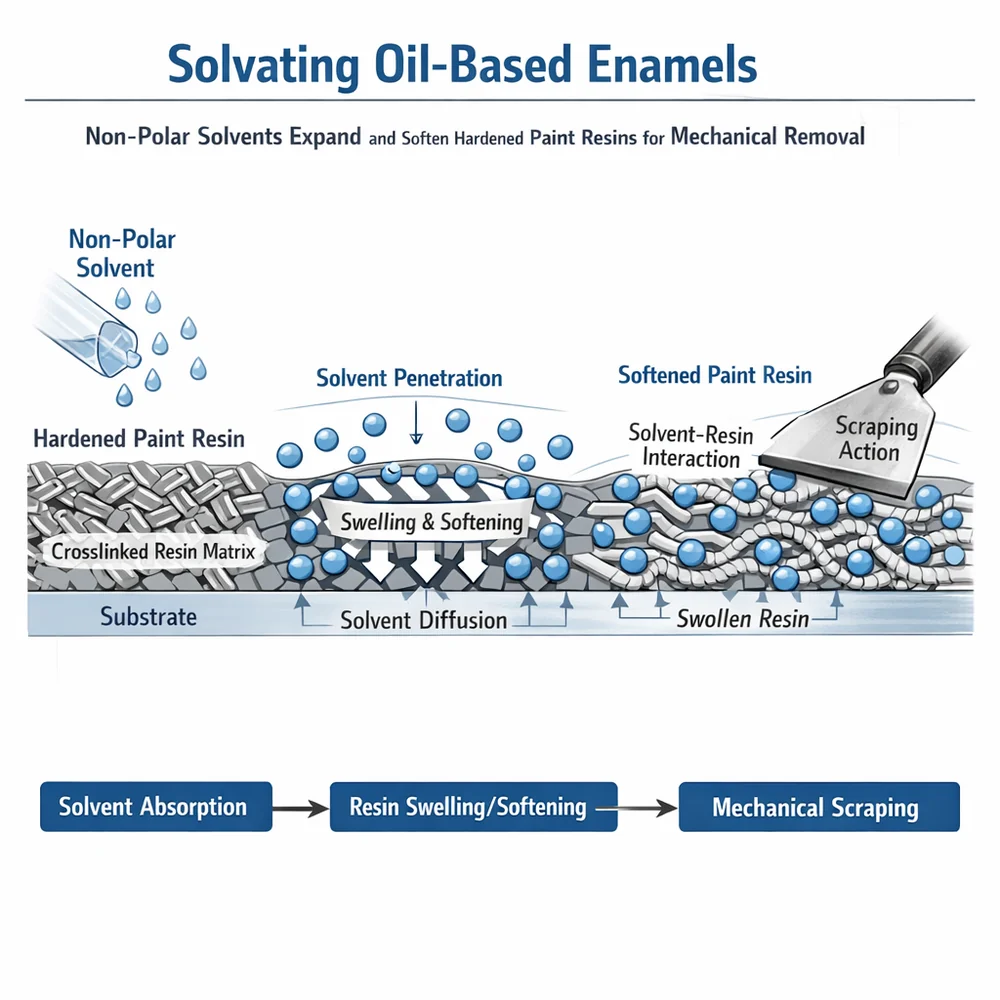
Oil-based and alkyd paints are commonly used for trim, doors, and furniture. These rely on oils like linseed and strong solvents as their carrier. They cure to a hard, glossy shell and are hydrophobic from the moment of application. Water does nothing to them.
If you still have the paint can, check the label. If not, think about how the brush cleaned up. If water worked, it was latex. If you needed mineral spirits or paint thinner, it was oil-based.
The Bottom Line Latex paint is water-based and cures to plastic. Oil paint is solvent-based and cures to a hard shell. Treatment differs completely.
Speed Matters
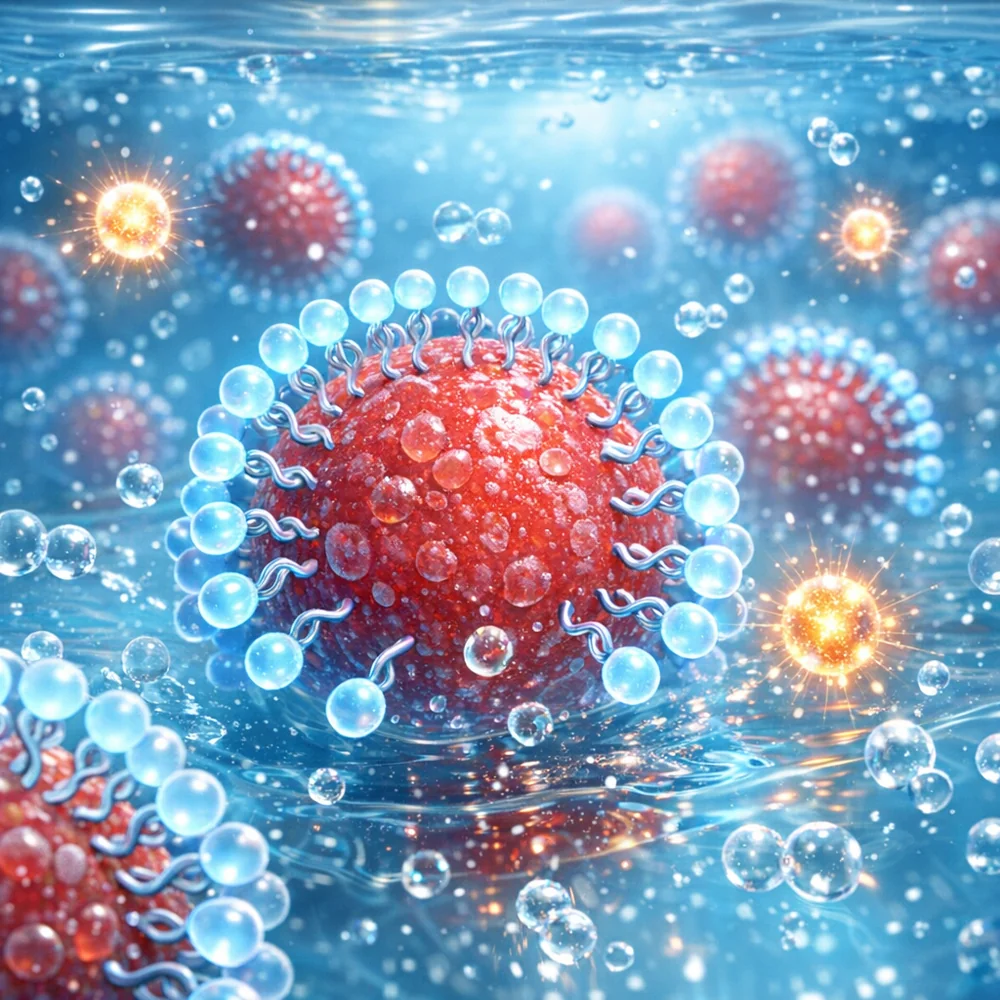
The single most important factor in paint stain removal is how quickly you act. Wet paint is fundamentally different from dried paint.
While paint is still liquid, the pigment particles are simply suspended in their carrier fluid. Flushing with warm water for latex or dabbing with thinner for oil removes wet paint almost instantly because you are just diluting and washing away a liquid.
Once paint dries, it cures. The molecules cross-link into solid chains, transforming from a suspension into a structured polymer. Breaking those chains requires much more aggressive chemical energy than just rinsing.
If you get paint on your clothes, stop what you are doing and treat it immediately. The few minutes you save by waiting until the project is done could mean the difference between easy removal and permanent damage.
The Bottom Line Wet paint washes out easily. Dried paint requires solvents to break polymer chains. Act immediately for best results.
Rubbing Alcohol for Dry Latex
Once latex paint dries on fabric, water just beads on the surface. The acrylic polymers have cross-linked into a waterproof plastic film. You need a solvent that can attack those polymer chains.
Isopropyl alcohol, commonly called rubbing alcohol, is the specific solution for dried latex paint. The higher the concentration, the better. Look for 91% isopropyl if available rather than the 70% version.
Saturate the dried paint spot completely with alcohol. Let it soak for five to ten minutes. The alcohol breaks down the acrylic binder, softening the hard film back into a gummy consistency.
Scrub vigorously with a stiff brush like an old toothbrush. The softened paint should ball up into crumbs that you can pick or brush away. You may need to repeat the process for thick spots.
After removing the bulk of the paint, wash the garment normally to eliminate any residue. Air dry first to confirm the stain is completely gone before using the machine dryer.
The Bottom Line Saturate dried latex paint with 91% rubbing alcohol. Wait 5 minutes, then scrub to ball up the softened paint.
Mineral Spirits for Oil Paint
Oil-based paints are immune to rubbing alcohol. You need a petroleum-distillate solvent that speaks the same chemical language as the paint.
Mineral spirits or turpentine are chemically similar to the thinners used in oil paint manufacturing. They dissolve the dried paint rather than softening it.
Place the stained fabric face-down on a stack of paper towels or clean rags. Apply the solvent to the back of the stain. This technique forces the dissolved paint out of the fabric and into the absorbent material below rather than pushing it deeper into the fibers.
Keep blotting and reapplying solvent, moving to fresh paper towels as they absorb the dissolved paint. Continue until no more color transfers. Never rub the front of the stain initially because this just spreads the pigment across a larger area.
After treatment, wash the garment immediately to remove the solvent residue. Mineral spirits have a strong odor that requires thorough rinsing.
The Bottom Line Apply mineral spirits from the back of the stain to push oil paint out. Blot onto paper towels until no color transfers.
Mechanical Removal for Thick Spots
Before applying solvents to a thick dried paint glob, removing the bulk mechanically reduces the amount of chemical work required. Scraping away the surface layer makes the solvent more effective.
Use a dull blade like a plastic spoon or butter knife. Sharp metal can damage fabric by cutting threads. Hold the fabric taut across a flat surface and scrape across the paint rather than digging down into the weave.
For very hard paint, gently bending the fabric back and forth can crack the dried layer. These cracks create entry points for your solvent to penetrate more effectively.
Be careful with delicate fabrics. Aggressive scraping can pull threads or create permanent damage that is worse than the paint stain itself. Test on a hidden area if you are unsure.
The Bottom Line Scrape thick dried paint with a dull blade before applying solvent. Crack hard paint by flexing the fabric.
Freezing Technique
When paint has dried in a thick puddle or glob, solvents can have trouble penetrating to the core. The outer layer dissolves into sticky mess while the inside stays hard.
Freezing offers an alternative approach. Place the garment in a plastic bag and put it in your freezer for an hour or two. Cold temperatures make many paints brittle.
Once frozen, the paint blob may snap off cleanly when you flex the fabric. This works particularly well for thick acrylics, craft paints, and three-dimensional puff paints that sit on top of the fabric rather than absorbing into the fibers.
After removing the bulk by freezing, use the appropriate solvent to address any remaining residue that did penetrate the weave.
The Bottom Line Freeze thick paint blobs to make them brittle. Flex the frozen fabric to snap off the hardened paint.
Fabric Type Considerations
The durability of your fabric determines how aggressively you can treat paint stains. Denim and canvas can handle vigorous scrubbing and strong solvents. Delicate synthetics cannot.
Heavy cotton fabrics like denim are robust. You can scrub with stiff bristle brushes or even fine-grit sandpaper to remove paint residues without destroying the pants. Repeated solvent applications are also well tolerated.
Synthetic materials like polyester, nylon, and rayon require extreme caution. The same solvents that dissolve paint can sometimes melt the plastic fibers of your clothing.
Acetate fabrics are particularly dangerous. This material dissolves instantly on contact with acetone, which is commonly found in nail polish remover. If your garment contains acetate, stick to mild oil-based approaches or professional dry cleaning.
Always test any solvent on a hidden seam or inside edge before treating the visible stain. This prevents discovering fabric damage in an obvious location.
The Bottom Line Sturdy fabrics tolerate aggressive treatment. Synthetics may melt with strong solvents. Always test first.
Spray Paint Removal
Spray paint presents unique challenges because the atomized droplets drive deep into the fabric weave immediately. There is no surface layer to scrape away.
Most spray paints are oil-based or enamel formulations. Standard mineral spirits may not be strong enough. You may need heavy-duty graffiti removers containing xylene or similar powerful solvents.
Work in a well-ventilated area because these products have strong fumes. Apply generously and allow adequate dwell time for the solvent to penetrate the fine pigment particles embedded in the fibers.
Wash the garment immediately after treatment to remove both the dissolved paint and the harsh solvent residue. Multiple treatment cycles are often necessary for complete removal.
The Bottom Line Spray paint penetrates deeply and requires strong solvents. Work in ventilation and expect multiple treatment cycles.
Hot Vinegar for Hardened Spots
Vinegar offers a gentler alternative for stubborn dried paint spots on durable work clothes. While not as effective as dedicated solvents, it can soften hardened paint enough for mechanical removal.
Heat white vinegar until steaming but not boiling. Apply it to the paint stain with a saturated cloth. Let the hot vinegar work for ten to fifteen minutes, reheating and reapplying as it cools.
The combination of heat and mild acid softens many types of dried paint. After treatment, scrub with a stiff brush. This approach works best for spots that have already had the bulk removed by other methods.
This technique is particularly useful for adhesive residues and similar sticky situations where gentle chemical softening is preferred over harsh solvents.
The Bottom Line Hot vinegar can soften stubborn dried paint for mechanical removal. Use on durable fabrics when gentle approach is preferred.
Professional Dry Cleaning
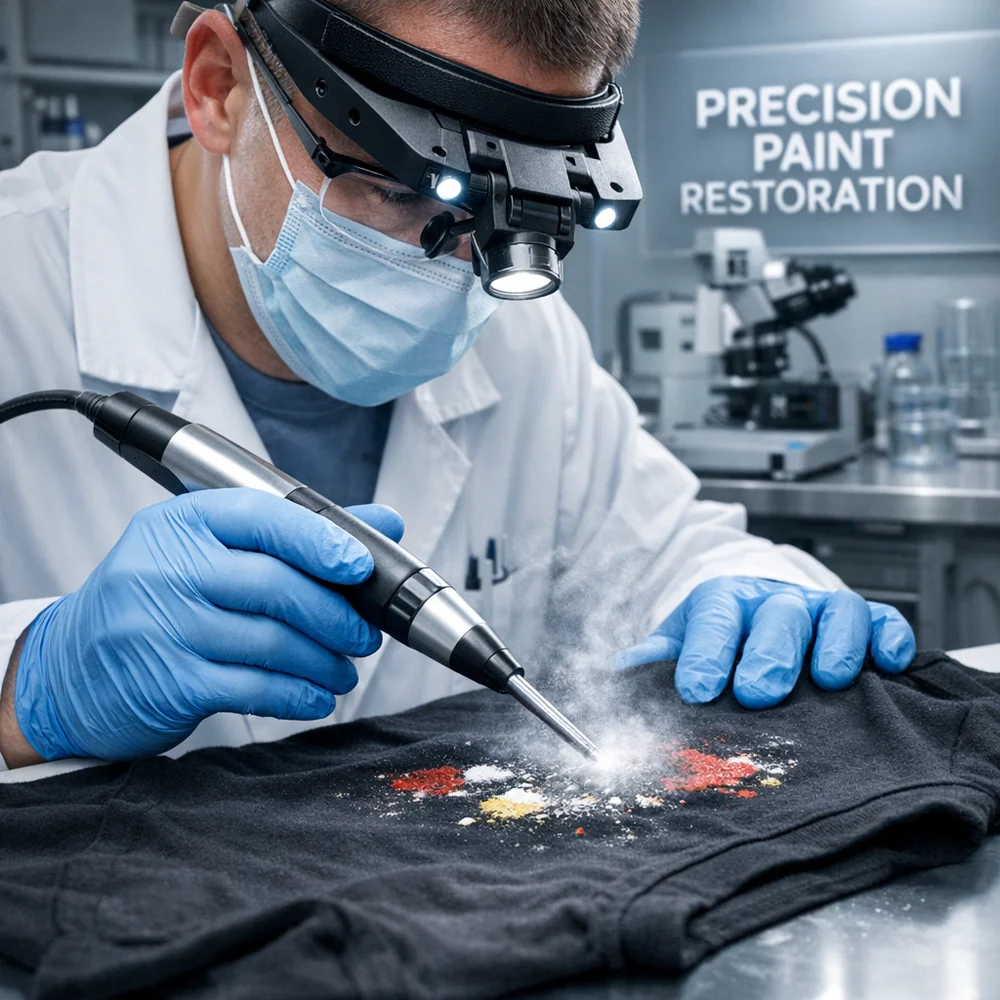
Some paint stains are beyond home treatment, especially on delicate or expensive garments. Professional dry cleaners have access to industrial solvents and equipment that exceed household options.
Be honest with the cleaner about what type of paint caused the stain and any treatments you have already attempted. This information helps them choose the appropriate approach and avoid damaging the fabric further.
Dry cleaning is particularly appropriate for “Dry Clean Only” garments where water and aggressive home solvents could cause permanent damage. The perchloroethylene used in professional cleaning dissolves many paint types effectively.
For heirloom or valuable items, the cost of professional treatment is worthwhile compared to the risk of ruining the garment with DIY attempts.
The Bottom Line Professional dry cleaning is appropriate for delicate fabrics or stubborn stains that resist home treatment.
Conclusion
Paint stain removal comes down to matching your solvent to the paint chemistry. Rubbing alcohol handles dried latex. Mineral spirits handle oil-based paints. Acting quickly before paint cures makes everything easier.
Test solvents on hidden areas first, especially with synthetic fabrics that may melt. Remove thick blobs mechanically before chemical treatment. Verify complete removal before machine drying.
When home treatment fails or the garment is valuable, professional dry cleaning offers the safest path forward.
References
- Journal of Coatings Technology and Research. “Solvent interactions with acrylic latex films.” Springer Link
- The Spruce. “How to Remove Paint from Clothes.” https://www.thespruce.com/
- Paint Quality Institute. “Understanding Paint Chemistry: Latex vs. Oil.”
- Progress in Organic Coatings. “Removal of cured coatings from different substrates.” ScienceDirect
- Family Handyman. “How to Get Paint Out of Clothes.” https://www.familyhandyman.com/