Period Stain Removal: The Science of Enzymatic Blood Extraction from Mattresses and Clothing
Table of Contents
Things You'll Learn From This Article:
- Cold water is your first move for any period stain; heat makes it permanent.
- Acting fast lets cold water pull blood out of fabric on its own, with less scrubbing.
- Mattresses need a press-and-lift approach instead of soaking to avoid spreading the stain.
- Enzyme cleaners work by breaking the stain down, not just fading the color.
- Enzymes need moisture and mild warmth to work, but never hot temperatures.
- Hydrogen peroxide is useful for white fabrics after enzymes, but risky on colors.
- Salt paste can stop a fresh stain from sinking deeper when nothing else is available.
- Old, dried stains must be rehydrated before any real cleaning can happen.
- Glycerin helps soften stubborn dried stains so enzymes can reach them.
- Scrubbing dried blood can damage fabric; soaking works better than force.
- Heat or chlorine bleach can turn blood stains into rust-like marks that won’t come out.
- Oxygen bleach is safer than chlorine bleach once all protein is removed.
- White sheets may need a separate whitening soak even after the stain is gone.
- Mattresses should be sanitized and fully dried to prevent odor, mold, or bacteria.
- Alcohol spray disinfects mattresses without soaking them if used lightly.
- Clothes and underwear are easier to clean if you rinse them in cold water right away.
- Never put stained items in the dryer until you’re sure the stain is completely gone.
- Proper cleaning prevents long-term smells and fabric breakdown, even on dark fabrics.
Period stains are more complex than regular blood spills. Menstrual fluid contains blood mixed with tissue, mucus, and other secretions, creating a thick, clotting mixture that penetrates fabric quickly. This biological cocktail forms deep bonds with fibers, especially in porous surfaces like mattresses.
The good news is that biology follows predictable chemistry. If you understand how proteins behave and what breaks them down, removal becomes straightforward. The key is acting fast, avoiding heat, and using the right enzymes.
This guide covers everything from fresh accidents to old dried stains, with specific protocols for mattresses, sheets, underwear, and upholstery.
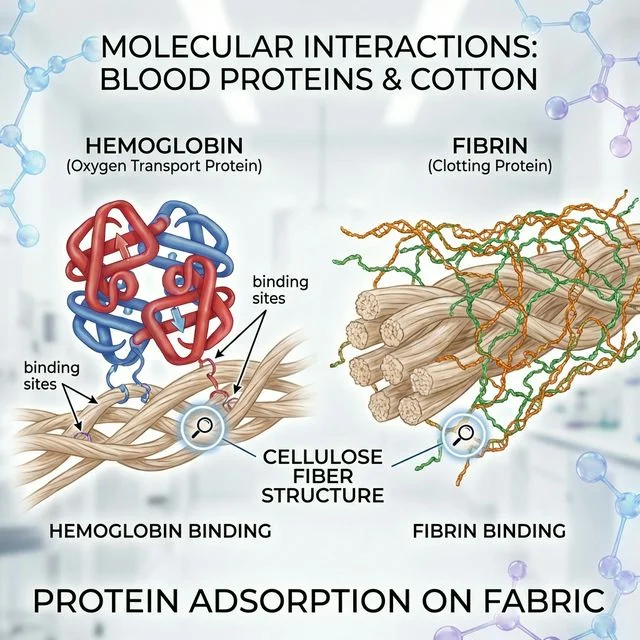
Cold Water Is Not Optional
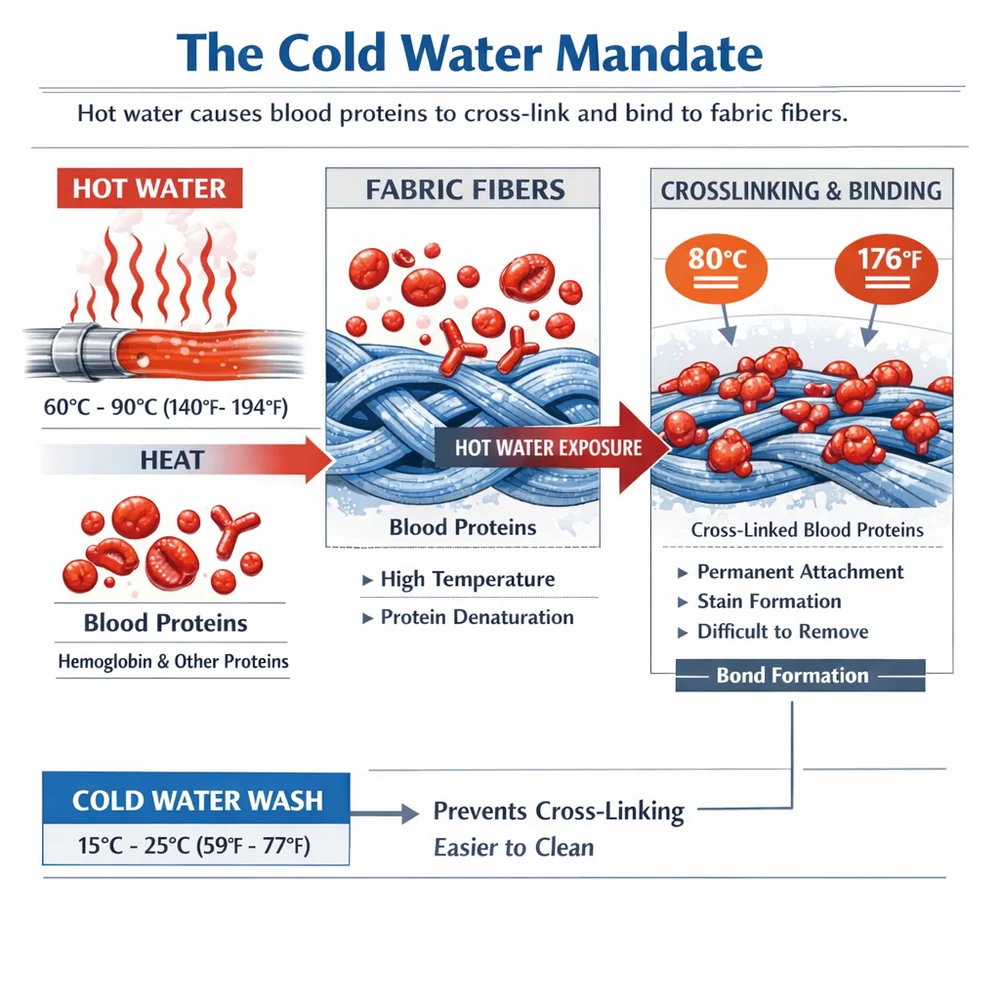
The single most important rule for any protein-based stain is temperature. Cold water keeps proteins soluble. Hot water denatures them.
When proteins like hemoglobin encounter heat, they unfold and cross-link with fabric fibers. This is exactly what happens when you cook an egg, and it is equally irreversible. Washing period stains with warm or hot water permanently “cooks” them into the fabric.
The science behind this is straightforward. Blood proteins maintain their three-dimensional shape through weak hydrogen bonds. These bonds break when thermal energy is applied. Once the protein chain unfolds, reactive chemical groups that were hidden inside become exposed. These groups immediately form new, much stronger bonds with the hydroxyl groups on cellulose fibers (cotton) or the polymer chains in synthetics.
Fresh stains respond beautifully to cold water through simple osmosis. The concentrated blood naturally diffuses into the surrounding fresh water, flowing out of the fabric. This physical law does the work for you.
For mattresses where immersion is impossible, use a “wet-press-lift” technique. Saturate a cloth with ice-cold water, press firmly against the stain, let the water soak in and dilute the blood, then lift to capture what migrated into the cloth. Repeat with fresh sections of cloth until transfer stops. This technique uses osmotic gradients to draw the stain out without spreading it.
The Bottom Line Hot water permanently bonds protein stains. Always start with cold water to keep proteins soluble and mobile.
Enzyme Cleaners Do the Heavy Lifting
After removing the bulk with cold water, microscopic protein residue remains trapped in the fiber weave. This residue causes the dark “halo” rings that persist even after the stain appears gone.
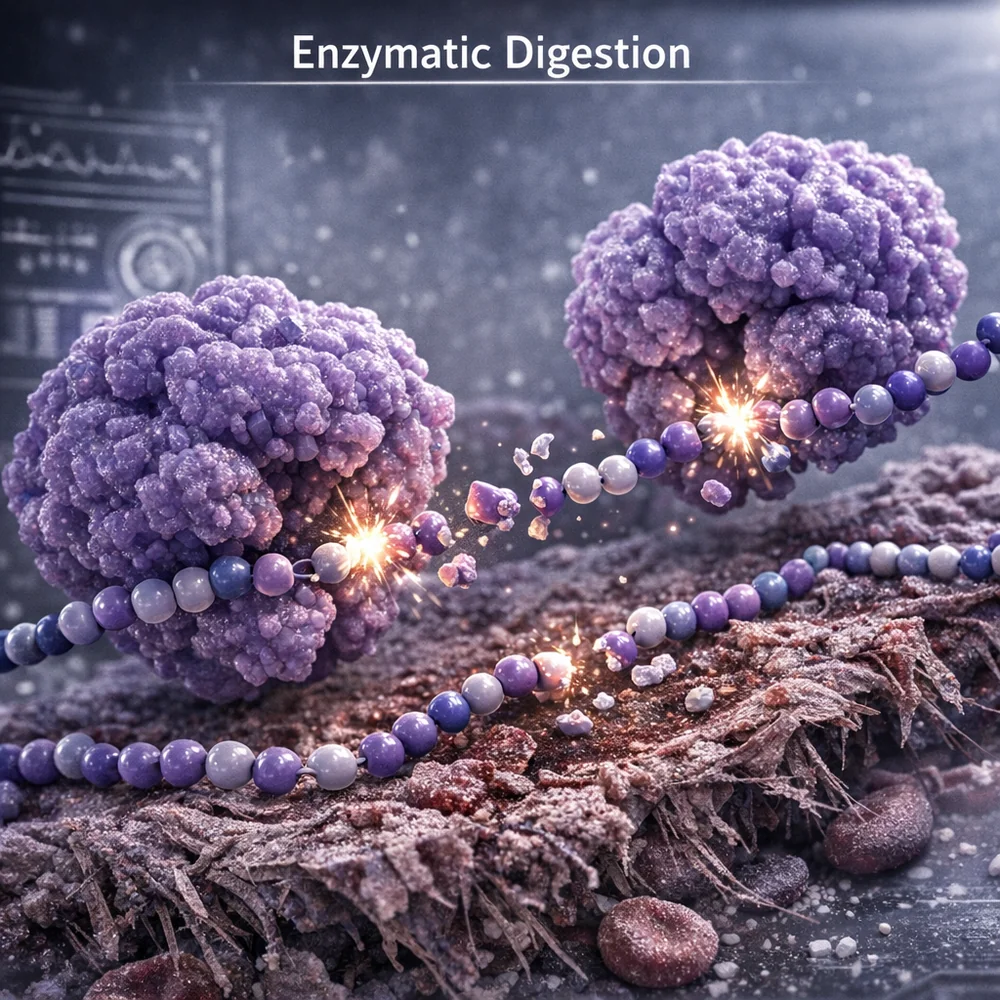
Protease enzymes cut protein chains at specific points, physically dismantling the stain at a molecular level. Unlike bleach, which merely oxidizes the color, enzymes actually digest the biological material. This is detailed in our complete blood stain removal guide.
The way proteases work is elegant. Each enzyme molecule contains an “active site” shaped to fit specific amino acid sequences in protein chains. When the enzyme encounters these sequences, it catalyzes a hydrolysis reaction that inserts a water molecule into the peptide bond, breaking the chain. The enzyme then releases and moves on to the next target. A single enzyme molecule can break thousands of bonds.
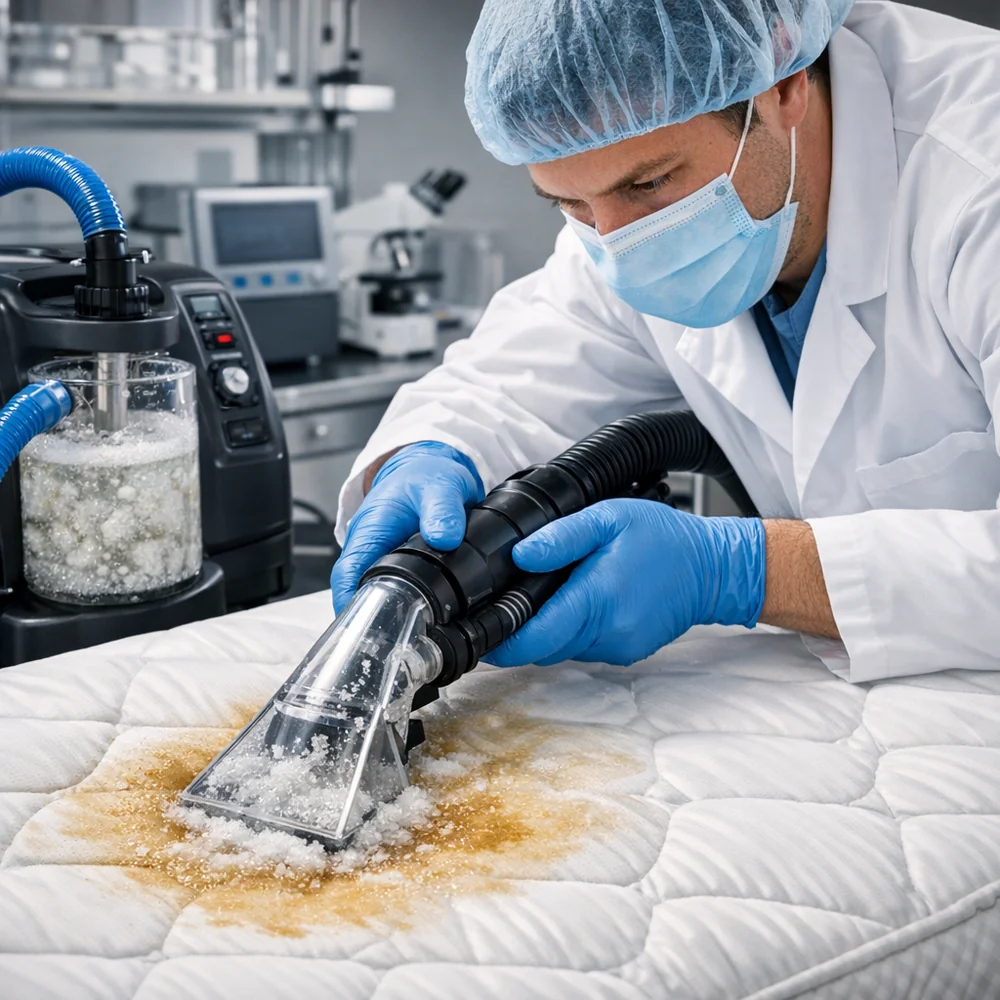
For mattresses, apply enzyme cleaner liberally and cover with a damp towel. This creates the warm, moist environment enzymes need to work. Dryness stops enzymatic activity completely, so maintaining moisture is critical. Let the treatment dwell for two to four hours, giving enzymes time to migrate into foam cells where liquid may have penetrated.
Temperature matters for enzyme effectiveness. Too cold and the enzymes operate sluggishly. Too hot and they denature just like the proteins they are supposed to clean. The sweet spot is lukewarm, around 85°F to 95°F (30°C to 35°C). This provides enough kinetic energy for rapid enzyme action without risking heat-setting the stain.
The Bottom Line Protease enzymes digest blood proteins at the molecular level. Give them time to work, at least two hours for mattresses.
Hydrogen Peroxide for White Fabrics
On white sheets and mattress covers, hydrogen peroxide provides dramatic visual restoration after enzyme treatment.
When peroxide contacts blood, the catalase enzyme naturally present in blood causes a vigorous bubbling reaction. This is not just visual drama. The rapid oxygen expansion creates mechanical lifting action that forces particles out from deep within the fiber weave.
Apply 3% hydrogen peroxide drop by drop directly onto darkened areas. As foam rises, wipe away the debris with a clean white cloth. The peroxide simultaneously bleaches the iron-based chromophores in hemoglobin, addressing both physical residue and visual staining.
The chemistry here involves oxidation of the porphyrin ring structure that gives blood its red color. When peroxide breaks these molecular rings, the color disappears. This is why peroxide works so well on the remaining shadows after enzymatic treatment has removed the bulk protein.
Use caution on colored fabrics. Peroxide can bleach some dyes. Always test in a hidden area first.
The Bottom Line Hydrogen peroxide creates bubbling action that lifts deep residue while bleaching white fabrics. Test first on colored items.
The Salt Paste Emergency
When enzyme cleaners are not available, a salt paste provides effective emergency containment.
Salt creates a hypertonic environment that pulls liquid out of the fabric through aggressive osmotic pressure. Mix table salt with just enough cold water to form a thick paste and apply generously to fresh stains. As the paste dries, it captures the blood in a crystalline crust.
The osmotic principle is simple: water moves from areas of low solute concentration to areas of high solute concentration. The salt paste has an extremely high concentration of dissolved ions compared to the blood in the fabric. Water flows out of the fabric into the paste, carrying dissolved blood components with it.
This method does not remove the stain; it prevents the stain from spreading deeper into mattress foam while you wait for proper treatment. Once dry, vacuum away the pink-tinged salt and treat the remaining shadow with enzymes.
The Bottom Line Salt paste dehydrates fresh stains and prevents spreading. It is triage, not cure.
Dried Stains Need Rehydration
Dried blood forms an insoluble fibrin lattice that water cannot quickly penetrate. Standard washing fails because the water rinses away before dissolving the hardened shield.
When blood dries, fibrinogen proteins cross-link into a tough fibrin network. This is the same clotting mechanism that stops bleeding from cuts. On fabric, this network creates a waterproof barrier that protects the interior of the stain from cleaning solutions.
Before attempting removal, soak the garment in cold water with a bit of salt or enzyme presoak for at least 30 to 60 minutes. This allows water molecules to slowly intercalate between the dried protein chains, softening the stain back to a semi-soluble state.
For particularly stubborn dried stains, vegetable glycerin helps break the crust. Glycerin is a humectant that actively pulls moisture into the dried protein matrix. Apply a thin layer and wait 30 minutes before proceeding with enzyme treatment.
Resist the urge to scrub dried stains. The hardened crystals act like sandpaper against fabric fibers, causing permanent damage. Let the chemicals do the work after rehydration.
The Bottom Line Dried stains need a 30 to 60 minute cold soak before treatment. Never scrub dry blood.
Avoid the Iron Trap
Blood contains iron, which creates a secondary problem if treated incorrectly. Hot water or chlorine bleach causes iron to oxidize into stable ferric oxide, turning the stain yellow-orange. This effectively converts a solvable protein problem into a permanent rust problem.
The iron in hemoglobin is normally bound in a ferrous (Fe2+) state. When exposed to oxidizing conditions at high temperature, it converts to ferric iron (Fe3+), which forms rust-colored iron oxide. This is chemically similar to the rust on old nails and is equally permanent.
Sheets that show yellow shadows after washing were likely exposed to heat or bleach before the protein was fully removed. The iron locked in before it could be flushed away.
Stay with cold water and enzyme-based treatment until the stain is completely gone. Avoid chlorine bleach entirely on blood. Oxygen-based bleaches are safe and effective without triggering iron oxidation because they operate at lower temperatures and different pH levels.
The Bottom Line Hot water and chlorine bleach cause blood iron to form permanent yellow rust stains. Stay cold and use oxygen bleach.
Restoring White Sheets
After biological matter is removed, white sheets may still look dingy or shadowed where the stain was. This calls for optical restoration.
Soak the sheets overnight in a warm solution of sodium percarbonate (oxygen bleach). The slow oxygen release breaks residual chromophores while the alkaline environment lifts any remaining oils. This is the technique we call oxidative whitening.
The warm temperature is safe at this stage because you have already removed all the protein. Without protein to denature, heat simply accelerates the bleaching action.
For the brightest finish, add bluing agent to the final rinse. This trace blue pigment counteracts natural fiber yellowing, tricking the eye into seeing whiter white. Optical brighteners work on similar principles but are already built into most modern detergents.
The Bottom Line Oxygen bleach soak eliminates shadows on white fabric. Bluing in the final rinse maximizes optical brightness.
Mattress Sanitization
Removing the stain is not enough. Biological fluids create a nutrient-rich environment for bacteria and fungi inside mattress foam. You need to sanitize after cleaning.
A light misting of 70% isopropyl alcohol kills surface bacteria and evaporates quickly without leaving moisture behind. The alcohol concentration matters: 70% is more effective than 90% because the water content helps the alcohol penetrate bacterial cell walls.
Water evaporates slowly from foam and risks mold growth if the mattress is covered before fully dry. Polyurethane foam is especially prone to harboring moisture in its cellular structure.
Always ensure the mattress is completely dry before replacing sheets. Use a fan or hair dryer on cool setting to accelerate drying into the foam core. Position the mattress against a wall with the stained area facing out to maximize air circulation. Trapped moisture causes problems far worse than the original stain, including mildew, odor, and foam degradation.
The Bottom Line Sanitize with alcohol after cleaning. Ensure complete drying before making the bed to prevent mold.
Underwear and Clothing Tips
Underwear stains are easier to treat than mattress stains because you can fully immerse and agitate the fabric. However, the same temperature rules apply.
Rinse immediately with cold water as soon as you notice the stain. If you are away from home, blot with cold water from any source. Even bottled water helps.
For washable items, soak in cold water with enzyme detergent for at least 30 minutes before machine washing. Check that the stain is completely gone before putting the item in the dryer. Heat from the dryer permanently sets any remaining residue.
Dark underwear hides staining better but still benefits from proper treatment to prevent odor and fabric degradation over time.
The Bottom Line Rinse underwear immediately with cold water. Soak with enzymes before washing. Verify removal before drying.
Conclusion
Period stain removal follows clear biological principles. Cold water keeps proteins soluble. Enzymes digest the organic matter. Oxygen bleach handles residual color. Heat must be avoided until the stain is completely gone.
For mattresses, the challenge is extracting fluid from a surface you cannot submerge. The wet-press-lift technique, extended enzyme dwell time, and thorough drying solve this problem.
Understanding the chemistry transforms panic into methodical restoration. Every period stain is solvable with the right approach.
References
- Journal of Forensic Sciences. “Aged Blood Stain Chemistry and Enzymatic Degradation.” Wiley
- American Cleaning Institute. “Biological Fluid Removal from Upholstery and Bedding.” https://www.cleaninginstitute.org/
- Textile Research Journal. “Oxidative Bleach Effects on Cotton Sheeting.” Sage Journals
- Consumer Reports. “Mattress Stain Removal Guide.” https://www.consumerreports.org/
- Journal of Surfactants and Detergents. “Protease Activity in Polyurethane Foam.” Springer Link