Removing Mildew and Mold from Fabric: Technical Protocols for Fungal Remediation
Table of Contents
Things You'll Learn From This Article:
- A musty smell means mold is alive and growing in the fabric, not just sitting on the surface.
- Mold digs deep into fibers, so regular washing alone usually won’t fix the problem.
- Natural fabrics like cotton and linen get damaged faster because mold actually feeds on them.
- Synthetic fabrics can still grow mold if sweat, skin oils, or detergent residue are present.
- Killing the mold comes first; stain removal only works well after the fungus is dead.
- Soaking fabric for several hours in white vinegar and borax helps kill mold deep inside the weave.
- Oxygen bleach is useful for removing leftover black or green stains after the mold is killed.
- Heat from a dryer can permanently lock in mold stains, so drying should wait until stains are fully gone.
- Sunlight helps finish the job by killing leftover spores and fading remaining discoloration.
- Handling dry mold indoors can release spores into the air, so items should be taken outside and wetted first.
- Wearing gloves and a proper mask reduces the risk of breathing in harmful spores.
- If mold covers a large area or the fabric feels weak and tears easily, throwing it away is safer.
- Mold doesn’t just stain fabric; it can weaken it enough to cause rips and failures later.
- Pillows, mattresses, and thick padded items are usually not salvageable once mold gets inside.
- A washing machine itself can spread mold if the door gasket and drum aren’t cleaned regularly.
- Leaving the washer door open after use helps prevent mold from growing inside the machine.
- Storing fabric while even slightly damp is one of the most common causes of mold growth.
- Good airflow and moisture control in closets matter more than airtight storage.
- Plastic storage containers can trap moisture and make mold problems worse.
- Baking soda can help remove lingering musty smells even after mold is gone.
- Vinegar rinses can neutralize odors that detergent and baking soda don’t remove.
- Outdoor gear is at high risk because it’s often stored damp and in enclosed spaces.
- Harsh cleaners can damage waterproof coatings on outdoor fabrics, so gentler methods are better.
- Hard water can reduce how well vinegar and oxygen bleach work during cleaning.
- Using distilled water or water softeners can improve mold-removal results.
- Preventing mold mostly comes down to keeping fabric completely dry and well-ventilated.
That musty smell coming from your closet or gym bag is not just unpleasant. It signals an active biological invasion. Mold and mildew are living organisms that have colonized your fabric and are literally eating it.
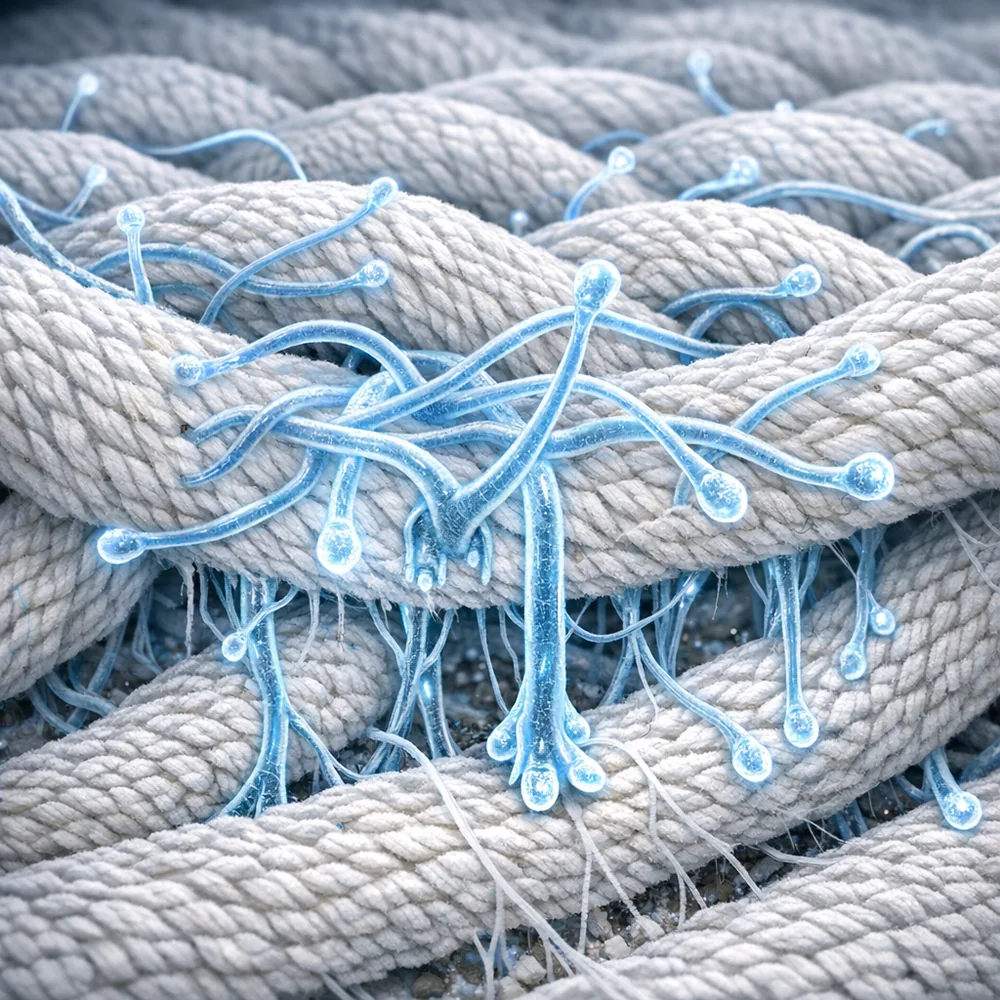
Unlike regular stains that just sit on the surface, fungal contamination involves organisms that send root-like structures deep into the fiber core. These threads, called hyphae, secrete enzymes that digest the fabric for nutrients. Standard washing cannot reach them, and killing the surface growth without addressing the roots just delays the problem.
Understanding the Fungal Invasion
Mold spores float everywhere in the air, waiting for the right conditions to germinate. When they land on damp fabric with organic fibers, they wake up and start growing. What you see as black or green spots is actually an extensive colony with invisible roots reaching deep into the material.
The visible patches produce pigments that are notoriously difficult to remove. These are not surface deposits like dirt. They are chemical compounds anchored within the yarn structure. Even after you kill the mold, the staining often remains unless you apply targeted oxidizing agents.
Cotton, linen, and other natural fibers are particularly vulnerable because they contain cellulose, which is essentially what the mold is eating. Over time, this digestion weakens the fabric. Severely affected items may tear easily or feel brittle to the touch. The damage accumulates over time, and by the time you notice visible spots, the colony has often been active for weeks.
Synthetic fibers resist digestion better because they are not food for fungi. However, mold can still grow on the oils, skin cells, and detergent residues that accumulate on synthetic surfaces. The organic buildup becomes the food source, even if the fiber itself is inert.
The Bottom Line Mold grows roots into fabric and produces stubborn pigments. Killing the surface is not enough. You need to address the embedded colony.
The Kill Phase: Vinegar and Borax
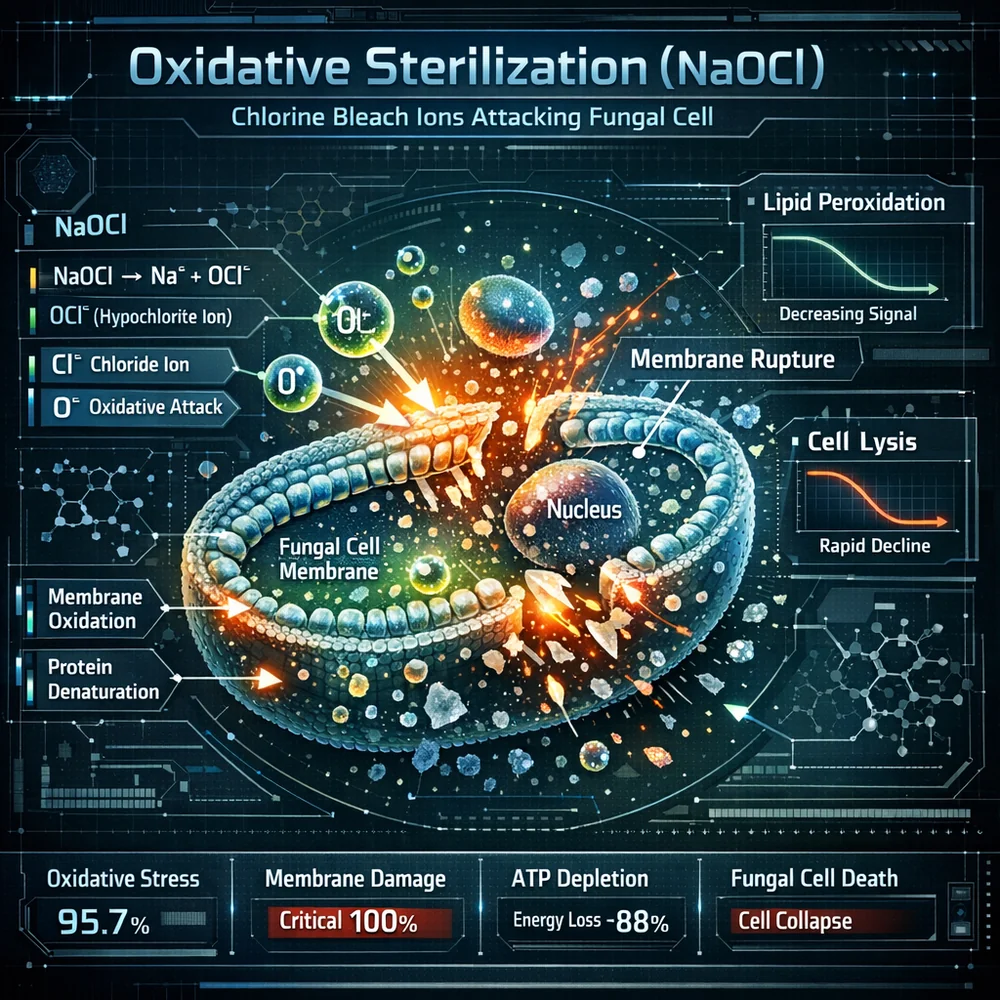
Before worrying about stains, you need to kill the fungal colony. Dead mold is much easier to clean than living mold that keeps producing new pigments.
White vinegar is a surprisingly effective fungicide. The acetic acid penetrates cell membranes and disrupts the internal chemistry of mold, causing it to die. Unlike chlorine bleach, vinegar can soak into porous fibers rather than just treating the surface.
Borax supplements vinegar by creating an environment hostile to reproduction. The combination provides comprehensive sterilization that reaches throughout the fabric weave.
Soak affected items in a solution of one cup white vinegar and half cup borax per gallon of water. Leave them submerged for at least four hours. This extended contact time ensures the solution reaches all parts of the garment, including seams and thick areas.
The Bottom Line Vinegar kills mold by penetrating cell membranes. Add borax for comprehensive sterilization. Soak for at least four hours.
Removing the Stains
Once the mold is dead, you need to address the residual black and green pigments. These are stable molecules that standard detergent cannot dissolve.
Oxygen bleach (sodium percarbonate) is the ideal tool here. When dissolved in warm water, it releases active oxygen that breaks apart the pigment molecules. This oxidative attack renders the staining colorless without the fiber damage that chlorine bleach can cause.
Wash the items in hot water with oxygen bleach according to the product instructions. The bubbling action provides mechanical lifting that helps dislodge dead fungal fragments from the yarn structure.
If faint shadows remain after the first wash, repeat while the fabric is still damp. Never put a mold-treated item in the dryer until you have verified the stains are completely gone. Heat can permanently set any remaining pigment, making it impossible to remove later.
The Bottom Line Use oxygen bleach to break apart fungal pigments. Verify stain removal before drying because heat sets pigment permanently.
Sunlight Finishing
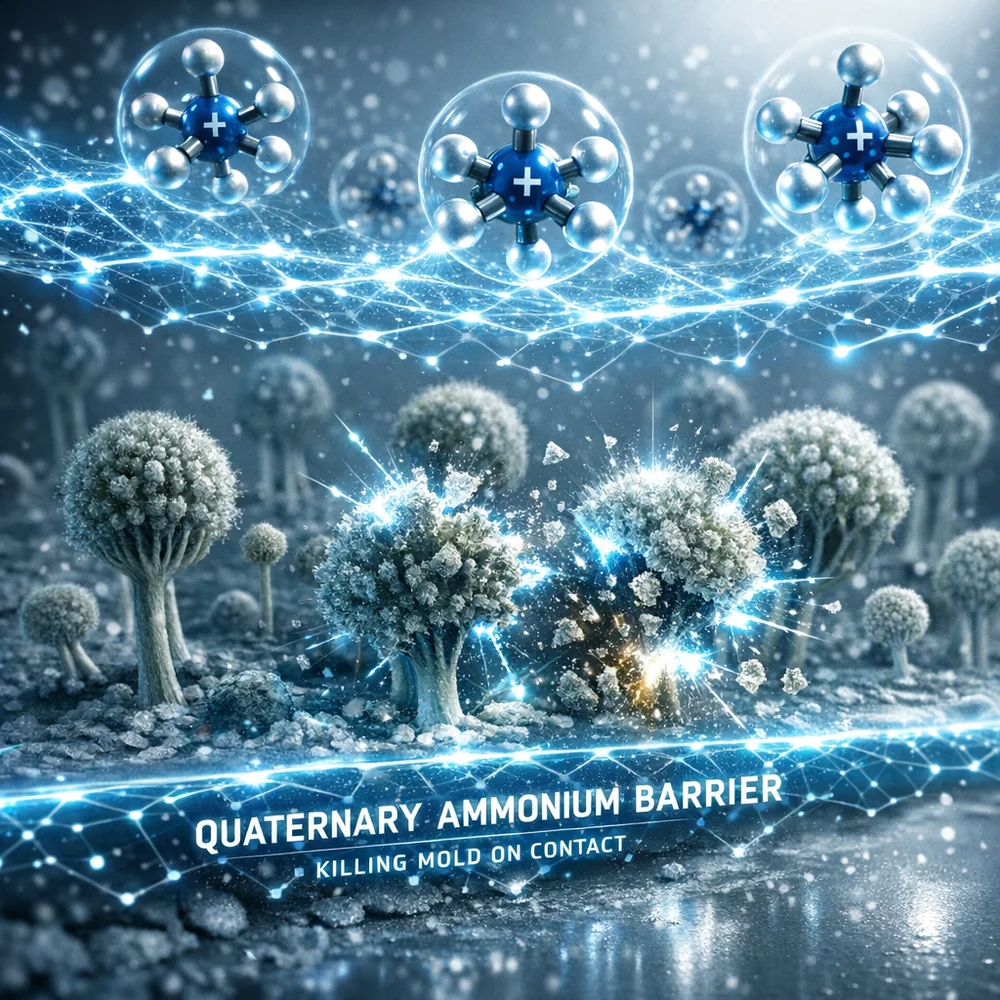
The most powerful sterilization step costs nothing. Direct sunlight contains ultraviolet radiation that kills remaining spores and naturally bleaches residual staining.
UV light literally breaks chemical bonds in fungal DNA, ensuring that any spores that survived the wash cannot reproduce. The drying action combined with fresh air creates an environment completely hostile to mold regrowth.
Hang treated items outside in direct sun for a full day. Turn them inside out halfway through to expose seams and internal surfaces. This traditional approach remains a cornerstone of zero-waste laundry routines because it works.
Avoid mechanical drying for mold-affected items whenever possible. Dryer heat can blow surviving spores into the ventilation system, potentially spreading the contamination throughout your home.
The Bottom Line Line-dry mold-treated items in direct sunlight. UV kills remaining spores and naturally bleaches stains.
Safety During Handling
Disturbing dry mold releases clouds of microscopic spores into the air. Inhaling these can trigger allergic reactions, asthma attacks, or respiratory infections.
Never shake, brush, or agitate moldy fabric indoors. Take items outside before any handling. Wear a proper N95 respirator and gloves during the process.
The safest approach is to get moldy items wet before moving them. Submerge them directly into the vinegar solution while they are still in their initial state. Wet spores are heavier and less likely to become airborne.
If the mold contamination covers more than about 20% of a fabric item, or if the material feels brittle and weak, disposal may be safer than remediation. Your respiratory health is worth more than any garment.
The Bottom Line Wet moldy items before handling to prevent spore release. Wear respiratory protection. Dispose of heavily contaminated items.
Checking for Structural Damage
Mold does not just stain fabric. It eats it. Before investing time in remediation, assess whether the item is even salvageable.
Examine the most affected areas. If the fabric feels thin, weak, or tears easily with gentle pressure, the mold has digested too much fiber. Continued use of a structurally compromised garment could result in embarrassing failures.
Test by pulling gently on the moldy sections. Healthy fabric resists; damaged fabric separates or crumbles. Items that fail this test should be discarded regardless of their remaining appearance.
Pillows, comforters, and mattresses with mold contamination are almost never salvageable because the spores penetrate deep into layers that cannot be reached with surface treatment.
The Bottom Line Test for structural damage before treating. If fabric tears easily or feels brittle, the item is beyond saving.
Your Washing Machine as Mold Source
Front-loading washing machines are notorious mold breeding grounds. The rubber door gasket traps moisture and organic debris in its folds, creating perfect conditions for fungal growth.
If your “clean” laundry smells musty immediately after washing, your machine is likely the source. The gasket bio-film inoculates every load with fresh spores.
Clean the door gasket monthly by pulling back the folds and scrubbing with a solution of bleach or hydrogen peroxide. Leave the door open between loads to let the drum dry completely. Run a hot, empty cycle with washing machine cleaner or white vinegar monthly.
This maintenance prevents your machine from becoming a contamination vector that undermines all your remediation efforts.
The Bottom Line Clean front-loader gaskets monthly. Leave the door open between loads. Run hot cleaning cycles regularly.
Preventing Future Mold Growth
All mold prevention comes down to moisture control. Fungi need humidity above 60% to survive and grow.
Never store items while even slightly damp. The inside of a sweater or the core of a folded towel can harbor enough moisture to start a colony. Make sure everything is bone dry before putting it away.
Use silica gel packets or calcium chloride dehumidifiers in closets prone to humidity, especially those on exterior walls. Increase airflow by spacing hangers and avoiding overstuffed drawers.
For seasonal storage, breathable garment bags provide better protection than sealed plastic. Sealed containers trap any moisture inside, creating exactly the conditions mold needs.
The Bottom Line Mold needs humidity above 60% to grow. Ensure items are completely dry before storage. Increase airflow in closets.
Deodorizing After Treatment
Even perfectly cleaned fabric can retain a musty smell from microbial volatile organic compounds (MVOCs). These are gaseous byproducts that remain trapped in the fiber even after the mold is dead.
Baking soda neutralizes these acidic gases. Add half a cup to your wash cycle along with detergent. The sodium bicarbonate reacts with the odor molecules to form odorless salts that rinse away.
For items that cannot be washed, like leather or vintage textiles, seal them in a container with fresh baking soda for several days. The powder absorbs the wandering gas molecules through physical adsorption.
If musty odor persists after washing with baking soda, try a white vinegar rinse. The acetic acid provides additional chemical neutralization.
The Bottom Line Baking soda neutralizes musty odor from MVOCs. Add to wash or seal with the item for several days.
Outdoor Gear and Technical Fabrics
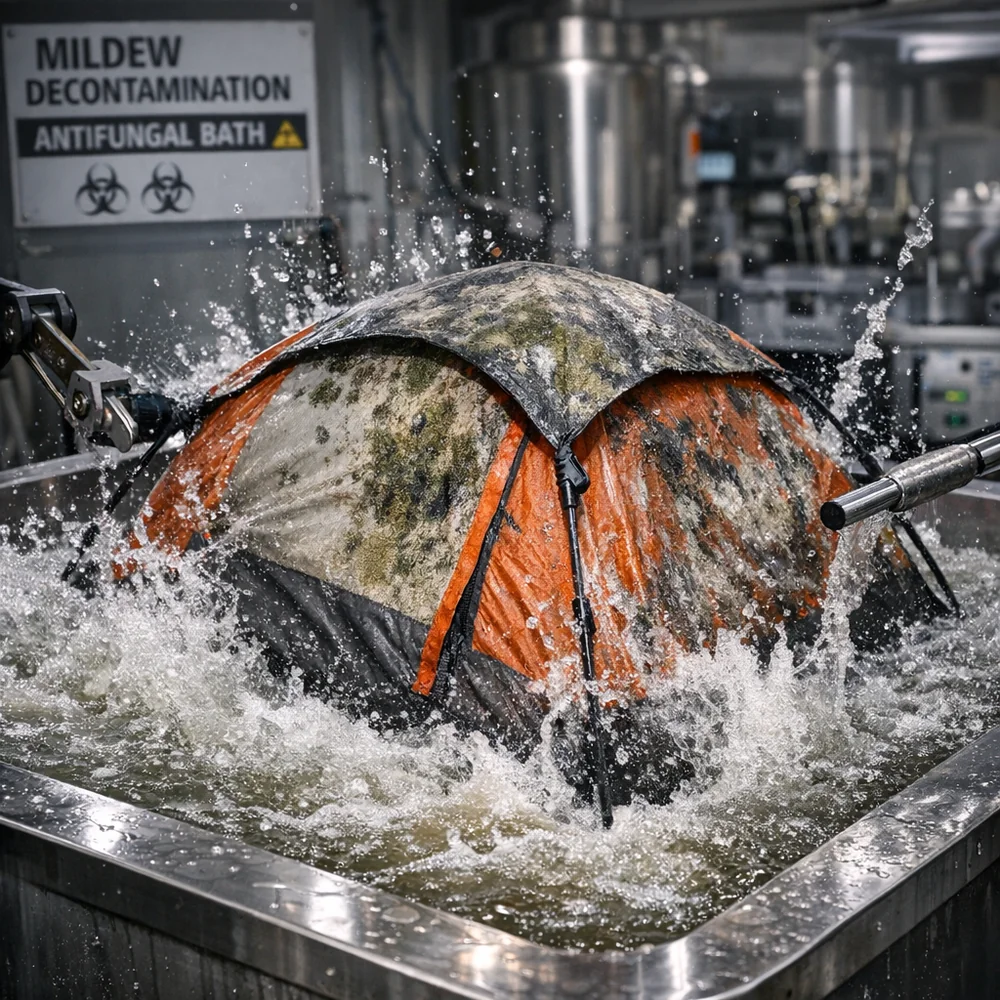
Tents, rain jackets, and outdoor furniture cushions are particularly prone to mold because they often get stored while still damp. The combination of organic soil, moisture, and enclosed spaces creates ideal growing conditions.
These items often have DWR (Durable Water Repellent) coatings that complicate cleaning. Aggressive chemicals can strip the coating, leaving the fabric vulnerable to water penetration. Use gentler approaches when possible.
For tents and awnings, remove surface mold with a soft brush outdoors before any chemical treatment. Mix a solution of mild dish soap with borax for cleaning. Avoid harsh bleaches that can degrade waterproof coatings and seam sealants.
After treatment, these items require thorough rinsing and complete drying. You may need to reapply waterproofing spray after cleaning. The effort is worthwhile because outdoor gear replacement costs add up quickly.
The Bottom Line Clean outdoor gear gently to preserve waterproof coatings. Brush off surface mold outdoors before chemical treatment.
Hard Water Considerations
If you have mineral-rich water, mold remediation may be less effective. The minerals in hard water can interfere with both vinegar and oxygen bleach, reducing their active power.
Consider using distilled water for the vinegar kill solution if your tap water is particularly hard. The investment in a gallon of distilled water may save you from repeating the entire process. For ongoing laundry issues with hard water, consult the hard water laundry guide for additional optimization strategies.
Water softeners or chelating agents added to the wash cycle can also help by binding up the interfering minerals and letting your cleaning agents work at full strength.
Conclusion
Mold remediation requires a systematic approach: kill the colony, remove the pigment, verify structural integrity, and prevent recurrence. Skipping any step leaves the problem partially solved at best.
Vinegar and borax kill the living organism. Oxygen bleach breaks down the staining. Sunlight provides final sterilization. Proper storage prevents regrowth.
When in doubt, protect your respiratory health first. Some contamination is too severe to safely address, and no garment is worth a fungal lung infection.
References
- Journal of Applied Microbiology. “The Antifungal Efficacy of Acetic Acid and Borates in the Decontamination of Cotton Textiles.” Wiley Online Library
- American Cleaning Institute. “The Science of Biological Remediation: Managing Mold and Mildew in Domestic Environments.” https://www.cleaninginstitute.org/
- Textile Research Journal. “Tensile Strength Degradation and Hyphal Penetration in Fungal-Infested Cellulose Fibers.” Sage Journals
- Environmental Protection Agency. “A Technical Guide to Mold Remediation and Spore Containment in Porous Materials.” https://www.epa.gov/mold/
- Journal of Surfactants and Detergents. “Synergistic Effects of Oxygen Bleach and Thermal Activation in the Destruction of Fungal Chromophores.” Springer Link