Removing Industrial Grease: The Science of Petroleum and Hydrocarbon Extraction
Table of Contents
Things You'll Learn From This Article:
- Regular laundry detergent doesn’t work on engine oil because it’s made for food fats, not petroleum grease.
- Adding more detergent won’t fix greasy work clothes if the chemistry doesn’t match the stain.
- Engine grease sticks especially hard to synthetic fabrics like polyester because they’re made from similar petroleum-based materials.
- Solvents or heavy-duty degreasers are needed first to loosen grease before washing with water.
- Waterless mechanic’s hand cleaner works well as a pre-treatment when applied to dry fabric and left to sit.
- Hot water makes a big difference because it thins petroleum grease so it can actually move out of the fabric.
- Cold or lukewarm washes often leave grease behind, even if the clothes look cleaner.
- For heavily soaked items, soaking in hot water with a strong degreaser removes most oil before machine washing.
- Rinsing degreased clothes before washing helps protect your washing machine from oil buildup.
- Greasy loads can contaminate your washer, so running an empty hot cycle afterward helps prevent future stains and odors.
- If clothes still smell like oil or fuel, they’re not safe for the dryer and should be air-dried first.
- Oily rags can catch fire on their own if piled up, so they need safe storage until cleaned or disposed of.
- Grease on flame-resistant workwear cancels out its safety benefits and needs careful, approved cleaning methods.
- Baking soda helps absorb leftover petroleum odors after the grease itself is gone.
- Natural fibers like cotton release grease more easily than synthetics, which may never fully recover after heavy contamination.
Engine grease and hydraulic fluid present challenges that regular laundry detergent simply cannot handle. These are not biological fats like cooking oil. They are engineered petroleum products designed to resist heat, friction, and environmental breakdown. That same durability makes them incredibly stubborn on fabric.
If you have ever washed mechanic’s coveralls and had them come out still stiff and greasy, you have experienced this firsthand. The standard detergent formulas that work perfectly on food stains are chemically useless against mineral-based lubricants. Understanding why this happens opens the door to treatments that actually work.
Why Standard Detergent Fails
The difference between kitchen grease and engine grease comes down to molecular structure. Cooking oils and butter are triglycerides, natural fats with oxygen-containing bonds that enzymes can attack. When your laundry detergent says it contains lipase enzymes, those enzymes are designed specifically to break apart these biological fats.
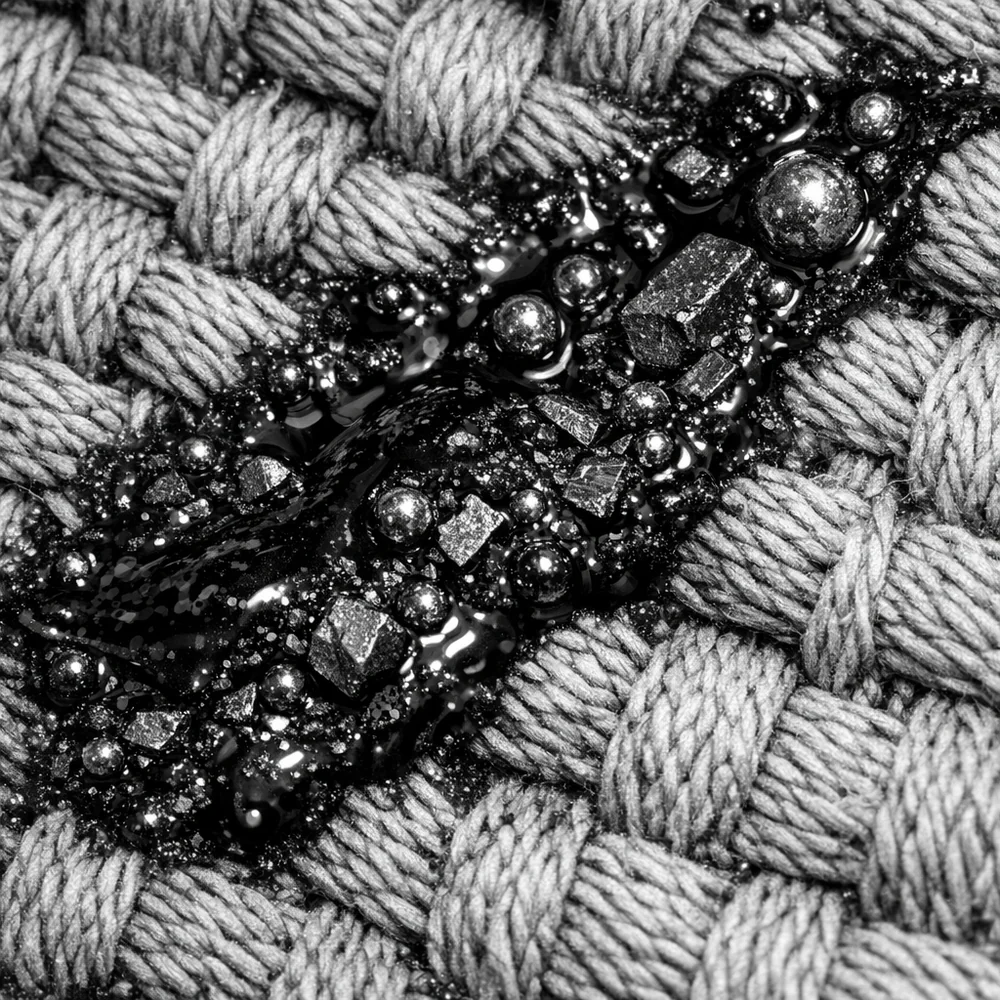
Engine oils are refined petroleum. They contain long chains of hydrocarbons with no oxygen atoms and no bonds that lipase can recognize. The enzyme floats in your wash water doing absolutely nothing while the grease sits undisturbed on your coveralls. This is a fundamental chemistry mismatch, not a failure of cleaning effort.
This is why adding more detergent does not help. You are not failing to add enough cleaning power. You are using the wrong chemistry entirely. The tools designed for kitchen accidents are fundamentally incapable of addressing industrial contamination.
Petroleum grease also has a natural affinity for synthetic fabrics because both are made from petroleum-derived polymers. Polyester fibers actually attract engine oil at the molecular level, pulling it deep into the fabric structure where water cannot reach. This creates the stubborn, permanent-feeling stain that survives wash after wash.
The Bottom Line Standard detergent enzymes cannot break down petroleum-based grease. The chemistry is completely different from food fats.
What Actually Works
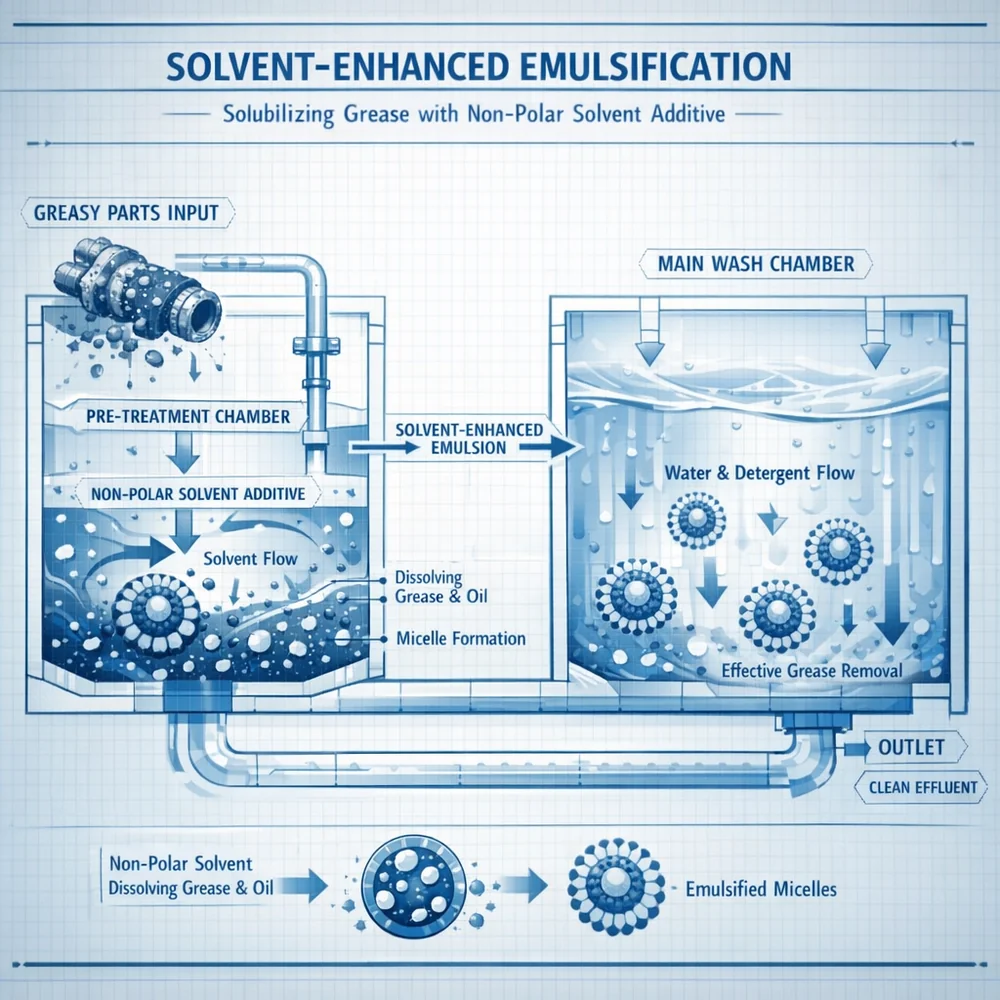
Industrial grease removal requires either dissolving the grease with a compatible solvent or emulsifying it with specialized surfactants that have high affinity for petroleum compounds.
Solvents work on the principle that like dissolves like. Since engine grease is a petroleum product, other petroleum-based solvents can dissolve it. D-limonene from citrus peels works well. So do the commercial waterless hand cleaners mechanics use at the shop. These products attack the grease directly before water enters the picture.
Surfactants work differently. They surround oil droplets with molecules that have one end attracted to oil and another attracted to water. When the concentration and type of surfactant are matched to the specific oil, these molecular structures can lift grease out of fabric and suspend it in wash water.
For petroleum grease, you need surfactants with strong oil-loving tails. Heavy-duty degreasers and concentrated dish soaps contain these. Regular laundry detergent does not have enough of them to handle engine oil.
The Bottom Line Use solvents that dissolve petroleum or surfactants specifically designed for heavy grease. Normal laundry detergent lacks the right chemistry.
The Mechanic’s Soap Method
The most effective pre-treatment for engine grease stains is often the same waterless hand cleaner you find in an auto shop. Products containing d-limonene or petroleum distillates are formulated to dissolve the exact lubricants used in engines.
Apply the cleaner directly to the dry fabric. This is critical because water dilutes the solvent and reduces its effectiveness. Work the gel into the stain and let it sit for 30 minutes. The solvent navigates through the yarn structure and liquefies the grease, making it accessible for subsequent washing.
Many of these products also contain mild abrasives like walnut shell that provide mechanical scrubbing action. This combination of chemical dissolution and physical agitation works exceptionally well on heavy canvas and denim where grease has saturated multiple layers.
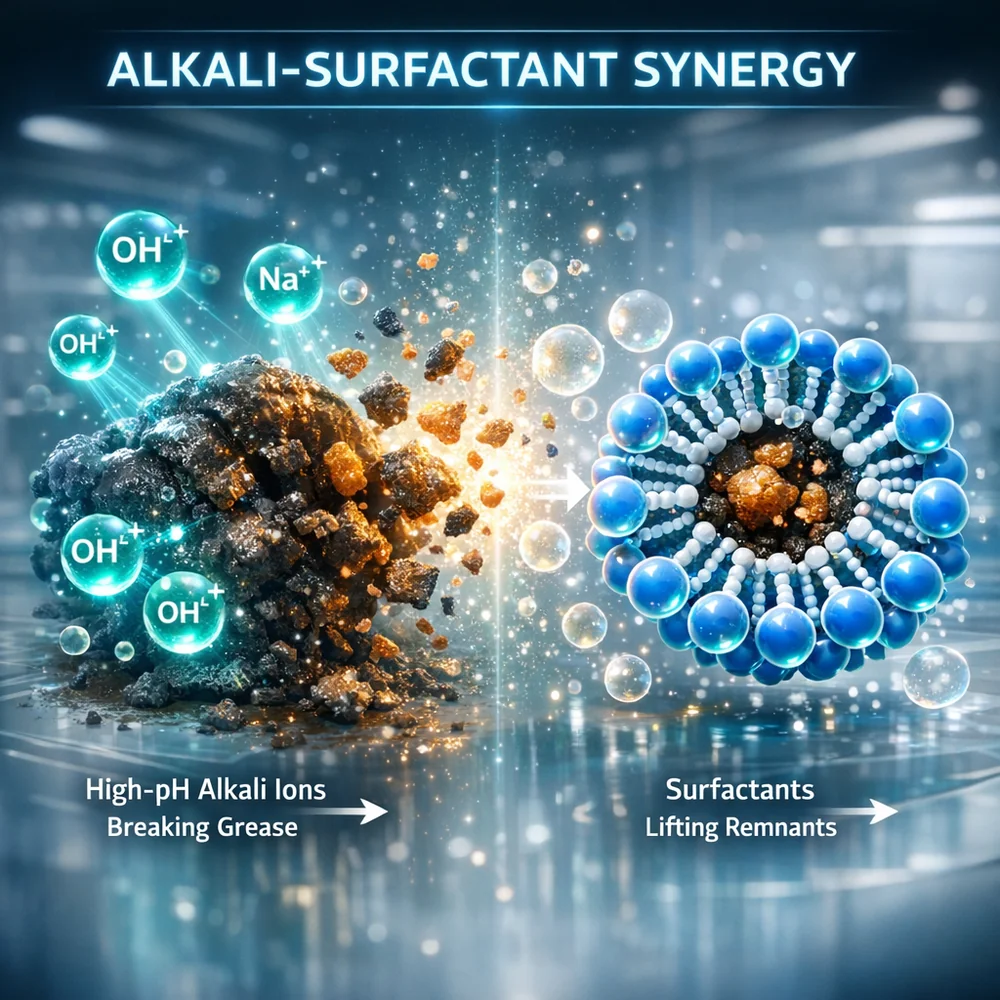
After the dwell time, wash the item in the hottest water the fabric can handle with a heavy-duty detergent. The surfactants in the wash can now reach and emulsify the pre-loosened grease.
The Bottom Line Apply waterless hand cleaner to dry fabric. Let it dwell for 30 minutes, then wash hot with heavy-duty detergent.
Hot Water Matters
Temperature plays a crucial role in industrial grease removal. Petroleum lubricants are engineered to maintain their thickness under friction and heat. At room temperature, motor oil is a sticky gel that physically grips fabric fibers.
Raising the wash temperature to 140°F or higher transforms that gel into a thin, mobile liquid. The molecules gain enough energy to move freely and release their grip on the fabric polymers. In this liquefied state, surfactants can surround and extract the grease much more effectively.
Washing industrial workwear in cold or lukewarm water is a fundamental mistake. You may lift some surface contamination, but the core of the stain remains solidified within the yarn. The result is that stiff, greasy feeling that persists through multiple wash cycles.
If your fabric cannot handle high temperatures, you must rely more heavily on solvent pre-treatment to liquefy the grease before it reaches the wash water.
The Bottom Line Wash at 140°F or higher when fabric allows. Heat liquefies grease so surfactants can extract it.
Degreaser Soak for Heavy Loads
When coveralls or shop rags are saturated with hydraulic fluid or motor oil, localized spot treatment is impractical. You need a bulk decontamination step before the clothes even approach your washing machine.
Fill a basin or utility sink with the hottest water the fabric can tolerate. Add a concentrated degreaser like Simple Green or Purple Power according to the product directions. Submerge the garments completely and let them soak for several hours.
You will see the water turn black or brown as grease releases from the fabric. This bulk extraction removes the majority of the contamination before the clothes enter your machine. Without this step, you risk overloading your washer with more oil than it can handle, potentially coating the drum and contaminating future loads.
After the soak, rinse the items in a separate basin to remove the alkaline degreaser residue before washing. This two-stage process protects both your clothes and your equipment.
The Bottom Line Soak heavily contaminated workwear in hot degreaser for hours before machine washing. This removes bulk contamination.
Protecting Your Washing Machine
Washing greasy workwear can leave petroleum residues on your machine’s internal surfaces. Over time, these deposits coat the drum, rubber seals, and pump components. The result is mysterious oil spots on your regular laundry and persistent odors that transfer to everything you wash.
After every load of industrial workwear, run an empty hot-water cycle. Add a cup of white vinegar or a dedicated washing machine cleaner. This purges the internal surfaces before residues have a chance to accumulate and harden.
Manually wipe down the rubber door gasket and detergent dispenser after greasy loads. These non-moving parts do not get the agitation of the wash cycle, so residues tend to collect there. A damp cloth with a mild degreaser or cleaning solution keeps them clean.
This maintenance is essential for anyone regularly washing shop clothes. Neglecting it leads to cross-contamination that can ruin dress shirts and delicate items washed in the same machine. The smell alone can transfer and become impossible to remove from ordinary clothing.
The Bottom Line Run a hot empty cycle with vinegar after washing greasy items. Wipe seals and dispensers manually.
The Fire Risk
Many petroleum products have flash points, temperatures at which they produce enough vapor to ignite. If clothes still smell like motor oil or gasoline after washing, they contain enough residue to be a fire hazard in a hot dryer.
Using your nose as a detector. If you can smell petroleum, do not put the item in the dryer. Line-dry it outdoors until the smell completely disappears. Only then is heat safe.
Oily rags also pose a spontaneous combustion risk. As petroleum residues oxidize, they generate heat. A pile of oil-soaked shop rags can reach ignition temperature without any external spark. Store used rags in a metal container covered with water until they can be properly laundered or disposed of.
The Bottom Line If you can smell oil after washing, line-dry outdoors. Store oily rags in water-covered metal containers.
Flame-Resistant Workwear
Technicians in high-voltage or high-heat environments wear flame-resistant rated clothing. Grease on these garments defeats their protective purpose because the petroleum itself is fuel that will burn.
Cleaning FR clothing requires careful product selection. Chlorine bleach damages the fire-retardant finish. Fabric softeners leave a coating that can act as fuel. Use only detergents compatible with FR fabrics as specified by the manufacturer.
Despite these restrictions, thorough grease removal remains critical. A mechanic wearing greased-up FR coveralls has less protection than one in clean non-rated clothing. The grease eliminates the very safety benefit the specialty garment provides.
Multiple rinse cycles help ensure no chemical residues remain that might interfere with the fabric’s fire performance. When safety equipment is involved, extra caution in cleaning is always justified.
The Bottom Line Grease on FR clothing defeats its purpose. Use FR-compatible detergents, no bleach or softeners, and rinse thoroughly.
Baking Soda for Odor
Even after successful grease extraction, a petroleum smell sometimes lingers. The volatile compounds trapped in the fabric continue to evaporate slowly, producing that distinctive garage odor.
Baking soda helps neutralize these residual vapors. Add half a cup to your wash cycle along with detergent. The sodium bicarbonate provides enormous surface area that attracts and traps hydrocarbon molecules. It also buffers the wash water to a neutral pH that helps release remaining residues.
For boots or leather items that cannot be machine washed, leave baking soda inside overnight. It absorbs vapors from the material and reduces odor intensity over time.
Following the wash with a white vinegar rinse provides additional deodorizing power. The mild acidity strips away any remaining alkaline residues and provides a final purge of the fiber structure.
The Bottom Line Baking soda in the wash helps neutralize petroleum odors. Follow with vinegar rinse for best results.
Synthetic vs. Natural Fibers
Different fabrics respond to grease contamination in different ways. Cotton and linen are naturally hydrophilic and do not bond as strongly with petroleum. While they still absorb grease, the contamination tends to sit more on the surface where surfactants can reach it.
Synthetic materials like polyester, nylon, and acrylic are oleophilic by nature. They actively attract and absorb oil-based substances. Once grease penetrates these fibers, it becomes part of the polymer structure at a molecular level. This is why synthetic work uniforms often feel permanently contaminated despite repeated washing.
Blended fabrics present the worst of both worlds. The cotton component absorbs and holds the grease while the synthetic component bonds with it permanently. Heavy-duty degreasing protocols become even more critical for these materials.
Understanding your fabric composition helps you calibrate expectations and treatment intensity. Some synthetic workwear may never fully recover from severe grease saturation, which is why professional mechanics often treat uniforms as consumable items with limited lifespans. The approach mirrors our oil and grease stain protocols for everyday clothing.
Conclusion
Industrial grease demands industrial-strength cleaning methods. Standard detergent enzymes cannot touch petroleum-based lubricants. Success requires solvent pre-treatment, high wash temperatures, and alkaline surfactants designed specifically for heavy oils.
The process protects not just your clothes but also your washing machine from cumulative contamination and your home from fire hazards. Taking the time to understand why certain approaches work while others fail transforms frustrating laundry failures into predictable restoration successes.
Respect the chemistry of petroleum and apply the right tools for the job. For related fuel contamination issues, see our guide to removing gasoline and diesel smell.
References
- Journal of Surfactants and Detergents. “The Solubilization of Heavy Hydrocarbons in Industrial and Domestic Laundering Systems.” Springer Link
- National Fire Protection Association. “Technical Standard for the Cleaning and Maintenance of Industrial Protective Clothing.” https://www.nfpa.org/
- Industrial & Engineering Chemistry Research. “Thermodynamic Viscosity Reduction and its Impact on the Extraction of Mineral Oils from Porous Textiles.” ACS Publications
- Occupational Health & Safety. “Management of Flammable Contaminants in FR Workwear Environments.” https://ohsonline.com/
- Journal of Chemical Technology. “The Performance of D-Limonene and Glycol Ethers as Selective Reagents for Petroleum Remediation.” Wiley Online Library