Removing Oil and Grease Stains: Rescuing Fabric from Lipids and Lubricants
Table of Contents
Things You'll Learn From This Article:
- Oil stains don’t come out with water alone because oil repels water, so a normal wash often does nothing.
- Dish soap works better than regular detergent on greasy spots because it’s made to grab oil and pull it into water.
- Always treat oil stains while the fabric is dry so the soap can reach the oil before water gets in the way.
- Let dish soap sit on the stain for a while instead of rushing it into the washer; time helps it break oil loose.
- Fresh oil spills are easier to fix by soaking them up first with cornstarch or baby powder before washing.
- Warm or hot water helps remove oil during washing, as long as the fabric can handle the heat.
- Never put an oil-stained item in the dryer until you’re sure the stain is gone, or it can become permanent.
- Check damp clothes in bright light because hidden oil stains can reappear once the fabric dries.
- Synthetic fabrics like polyester hold onto oil more strongly, so they need faster and stronger treatment.
- Heavy grease from machines or cars may need a solvent-based cleaner before regular washing.
- Set-in oil stains sometimes need a solvent first to soften the oil before soap can remove it.
- Enzyme detergents help break down body oils and greasy buildup, especially on collars and activewear.
Oil stains are frustrating because they are designed by nature to repel water. That splash of salad dressing or smear of bike chain grease creates a bond with fabric that normal washing simply cannot break.
The challenge is that oil and water are fundamentally incompatible. Your laundry detergent floats around in the wash water while the oil sits comfortably on your shirt, protected by its hydrophobic nature. Understanding this incompatibility is the first step toward actually removing these stubborn marks.
Why Oil Stains Are Different
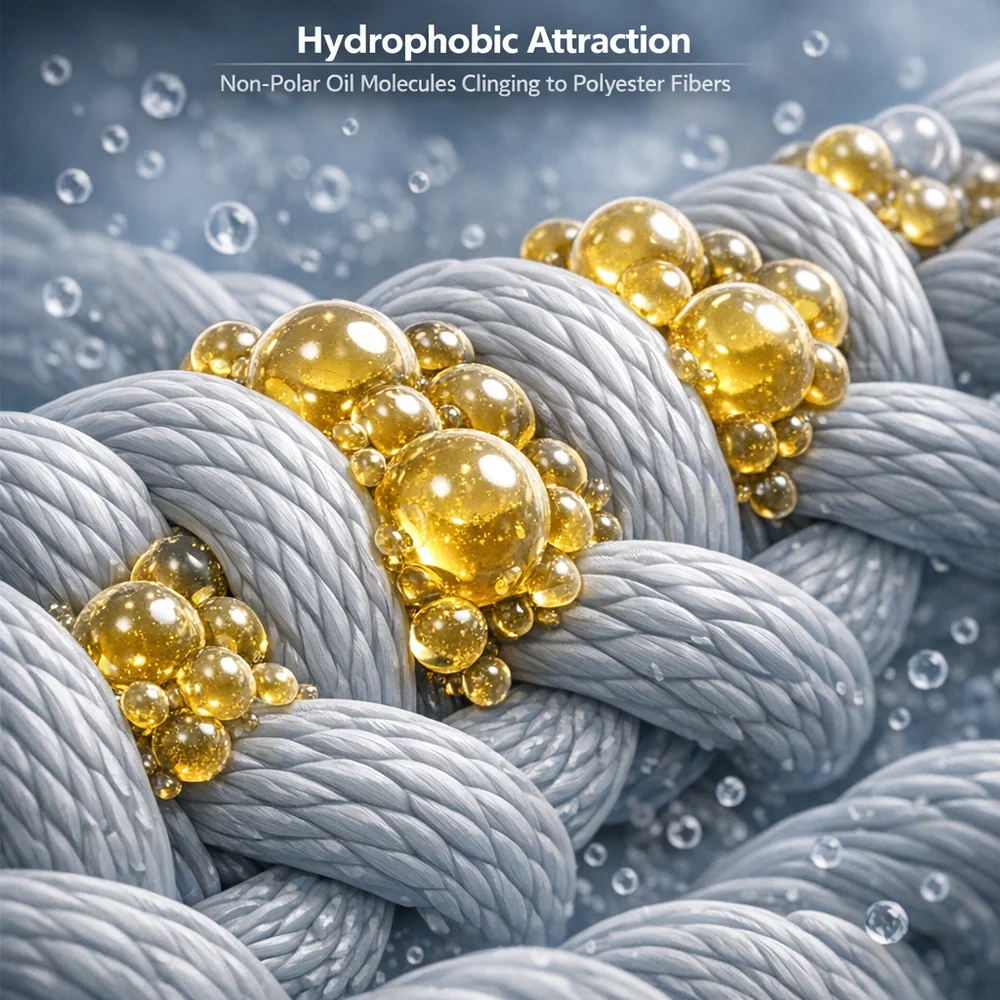
Oil molecules are hydrophobic, meaning they have no attraction to water. When you spill cooking oil on cotton or motor grease on your work pants, those molecules immediately seek out other non-polar surfaces rather than dispersing into wash water.
Fabric fibers provide perfect hiding spots. Oil slides between yarns and coats individual threads in a lubricant film that effectively shields the stain from water-based cleaning. Your detergent molecules cannot penetrate this barrier to do their job.
The problem gets worse with synthetic fabrics. Polyester and nylon are made from petroleum-derived polymers that have a natural chemical affinity for oil. These materials actually attract grease at the molecular level, pulling it deep into the fiber structure.
The Bottom Line Oil repels water and bonds to fabric. Standard washing cannot penetrate the hydrophobic barrier to reach the stain.
How Surfactants Break Oil’s Grip
The solution to the oil-water incompatibility problem is a special class of molecules called surfactants. These are the active ingredients in dish soap and laundry detergent.
Surfactants have a split personality. One end of the molecule loves water while the other end loves oil. When you apply dish soap to a grease spot, the oil-loving tails embed themselves into the oil droplet while the water-loving heads face outward.
As water is added, the water-loving heads pull toward the rinse water, lifting the oil-surrounded micelles away from the fabric. The oil is broken into microscopic droplets that stay suspended in the wash water and get flushed away.
This process is called emulsification, and it is why dish soap works better than regular laundry detergent on heavy oil stains. Dish soap contains higher concentrations of powerful surfactants specifically designed for grease.
The Bottom Line Surfactants bridge the gap between oil and water. Their dual nature lets them surround oil droplets and carry them away.
Dish Soap Pre-Treatment
For most cooking oil stains, concentrated dish soap is your most effective first-line treatment. Apply a small amount directly to the spot while the fabric is still dry.
Work the soap into the fibers with your fingertips or a soft brush. This ensures the surfactants penetrate to the core of the yarn where oil typically hides. Be thorough but gentle to avoid damaging the fabric structure.
Let the dish soap sit for at least 30 minutes before washing. This dwell time allows the surfactant molecules to fully penetrate and surround the oil particles. Rushing to the washing machine before the soap has done its work wastes much of its cleaning potential.
After the dwell time, wash in the warmest water safe for the fabric. Heat helps because it makes oil more fluid and easier for surfactants to emulsify.
The Bottom Line Apply dish soap directly to dry fabric. Work it in, wait 30 minutes, then wash hot.
Absorbing Fresh Spills
When oil lands on fabric and is still liquid on the surface, you have a window to pull it out before it penetrates deep into the fibers. Absorbent powders exploit simple physics to accomplish this.
Cornstarch, talcum powder, and baby powder all work well. These materials have enormous surface area and naturally wick up liquid through capillary action.
Cover a fresh oil spot with a thick layer of powder immediately after the spill. Let it sit for at least an hour. You will see the powder visibly darken as it absorbs oil from the fabric.
Brush away the saturated powder and assess the results. If the area still feels oily, apply fresh powder and repeat. Once the powder stops absorbing, you can proceed with dish soap treatment for any remaining residue.
The Bottom Line Cover fresh oil spills with absorbent powder immediately. Let it wick up the liquid for at least an hour before brushing away.
Temperature Matters
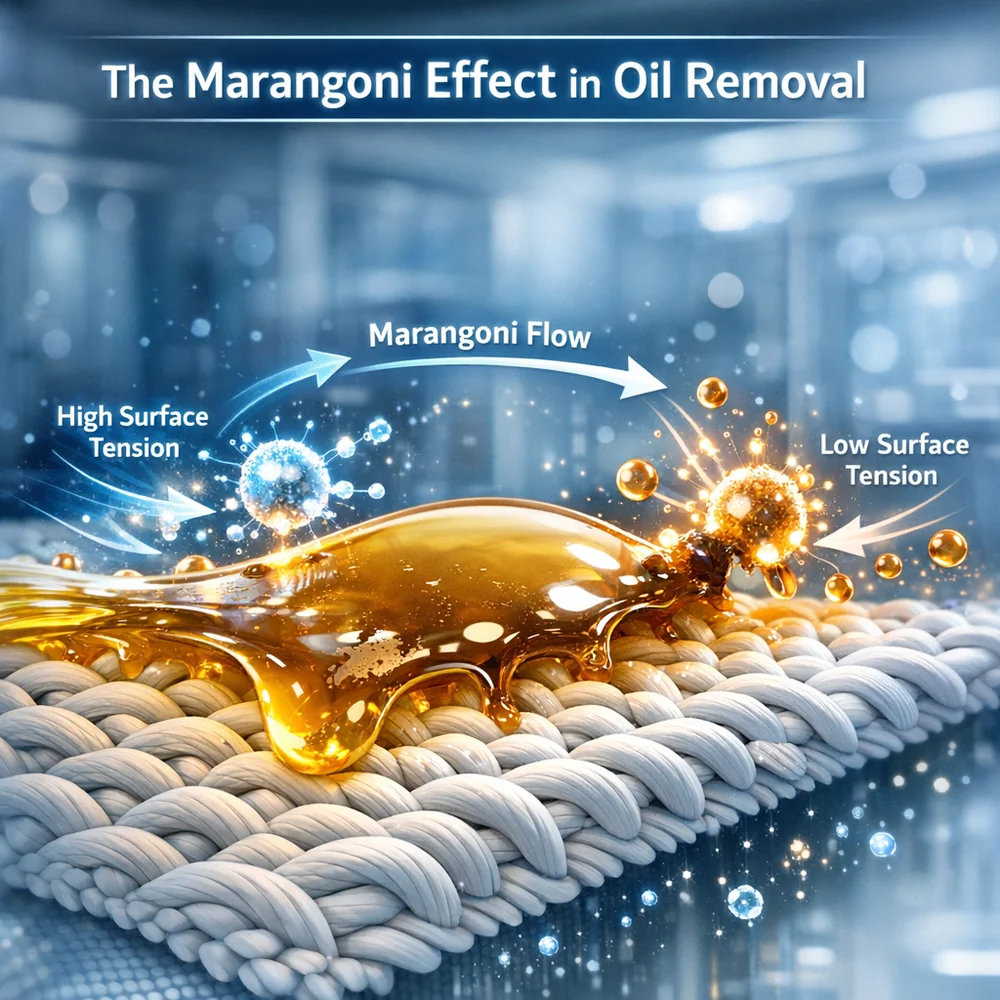
Heat is your ally in oil removal, but only during the washing phase. Warm water lowers the viscosity of oil, making it thinner and more mobile so surfactants can work more efficiently.
Cold water makes oil thicker and stickier. It clings more firmly to fabric and resists emulsification. This is why heavily greased items washed in cold water often come out feeling exactly as dirty as they went in.
Check the care label and use the warmest water the fabric can tolerate. For sturdy cotton and polyester blends, hot water significantly improves oil removal. Delicate fabrics may require cooler temperatures, which means you need to compensate with longer dwell times and more aggressive pre-treatment.
The Bottom Line Warm water makes oil easier to remove by lowering its viscosity. Use the hottest setting safe for the fabric.
The Danger of the Dryer
While heat helps during washing, it becomes your enemy in the dryer. High dryer temperatures can trigger a chemical reaction that permanently bonds oil to fabric fibers.
This process is called polymerization. The oil molecules link together to form a plastic-like varnish that becomes part of the textile itself. Once this happens, the “stain” is no longer removable by any means.
Always air-dry any garment that had an oil stain until you can confirm complete removal. Inspect the area in bright light while it is still damp. If any oily shadow remains, treat again before applying any heat.
The Bottom Line Never machine-dry oil-stained fabric until you confirm the stain is gone. Dryer heat can permanently polymerize oil.
Checking for Ghost Stains
Oil stains are deceptive. When fabric is wet, the refractive index of water can mask residual oil, making the garment look perfectly clean. As it dries, the hidden stain reappears.
Use a simple light test to find these “ghost” stains before they surprise you. Hold the damp fabric up to a strong light source. Areas with residual oil will appear slightly more translucent than the surrounding material.
Light passes through oil more easily than through water-soaked fabric fibers. If you see any uneven translucency when backlighting the damp garment, treat the area again before allowing it to dry.
The Bottom Line Check damp fabric against bright light to find hidden oil. Translucent spots indicate residue that needs retreatment.
Heavy Grease and Mechanics Oil
Automotive lubricants and industrial grease are thicker and more stubborn than cooking oils. They often contain carbon particles and metallic compounds that add a dye component to the oily base.
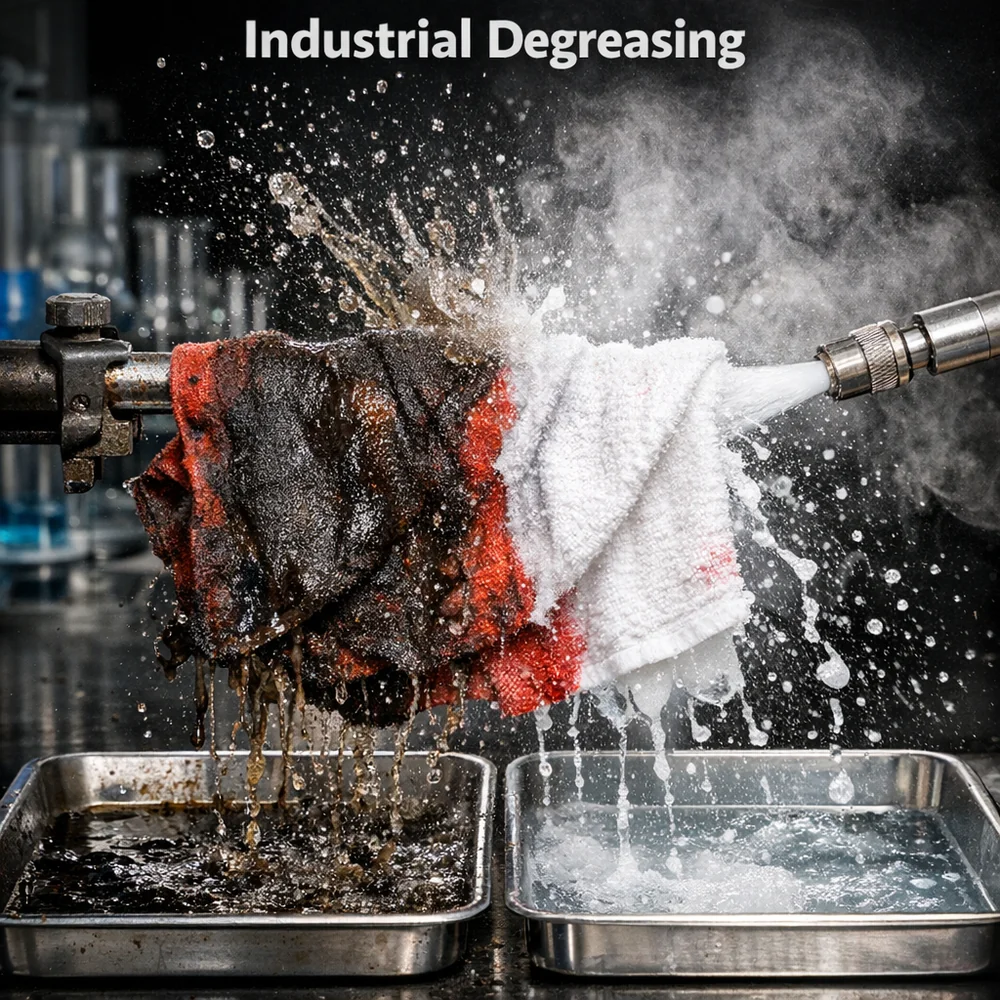
For heavy industrial grease, you may need solvent-based pre-treatment rather than dish soap alone. Waterless hand cleaners used by mechanics contain solvents that dissolve petroleum grease without requiring water.
Apply the hand cleaner to the dry fabric and let it work for 20 to 30 minutes. The solvent liquefies the grease, making it accessible to surfactants in the subsequent wash. Use the hottest water the fabric can handle for best results.
The Bottom Line Heavy mechanic grease may need solvent pre-treatment. Waterless hand cleaners dissolve petroleum-based oils effectively.
Set-In Oil Stain Rescue
Discovering an oil stain after the garment has been through the dryer is frustrating but not always hopeless. You need to re-liquefy the oil before treatment can work.
A light solvent like WD-40 or lighter fluid can soften dried oil enough to make it accessible again. Apply sparingly and let it sit for 15 minutes. The solvent dissolves into the hardened oil, converting it back to a liquid state.
Once re-liquefied, treat immediately with heavy dish soap and wash in hot water. This approach works best on durable fabrics like cotton and denim. Delicate materials may not tolerate the solvents required.
For truly set stains that resist solvent treatment, laundry stripping may help by extracting deeply embedded oil with extended soaking in high-surfactant solutions.
The Bottom Line You can sometimes rescue set-in oil stains by re-liquefying the dried oil with light solvent, then treating immediately.
Synthetic Fabric Challenges
Polyester, nylon, and other synthetics present the worst-case scenario for oil stains. These fabrics are oleophilic, meaning they have a natural chemical attraction to oil.
The same petroleum-based chemistry that makes synthetic fibers durable also makes them grab and hold lipids far more tenaciously than natural materials. Oil that would wash out of cotton in one cycle often leaves permanent shadows on polyester.
Address oil on synthetics immediately. Do not wait for laundry day. Use enzyme-based detergents that contain lipase enzymes specifically designed to digest oil molecules. Expect to need multiple treatment cycles for complete removal.
The Bottom Line Synthetics actively attract oil and hold it tightly. Treat immediately and expect to need multiple cycles.
Enzymatic Help
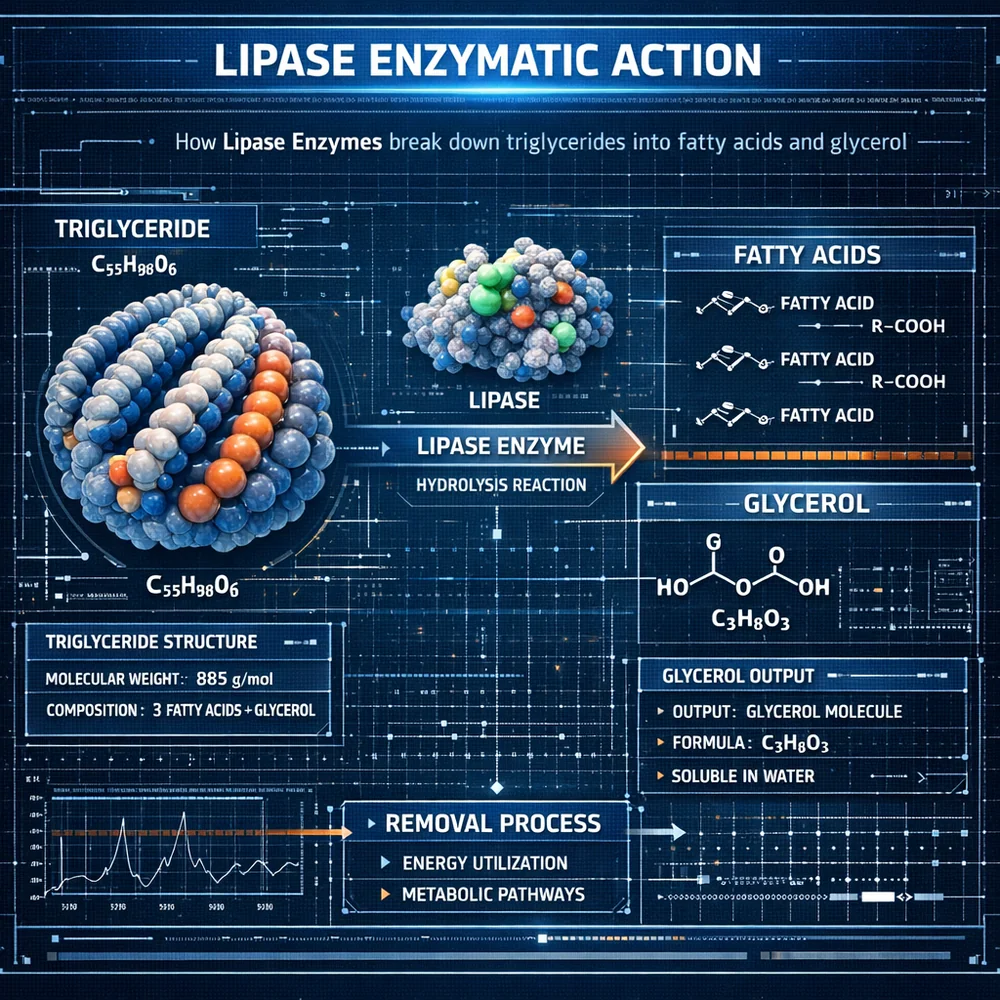
Modern detergents often include lipase enzymes that biologically digest oil rather than just lifting it. This adds another dimension to stain removal.
Lipase targets the ester bonds in triglycerides, breaking cooking fats down into fatty acids and glycerol. These smaller molecules are much easier for surfactants to carry away.
Enzymatic cleaning is particularly helpful for body oils (sebum) that accumulate on collars and activewear. These stains mix oil with proteins and skin cells, creating a complex matrix that benefits from both lipase and protease action.
The Bottom Line Lipase enzymes biologically digest oil molecules. They are especially effective on body oils and mixed stains.
Conclusion
Oil stains demand respect for the fundamental incompatibility between grease and water. Success requires bridging that gap with surfactants, using temperature wisely, and verifying complete removal before any heat exposure.
Dish soap pre-treatment handles most cooking oil. Heavy grease may need solvents. Synthetics require aggressive and immediate action. Absorbent powders can capture fresh spills before they set.
The dryer is your enemy until the stain is confirmed gone. Treat oil-stained fabric as potentially contaminated until proven otherwise.
References
- Journal of Surfactants and Detergents. “Surfactant-oil interactions in fabric cleaning.” Springer Link
- American Cleaning Institute. “Oily Stain Removal.” https://www.cleaninginstitute.org/
- Textile Research Journal. “Sorption and retention of oils in synthetic fibers.” Sage Journals
- Consumer Reports. “How to get oil stains out of clothes.” https://www.consumerreports.org/
- Laundry Science. “The physics of micelle formation.” ScienceDirect