Removing Bug Spray Stains: The Chemistry of DEET and Plasticizers
Table of Contents
Things You'll Learn From This Article:
- Bug spray marks aren’t always stains — sometimes the fabric itself is melted, and that can’t be fixed.
- A sticky or gummy feel usually means permanent damage, not something you can wash out.
- Greasy-feeling spots on cotton or linen are more likely removable oil residue.
- Rubbing alcohol can pull bug spray residue out of fabric if the fibers aren’t already damaged.
- Blotting through the fabric onto a towel works better than wiping the surface.
- Stretch fabrics like spandex and elastane are the easiest to ruin, and they don’t recover once damaged.
- Acting fast matters — the longer bug spray sits, the more damage it can cause.
- Heat makes the chemical reaction worse, so cold water is safer when you’re not sure.
- Waterproof jackets can lose their water-repellent coating from bug spray and regular detergents.
- Some color changes after bug spray are permanent because the dye itself has moved.
- Always test cleaners on a hidden spot before treating a visible area.
- Camping gear needs gentle hand cleaning; washing machines can destroy coatings and seams.
- Let tents and gear dry completely before storing to avoid coating breakdown later.
- Applying bug spray to skin before getting dressed helps prevent fabric damage.
- Using picaridin on skin and permethrin on clothes avoids most of these problems entirely.
Bug spray stains are not like other stains. The problem is not just an oily residue that needs washing. DEET, the active ingredient in most effective repellents, is a powerful plasticizer that can literally melt synthetic fabrics.
When you spray bug repellent and it drips onto your polyester shirt, the DEET may be dissolving the plastic fibers. That sticky spot you feel might not be a stain at all. It might be permanently damaged fabric.
The first step is figuring out what you are actually dealing with: removable oil residue or irreversible polymer damage.

Understanding DEET’s Chemical Nature
DEET (N,N-Diethyl-meta-toluamide) is not just an insect repellent. It is a powerful organic solvent with properties similar to paint strippers and industrial plasticizers.
The molecular structure of DEET allows it to dissolve into plastic polymers. It penetrates between polymer chains and disrupts the intermolecular forces holding them together. This causes the plastic to soften, swell, and in severe cases, liquefy.
This is why DEET destroys hard plastics like watch crystals in seconds. It is also why spandex and elastane fibers essentially dissolve when saturated with concentrated DEET. The chemical is doing exactly what it was designed to do at a molecular level.
Natural fibers like cotton and linen are not affected in the same way because their cellulose structure is fundamentally different from synthetic polymers. On natural fibers, bug spray leaves only an oily residue that can be removed with appropriate solvents.
The Bottom Line DEET is a plasticizer that dissolves synthetic polymers. Natural fibers are safe; synthetics may be permanently damaged.
Diagnosing the Damage
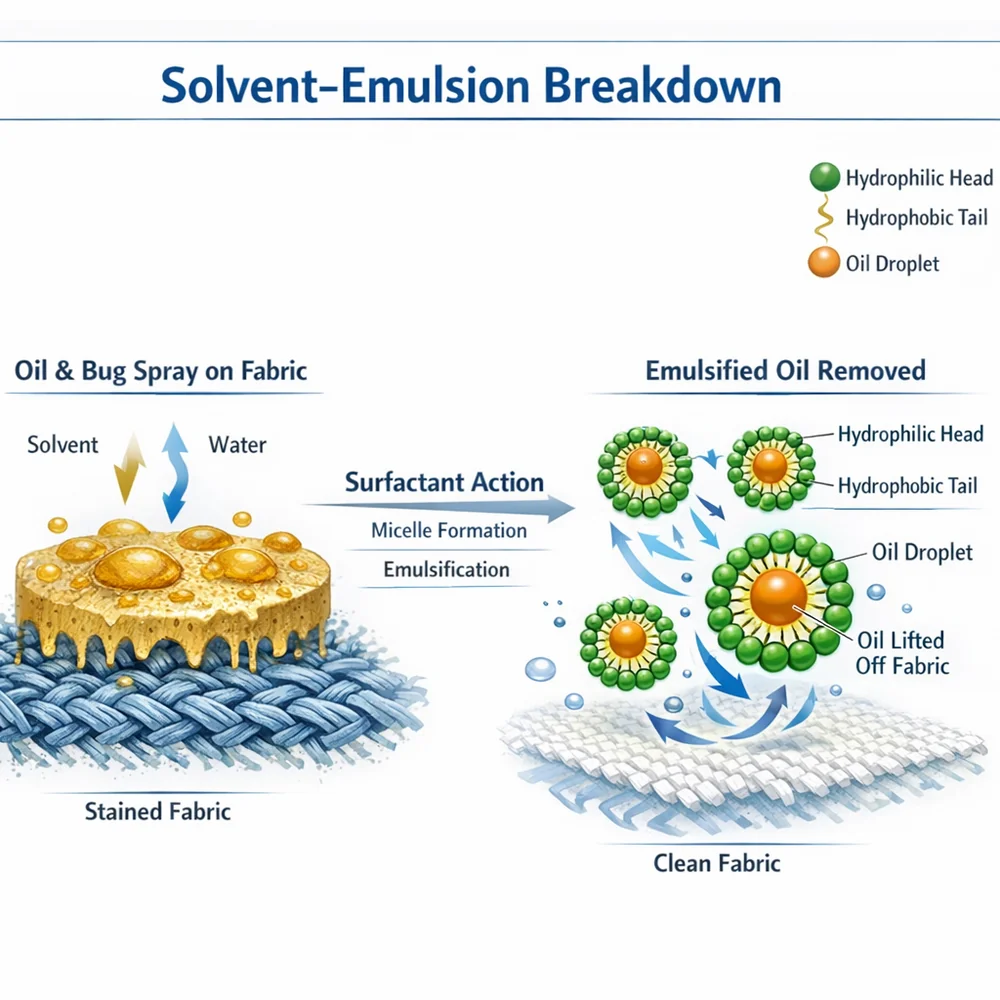
Before attempting any treatment, you need to determine whether you are facing a removable stain or permanent fiber damage.
Touch the suspect area. If the fabric feels gummy or sticks to itself when folded, the fibers have been chemically melted. This damage is permanent. No amount of cleaning will restore the original texture.
If the spot just feels greasy and looks dark but the fabric texture seems normal, you are dealing with carrier oil residue that can likely be removed.
Look for visual distortion in the weave. Melted synthetics often show a puckered or warped surface where the fibers have fused together. This warping is irreversible.
On blended fabrics, the damage pattern can be uneven. The synthetic components may be damaged while natural fibers in the same weave remain intact. This creates a patchy, inconsistent texture.
The Bottom Line Gummy or sticky texture indicates permanent melting. Greasy residue without texture change can likely be cleaned.
Isopropyl Alcohol Removes the Residue
For the oily residue that can be cleaned, isopropyl alcohol (rubbing alcohol) is your best tool. DEET and its carrier oils dissolve readily in alcohol.
Place an absorbent white towel behind the stain. Apply 70% or 90% isopropyl alcohol from the front and push the dissolved residue through the fabric into the towel. Continue blotting until the fabric no longer feels greasy.
This technique removes the bulk of the DEET quickly, which matters because longer contact time means more fiber damage. The pre-treatment also protects your washing machine’s rubber seals from the plasticizing effects of any remaining repellent.
The “blot through” method works better than surface wiping because it moves the dissolved DEET away from the fabric rather than spreading it across a larger area. Always work from the back of the stain toward an absorbent surface.
After the alcohol has evaporated, wash normally with detergent to handle any remaining traces. The surfactants in laundry detergent will emulsify any residual oils.
The Bottom Line Isopropyl alcohol dissolves DEET residue. Blot through to a towel behind the fabric to remove quickly.
Spandex and Stretch Fabrics Are Most Vulnerable
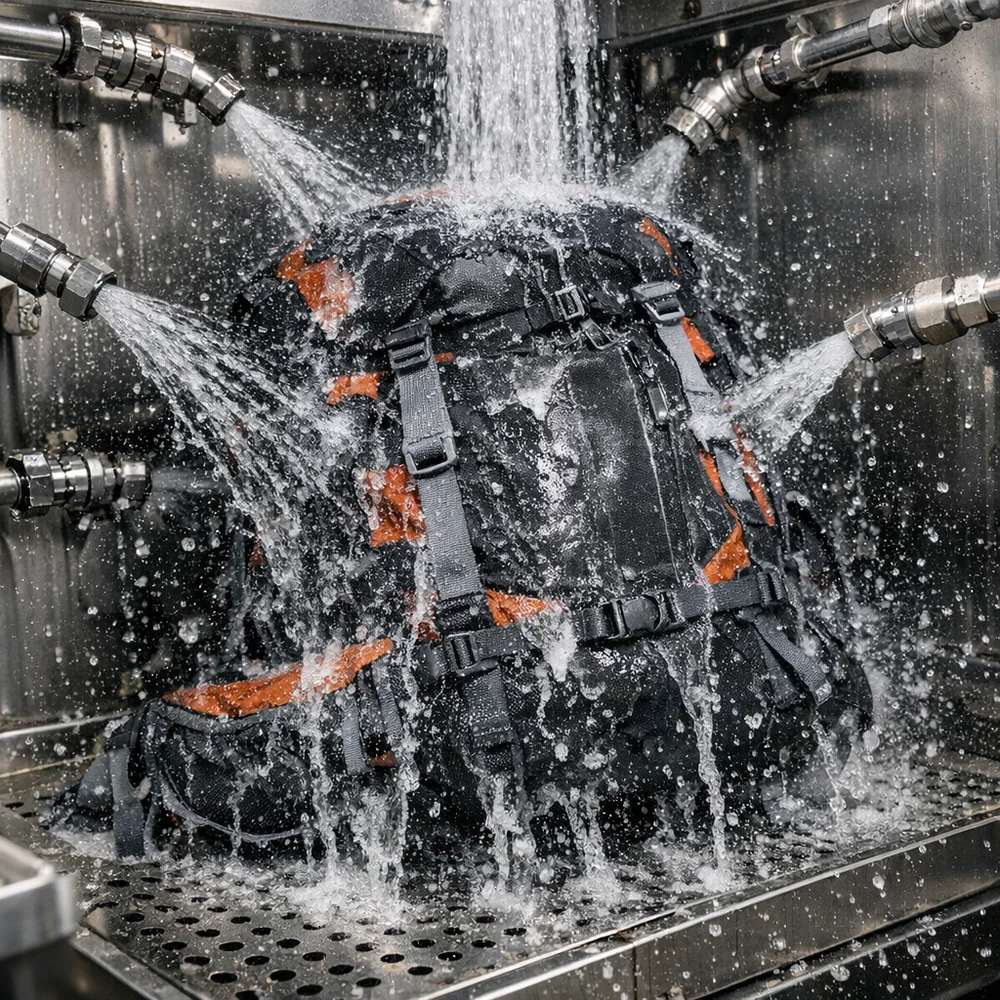
Athletic leggings, swimwear, and anything with stretch contain elastane or spandex. These fibers are extremely sensitive to DEET.
The repellent attacks the cross-links that give elastic fibers their recovery. Spandex maintains its stretch through a specific molecular structure of hard and soft segments. DEET disrupts the bonds between these segments, causing the fiber to lose its elasticity permanently.
Once damaged, the fabric develops permanent baggy spots or wavy distortions. Your yoga pants will never snap back. The damage often appears as a flat, lifeless patch that does not match the surrounding fabric’s stretch and recovery.
Speed is your only defense. The moment you notice bug spray on stretch fabric, flush the area with cold water to dilute the chemical concentration. Avoid heat, which accelerates the reaction.
If the fabric already feels melted, stop. Scrubbing chemically weakened fibers will cause them to disintegrate, turning a stain into a hole.
The Bottom Line Spandex is destroyed by DEET contact. Flush immediately with cold water. If already gummy, do not scrub.
Protecting Waterproof Gear
Rain jackets and technical outdoor gear use DWR (Durable Water Repellent) coatings that make water bead up and roll off. Bug spray solvents can strip these coatings, leaving your “waterproof” jacket absorbent.
DWR coatings are fluoropolymer or silicone-based treatments applied to the fabric surface. They work by creating a low-energy surface that water cannot wet. Bug spray solvents, including DEET and the alcohols in the carrier, dissolve or redistribute these coatings.
Standard laundry detergents designed to remove oil will also remove DWR. Use specialized technical gear cleansers instead. These are non-detergent soaps that clean without stripping the coating.
If you must use alcohol to remove heavy DEET buildup, accept that the DWR in that area will be compromised. Plan to reapply a spray-on DWR restorative afterward while the fabric is still damp.
Heat activation in a low dryer cycle sets the new coating by allowing the polymer to flow and rebond with the fabric. Details on this process are in our Gore-Tex care guide.
The Bottom Line Bug spray strips DWR coatings. Use technical cleansers and plan to re-proof affected areas.
Enzyme Treatment for Carrier Oils
Bug spray lotions and creams contain lipid-based carrier oils that feel comfortable on skin but leave greasy marks on fabric. After removing the DEET with alcohol, these oils may persist.
Lipase enzymes specifically target these fats, breaking them into water-soluble components. An hour-long enzyme soak handles the “dark shadow” that sometimes reappears after the fabric dries.
Lipase works by cutting the ester bonds in triglycerides, releasing fatty acids and glycerol that dissolve easily in wash water. This biological approach is gentler than repeated solvent treatment.
This biological approach is especially safe for natural fibers like cotton and linen that might already be stressed from the chemical exposure.
The Bottom Line Lipase enzymes digest the oily carrier fluids in bug spray lotions after alcohol removes the DEET.
Color Shifting Is Permanent
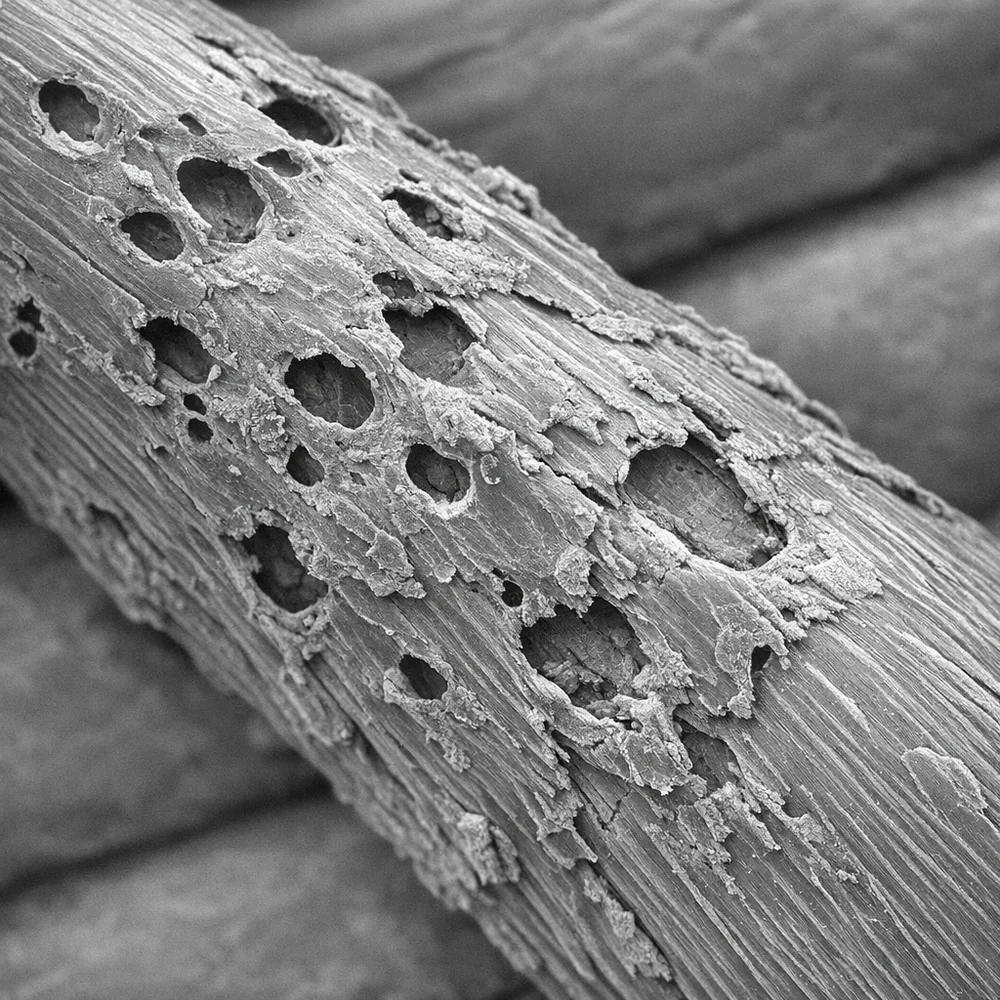
Some fabric dyes, especially disperse dyes on polyester, are chemically similar to DEET. When saturated with repellent, these dyes can dissolve and migrate, causing permanent color bleeding or hue shifts.
Disperse dyes work by dissolving into the plastic structure of polyester fibers. DEET, as a plasticizer, can re-dissolve these dyes and allow them to migrate. A blue shirt might develop purple or pink spots where the dye has redistributed.
If your blue shirt develops a discolored spot where bug spray hit, that is a chemical reaction, not a stain. It cannot be cleaned away because the dye molecules have actually moved and rebonded in new locations.
A dilute vinegar rinse can sometimes stabilize remaining dye and prevent further migration. However, once the color has shifted, there is no way to move the dye back to its original position.
The only prevention is a “spray then dress” protocol. Apply bug spray to your skin and let it dry completely before putting on clothes. Alternatively, treat your clothing with Permethrin, a fabric-safe repellent that provides protection without DEET touching the textile.
The Bottom Line DEET can dissolve fabric dyes, causing permanent color changes. Let skin applications dry before dressing.
Cleaning Tents and Sleeping Bags
Camping gear frequently gets bug spray overspray. Tents should never go in a washing machine because the agitation destroys mesh screens and seam tape.
Set up the tent on a taut surface. Use a sponge and technical gear cleanser to gently wipe affected areas. Clean sticky zippers with a toothbrush, then apply silicone lubricant to restore smooth operation.
Zippers are particularly vulnerable because DEET residue attracts dirt and grit that causes mechanical failure. The sticky residue acts like an adhesive for abrasive particles that wear down the zipper teeth.
Rinse with a gentle hose, avoiding high pressure that could force water through the waterproof coating. High-pressure water can penetrate the DWR coating and potentially damage the polyurethane laminate underneath.
Let the tent dry completely in shade before packing. Storing a damp tent leads to hydrolysis, where the waterproof coating peels off in flakes. This coating degradation is accelerated by chemical residue left on the fabric.
The Bottom Line Tents require hand cleaning. Never machine wash. Dry completely before storage.
Always Spot Test First
Given DEET’s aggressive nature, spot testing is mandatory before using any solvent on a visible area.
Apply your cleaning solution to a hidden seam with a cotton swab. Wait 30 seconds. If any color transfers to the swab, or if the fabric becomes tacky, stop immediately. Your solvent is dissolving the material.
Pay attention to both color transfer and texture change. Even if no color moves, the fabric might soften or become sticky, indicating polymer damage.
Fall back to a simple cold water flush instead if testing reveals problems. Sometimes dilution is the safest approach even if it does not achieve complete removal.
The Bottom Line Spot test on hidden fabric before treating visible areas. Abort if color transfers or fabric becomes tacky.
Switch to Safer Repellents
The best solution to bug spray stains is avoiding DEET on fabric entirely.
Picaridin provides protection comparable to DEET but does not plasticize synthetic materials. It is safe for use on gear, sunglasses, and technical clothing. Studies show equivalent effectiveness against mosquitoes without the material compatibility issues.
Permethrin offers a secondary defense by treating the fabric itself rather than your skin. It kills insects on contact, binds to fibers through a safe drying process, and lasts multiple washes. Treated clothing remains effective for weeks.
Combining Picaridin for skin with Permethrin for clothing creates a fabric-safe protection system that eliminates the risk of chemical staining while providing superior insect defense.
The Bottom Line Picaridin is a non-plasticizing DEET alternative. Permethrin treats clothing safely. Use both together.
Conclusion
Bug spray removal requires understanding that DEET is a solvent, not just an oily contaminant. Diagnose whether you are facing removable residue or permanent polymer damage before treating.
For removable stains, isopropyl alcohol extracts the DEET, lipase enzymes handle carrier oils, and technical cleansers protect DWR coatings. For prevention, switch to Picaridin and Permethrin to protect your gear.
References
- Journal of Polymer Science. “DEET Plasticizing Effects on Synthetic Textile Fibers.” Wiley
- American Cleaning Institute. “Oily Repellent and Resin Removal Protocols.” https://www.cleaninginstitute.org/
- Textile Research Journal. “Organic Solvents and DWR Coating Hydrostatic Resistance.” Sage Journals
- Consumer Reports. “DEET vs Picaridin: Gear Safety Analysis.” https://www.consumerreports.org/
- Journal of Applied Polymer Science. “Solvent-Induced Crazing in Thermoplastic Fibers.” ScienceDirect