Cleaning Tablets vs Liquids: Blueland, Dissolvable Formulas, and Efficacy Review
Table of Contents
Things You'll Learn From This Article:
- Tablet cleaners work by fizzing in water, which helps break them apart and spread the cleaning ingredients evenly.
- Once dissolved, spray cleaners from tablets usually clean about the same as regular liquid sprays.
- Dishwasher tablets made this way can struggle with tough stains like coffee or tea compared to big-name liquid or pod brands.
- Warm or hot water helps tablets dissolve fully; cold water can leave chunks or cloudy residue behind.
- Hard water can interfere with tablet formulas and cause film or leftover powder in the bottle.
- Some tablet products only work properly with their own bottles or pumps, especially foaming hand soap.
- Tablets don’t need preservatives because they’re dry, but once mixed with water, you should use them within a few weeks.
- Keeping tablets dry matters—humidity can ruin them before you ever use them.
- Tablet cleaners usually cost more than the cheapest store brands but land in the same range as mid‑to‑premium cleaners.
- Reusing bottles and shipping less water cuts down a lot on plastic waste and shipping emissions.
- Heavy-duty jobs like serious degreasing still favor traditional liquid cleaners.
- Products that rely on enzymes for stain removal often work better in liquid form than tablet form.
- Tablets aren’t ideal if you need something ready to use immediately, since mixing takes time.
- Not all “eco” refills are tablets—some brands use liquid concentrates or recyclable cartons instead.
- Airtight containers and room‑temperature storage help tablets last longer and dissolve better.
- Subscriptions save money if your usage is predictable, but one‑time buying is safer while you’re still figuring out how much you use.
The sustainable cleaning market has gone all-in on dissolvable tablets and concentrated refills as alternatives to the endless cycle of buying and throwing away plastic bottles. Brands like Blueland, Branch Basics, and Cleancult sell systems where you keep permanent bottles and just add water to concentrated tablets or pouches. The environmental appeal is obvious: shipping water around the country is wasteful, and those plastic bottles pile up fast.
But here is the question that actually matters: do these products clean as well as the liquids they replace? This is important because eco-friendly products that underperform create two problems at once. Consumers waste money on stuff that does not work, and the failures make people skeptical of sustainable products in general.
This guide digs into the science behind tablet cleaning products, looks at real-world performance data, and helps you figure out whether tablet systems make sense for your household.
How the Fizzing Tablets Actually Work
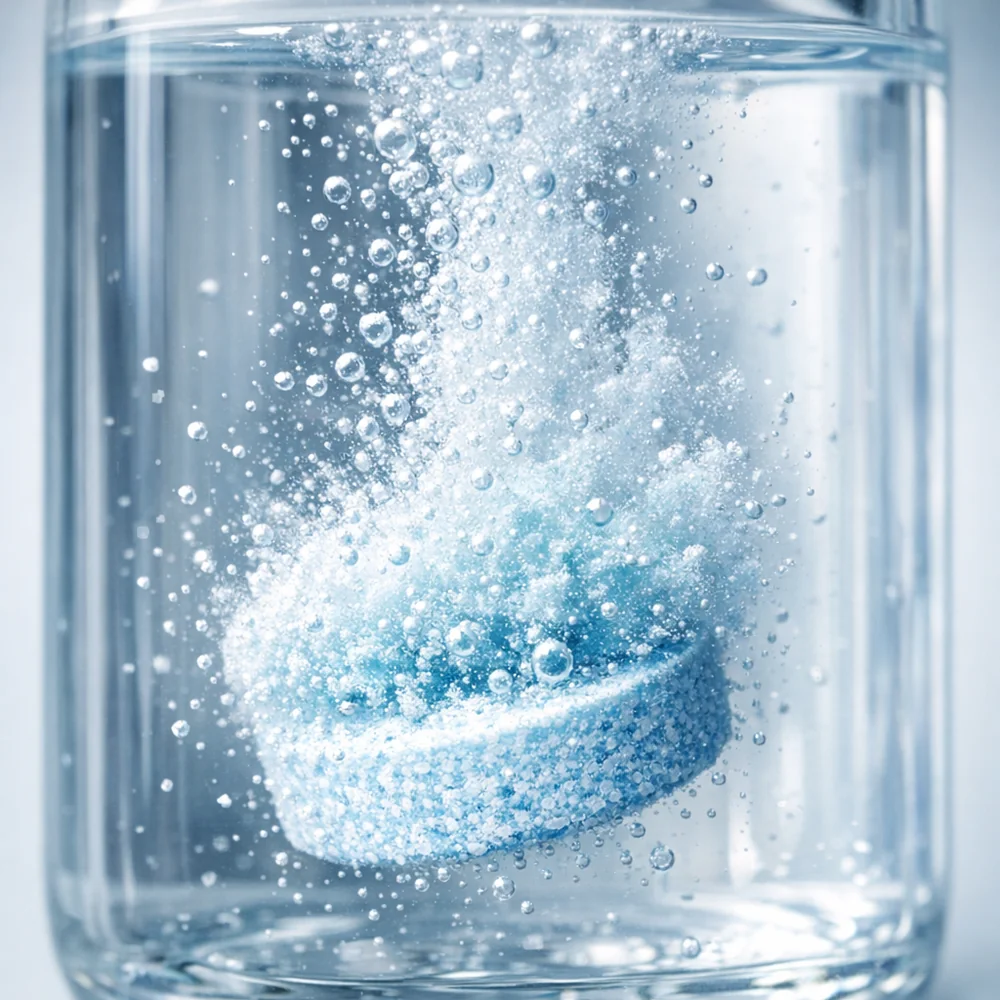
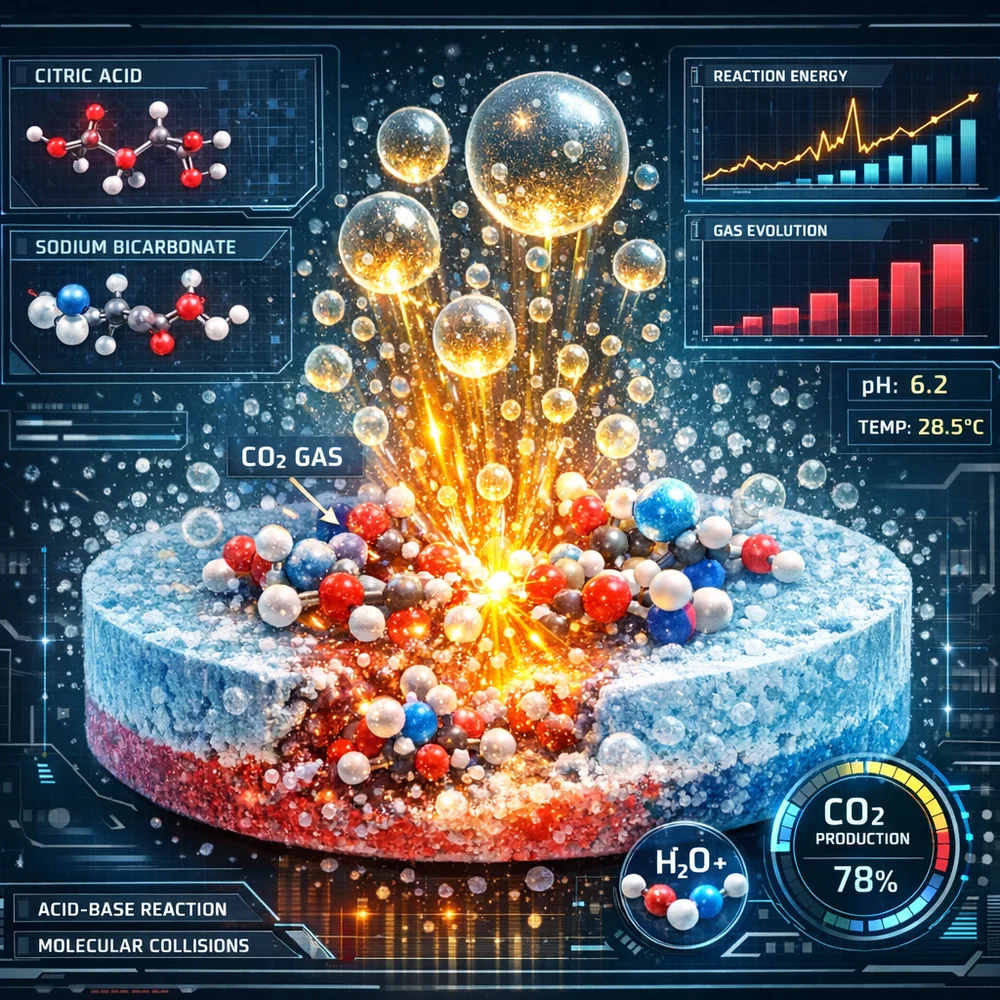
Cleaning tablets achieve their dissolution through acid-base reactions that generate carbon dioxide gas. That fizzing is not just for show. It serves the functional purpose of breaking the tablet apart and spreading the cleaning agents throughout the water.
The typical tablet combines a solid acid, like citric acid or sodium bisulfate, with a solid base, like sodium bicarbonate or sodium carbonate. When water hits both components, they react to produce carbon dioxide bubbles, some heat, and neutralized salt products. The gas bubbles physically break apart the tablet structure, releasing the active cleaning ingredients into solution.
US Patent 7053039B2 for effervescent cleaning tablets describes the formulation principles in detail. The acid-base ratio controls how fast the tablet dissolves, while binding agents keep the tablet intact until water contact. Surfactants, builders, and other cleaning ingredients are all compressed into the tablet matrix.
The big advantage of this format is stability. Dry tablets can include ingredients that would react or break down in liquid storage. The absence of water prevents microbial growth, eliminating the need for preservatives entirely. When you dissolve the tablet, the resulting solution is chemically identical, or nearly so, to a conventionally formulated liquid product.
Key Insight: The fizzing comes from an acid plus base reaction producing CO2. This physical disruption disperses the cleaning agents. Non-fizzing tablets dissolve much more slowly.
How Blueland Products Actually Perform
Blueland has become the most visible tablet cleaning brand in the US market, earning Shark Tank investment, coverage from NBC and Good Housekeeping, and EPA Safer Choice certification. Real-world testing gives us insight into how their products stack up.
NBC News testing found that Blueland’s Multi-Surface Cleaner worked well on marble countertops and stovetops. The Glass and Mirror Cleaner removed coffee rings without noticeable streaks. The Foaming Hand Soap produced consistent frothy consistency after the tablets dissolved, which takes about 15 minutes. User satisfaction was high for these spray-format products.
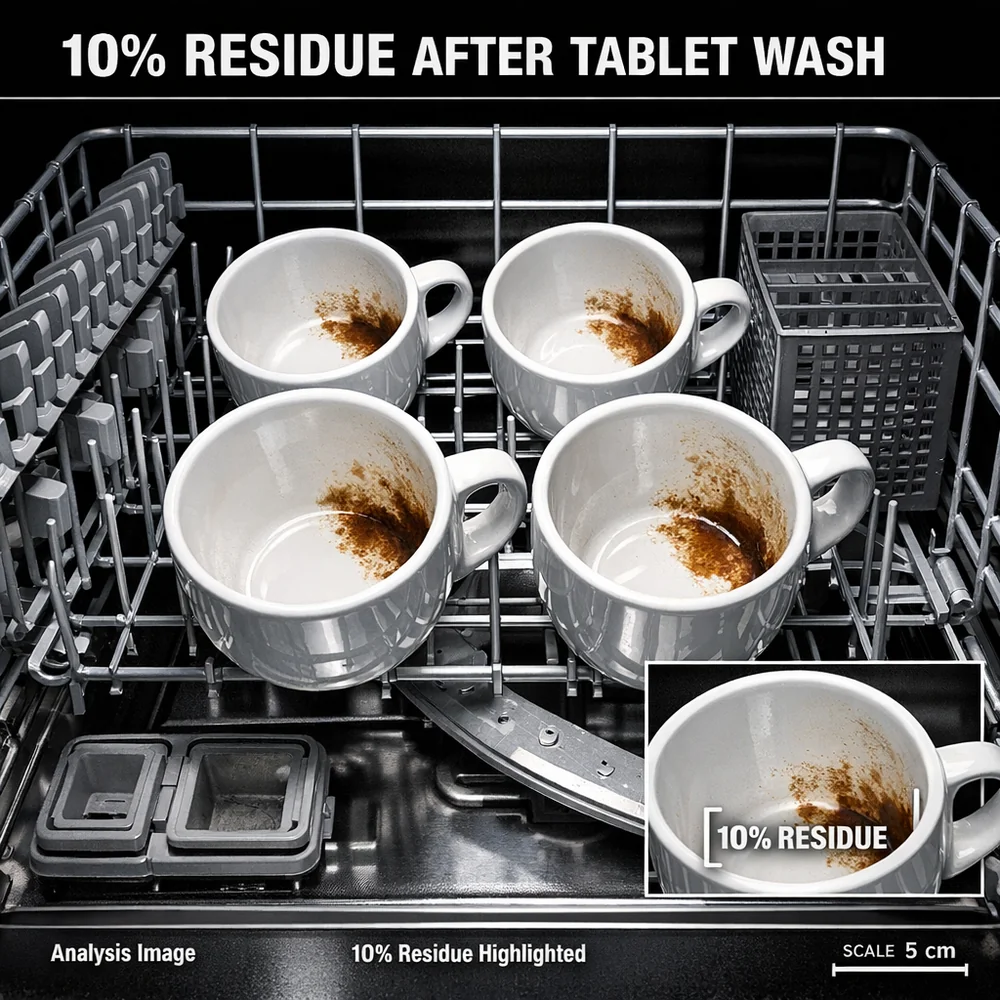
However, the dishwasher tablets got notably lower marks. NBC testing found only about 90 percent of dishes came out fully clean, with coffee and tea stains particularly resistant. Blueland’s own efficacy research acknowledged that their tablets performed below major brands like Cascade and Finish on tea stain removal. A company representative suggested water chemistry variations might affect results.
The pattern suggests that tablet formats work well for spray cleaners where the dissolved product functions identically to conventional liquids, but face challenges in automatic dishwashers where higher-performance chemistry may be needed. The hand dish soap, which comes as a powder format, performed well in the same testing.
Key Insight: Blueland sprays including multi-surface, glass, and bathroom cleaners perform comparably to conventional products. EPA Safer Choice certified. Dishwasher tablets underperform on tea and coffee stains.
When Tablets Fail to Dissolve
Some people report tablets failing to dissolve completely, leaving chalky residue or undissolved chunks. Understanding why this happens helps you troubleshoot problems and set realistic expectations.
Water temperature makes a huge difference in dissolution rate. Most tablet products specify warm or hot water for optimal results. Cold water slows down the acid-base reaction and reduces solubility of tablet components. Using cold tap water, especially in winter when supply temperatures drop, may leave you with incomplete dissolution.
Water hardness also affects results. Hard water contains dissolved calcium and magnesium that can react with some tablet ingredients, forming precipitates that show up as cloudiness or residue. Products optimized for soft water may underperform in hard water regions.
Bottle design matters for consistent results too. Blueland’s foaming hand soap tablets specifically require their proprietary dispenser because the foam pump mechanism needs a particular viscosity and formulation. One reviewer who tested the tablets in other dispensers described the result as “some sad combination of water and chalk.”
Key Insight: Use warm or hot water for tablets. Cold water causes incomplete dissolution and chalky residue. Shake the bottle after mixing.
Why Tablets Skip the Preservatives
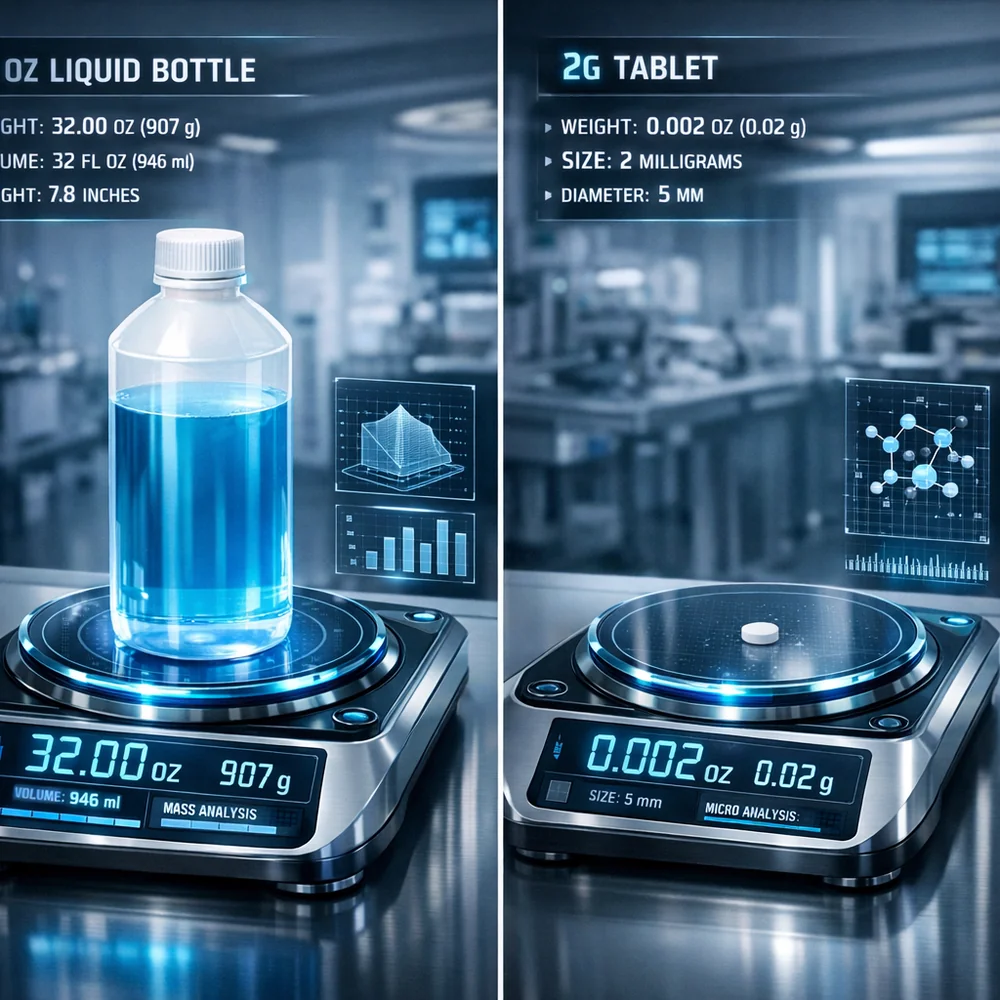
Liquid cleaners require preservatives to prevent microbial contamination over months or years of storage. Those preservatives, including methylisothiazolinone, benzisothiazolinone, and phenoxyethanol, show up on ingredient lists and add complexity to the formulation. Tablet formats can avoid preservatives entirely because dry environments simply do not support microbial growth.
The tradeoff involves shelf life after dissolution. Once you dissolve a tablet in water, the resulting solution has limited antimicrobial protection. These products are designed for relatively quick use rather than sitting around for months like a sealed conventional bottle.
The American Cleaning Institute notes that dissolved tablet solutions should generally be used within a few weeks, not stored indefinitely like sealed conventional products. This time pressure is minimal for products you use regularly but may matter for specialty cleaners you only pull out occasionally.
Tablet packaging also needs to protect against moisture exposure before you intentionally dissolve the tablet. The compostable paper wrapping some brands use may absorb humidity over time, potentially affecting tablet integrity. Keeping tablets in a sealed container protects them from premature moisture exposure.
Key Insight: Dry tablets need no preservatives because bacteria cannot grow without water. But dissolved solutions have limited shelf life, weeks rather than years.
What Tablets Actually Cost
The economics of tablet cleaning products involve weighing higher unit costs against lower shipping weights and packaging materials. Looking at cost per ounce reveals whether tablet formats represent genuine value or just premium pricing.
Blueland’s Clean Essentials Kit starts at about $40 for reusable bottles plus your first set of tablets. Refill tablets run roughly $2 to $4 per tablet, and each one makes 16 to 24 ounces of product. That works out to about $0.08 to $0.17 per ounce of finished cleaner.
Conventional cleaning products vary widely in price. Budget brands might cost $0.03 to $0.06 per ounce, while premium brands reach $0.10 to $0.15 per ounce. Tablet products fall in the mid-to-premium range but with ongoing savings as you keep reusing the same bottles.
The subscription model that Blueland and competitors use provides additional savings, typically 15 to 20 percent off one-time prices, while ensuring consistent supply. The economic argument improves over time as you amortize that initial bottle investment across many refill cycles.
Key Insight: Tablet refills cost $0.08 to $0.17 per finished ounce. Conventional cleaners run $0.03 to $0.10 per ounce. Tablets cost more but reduce plastic waste.
The Actual Environmental Benefits
The environmental case for tablets rests primarily on packaging reduction and shipping efficiency. Quantifying these benefits requires looking at the full product lifecycle.
Eliminating plastic bottles is the most obvious benefit. Conventional cleaning products generate continuous plastic waste as you buy and discard bottles over and over. Refillable systems reduce this to a single permanent bottle plus minimal tablet packaging, often compostable paper. This concept connects to our broader guide on spotting greenwashing on laundry labels.
Shipping efficiency provides substantial carbon reduction. Conventional products are more than 90 percent water by weight, meaning shipping costs and carbon emissions primarily move water that you could add yourself from your tap. Tablets eliminate this wasted shipping capacity, potentially cutting shipping emissions by 80 percent or more per equivalent amount of cleaning solution.
Cradle to Cradle certification, which Blueland products have achieved, involves third-party verification of material health, recyclability, renewable energy use, water stewardship, and social fairness across the whole product lifecycle. This certification gives you confidence that the environmental claims have been independently validated.
Key Insight: Blueland claims 90 percent less plastic than conventional products. Cradle to Cradle certified packaging. Shipping tablets instead of water cuts carbon emissions by 80 percent or more.
When Liquids Still Win
Despite tablet advantages, some applications genuinely favor traditional liquid formats. Understanding these situations prevents frustration from using tablets where they underperform.
Heavy-duty degreasing applications may require concentrated surfactant levels that tablet dissolution simply cannot achieve. Commercial kitchen degreasers and automotive cleaners often use formulations that would be impractical to compress into tablet form while still maintaining the ability to dissolve properly.
Enzyme-containing products typically cannot use effervescent tablet formats because the acid-base reaction environment destroys enzymes. Laundry and dish products that rely on protease, lipase, or amylase enzymes for stain removal may work less effectively in tablet form compared to enzyme-stabilized liquid formulations.
Time-critical applications may not tolerate the dissolution delay. Products that need to work immediately, like emergency spill cleanup, require ready-to-use formats rather than mix-before-use tablets.
Key Insight: Tablets may underperform for heavy grease, enzyme-dependent stains, automatic dishwashers, and applications requiring very specific pH or concentration levels.
Other Brands Worth Knowing
Blueland is the most prominent tablet brand but definitely not your only option. Competitors take different approaches to the concentrated cleaning concept.
Branch Basics uses liquid concentrate rather than tablets, with a single product called “The Concentrate” that you dilute to various strengths for different applications. One 33.8-ounce concentrate bottle makes approximately 16 spray bottles of finished product. This approach provides formulation flexibility but still involves shipping some liquid.
Cleancult offers refillable bottles with refills packaged in recyclable milk-carton-style containers. Their coconut oil-based formulation emphasizes skin safety alongside cleaning performance. Subscription options mirror Blueland’s recurring delivery model.
Smaller brands including Grove Collaborative’s concentrate line, Meliora cleaning products, and various direct-to-consumer startups offer additional tablet and concentrate options. Competition has driven innovation while keeping prices relatively contained.
Key Insight: Branch Basics uses liquid concentrate so you still ship water. Cleancult uses coconut-oil base in recyclable cartons. Each offers refill subscriptions.
Storing Tablets Properly
Keeping your tablets effective requires appropriate storage that protects them from moisture and maintains temperatures within their design specifications.
Moisture is the main enemy. Humidity exposure starts the dissolution reaction prematurely, degrading tablet structure and potentially causing tablets to stick together or crumble. Store tablets in airtight containers in low-humidity environments.
Temperature extremes can affect some tablet formulations too. Very hot storage above 100 degrees Fahrenheit can cause certain binding agents to soften, leading to tablet deformation. Very cold storage is generally less of a problem but may slow dissolution rate if you use the tablets while they are still cold.
The compostable paper packaging that eco-focused brands use provides limited moisture barrier compared to plastic or foil. Transferring tablets to glass jars or sealed containers when you get them provides extra protection, especially in humid climates.
Key Insight: Store tablets in airtight containers away from humidity. Keep them out of hot locations like garages and cars that may affect stability.
Subscriptions Versus One-Time Buying
Most tablet cleaning brands push subscription models that automatically deliver refills at set intervals. Understanding the pros and cons of subscriptions versus one-time purchases helps you choose the right approach for your situation.
Subscriptions offer automatic replenishment so you never run out, discounted pricing that typically runs 10 to 20 percent below one-time prices, and simplified household management. For products you use at predictable rates, subscriptions efficiently match supply to demand.
Subscription drawbacks include accumulating unused product if you use less than expected, continued charges for stuff you are not actually using, and less flexibility to try alternatives. Most brands let you pause or cancel subscriptions, but the default behavior favors the company continuing to bill you.
For people uncertain about their usage patterns, starting with one-time purchases lets you establish your actual usage rate before committing to subscriptions. Once consumption becomes predictable, subscription savings become worthwhile.
Cleaning tablets represent a genuine advancement in sustainable product design, eliminating unnecessary water shipping and plastic packaging while maintaining cleaning performance comparable to conventional products in most applications. Blueland and competitors have proven the concept works commercially and resonates with people who care about environmental impact.
The honest assessment acknowledges that tablets underperform liquids in specific situations, particularly automatic dishwashing and enzyme-dependent cleaning. Expect these limitations rather than assuming tablet format is universally equivalent to liquid format.
For spray cleaners, hand soap, and general-purpose cleaning, tablets offer an environmentally superior option without meaningful performance sacrifice. The initial investment in reusable bottles pays off over time as refill savings accumulate. For more on maximizing these benefits, see our guide to refillable cleaning systems. Just pay attention to your subscription so you do not end up with a cabinet full of unused tablets.
Key Insight: Subscriptions save 10 to 20 percent and prevent stockouts, but may oversupply or undersupply if your usage varies. Adjust frequency or pause deliveries as needed.
The Bottom Line
References
- US Patent 7053039B2. “Effervescent Cleaning Tablets Composition and Method.”
- NBC News. “Blueland Eco-Friendly Cleaning Review.”
- RSC Pharmaceutics. “Recent advances in the technology of effervescent tablets.”
- Wikipedia. “Effervescent tablet.”
- EPA Safer Choice. “Safer Choice Standard and Certification.”