Hotel Towel Whitening Methods: Industrial Laundry Chemistry
Table of Contents
Things You'll Learn From This Article:
- Hotel towels stay white because the wash process is tightly controlled, not because of a single strong chemical.
- Water quality matters a lot—minerals like iron and calcium can make towels look gray or yellow if they aren’t dealt with.
- Bleach works best when it’s added at the right moment, after dirt is removed, not at the start of the wash.
- Using too much bleach or adding it incorrectly is what ruins towels, not the bleach itself.
- High heat helps kill germs and boost whitening, but it has to be balanced so the cotton doesn’t become rough or brittle.
- Towels go through an acidic rinse at the end to cancel out harsh alkaline chemicals and keep them soft on skin.
- If towels feel stiff or scratchy, leftover alkalinity is often the cause.
- Industrial machines clean better because they move towels in a consistent, powerful way that pushes water and detergent deep into the fabric.
- Oils from skin, lotions, and cosmetics need very high pH levels to fully break down and rinse away.
- Optical brighteners don’t remove stains—they trick your eyes by making whites look bluer and brighter under light.
- Too much brightener can backfire and change the towel’s color, so it has to be carefully managed.
- Not every towel comes out perfect the first time, so stained ones are separated and treated again with targeted methods.
- Different stains need different fixes—makeup, food, and rust aren’t handled the same way.
- Folding and storage affect how white towels look, because wrinkles and shadows make fabric seem dull.
- Letting towels rest after drying helps them regain softness and fluff instead of staying flat.
The maintenance of pristine white towels in the hospitality industry is not merely a matter of aesthetic preference but a critical benchmark of industrial hygiene and guest perception. Achieved through a sophisticated orchestration of chemical and mechanical variables, the whitening process relies on the precise manipulation of pH levels and oxidative potentials. Unlike domestic laundering which often prioritizes garment longevity, hotel laundry systems are engineered for maximum soil extraction and pathogen elimination. This requires a deep understanding of surfactant dynamics and the thermodynamics of large-scale aqueous systems.
At the core of professional whitening is the concept of a balanced wash formula where water quality and chemical dosage are monitored in real-time. Residual minerals in water such as calcium and iron can lead to graying or yellowing if not properly sequestered. Furthermore, the buildup of alkaline salts must be neutralized to prevent skin irritation and fiber degradation. By employing high-capacity tunnel washers and automated dosing systems, commercial laundries achieve a level of consistency that is impossible to replicate in a residential setting.

Industrial Bleach Injection Cycles
Effective whitening in a commercial facility begins with the precise timing and concentration of bleach injection cycles. Industrial machines utilize sodium hypochlorite or hydrogen peroxide which are injected into the wash liquor at specific temperature thresholds to optimize oxidative efficiency. The concentration of available chlorine is typically maintained between 50 and 150 parts per million depending on the organic load and soil level. This level of precision prevents the catastrophic fiber damage that often occurs when homeowners use excessive amounts of undiluted bleach.
The sequence of injection is critical to protecting the cotton fibers from premature oxidation. Bleach is never introduced at the beginning of the cycle because it would be consumed by surface-level soil rather than acting on stubborn pigments. Instead, it is added after the initial soil removal and alkaline boost phase. Furthermore, modern dosing pumps ensure that the bleach is diluted uniformly before contacting the fabric which eliminates the risk of localized chemical burns. These automated systems also monitor the oxidation-reduction potential (ORP) to ensure that the kill rate for microbes is achieved without compromising the structural integrity of the pile.
The Bottom Line Industrial bleach injection relies on real-time ORP monitoring and precise timing. By introducing oxidants only after the bulk of organic soil is removed, commercial systems maximize whitening power while minimizing the oxidative stress that leads to fiber thinning.
Peroxide-Based Souring Steps
Following the aggressive alkaline wash and bleaching phases, the linen must undergo a professional souring step to restore the fabric to a neutral or slightly acidic state. Professional souring agents typically utilize diluted acids such as phosphoric or citric acid which are injected during the final rinse cycle. This process is essential for neutralizing residual alkalinity which can cause towels to feel stiff and abrasive to the touch. Residual pH levels above 8.0 can lead to chemical “yellowing” when the towels are subjected to the high heat of industrial dryers.
The chemistry of the souring step also plays a vital role in preventing “iron graying.” Many commercial water supplies contain trace amounts of iron which can become trapped in the cotton fibers during the alkaline phase. Acidic souring agents act as chelators largely ensuring that these metallic ions are rinsed away before they can oxidize. This ensures that the towels retain a “cool” white tone rather than developing the dingy yellowish hue common in older hotel linens. Maintaining a final fabric pH of 5.5 to 6.5 is the gold standard for both comfort and visual brilliance.
Mechanical Action in Tunnel Washers
The physical extraction of soil from hotel towels is facilitated by the unique mechanical action of continuous batch washers which are also known as tunnel washers. Unlike top-loading domestic machines that rely on an agitator, tunnel washers move the linen through a series of compartments via a large internal screw or oscillating drum. This creates a “waterfall” effect where the weight of the saturated towels creates a gentle but powerful pummeling action. This mechanical energy is essential for driving the cleaning solution deep into the looped pile of the terry cloth.
Consistency is the primary advantage of tunnel washer mechanics. Every batch of towels is subjected to the exact same amount of lift and drop ensuring that no section of the load is under-processed. The counter-current flow of water within the machine means that as the linen moves forward, it is constantly being met by cleaner water moving in the opposite direction. This gradient maximizes the efficiency of soil suspension and prevents the redeposition of particulates. The precise control over RPM and drum rotation patterns allows technicians to tune the mechanical energy to the specific density and weight of the hotel’s towel inventory.
The Bottom Line Tunnel washers utilize a counter-current water flow combined with consistent gravitational lift. This design ensures that towels are mechanically scrubbed by their own weight while moving through a continuous gradient of increasingly clean water.
High Temperature Sanitation
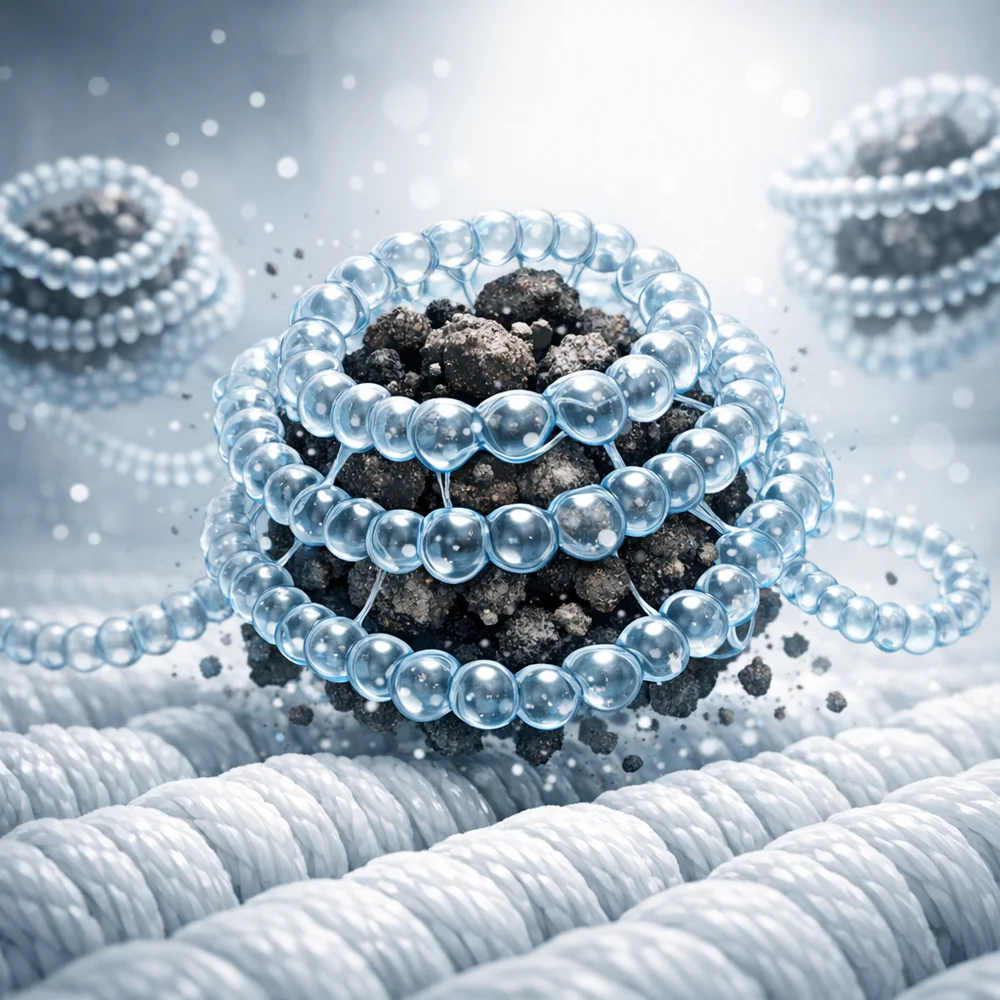
Sanitization in the hospitality sector is achieved through the synergy of thermal and chemical energy. Industrial wash cycles for white towels frequently operate at temperatures between 60°C and 85°C (140°F to 185°F). These high temperatures are necessary to ensure the thermal death point of pathogens such as Staphylococcus aureus and various viral contaminants is reached. Additionally, heat accelerates the kinetics of the whitening chemicals allowing for shorter cycle times and higher throughput.
However, high temperature sanitation must be carefully balanced with the thermodynamics of the fabric. Repeated exposure to extreme heat can cause the cotton fibers to become brittle and lose their absorbency. Industrial laundries manage this by incorporating “cool-down” steps where the temperature is gradually reduced before the final spin. This prevents the formation of thermal shocks and permanent creases in the fabric. By maintaining the wash at the “sweet spot” of 71°C (160°F) for a minimum of 25 minutes, facilities can guarantee a 99.9% reduction in microbial activity while preserving the luxurious hand-feel of the cotton.
Optical Brightener Chemistry in Commercial Laundry
Commercial detergents are heavily fortified with fluorescent whitening agents (FWAs) also known as optical brighteners. These specialized molecules work by absorbing ultraviolet light and re-emitting it in the blue part of the visible spectrum. Because yellow is the complementary color to blue, this blue shift cancels out the natural yellowing of the cotton fiber. In the context of a hotel, this creates an “extra white” appearance that looks particularly striking under the bright artificial lighting used in luxury bathrooms.
The application of optical brighteners requires careful management of the “substantivity” of the molecule. Substantivity refers to the ability of the brightener to anchor itself to the cotton fiber rather than being washed away. Industrial formulas are designed to build up a consistent level of brightener over several wash cycles without reaching a point of “greening” where an excess of the chemical begins to alter the hue. By monitoring the fluorescence of the linen under a UV lamp, laundry managers can adjust the dosage of the brightener to maintain the desired levels of visual pop across the entire towel inventory.
The Bottom Line Optical brighteners do not remove soil; they function as a visual additive that shifts UV light into the visible blue spectrum. Success in industrial settings involves maintaining a stable concentration of these molecules to avoid color distortion or “greening.”
Alkaline Hydrolysis of Soils
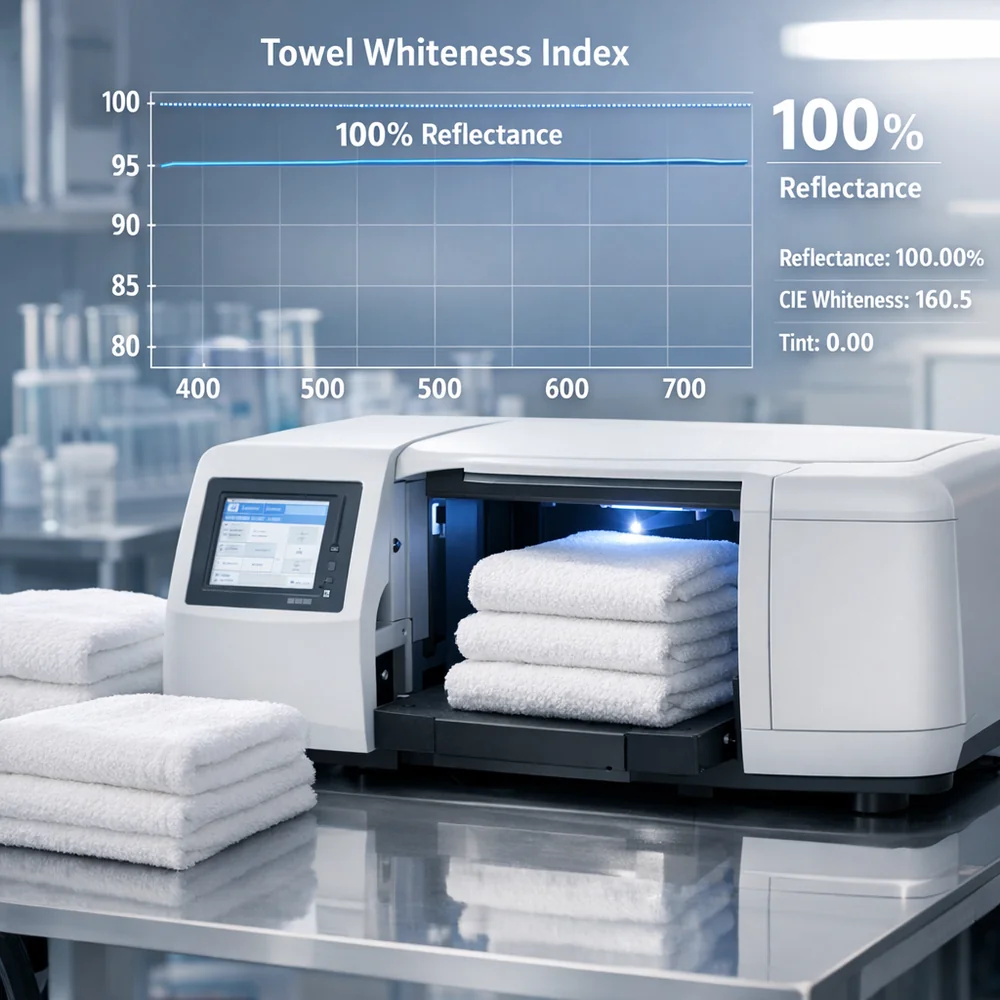
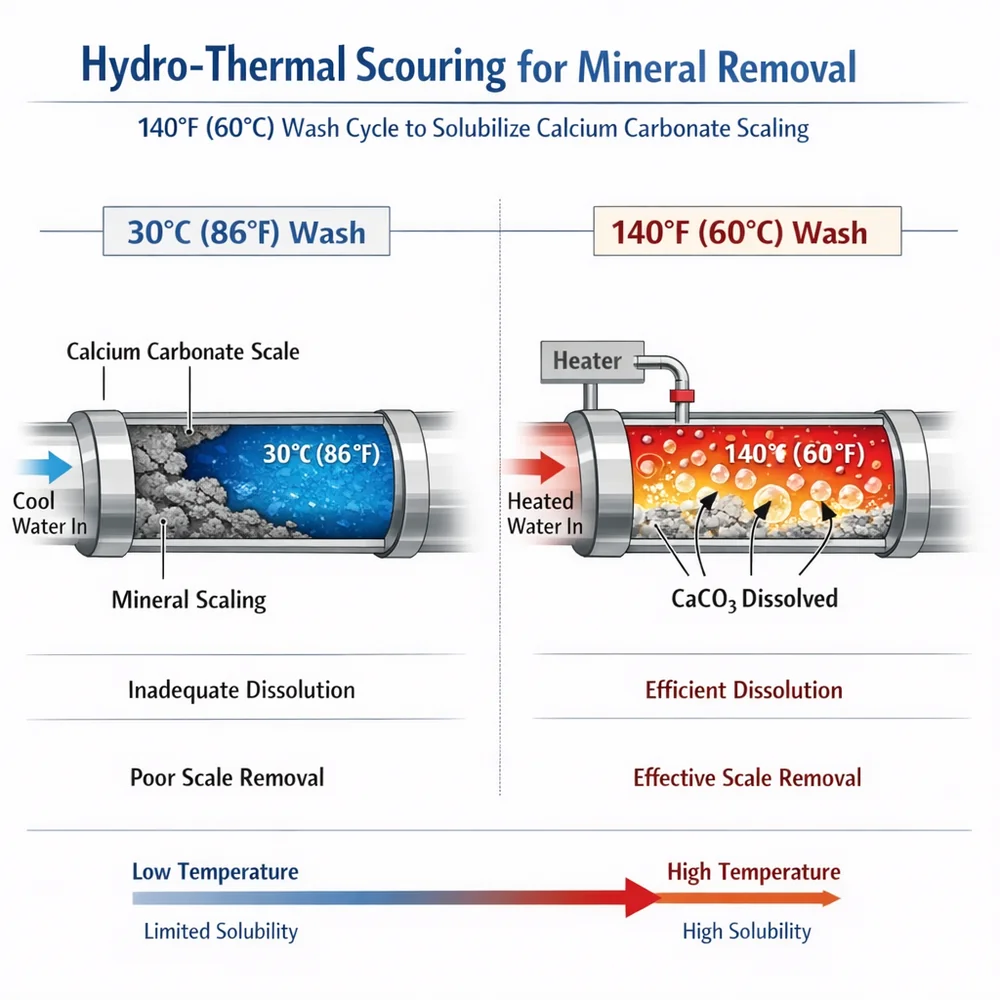
One of the most powerful chemical tools in the industrial arsenal is the use of high-alkalinity builders to induce alkaline hydrolysis. Hotel towels often accumulate heavy loads of body oils, sebum, and proteins from cosmetic products. By raising the pH of the wash liquor to 11.0 or higher, the laundry system triggers a chemical reaction that converts these insoluble fatty acids into water-soluble soaps. This process is far more effective at deep cleaning than the neutral-pH detergents used in residential homes.
Alkaline hydrolysis is particularly effective at removing the “greying” effect caused by the deposition of synthetic oils from guest lotions. The high pH environments cause the fibers to swell slightly allowing the surfactants to penetrate deeper into the core of the yarn. However, this aggressive chemistry requires the subsequent peroxide-based souring steps to ensure the safety of the end-user. Without proper neutralization, the high alkalinity would lead to skin irritation and potential chemical burns for the guest. The masterful use of alkalinity allows hotels to maintain towels that are clean at the molecular level.
Stain Reclamation Rates
In any high-volume laundry operation, a certain percentage of linens will emerge from the standard cycle with visible residual staining. Managing “reclamation” is a science in itself involving the identification and specialized treatment of rejected items. Industrial facilities track the reclamation rate as a key performance indicator. Items that fail the first pass are subjected to “salvage cycles” which may involve higher concentrations of enzymes, extended soak times, or the use of specialized solvent-based emulsifiers for oil-based stains.
Effective reclamation requires a diagnostic approach to stain chemistry. A towel stained with makeup requires a different reclamation protocol than one stained with food or rust. Many facilities use a “stain spotting” station where technicians apply targeted chemicals before the item is re-washed. By keeping the reclamation rate below 3-5%, hotels can maximize the life cycle of their linen while ensuring that only 100% white items reach the guest rooms. This rigorous sorting process is what separates professional operations from substandard facilities that might allow faded or dingy towels to remain in circulation.
The Bottom Line Stain reclamation is the process of triaging rejected linens for intensive chemical treatment. High-efficiency laundries use targeted salvage cycles to recover up to 90% of stained items, significantly extending the life of the towel inventory.
Folding Consistency Standards
The final step in the professional whitening process is not chemical but mechanical and organizational. Folding consistency standards are vital for maintaining the perceived quality of the towels. Even the whitest towel will appear yellow or dingy if it is wrinkled or folded in a way that creates shadows. Industrial folding machines use air jets and mechanical plates to ensure that every towel is folded with mathematical precision creating a uniform stack that reflects light evenly.
Proper folding and storage also play a role in the “resting” of the fibers. After emerging from the high-heat dryers, towels should ideally be allowed to rest and regain their natural moisture balance before being compressed into stacks. This “tempering” phase prevents the fibers from becoming flattened and losing their loft. Uniform folding also allows for easier inventory management because any variation in color becomes immediately obvious when viewed in a consistent stack. The crisp edges of a professionally folded towel signal to the guest that the item is clean, fresh, and hygienic.
Conclusion
The science of hotel towel whitening is a multidimensional discipline that integrates thermodynamics, organic chemistry, and mechanical engineering. By leveraging the power of industrial bleach injection and alkaline hydrolysis, commercial laundries can achieve levels of whiteness and sanitization that surpass domestic limits. The process is a continuous cycle of aggressive soil removal followed by meticulous neutralization via acidic souring agents. This ensures that the towels are not only visually stunning but also chemically safe for guest contact.
Maintaining this level of excellence requires a commitment to monitoring variables such as ORP, pH, and temperature in real-time. The transition from a soiled towel to a bright, fluffy, and hygienic item is the result of a perfectly balanced wash formula executed with industrial precision. As guest expectations for hygiene continue to rise, the role of advanced laundry chemistry becomes even more critical. Ultimately, the white towel remains the ultimate symbol of hospital cleanliness, a status it earns through the rigorous application of professional laundry science.
References
- Laundry and Cleaning News. “The Chemistry of Commercial Whitening Agents.” LCN
- Journal of Textile Science & Engineering. “Effect of Alkaline Hydrolysis on Cotton Fiber Integrity.” OMICS International
- International Journal of Hygiene and Environmental Health. “Thermal Disinfection Standards for Healthcare and Hospitality Textiles.” Elsevier
- Textile Chemist and Colorist. “Fluorescent Whitening Agents: Mechanisms and Applications.” AATCC
- Industrial Laundry Operations Manual. “Optimizing Reclamation Rates in Large Scale Facilities.” TRSA