OPL vs Outsourced Laundry Analysis: Industrial Strategy
Table of Contents
Things You'll Learn From This Article:
- Running laundry on-site gives you faster access to clean linens, but you have to manage machines, staff, chemicals, and utilities yourself.
- Outsourcing laundry lowers your upfront spending on equipment, but you rely on delivery schedules and need more backup linen in storage.
- Doing laundry on-site usually means you can keep fewer total sheets, towels, or gowns because nothing leaves the building.
- Commercial laundry plants often use much less water and energy per load than small on-site setups.
- Labor costs are easier to control with outsourcing because trained specialists handle laundry full-time instead of staff juggling multiple duties.
- On-site laundry lets you fine-tune wash formulas, which can help expensive or delicate linens last longer.
- Outsourced laundries tend to use stronger, one-size-fits-all wash processes that clean well but can wear fabrics out faster.
- Keeping chemical dosing accurate is critical; small mistakes can lead to dirty linens or damaged fabric.
- Commercial laundries usually have more advanced monitoring systems and dedicated experts watching quality around the clock.
- Setting up an on-site laundry requires major upfront investment in machines, plumbing, power, ventilation, and safety systems.
- Outsourcing turns those big equipment costs into a predictable cost per pound or per item.
- Hygiene control is more hands-on with on-site laundry, which can be important for hospitals and infection-sensitive environments.
- Certified commercial laundries offer third-party proof that hygiene standards are being met, reducing your internal audit workload.
- On-site laundry gives you the fastest turnaround when demand suddenly spikes.
- Outsourced laundry requires higher inventory levels to cover delays, traffic, or missed deliveries.
- Laundry operations need more space and ventilation than most people expect, especially because of heat, humidity, and lint.
- Giving up on-site laundry can free valuable floor space for rooms, services, or other income-generating uses.
- The best choice depends on your volume, space, budget, and how critical control and speed are to daily operations.
The decision between maintaining an On-Premise Laundry (OPL) and utilizing an outsourced commercial laundry service is a fundamental strategic dilemma for hospitals, hotels, and industrial facilities. This choice transcends simple financial accounting because it involves a complex analysis of thermodynamics, labor productivity, and the microbial security of the textile life cycle. An OPL offers total control over chemical protocols and turnaround times but it carries significant burdens in terms of capital expenditure and utility management. Conversely, outsourcing leverages massive economies of scale and technical specialization but introduces risks related to collection logistics and external quality consistency.
At a molecular level, the performance of a laundry operation is defined by the stability of its chemical dosing and the precision of its thermal controls. Facilities that opt for an OPL assume the responsibility for maintaining the stoichiometry of every wash load ensuring that the interplay between surfactants, oxidants, and neutralizers is perfectly optimized for their specific textile inventory. Outsourced providers often utilize high-capacity tunnel washers that operate on continuous-flow principles offering superior efficiency in water and energy recovery. This article provides a clinical comparison of these two models through the lens of industrial operations and hygiene science.
On-Premise Laundry Cost Benefit Analysis
A rigorous cost-benefit analysis of an On-Premise Laundry requires a granular breakdown of direct and indirect expenses. The primary advantage of an OPL is the reduction in “par levels” which is the total amount of linen required to keep the facility operational. Because the processing cycle is handled on-site, the “buffer” stock needed to cover the time the linens are in transit to an external provider is eliminated. This can result in a 20-30% reduction in initial textile investment. Furthermore, OPL managers can precisely control the chemical load potentially extending the life of high-thread-count linens that might be over-processed in a heavy-duty commercial plant.
However, the hidden costs of OPL are substantial. Beyond the obvious machinery costs, the facility must account for the continuous consumption of specialized laundry chemicals, water treatment such as softeners to prevent hard water laundry chemistry issues, and the maintenance of sewer discharge permits. The “per-pound” cost of OPL often appears lower on paper but frequently excludes the opportunity cost of the square footage occupied by the laundry and the administrative overhead of managing a specialized labor force. A successful OPL must achieve a threshold of volume to justify these fixed and semi-variable operational expenses.
The Bottom Line OPL cost efficiency is driven by reduced linen par levels and customized chemical control. Success depends on reaching a critical volume threshold where the lower variable costs of on-site processing outweigh the substantial fixed costs of equipment and space.
Labor and Utility Consumption Models
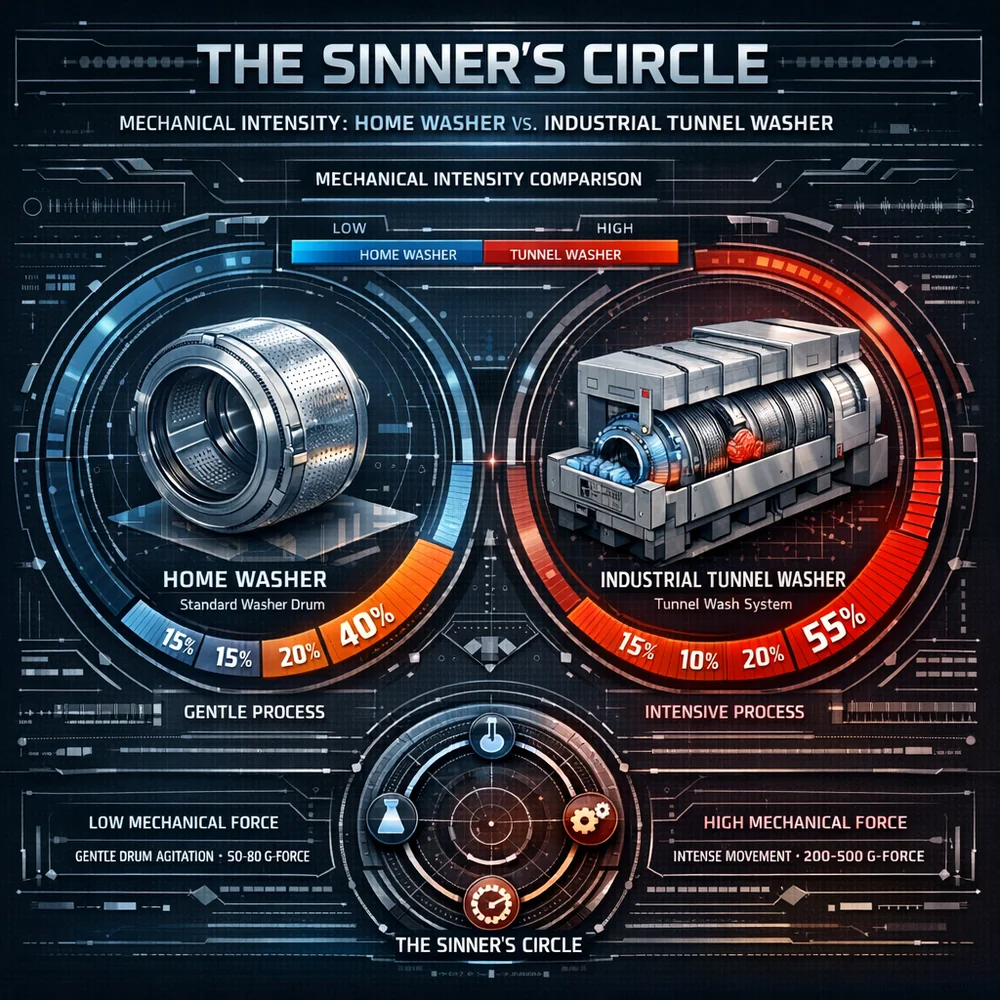
In the industrial laundry sector, labor and utilities are the two most volatile cost drivers. Domestic-style OPL setups are notoriously inefficient often using twice as much water and three times as much energy per pound of linen compared to a centralized commercial plant. Commercial outsourcers utilize heat recovery systems and water recycling loops that can reduce consumption to as little as 0.5 to 1.5 gallons per pound of linen. In contrast, an unoptimized OPL may consume 3 to 4 gallons per pound drastically increasing the facility’s overall environmental footprint and utility bill.
Labor models also differ sharply. OPL labor is often “fragmented” with staff splitting their time between laundry and other housekeeping duties which can lead to inconsistencies in the application of technical protocols. Commercial facilities utilize highly specialized labor forces trained in the mechanics of tunnel washers and automated folders achieving much higher levels of “pounds per operator hour” (PPOH). When evaluating these models, engineering managers must use a total-cost-of-ownership (TCO) approach that accounts for the peak-load utility demand and the recurring cost of training staff to handle biohazard laundry protocols safely.
Linen Life Cycle in Commercial Washers
The life cycle of a linen item is determined by the cumulative physical and chemical stress it undergoes during processing. Commercial washers, particularly high-capacity extractors, exert significant centrifugal force on the fabric during the spin cycle. While this is necessary for efficient moisture removal, it can lead to fiber fatigue and eventual tearing if not carefully managed. Outsourced providers often use aggressive wash formulas designed to handle the “worst-case” soil levels of a diverse client base which may be more punishing on the textiles than the customized gentle formulas possible in an OPL.
Textile life cycle analysis shows that the “chemical burn” from residual alkalinity or improper bleaching is the leading cause of premature replacement. In an OPL setting, the laundry manager can monitor the tensile strength of the linen through recurring “test strips” and adjust the wash formula in real-time. This level of granular control can extend the life of a standard hotel sheet from 150 cycles to 200 or more. For facilities with ultra-premium or delicate linens, the preservation of the fabric’s integrity through an OPL model often offsets the efficiency advantages of outsourcing.
The Bottom Line Linen longevity is inversely proportional to the chemical and mechanical “aggression” of the wash cycle. OPL offers the possibility of fiber preservation through customized chemistry, whereas outsourcing usually prioritizes throughput and universal soil removal.
Chemical Dosing System Maintenance
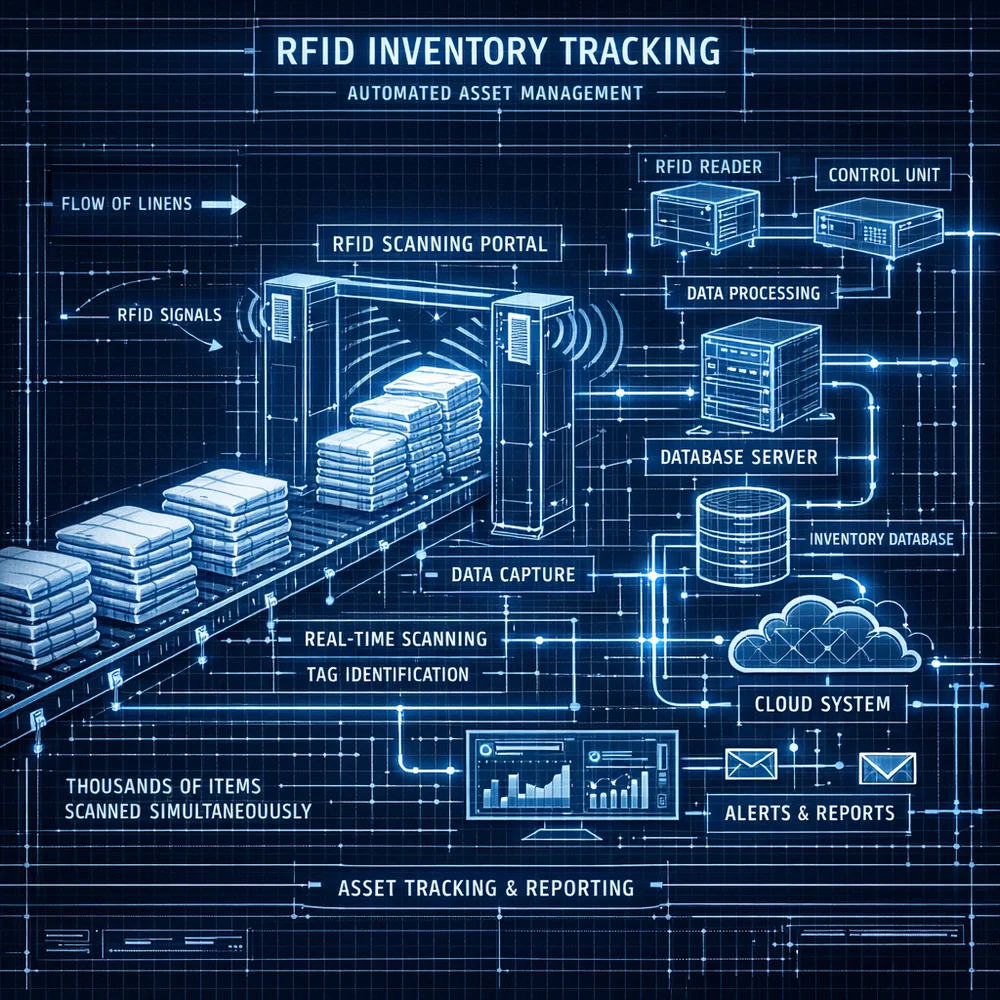
The heart of a modern industrial laundry is the automated chemical dosing system which is a network of pumps and sensors that inject detergents, builders, and bleaches into the machines with milligram precision. In an OPL, the maintenance of this system is the responsibility of the facility management team or a contracted chemical supplier. Fluctuations in pump calibration can lead to “under-shooting” or “over-shooting” a chemical resulting in either unhygienic linen or catastrophic fabric damage. Regular titration of the wash liquor is necessary to verify that the target pH and ORP levels are being met.
In contrast, outsourced facilities have dedicated chemical engineers who monitor these systems 24/7. They use turbidity sensors to adjust the formula based on the incoming soil load and conductivity meters to ensure thorough rinsing. The sophisticated dosing systems in commercial plants are rarely feasible for small-scale OPLs due to their cost and complexity. Consequently, OPLs often rely on simpler less dynamic systems that may not respond as effectively to variations in water quality or soil levels. This technical gap is a major factor in the superior consistency often observed in high-volume commercial laundry outputs.
Capital Expenditure for Machinery
The initial capital expenditure (CAPEX) required to establish a modern OPL is a significant barrier to entry. Professional-grade washer-extractors, industrial dryers with moisture-sensing technology, and flatwork ironers (mangles) represent a substantial investment that can take five to ten years to depreciate. Furthermore, the installation requires specialized plumbing for high-volume water intake, heavy-duty electrical circuits, and extensive lint-filtration systems to meet municipal fire codes. For many organizations, this capital is better deployed toward their core business missions.
Outsourcing converts these fixed capital costs into a predictable variable expense (OPEX). Instead of worrying about equipment obsolescence or emergency repair costs, the facility pays a fixed rate per pound or per piece. This “pay-as-you-go” model provides greater financial flexibility and eliminates the risk of an operational shutdown due to a major mechanical failure. However, for organizations with a long-term horizon and tax-advantaged financing, the ownership of the laundry infrastructure may provide a stronger return on investment (ROI) over a twenty-year span.
The Bottom Line OPL is a capital-intensive strategy that trades upfront investment for long-term operational control. Outsourcing is an operational-expense strategy that prioritizes financial liquidity and shifts the technical risks of machinery maintenance to a third party.
Hygiene Control Comparison
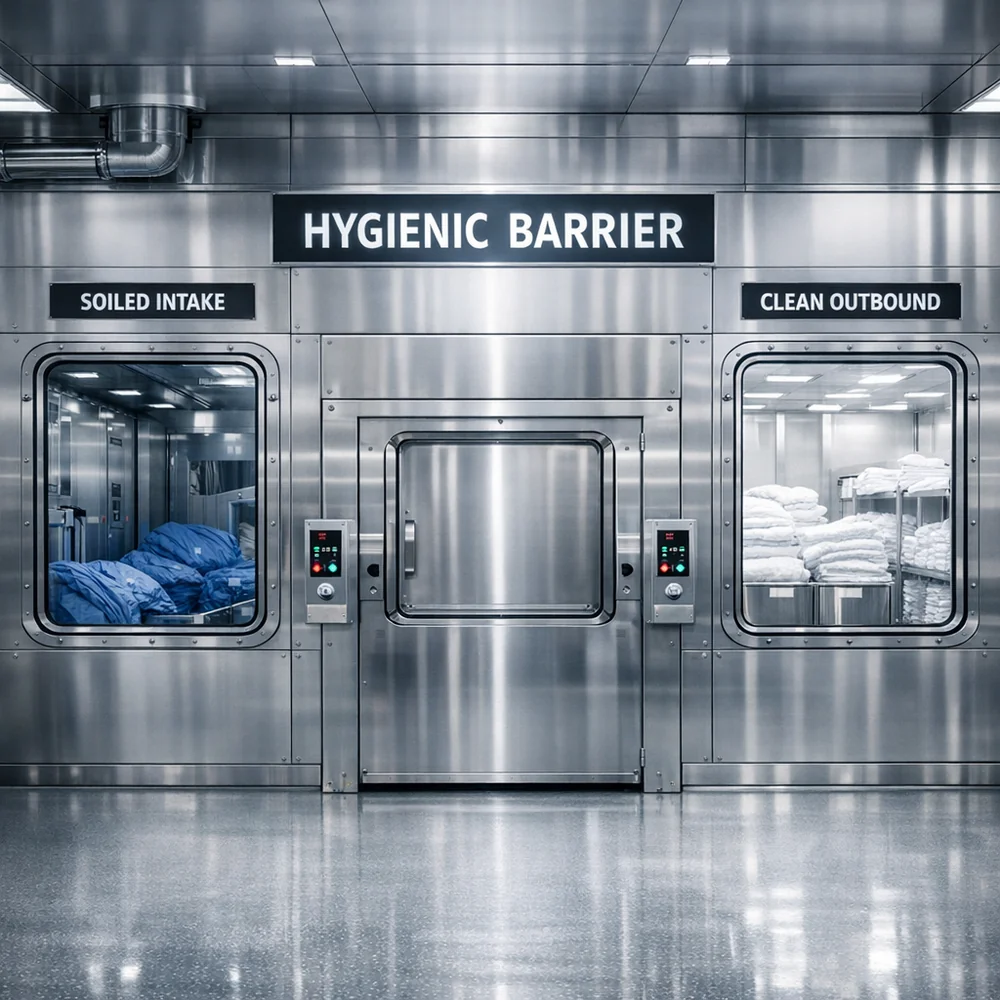
Hygiene control is the most critical technical parameter for healthcare facilities. In an OPL, the facility has direct oversight of the “clean-dirty” separation and can audit the thermal disinfection logs on a daily basis. This provides a high degree of confidence that the hospital-grade laundry standards are being met. The proximity of the laundry to the clinical areas also minimizes the risk of re-contamination during transport which is a persistent concern with outsourced providers where linens must be moved in and out of delivery trucks.
Commercial providers, however, often hold specialized certifications such as HLAC (Healthcare Laundry Accreditation Council) or TRSA’s Clean Green certification. These programs provide an external third-party validation of the facility’s hygiene protocols that a small OPL may find difficult to maintain. Commercial plants are also better equipped to handle large-scale biohazard scenarios due to their specialized equipment and high-volume chemical stocks. Ultimately, the “best” choice for hygiene depends on the facility’s internal auditing capacity versus the reliability of the external provider’s certification regime.
Turnaround Time Requirements
In the fast-paced hospitality and healthcare sectors, the turnaround time (TAT) of linens can be a mission-critical metric. An OPL offers the ultimate TAT; if a surge in patient volume or hotel occupancy occurs, the laundry can run extra shifts or prioritize specific items to meet the immediate need. This “just-in-time” capability reduces the risk of operational bottlenecks caused by a shortage of clean linens. For luxury hotels with a high room turnover rate, this responsiveness is often the deciding factor in choosing an OPL model.
Outsourced services operate on a fixed delivery schedule typically once or twice a day. If the facility runs out of linens between deliveries, they have limited options to accelerate the process. Furthermore, events such as traffic delays, equipment outages at the commercial plant, or extreme weather can disrupt the supply chain. To mitigate this, facilities using an outsourced model must maintain higher par levels (often 4 to 5 sets of linen per bed/room) to provide a “safety cushion.” This increased inventory cost must be factored into the overall evaluation of the outsourcing contract.
The Bottom Line OPL provides the tactical flexibility to respond to immediate surges in demand. Outsourcing requires a more rigid inventory management system and higher par levels to compensate for the logistical “lag” between the laundry facility and the end-user.
Space and Ventilation Needs
The physical footprint of an industrial laundry is often underestimated. A facility processing 5,000 pounds of linen per day requires approximately 2,000 to 3,000 square feet of dedicated space for sorting, washing, drying, folding, and storage. More importantly, the laundry generates immense amounts of heat and humidity requiring a sophisticated HVAC (Heating, Ventilation, and Air Conditioning) system to maintain a safe working environment and prevent the buildup of mold. The lint-mitigation requirements for the dryer exhausts are also complex and demand regular cleaning of ductwork to prevent fire hazards.
In urban environments where real estate costs are high, dedicating several thousand square feet to a laundry operation is often economically indefensible. Forcing an OPL into an undersized or poorly ventilated basement or backroom leads to premature equipment failure and poor staff health outcomes. By outsourcing, the organization reclaims this valuable square footage for revenue-generating activities such as extra patient rooms, restaurant seating, or storage for higher-value assets. The “cost of space” is often the single most significant factor that tips the scales in favor of commercial outsourcing in dense metropolitan areas.
Conclusion
The analysis of OPL versus outsourced laundry is a multi-dimensional challenge that requires a deep understanding of industrial physics, chemical engineering, and financial modeling. There is no “universal” solution; the ideal choice depends on the facility’s volume, real estate constraints, and the criticality of its hygiene requirements. OPL offers the pinnacle of quality control and fiber preservation but only at the cost of significant capital investment and management overhead. Outsourced laundry provides superior utility efficiency and financial flexibility but necessitates higher inventory levels and a reliance on external logistics.
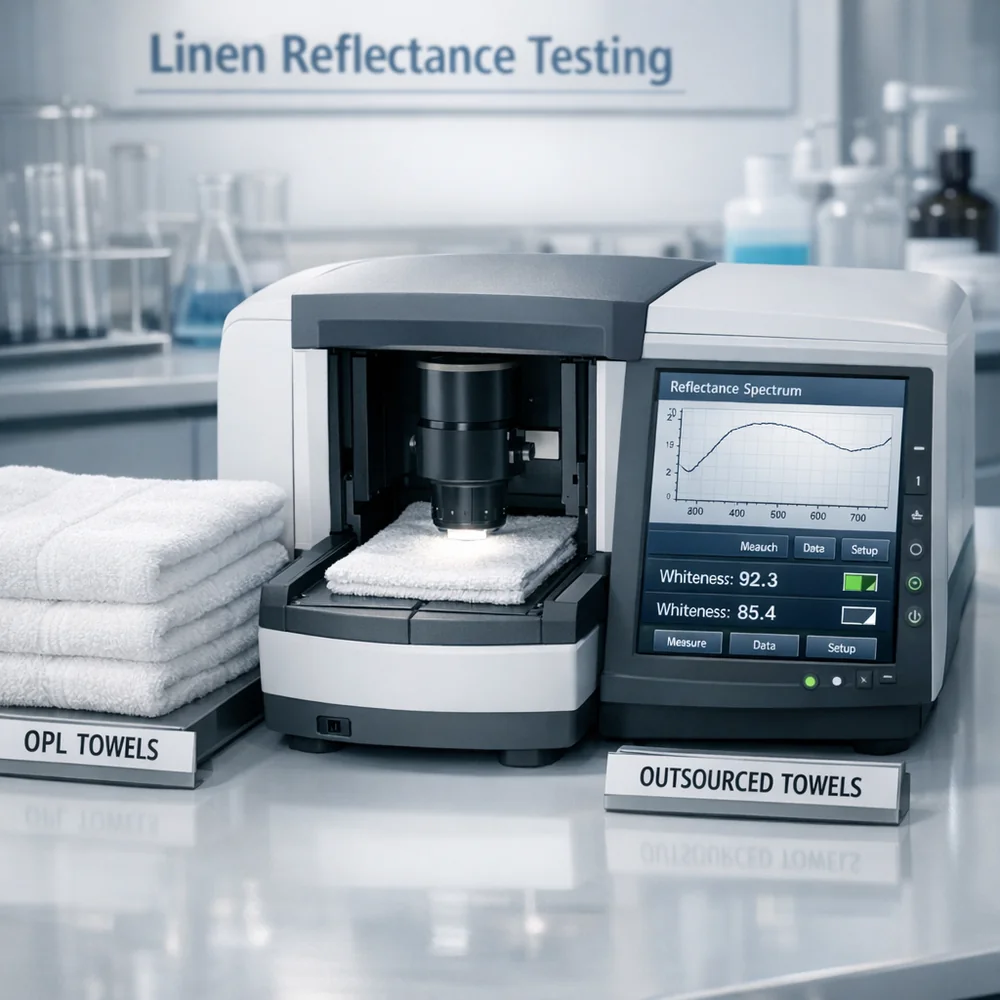
For most high-volume standardized operations, the economies of scale offered by commercial providers make outsourcing the logical economic choice. However, for specialized healthcare settings where biohazard control is paramount or luxury hotels where “touch” and “brightness” are part of the brand promise, the OPL model remains a powerful strategic asset. Ultimately, the decision must be guided by a total-cost-of-ownership audit that respects both the financial balance sheet and the technical requirements of modern industrial hygiene. By balancing these competing priorities, organizations can ensure that their textile management is both economically sustainable and scientifically rigorous.
References
- Textile Rental Services Association. “OPL vs. Commercial Laundry: A Comparative Cost Analysis.” TRSA
- Healthcare Laundry Accreditation Council. “Standard for Processing Health Care Textiles.” HLAC
- Journal of Cleaner Production. “Resource Efficiency in Industrial Laundry Systems: A Lifecycle Assessment.” Elsevier
- Management in Healthcare. “Strategic Decision Making in Clinical Support Services: The Case of Hospital Laundry.” Henry Stewart Publications
- ASHRAE Journal. “Ventilation and HVAC Requirements for High-Volume Industrial Laundries.” ASHRAE