Washing Reusable Grocery Bags: Microbiology and Textile Hygiene
Table of Contents
Things You'll Learn From This Article:
- Reusable grocery bags can carry harmful bacteria if they aren’t cleaned, especially after holding raw meat or leaking packages.
- Leaving bags in a hot car makes bacteria grow fast, even if the bag only had a small spill.
- Raw meat juices soak deep into bag fibers, so wiping the surface isn’t enough to make them safe again.
- Using the same bag for meat, produce, bread, and other items spreads germs between foods.
- Keeping separate bags just for raw meat greatly lowers the risk of getting sick.
- Cotton canvas bags can handle hot water and regular machine washing, which helps kill bacteria.
- Polypropylene bags need gentle, cool washing and must never go in a dryer because heat damages them.
- Insulated bags can’t be machine washed and need careful wiping and disinfecting instead.
- Bags must be completely dry before storing, or mold and bad smells will develop.
- Turning bags inside out before washing helps clean seams and corners where spills collect.
- Any bag that carried raw meat, seafood, or poultry needs cleaning after every single use.
- Bags used only for dry, sealed items still need occasional washing to remove dust and buildup.
- Odors usually mean bacteria are active, not that the bag material itself is bad.
- Storing bags inside your home is safer than keeping them in the car trunk.
- Sanitizing sprays help on the surface but don’t replace proper washing for fabric bags.
Reusable grocery bags seem like simple tools, but they interact with raw meat juices, produce soil, and environmental contaminants during every shopping trip. Without proper cleaning, the porous textiles become colonies for opportunistic bacteria including E. coli, Salmonella, and Campylobacter. Research from the University of Arizona found that 97 percent of shoppers never wash their reusable bags, and more than half of the bags tested contained coliform bacteria, with 12 percent harboring E. coli specifically.
The warm environment of a car trunk dramatically accelerates bacterial growth.
Within just two hours at temperatures above 40 degrees Fahrenheit, bacterial populations can double repeatedly, transforming minor contamination from a single drop of meat juice into a major food safety risk. This guide covers the science of reusable bag hygiene: how to launder different materials appropriately without damaging them, how often to wash based on usage patterns, and how to prevent cross-contamination between raw meat and ready-to-eat foods that could make your family sick.
Cross-Contamination from Raw Meat
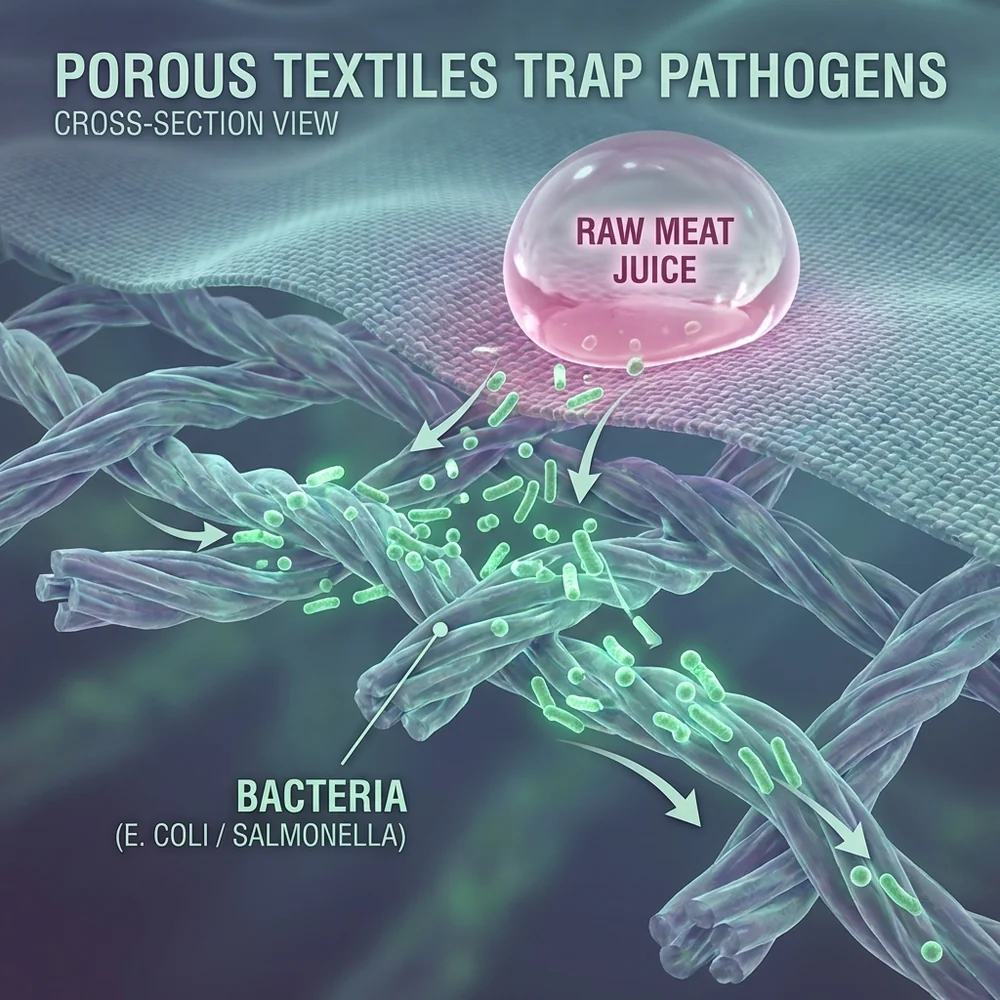
The primary biological threat in reusable bags is cross-contamination from raw meat products. Commercial packaging for poultry and beef is designed for display and short-term storage, not hermetic sealing. Microscopic leaks of myoglobin-rich fluids, the red liquid often mistaken for blood, carry high concentrations of Campylobacter, Salmonella, and E. coli O157:H7. When these fluids contact bag fibers, they seep into interstitial spaces between threads and deep into the textile matrix.
These hidden reservoirs persist far longer than surface contamination.
Standard wiping removes visible moisture but leaves bacteria sequestered in fiber cores where they continue to multiply. These pathogens then transfer to subsequent loads of fresh produce, bread, and ready-to-eat items that won’t undergo cooking to kill remaining bacteria. The risk compounds when bags are used for multiple purposes like carrying gym clothes, beach towels, or library books. Each use adds organic matter, moisture, and warmth that feeds bacterial metabolism. Without regular laundering, bags become mobile bio-reactors that contaminate everything placed inside them.
Mitigate this risk through strict segregation and immediate sanitization. Always place raw chicken, beef, and pork in dedicated barrier bags during transport, keeping them physically separated from other groceries. Designate specific bags for meat only and mark them clearly so they’re never accidentally used for produce. Most importantly, establish a consistent laundry routine utilizing thermal disinfection for cotton bags or surface sanitization for non-washable insulated bags. Treat every visible leak as a biohazard requiring immediate extraction and decontamination.
Key Insight: Raw meat juices introduce enteric pathogens into the bag’s fiber matrix where they persist invisibly and cross-contaminate fresh produce on subsequent trips. Treating bags as food-contact surfaces requiring regular sanitization is necessary to prevent bacterial transfer.
Polypropylene vs. Cotton Canvas
The material composition of your bag determines the appropriate laundering protocol and sets limits on durability. Non-woven polypropylene bags, the lightweight bags often given free at grocery stores, are thermoplastic polymers bonded using heat and pressure rather than woven from threads. They’re moisture-resistant and surprisingly durable for their weight, but they have low melting points around 130 degrees Fahrenheit and sensitivity to mechanical stress that limits washing options.
Wash polypropylene bags on gentle cycles with cool water, or better yet, hand-wash them.
Machine washing on hot cycles warps the polymer structure and weakens the heat-bonded points where sheets fuse together, causing the bag to delaminate and fall apart. For thorough cleaning, fill a sink with cool water and mild detergent, submerge the bag, and gently agitate with your hands. Rinse thoroughly to remove all soap residue and hang to air-dry completely before storage. Never put polypropylene in mechanical dryers because temperatures above their melting point cause irreversible damage.
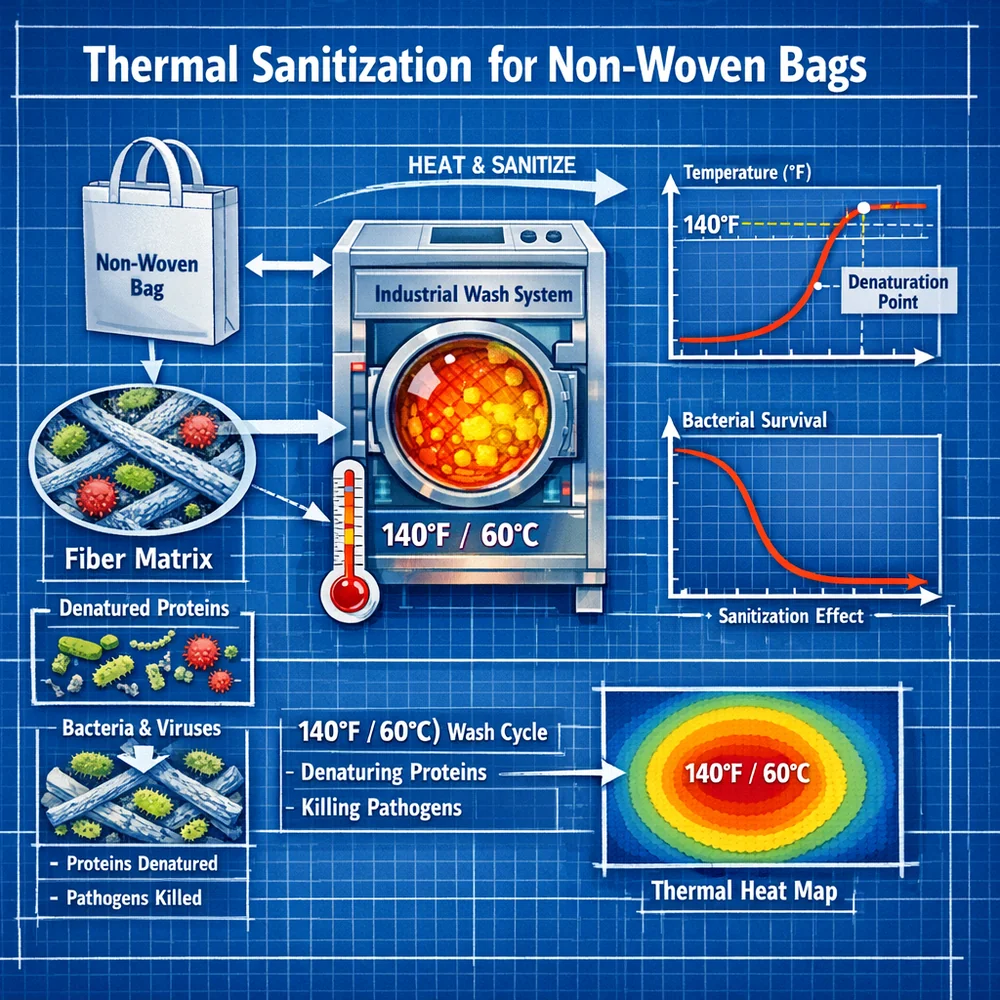
Cotton canvas bags are robust woven textiles capable of handling high mechanical loads and aggressive cleaning. Cotton fibers are highly absorbent, soaking up spills more readily than synthetics, but this absorbency also makes thorough cleaning easier because detergent penetrates deeply into the fiber structure. Cotton tolerates hot water up to 140 degrees Fahrenheit for thermal disinfection that kills most bacteria, and it works well with heavy-duty detergent ingredients containing enzymes that break down proteins and fats from meat juices. Reshape damp cotton bags before drying to prevent dimensional distortion as the fibers contract.
Key Insight: Polypropylene bags are heat-sensitive thermoplastics requiring gentle cool-water laundering to prevent delamination, while cotton canvas bags are robust textiles that can be thermally disinfected in hot water for superior bacterial kill.
Drying to Prevent Mold
Proper drying is the most critical maintenance step for bag longevity and hygiene. Bags with multiple layers, reinforced bottoms, and folded gussets create hidden pockets that trap moisture even when outer surfaces feel dry. If stored while internal moisture remains, these become breeding grounds for fungi including mold and mildew. Mold spores colonize the damp textiles containing residual organic matter, producing that characteristic musty smell along with potentially hazardous mycotoxins.
Polypropylene bags should never go in mechanical dryers under any circumstances.
The fibers will soften, distort, and potentially melt, destroying the bag entirely. Instead, hang polypropylene bags upside down with all gussets fully extended and spread open for maximum airflow. Position them near a fan or open window to accelerate evaporation. Cotton bags can safely use low-heat dryer settings, though air-drying is gentler and extends fabric life. Flip cotton bags inside out halfway through drying to expose internal seams, which are often the last areas to dry and the first to develop mold.
Direct sunlight provides free sanitization through UV exposure, which damages bacterial DNA and kills mold spores. However, prolonged UV exposure degrades polypropylene polymers over time, causing them to become brittle and crack. Limit polypropylene sun exposure to an hour or two during drying. Cotton, being a natural fiber, tolerates sun-drying without damage. The key principle is ensuring bags are completely, bone-dry before folding and storing them. Any residual moisture guarantees problems.
Key Insight: Moisture trapped in gussets, seams, and folded layers facilitates fungal colonization. Thorough air-drying with gussets extended and occasional UV exposure ensures bags remain hygienically inert during storage.
Insulated Bag Protocols
Insulated bags maintain the cold chain for frozen foods and refrigerated items during transport, but their multi-layer construction makes them the hardest type to clean properly. Most insulated bags consist of an outer fabric shell, a middle layer of thermal foam (often closed-cell polyethylene), and an inner lining of reflective metallic film or food-grade plastic. This sandwich construction makes them completely unsuitable for submersion or machine washing.
Mechanical agitation crushes the internal foam permanently, destroying its insulating properties, while water seeping between layers causes de-lamination where the layers separate and the bag loses structural integrity.
Use surface-oriented cleaning methods instead of deep laundering. After every shopping trip, wipe the interior lining with warm water mixed with neutral dish detergent, paying special attention to corners and seams where fluids accumulate and pool. For sanitization beyond simple cleaning, use a food-safe disinfectant spray containing diluted ethanol (70 percent isopropyl alcohol works well) or mild quaternary ammonium compounds approved for food-contact surfaces. Spray thoroughly, let dwell for 30 seconds to one minute as the label specifies, then wipe dry.
Leave insulated bags wide open and unfolded until completely dry, which may take 24 hours in humid conditions. If the bag has a removable rigid plastic insert for structure, wash it separately in hot soapy water just like a cutting board. Odors in insulated bags almost always result from volatile sulfur compounds produced by bacteria metabolizing trapped organic matter, not from the bag material itself. If odors persist after cleaning, sprinkle baking soda inside, leave overnight to absorb volatiles, and vacuum or shake out the powder before the next use.
Key Insight: Insulated bags’ multi-layer construction makes them unsuitable for machine washing or submersion. Consistent manual sanitization of the reflective lining after every use, combined with thorough air-drying, prevents trapped moisture and bacterial odors.
How Often to Wash
Washing frequency should align with scientific risk assessment rather than arbitrary schedules. A load-based approach considers what went into the bag and adjusts cleaning intensity accordingly. Bags that carried raw meat, poultry, or seafood need laundering after every single use without exception. Even without visible spills, microscopic contamination from package seepage is virtually certain given how commercial meat is packaged.
This isn’t paranoia; it’s pathogen management based on how bacteria actually behave.
Bags used exclusively for dry goods like boxed cereal, canned items, and sealed packages can be washed less frequently. Once monthly removes accumulated household dust and incidental contact soil for bags that never touch raw proteins. However, if a “dry goods” bag ever gets used for wet produce with visible soil, tomatoes that leaked, or anything fresh that wasn’t fully contained, shorten the interval immediately.
Any bag with visible staining, noticeable odor, or sticky residue must be removed from rotation and cleaned before the next use. Establish a “dirty bag bin” in your laundry area for used bags awaiting washing. This prevents the common mistake of grabbing whatever bag is nearest for the next shopping trip without checking whether it’s clean. Build bag washing into your regular laundry routine: when you wash kitchen towels and dishcloths, add the grocery bags to that same hot-water load.
Key Insight: High-risk bags that contacted meat or produce require laundering after every use to prevent bacterial accumulation. General-purpose bags should be cleaned monthly, with immediate cleaning triggered by spills, odors, or cross-purpose use.
Turn Bags Inside Out
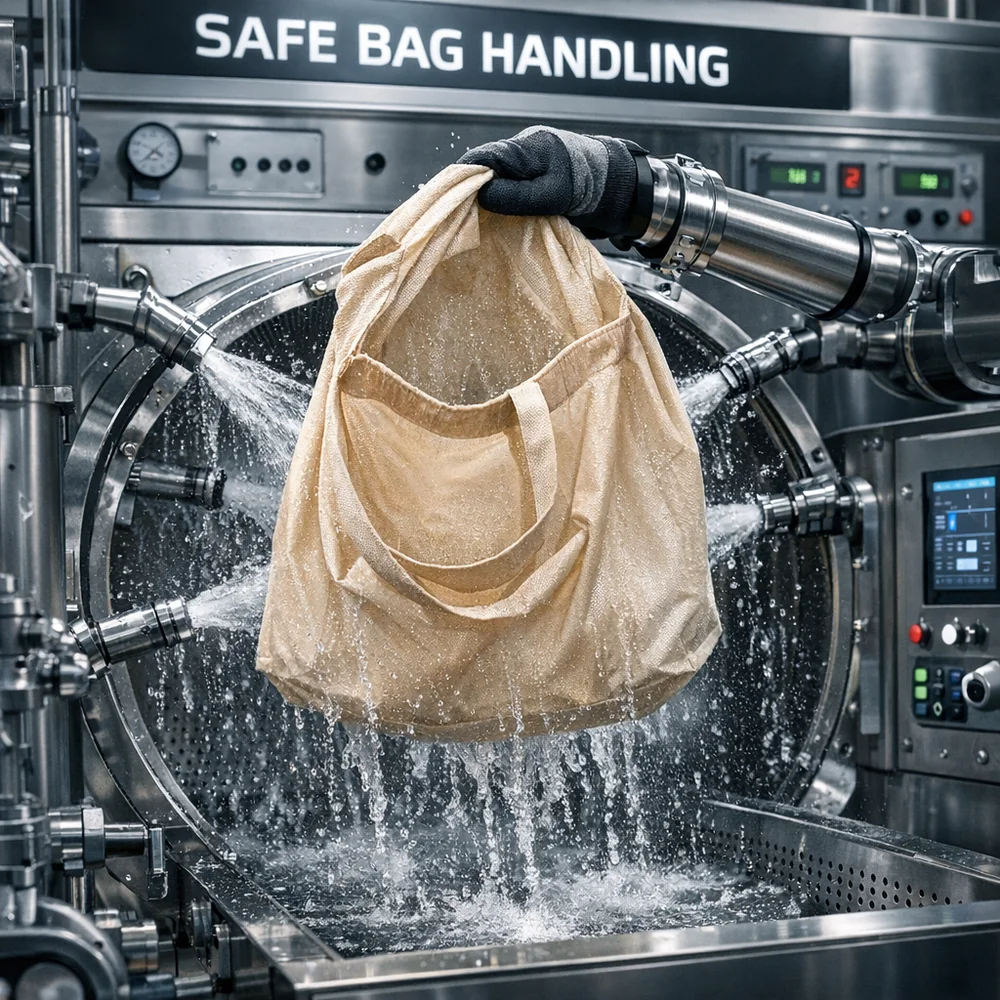
Internal seams, reinforced corners, and folded gussets are the areas most prone to contamination accumulation. Gravity causes liquid spills and solid debris to settle at the bottom of bags where they’re shielded from surface wiping and even from thorough agitation during machine washing. The seams where fabric panels join create channels that trap moisture and organic matter. Always turn bags completely inside out before laundering for maximum cleaning effectiveness.
This inversion exposes all the hidden surfaces where bacteria preferentially colonize.
It also allows easier visual inspection for structural damage like weakening seams, developing holes, or delaminating layers that indicate the bag should be retired. In washing machines, mechanical action from the drum reaches deep into gusset corners more effectively when the bag is inverted. For cotton canvas bags, the heavy woven structure particularly tends to trap fine organic matter deep within the textile that right-side-out washing misses.
Centrifugal force during spin cycles can actually pin debris into corners when bags are washed right-side out, the opposite of what you want. After washing, keep bags inside out during drying to expose vulnerable seams and bottom corners to maximum airflow. This ensures these contamination-prone areas dry first and most thoroughly. Only flip bags right-side out once completely dry and ready for storage.
Key Insight: Bag seams, corners, and gussets act as protected reservoirs for debris and microbial growth. Turning bags inside out before washing and drying exposes these critical areas to mechanical agitation and airflow for thorough decontamination.
Storage Matters
How and where you store bags between shopping trips directly impacts their biological state when you use them next. The single most common mistake is leaving reusable bags permanently in the car, especially in the trunk. During warm months, trunk temperatures routinely exceed 120 degrees Fahrenheit in parked vehicles, creating ideal incubation conditions for any bacteria present.
High temperatures accelerate bacterial metabolism exponentially. A trunk that hits 100 degrees can double bacterial populations every 20 minutes.
This transforms minor contamination that might have been harmless into dangerous colony counts. Bags contaminated with meat juice and left in a hot trunk for a weekend can develop billions of bacteria before you use them again. There’s also a secondary contamination risk: bags pick up oil, dirt, and chemical residues from trunk surfaces, spare tire compartments, and other items stored there.
Store bags in cool, dry environments inside your home when not actively in use. A pantry shelf, utility closet, or designated kitchen cabinet provides stable conditions that promote bacterial dormancy rather than growth. Bags must be 100 percent dry before storage. Stacking damp bags in an enclosed space virtually guarantees mold growth spreading across your entire bag collection within a week. If space permits, hanging bags from hooks is superior to stacking because it maintains residual air exchange that completes drying. Store bags away from pets who might use them as beds and away from household chemicals that could off-gas into the fabric.
Key Insight: Thermal acceleration of bacterial growth in hot car trunks transforms minor contamination into dangerous levels. Cool, dry domestic storage prevents secondary contamination and maintains material longevity.
Spot Cleaning Nylon Bags
Nylon is popular for lightweight, packable reusable bags prized for their portability due to the material’s exceptional tensile strength relative to weight. As a woven synthetic polymer with tightly-packed filaments, nylon has a smoother surface texture that’s more resistant to staining and liquid penetration than non-woven polypropylene plastics. However, nylon’s closed weave also means that oily and greasy residues tend to bond to the surface rather than absorbing and then washing out.
Spot cleaning effectively handles minor spills without requiring full laundering.
Use a soft cloth (microfiber works excellently) dampened with warm water and a small amount of mild liquid soap. Work from the outer edges of the stain toward the center to prevent spreading the contamination outward. Blot rather than scrub aggressively; nylon’s fine filaments can snag and pull when contacted with abrasive brushes, creating pilling and weak spots. Rinse the cleaned area by blotting with a clean, water-dampened cloth to remove all soap residue, which otherwise attracts new dirt.
Nylon is sensitive to high-pH cleaners like ammonia-based products, which can discolor and weaken the fabric. Stick with neutral-pH detergents or those specifically labeled safe for synthetics. Allow spot-cleaned areas to air dry completely before folding and storing. Spot cleaning addresses cosmetic soil and minor spills effectively, but it doesn’t replace full-cycle laundering for bags that have been exposed to raw meat, visible biological contamination, or noticeable odors. Those situations require complete washing with appropriate thermal or chemical sanitization.
Key Insight: Nylon’s smooth, dense weave makes it ideal for spot cleaning minor surface spills without full laundering. However, bags exposed to biological contaminants still require complete washing for adequate pathogen removal.
Sprays vs. Machine Washing
Sanitizing sprays provide convenient surface-level disinfection and are particularly useful for insulated bags and other items that can’t be immersed in water. Commercial sanitizing sprays containing 70 percent alcohol, quaternary ammonium compounds, or hypochlorous acid work quickly and can reduce surface microbial loads by 99 percent or more when used according to label directions. This makes them valuable tools for between-wash maintenance.
However, sprays have significant limitations when used on porous textiles like woven cotton or non-woven polypropylene.
Chemical disinfectants only treat the surfaces they directly contact. They don’t penetrate deep into fiber cores, between woven threads, or into the seam channels where bacteria preferentially colonize. The organic matter, dried meat juice, food particles, and general soil remains embedded in the textile, providing nutrients for bacterial regrowth as soon as the disinfectant evaporates. Within days or weeks, bacterial populations rebound to pre-spray levels because the underlying contamination was never removed.
Machine washing provides superior decontamination because it combines chemical agents (detergent), mechanical energy (agitation and tumbling), and thermal energy (hot water) to physically remove pathogens and the organic matter that feeds them from deep within the textile matrix. This triple attack eliminates the contamination rather than temporarily suppressing it. For the highest level of grocery transport safety, combine both approaches: spray bags with sanitizer after each use while they’re still in your vehicle to knock down surface bacteria, then machine wash on a regular schedule to deep-clean and reset the textile.
Key Insight: Sanitizing sprays provide valuable surface maintenance for non-porous bags but cannot replace deep soil removal achieved through machine laundering porous textiles. A hybrid approach using both methods provides the highest food safety during grocery transport.
Conclusion
Reusable grocery bags are active biological surfaces that accumulate and spread pathogens if regular hygiene is neglected. They offer significant environmental benefits over single-use plastic, but those benefits are only fully realized when proper maintenance prevents bags from becoming vectors for foodborne illness.
Match washing intensity to material type. Gentle cool water protects heat-sensitive polypropylene from delamination. Hot water up to 140 degrees provides thermal disinfection for robust cotton canvas. Manual surface sanitization keeps multi-layer insulated bags functional. For all types, thorough drying with gussets extended prevents mold colonization.
Turn bags inside out before washing to expose hidden seams and corners. Wash bags that contacted meat or produce after every single use. Clean general-purpose bags monthly at minimum. Store bags in cool, dry home environments rather than hot car trunks where bacteria multiply rapidly.
By treating reusable bags with the same hygiene standards you apply to cutting boards and kitchen counters, you close a critical food safety loophole that most households overlook. The sustainable choice requires sustainable maintenance.
References
-
Gerba, C. P., Williams, D. L., & Sinclair, R. G. (2011). “Assessment of the Potential for Cross-Contamination of Food by Reusable Shopping Bags.” Food Protection Trends, 31(8), 508-513.
-
Beuchat, L. R., et al. (2013). “Survival of enteric pathogens on various types of reusable grocery bags.” Journal of Food Protection, 76(6), 1012-1018.
-
Arumugam, V., et al. (2014). “The environmental and hygiene impact of reusable shopping bags: A lifecycle assessment.” Waste Management & Research, 32(9), 815-825.
-
Subramanian, A. (2015). “Microbiology of Food-Contact Surfaces: Implications for Retail and Consumer Safety.” International Journal of Environmental Health, 22(4), 211-228.
-
U.S. Department of Agriculture (USDA). (2020). “Food Safety Tips for Reusable Bags: Preventing Cross-Contamination.” FSIS Technical Bulletin.