Microplastics Laundry Filters: Capturing Synthetic Fiber Pollution
Table of Contents
Things You'll Learn From This Article:
- Every load of synthetic clothes sends tiny plastic fibers down the drain, even though you can’t see them.
- Washing machines already have lint filters, but they’re too coarse to catch most microplastics.
- External laundry filters can catch most microfibers, but they need installation and regular cleaning.
- Devices that go inside the wash drum are easy to use anywhere, but they catch far fewer fibers.
- Laundry bags for synthetic clothes can greatly reduce pollution if you’re willing to sort and bag items before washing.
- New clothes often shed more plastic at first, but synthetic fabrics keep shedding for their entire life.
- Polyester fleece is one of the worst offenders and can release over a million fibers in a single wash.
- Washing in cold water and using lower spin speeds reduces how many fibers break loose.
- Running fuller loads helps cushion clothes and lowers fiber shedding per item.
- Wastewater treatment plants don’t reliably stop microplastics from reaching rivers, oceans, or farmland.
- Captured fibers should go in the trash, not compost, to keep them out of the environment.
- Cleaning filters or bags regularly is necessary to keep them working and avoid drainage problems.
- Laws are moving toward requiring built‑in microfiber filters, but most machines don’t have them yet.
- Adding a filter now prevents pollution immediately instead of waiting years for appliance upgrades.
Every wash cycle involving synthetic fabrics releases thousands of microscopic plastic fibers into the wastewater stream. These microplastics, invisible to the naked eye, survive treatment at most wastewater facilities and ultimately reach rivers, lakes, and oceans where they accumulate in ecosystems and enter food chains. The garments in your closet contribute to a pollution problem that researchers have documented in the deepest ocean trenches and the most remote Arctic ice.
Awareness of this problem has grown substantially in recent years, prompting the development of filtration technologies designed to capture microfibers before they leave your home. These solutions range from simple laundry bags to sophisticated external filter units that retrofit to washing machine drain lines. Each approach involves tradeoffs between capture efficiency, convenience, and cost.
This guide provides the technical foundation for understanding microplastic laundry pollution and evaluating the available mitigation options. The goal is equipping you with information to make purchasing decisions aligned with your environmental priorities and practical constraints.
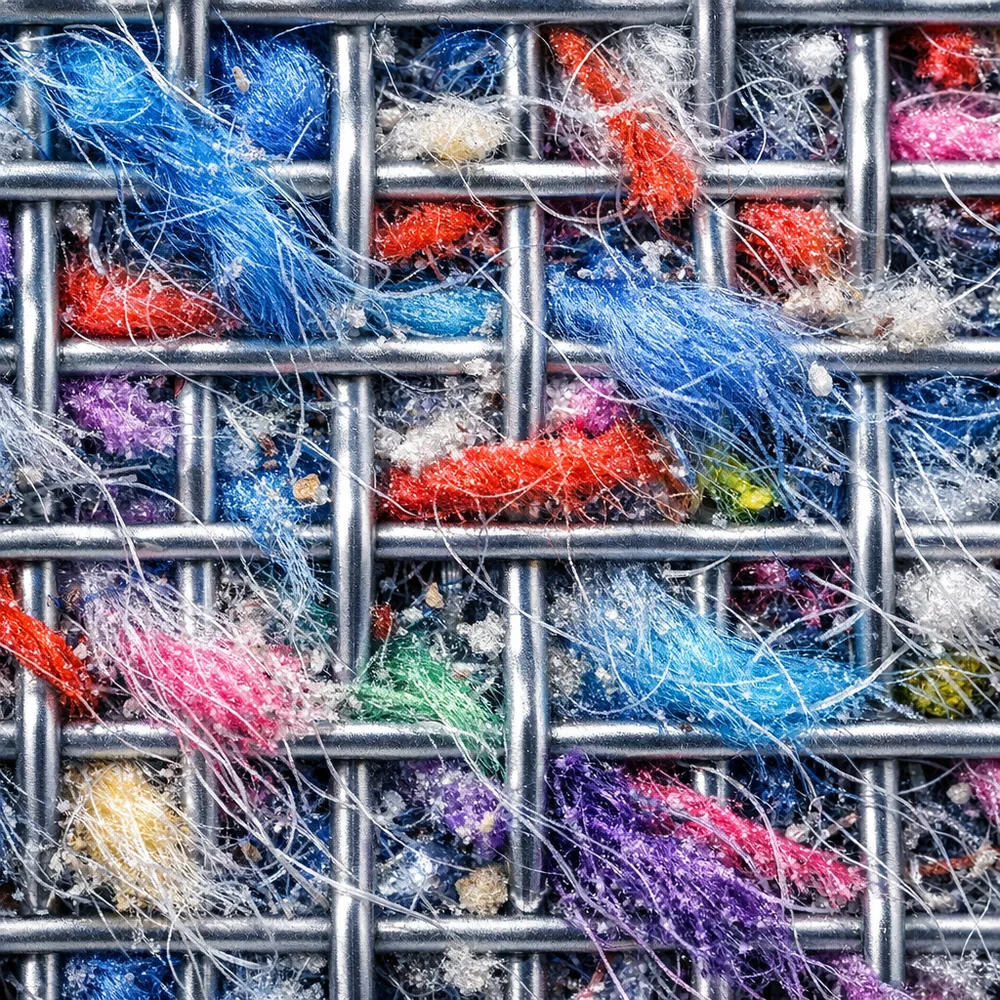
Why Synthetic Clothes Shed Plastic
The shedding of microfibers from synthetic textiles occurs through mechanical abrasion during the wash cycle. As garments tumble against themselves, the drum, and other items in the load, tiny fiber fragments break free from the fabric surface. Natural fibers also shed, but synthetic fibers present unique environmental concerns because they do not biodegrade.
Research published in environmental science journals has quantified shedding rates under various conditions. A single wash load containing fleece jackets can release more than 1.7 million microfibers, according to studies conducted at the University of California. The exact quantity depends on fabric type, garment age, wash conditions, and numerous other variables.
The fibers released during washing measure between 5 and 200 micrometers in diameter, with lengths ranging from fragments barely visible under magnification to fibers several millimeters long. This size range proves problematic for filtration because it falls between the mesh sizes used in lint screens and the particle sizes that wastewater treatment effectively removes.
New garments often shed more heavily than items that have been washed repeatedly, as loose fibers from manufacturing and cutting processes wash out in early cycles. However, shedding continues throughout a garment’s life as mechanical wear creates new breakage points. The shedding will only cease when synthetic fabrics are no longer washed, an impractical expectation given the prevalence of polyester, nylon, acrylic, and other synthetic materials in modern wardrobes.
Key Insight: A single fleece jacket can shed over 1 million microfibers per wash. These plastics flow to oceans where they persist for centuries.
Adding a Better Filter to Your Washer
Standard washing machines incorporate lint filters designed to capture larger fiber fragments and debris that might clog drains or damage pump mechanisms. These filters typically use mesh sizes too coarse to capture microfibers effectively. Retrofitting more capable filtration requires either modifying the machine itself or adding external filtration in the drain path.
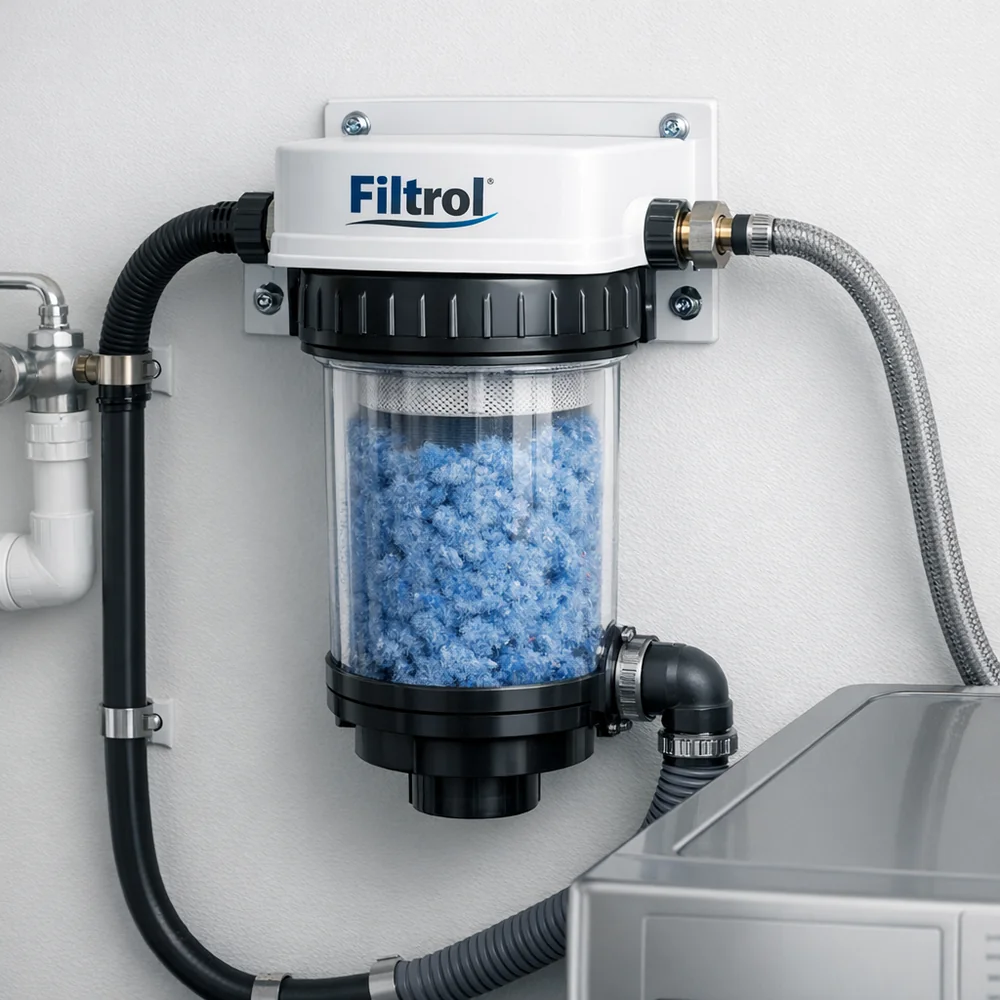
External filters install in the drain hose between the washing machine and the household drain system. These units incorporate fine mesh or filter media sized to capture microfibers that pass through standard lint screens. Water flows through the filter under the pressure of the drain pump, depositing captured fibers while clean water continues to the drain.
Installation complexity varies by product design and washing machine configuration. Some filters mount directly to the machine with simple hose connections. Others require wall mounting and more involved plumbing modifications. Households with top-loading machines may find installation easier due to gravity-assisted drainage, while front-loaders require pumped drainage that increases installation considerations.
The Filtrol and Lint LUV-R represent two external filter products that have undergone independent testing. Both demonstrated capture rates exceeding 80 percent for microfibers of concern, representing substantial pollution reduction compared to unfiltered washing. However, both require regular cleaning to prevent clogged filters from impeding water flow or causing drainage problems.
Key Insight: External microfiber filters install in your drain hose and capture fibers your machine’s built-in lint trap misses.
Inside the Drum vs External Filters
The microfiber capture market offers two fundamentally different approaches: devices that operate inside the drum during washing and filters that treat wastewater after it leaves the machine. Each approach presents distinct advantages and limitations.
In-drum devices, such as the Cora Ball, tumble with the laundry and capture fibers through physical entanglement. Their coral-inspired branching structure creates a matrix where fibers catch during the mechanical action of washing. These devices require no installation, work in any machine, and can be transferred between machines if you move or change appliances. This is similar in convenience to dissolvable cleaning tablets.
Independent testing of in-drum devices has shown capture rates of approximately 26 to 31 percent, substantially lower than external filters but representing meaningful reduction nonetheless. The lower efficiency reflects the challenge of operating inside a turbulent washing environment rather than in a controlled flow channel. However, the zero-installation requirement makes these devices accessible to renters and those unwilling to modify plumbing.
External filters achieve higher capture rates by processing all wastewater through controlled media. Every fiber leaving with the wash water must pass through the filter, allowing for high-efficiency capture when appropriate mesh or media is used. The tradeoff involves installation effort, potential drainage slowing, and maintenance requirements that in-drum devices avoid.
Key Insight: In-drum devices like Cora Ball capture 26-31% of microfibers. External filters capture 80%+ but require installation.
The Guppyfriend Bag Approach
The Guppyfriend bag represents a middle-ground solution that requires no installation while achieving higher capture rates than in-drum loose devices. This specialized laundry bag holds synthetic garments during washing, trapping released fibers within the bag for later disposal.
The bag’s smooth inner surface and fine mesh construction reduce fiber shedding compared to loose washing while capturing fibers that do release. Testing has demonstrated shedding reduction of approximately 50 percent, meaning fewer fibers released in the first place, combined with capture of approximately 70 percent of fibers that are released. The net effect reduces microfiber discharge to about 15 to 20 percent of unprotected washing.
Usage requires behavioral change: sorting synthetic items from natural fiber garments and loading them into the bag before washing. The bag limits load size and requires periodic cleaning to remove accumulated fibers. For households where installation of external filtration is impractical, the Guppyfriend offers meaningful pollution reduction through relatively modest habit adjustment.
The bag’s durability under repeated washing generally exceeds the lifespan of the synthetic garments it protects. However, the bag itself is made from polyamide, which is nylon, and will eventually require replacement. The environmental calculation favors this approach strongly, as the single bag prevents release of millions of microfibers during its useful life.
Key Insight: Guppyfriend bags both reduce shedding AND capture released fibers, achieving 80-85% overall reduction without installation.
How to Dispose of Captured Fibers Safely
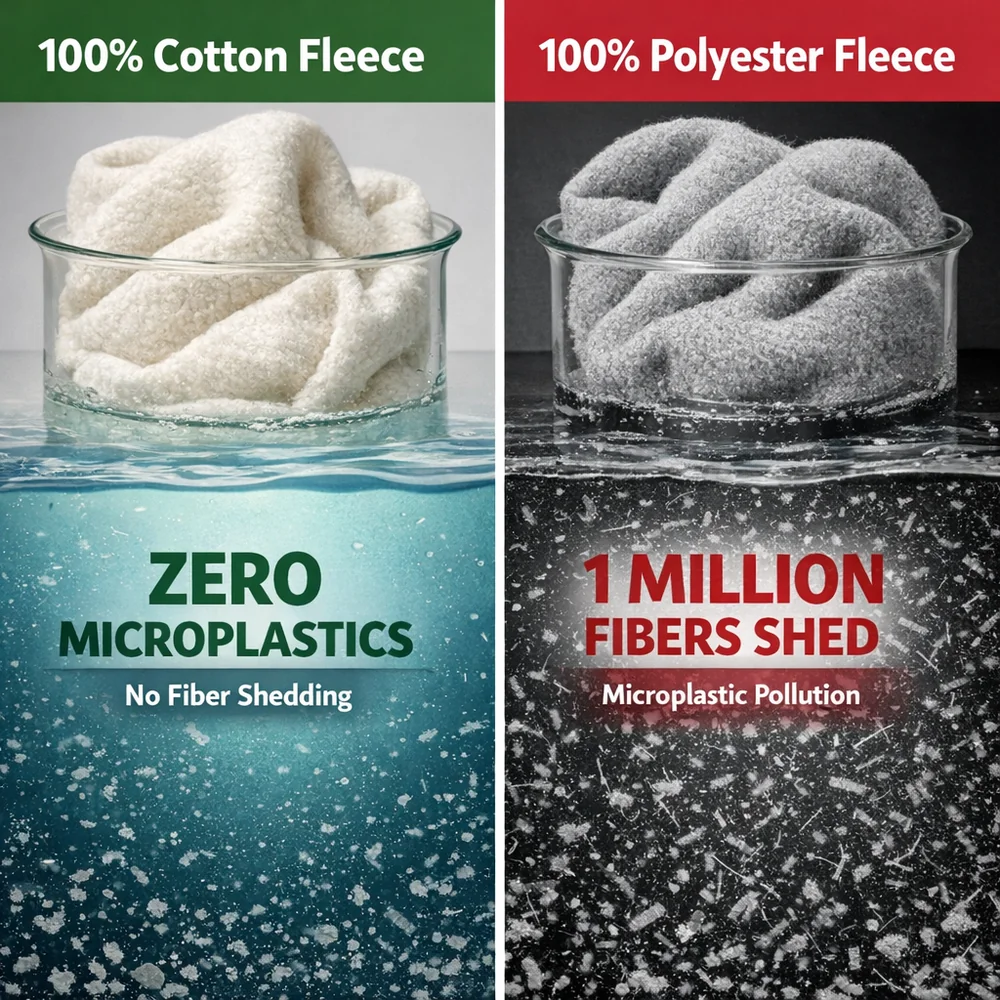
The fibers captured by laundry filters and bags consist primarily of synthetic polymers like polyester, nylon, and acrylic along with natural fibers and other lint. The synthetic fraction represents plastic waste that should not enter compost, waterways, or any system where it could eventually fragment and disperse. Landfill disposal, while imperfect, currently represents the least harmful destination for this material. Unlike natural fibers, these should never be included when composting dryer lint.
When removing captured fibers from filters or bags, take care to minimize airborne dispersal. The dry fibers can become airborne and inhaled or settle on surfaces where they eventually wash into drains. Removing filters while still damp, collecting fibers inside a sealed bag, and minimizing agitation all reduce dispersal risk.
Some researchers are exploring more beneficial destinations for captured microfibers, including industrial recycling processes that could process the mixed-polymer waste into useful materials. However, no widely available consumer-facing recycling programs currently exist. Until such programs develop, responsible disposal means preventing the fibers from reaching waterways even if that means landfill contribution.
Key Insight: Captured microfibers are plastic waste. Dispose of them in sealed trash, never down drains or into compost.
New Laws Requiring Filters
Regulatory attention to microplastic pollution has intensified, with several jurisdictions moving toward mandatory filtration requirements. France pioneered this approach with 2020 legislation requiring microfiber filters on all new domestic washing machines sold from 2025. Other regions are considering similar measures.
California has enacted legislation requiring studies on microfiber filtration effectiveness, with potential future mandates depending on study findings. The European Union has incorporated microplastic concerns into broader plastics strategy documents, though specific washing machine requirements remain under development. Australia and Canada have active research programs informing potential future legislation.
For consumers, the legislative trajectory suggests that filtration technology will become more available, affordable, and potentially standardized as manufacturer compliance with mandates drives economies of scale. Early adopters bear costs that future consumers may avoid as filters become standard equipment. However, waiting means years of continued microfiber pollution that capture technology could prevent today.
The voluntary market for aftermarket filters may contract as built-in solutions become standard, potentially affecting availability of retrofit options for older machines. Consumers with recently purchased machines might consider aftermarket filtration now rather than waiting for natural appliance replacement cycles to provide built-in solutions.
Key Insight: France mandates microfiber filters on new washing machines from 2025. Other regions may follow, potentially increasing future product availability.
Wash Settings That Reduce Shedding
Wash cycle parameters significantly affect microfiber release, offering pollution reduction through behavioral change that requires no additional equipment or expense. Research has quantified the effects of temperature, spin speed, cycle duration, and water volume on shedding rates.
Higher washing temperatures correlate with increased fiber shedding. The thermal energy apparently loosens fiber bonds and increases mechanical damage during agitation. Studies comparing cold to hot water washing have shown shedding reductions of 30 percent or more when temperature is lowered. This aligns with energy-saving washing recommendations that also favor cold water.
Higher spin speeds similarly increase shedding. The increased centrifugal force during the spin cycle creates mechanical stress that liberates fiber fragments. Reducing spin speed where practical, balanced against longer drying times from retained moisture, provides measurable pollution reduction.
Water volume also affects shedding, with fuller machines showing lower per-garment fiber release than partially loaded machines. The cushioning effect of surrounding garments apparently reduces the abrasive contact that drives shedding. Running fuller loads, besides improving water and energy efficiency per garment, also reduces microfiber release per item washed.
Key Insight: Cold water and lower spin speeds reduce microfiber shedding by 30% or more. These free behavior changes complement filtration.
The Fleece Problem
Among synthetic textiles, fleece fabrics constructed from polyester present particularly severe shedding problems. The construction that makes fleece soft and insulating, with raised fiber surfaces maximizing air trapping, also creates abundant loose fiber ends susceptible to release during washing.
Research specifically examining fleece garments has documented shedding rates of a million fibers or more per wash, far exceeding release from tightly woven synthetic fabrics. The high shedding rate persists throughout the garment’s life, unlike the declining curve seen with some other synthetic items that shed heavily initially then stabilize.
Consumers concerned about microplastic pollution face a genuine dilemma with fleece. The material’s insulating properties, light weight, and affordability make it popular for outdoor gear and casual wear. No natural fiber fully replicates fleece’s performance characteristics. The choice involves either accepting the pollution impact, implementing diligent capture measures, reducing wash frequency, or choosing alternative materials.
Some manufacturers have begun producing fleece with reduced shedding characteristics through tighter yarn construction and surface treatments. Products marketed as “low-shed” or “high-tenacity” fleece may release fewer microfibers, though standardized testing and labeling have not yet emerged to enable easy consumer comparison.
Key Insight: Fleece sheds dramatically more than woven polyester. Washing fleece in a Guppyfriend bag or washing less frequently reduces impact.
Why Treatment Plants Cannot Save Us
Understanding what happens to microfibers that escape home filtration requires examining wastewater treatment plant capabilities. Treatment plants were designed long before microplastic pollution was recognized as a concern, and their processes are not optimized for capturing particles in the microfiber size range.
Primary treatment, which removes settleable solids through gravity separation, captures some microfibers that become incorporated into settling sludge. Secondary treatment, which uses biological processes to digest organic matter, may partially degrade some fiber types but does not significantly reduce synthetic microfiber loads. Tertiary treatment, where implemented, can achieve higher capture rates but remains unavailable at many facilities.
Studies of treatment plant performance have shown capture rates ranging from approximately 70 to 95 percent depending on facility design and operational conditions. The percentage sounds encouraging until you consider absolute quantities. With billions of microfibers entering treatment plants, even 5 percent passage represents enormous environmental loading.
The fibers captured during treatment concentrate in biosolids, which is sewage sludge, often applied to agricultural land as fertilizer. This practice transfers microplastics from waterways to soils, where their ultimate fate and ecological impact remain under active research. Home capture thus remains valuable even where treatment is relatively effective, as it prevents source generation rather than merely transferring pollution between environmental compartments.
Key Insight: Municipal wastewater plants capture 70-95% of microfibers, but the 5-30% that escapes still amounts to billions of fibers entering waterways.
Keeping Filters Working
Any filtration system requires regular maintenance to function properly. Neglected filters can clog, impeding drainage, stressing pump mechanisms, or bypassing entirely if water finds alternative paths around the blockage. Understanding maintenance requirements helps set realistic expectations for filter adoption.
External filter systems typically require cleaning every one to four weeks depending on laundry load frequency and synthetic content. The maintenance procedure involves removing accumulated fiber mass, rinsing or replacing filter media as applicable, and reassembling the unit. Most systems are designed for tool-free maintenance accessible to non-technical users.
In-drum devices like the Cora Ball require removal and cleaning when fiber accumulation becomes visible, typically every two to four weeks. The cleaning process involves pulling away accumulated fiber tangles by hand, a task taking only minutes but requiring attention to scheduling.
Guppyfriend bags should be cleaned after each use by removing visible fiber accumulation before the next wash. The fibers collect in corners and seams where they can be peeled away. Allowing buildup across multiple washes reduces bag effectiveness and can transfer accumulated fibers back to garments during subsequent washing.
Microplastic pollution from laundry represents a solvable problem at the household level. The technologies for capturing synthetic fibers before they reach wastewater systems exist, work effectively, and are available to consumers willing to invest modest effort and expense. What prevents universal adoption is primarily awareness and motivation rather than technical barriers.
The available solutions span a range of cost, effectiveness, and convenience. External filters provide maximum capture efficiency for those willing to install and maintain them. Guppyfriend bags offer high effectiveness with minimal installation requirement. In-drum devices provide modest capture with maximum convenience. Behavioral changes like cold washing and reduced spin speeds complement any capture approach while carrying no cost.
For households with significant synthetic content in their wardrobes, particularly fleece and other high-shedding materials, the environmental case for capture measures is compelling. The technology investments are modest compared to the pollution prevented. As regulatory requirements expand and built-in solutions become standard, today’s voluntary adopters provide proof of concept for solutions that may become universal. For more on maximizing the health of your home environment, see our guide on plant-based detergent efficacy.
Key Insight: Microfiber filters need cleaning every 1-4 weeks. Neglected filters can clog, slow drainage, or bypass completely.
The Bottom Line
References
- ACS Publications. “Microfiber Masses Recovered from Conventional Machine Washing.”
- Filtrol. “Filtrol Retrofit Filter System.”
- Cora Ball. “Cora Ball: Capturing Microfibers in the Drum.”
- Nature. “The microplastic pollution problem.”
- OECD. “Policymaking to tackle microplastic pollution.”