Robot Mop Detergent Compatibility: The Chemistry of Seals
Table of Contents
Things You'll Learn From This Article:
- Regular floor cleaner, vinegar, or essential oils can quietly destroy your robot mop from the inside, even if it seems fine at first.
- Thick or poorly diluted cleaners can burn out the tiny pump because it’s built for very thin, water-like liquids only.
- Citrus scents and “lemon fresh” products are risky because citrus oil swells rubber seals and permanently jams the pump.
- More soap doesn’t mean cleaner floors—too much detergent causes cloudy streaks as the floor dries.
- Robot mops need extremely diluted solutions, closer to plain water than traditional mop water.
- Enzymatic cleaners can clog the system if left sitting in the tank, especially while the robot is charging.
- If you use enzymatic cleaners, run the robot and then flush the tank instead of storing the solution inside.
- Vinegar slowly damages metal parts and rubber seals and can eventually short out the electronics.
- Safe cleaners must be non-foaming, since foam can stop the pump from moving water at all.
- A neutral pH (about the same as water) protects both rubber seals and metal components.
- Cleaners that dry clear and leave no residue help prevent streaks and internal buildup.
- Weekly flushing with warm distilled water helps clear detergent residue before it causes damage.
- Distilled water is safer than tap water because it doesn’t leave mineral scale inside tiny channels.
- Some high-end robots are even more sensitive and can stop working if any film or residue coats internal parts.
- Alcohol-based or heavy-duty degreasers can weaken the plastic tank until it cracks or shatters months later.
- A robot that stops dispensing water may just be air-locked or clogged, not completely broken.
- Checking the air vent and gently flushing the system can sometimes bring a “dead” pump back to life.
- Manufacturers can detect chemical misuse inside the robot and deny warranty repairs if the wrong fluids were used.
- Treat the water tank like precision equipment—only approved, gentle fluids belong inside it.
Your robot mop might look like a simple gadget, but under that sleek plastic shell is a surprisingly complex plumbing system. We’re talking hair-thin tubing, magnetic pumps, and super sensitive gaskets. And while these little machines are great at navigating your floors on their own, they’re surprisingly fragile when it comes to chemicals.
Here’s the thing most people don’t realize: the number one cause of robot mop failure isn’t a dead motor or a busted battery. It’s catastrophic plumbing failure from using the wrong cleaning solution. Just pouring in a capful of regular floor cleaner, vinegar, or even essential oils can start a chain reaction that destroys your robot from the inside out.
So let’s get into the material science of what’s going on inside your robot mop. We’ll look at why citrus oils destroy rubber seals, how those tiny pumps actually work, and why some detergents leave streaks on your hardwood floors.
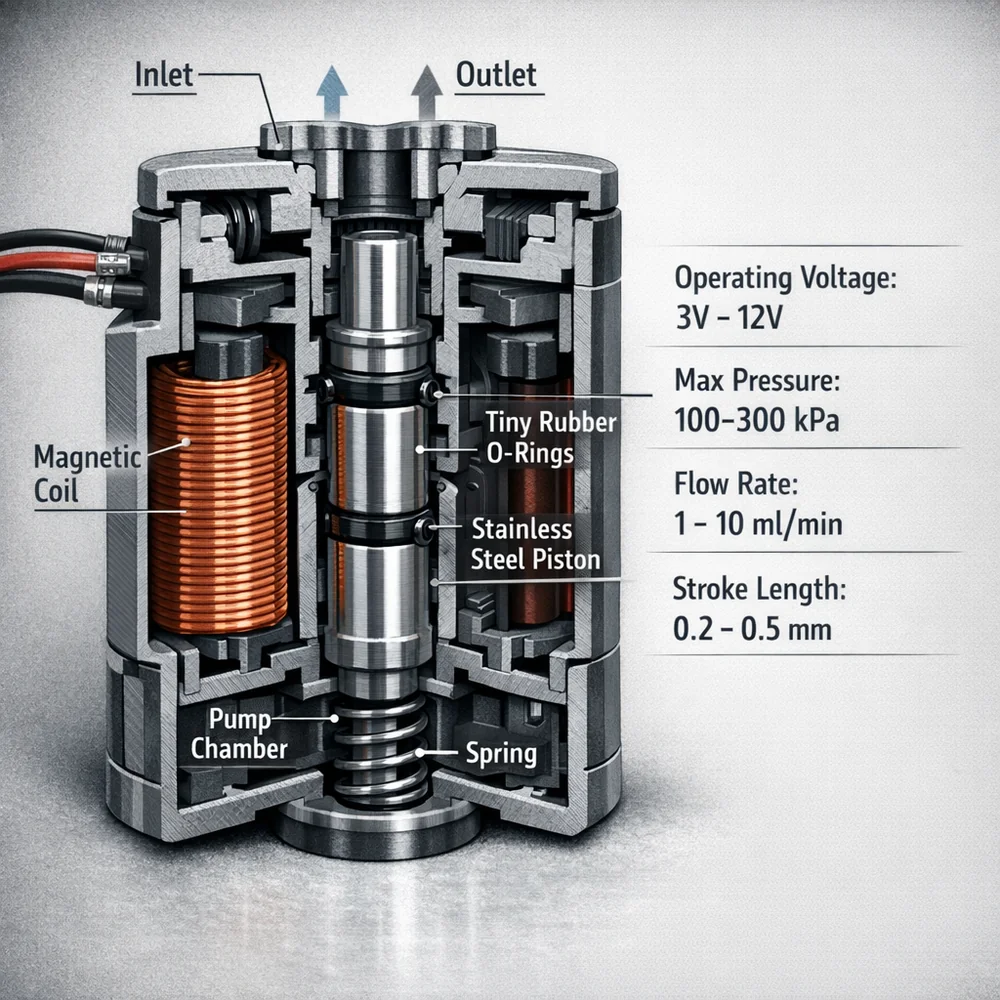
The Solenoid Micro-Pump: A Fragile Heart
To understand why the type of cleaner you use even matters, you’ve got to appreciate what’s moving the water around. Most modern robot mops use something called a solenoid micro-pump. Unlike older models that just dripped water using gravity, these pumps use magnetic fields to move a tiny piston back and forth.
This happens thousands of times per minute, giving you precise water control. But here’s the downside: the system really can’t handle thick fluids.
If you put something too viscous in the tank, like gel-based floor cleaner or soap concentrate that you didn’t dilute enough, it creates too much drag. The magnetic field might not be strong enough to push through all that resistance, causing the piston to freeze up.
Or even worse, the high resistance makes the coil overheat and burn out completely, killing the water delivery system for good.
The bottom line: Solenoid pumps are weak; thick gels create too much drag, causing the magnetic coil to overheat and burn out.
The Citrus-NBR Conflict: Chemical Corrosion
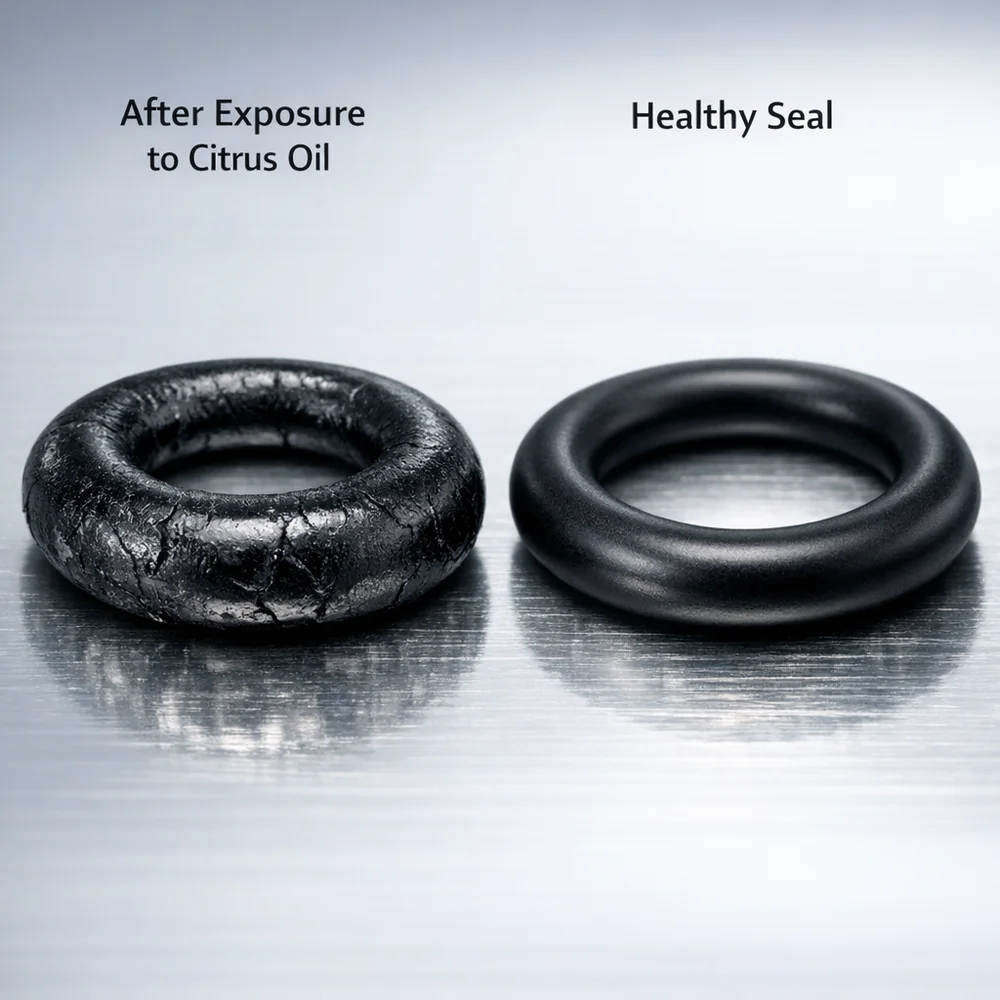
Here’s something ironic: one of the most dangerous things for your robot mop is actually one of the most popular natural cleaners out there. Citrus oil. Whether it’s from that “Lemon Fresh” floor cleaner or a few drops of essential oil you added for a nice smell, there’s a chemical in there called d-limonene that’s basically poison for your robot.
The seals inside these pumps are made from Nitrile Butadiene Rubber (NBR). It’s tough stuff, but d-limonene, the oil from citrus peels, eats away at it. The oil makes the rubber swell up, and in a micro-pump with super tight tolerances, any swelling at all jams everything up.
D-limonene is basically a solvent for the polymer chains in the rubber. Over weeks of exposure, the O-rings absorb the oil and expand. In a big pool pump, a 10% swelling might not be a huge deal. But in a micro-pump where everything is measured in microns, even a tiny expansion seizes the whole mechanism.
And once the rubber swells, it doesn’t shrink back. The damage is permanent, and you’re usually looking at replacing the entire tank assembly.
The bottom line: Citrus oils (d-limonene) cause rubber seals to swell. In a micro-pump, this swelling seizes the piston permanently.
The Marangoni Effect: The Physics of Streaking
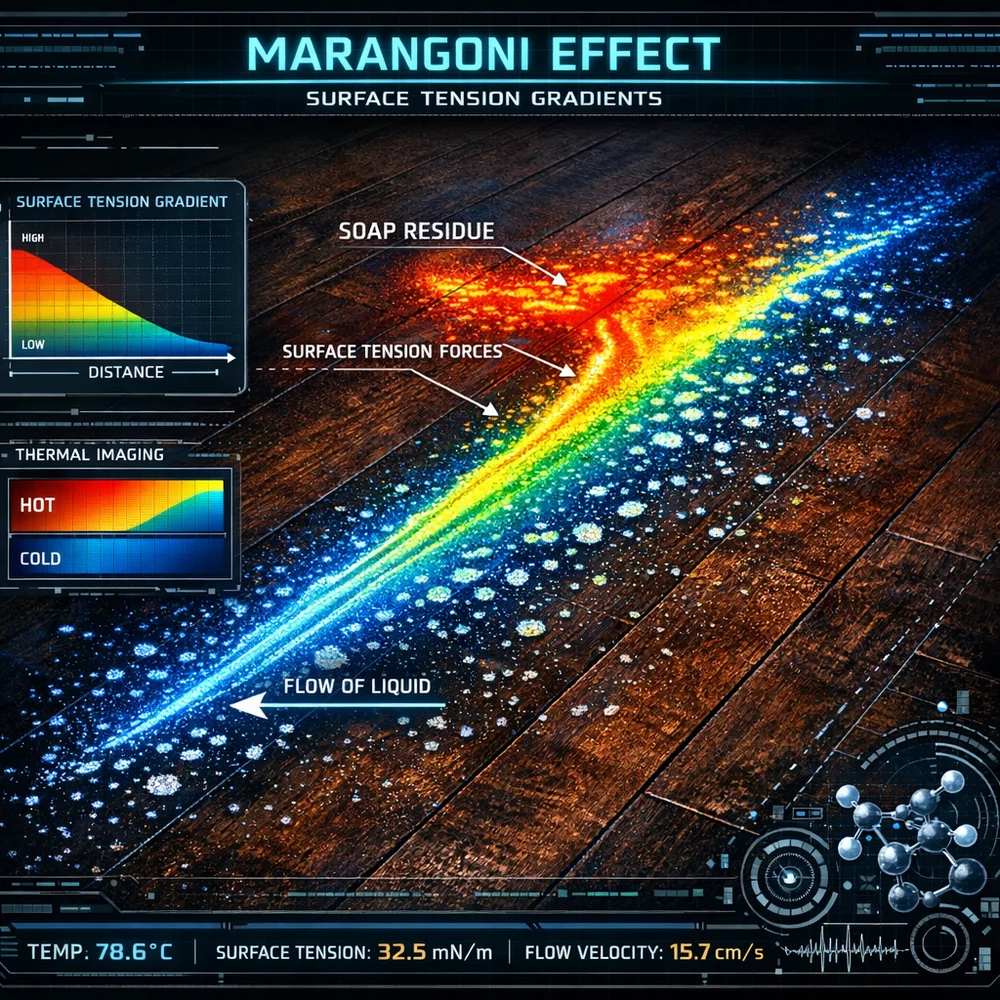
One thing new robot mop owners complain about a lot is cloudy streaks on the floor. The first instinct is usually to add more soap. But that actually makes the streaks worse.
What’s happening is something called the Marangoni effect. When surface tension isn’t even across the water film, liquid flows from areas with lower tension to areas with higher tension. As the water evaporates, the soap gets concentrated in certain spots and leaves those cloudy streaks behind.
Robot mops don’t use much water compared to a regular mop. They lay down a thin, even film of moisture. If that film has too much soap in it, the drying process gets all messed up.
As water evaporates, soap concentration goes up, which changes the surface tension. The fluid flows toward the high-tension areas, pooling the soap into visible lines. To avoid streaks, you need super dilute solutions, basically “water-plus” rather than anything soapy.
The bottom line: The “Marangoni Effect” causes streaks when too much soap travels to high-tension areas as water evaporates. Use dilute solutions.
Enzymatic Solutions and Biofilm Risks
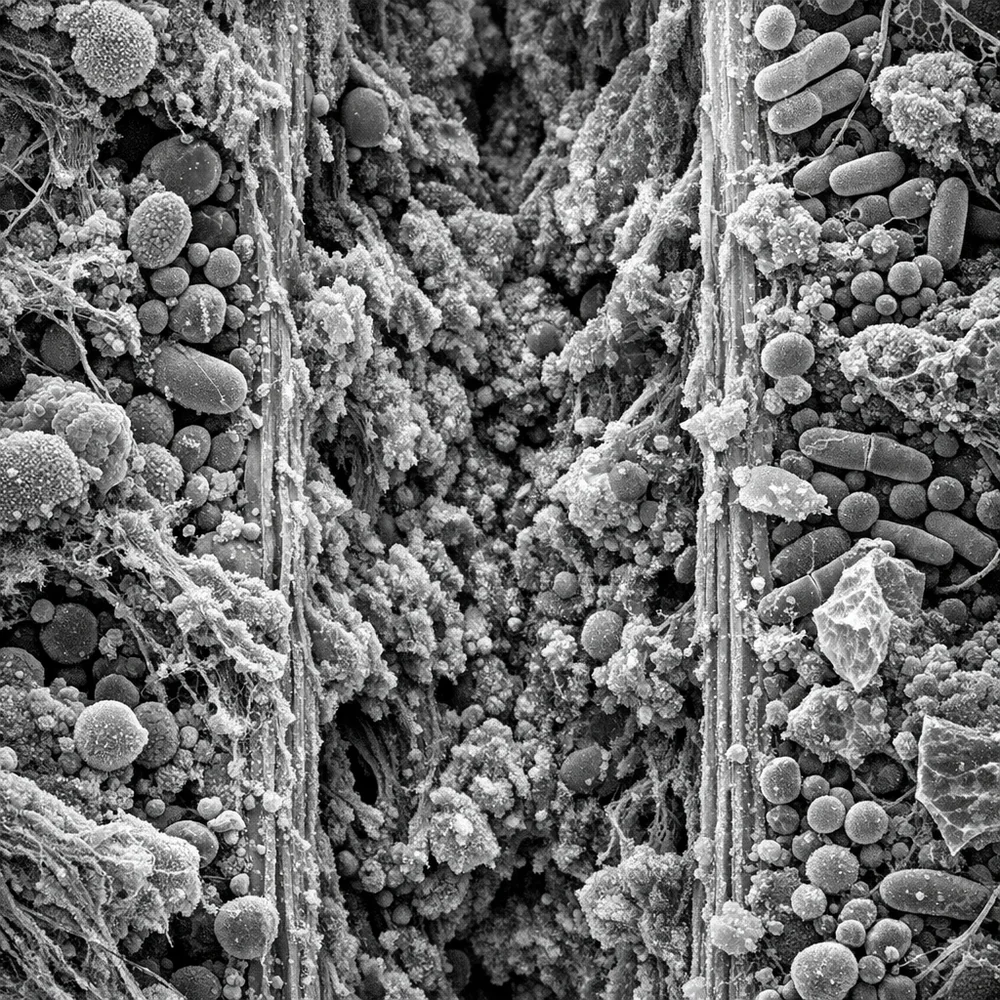
Enzymatic cleaners are usually safe for the seals since they’re pH neutral. But they come with a different problem: biological clogging. Enzymes are proteins, and if you leave them sitting in a stagnant tank for a few days, they can break down and form sludge.
The internal channels that move fluid around are usually less than 1 millimeter wide, and they’re basically impossible to clean out by hand. Once they’re clogged with dried enzymatic gunk, you’re looking at replacing the whole tank assembly.
If you want to use an enzymatic cleaner for pet odors, you’ve got to use a “Fill, Run, Flush” approach. Never leave the solution sitting in the tank while the robot charges.
The heat from the charging battery can warm up the water tank, which speeds up bacterial growth and enzyme breakdown. Your cleaning solution turns into a biological slime that blocks the micro-filters.
The bottom line: Enzymes degrade into biological slime in warm tanks; use “Fill, Run, Flush” to prevent filter clogging.
The Vinegar Myth
The internet is full of “life hacks” saying white vinegar is a safe, natural cleaner for robot mops. From an engineering perspective, that’s just not good advice. Vinegar is dilute acetic acid. It’s a weak acid, sure, but it’s still corrosive to metals and certain rubbers over time.
Inside the solenoid pump, the piston and spring are often stainless steel. Prolonged acid exposure can cause pitting on the metal surface. That roughness increases friction and wears down the rubber seals that rub against it.
Plus, vinegar attacks NBR seals, making them crack and get brittle. A cracked seal leads to internal leaks, and when water drips onto the motherboard, you end up with a short circuit that kills the whole machine.
The bottom line: Vinegar is an acid. It pits steel pistons and cracks rubber seals, eventually leaking onto the motherboard.
Safe Detergent Attributes
So what can you actually put in your robot mop safely? Look for a cleaner that meets three specific requirements.
First, it’s got to be Non-Foaming. Foam is just air bubbles trapped in liquid. A pump designed for incompressible liquid can’t push compressible foam.
If the detergent suds up in the tank or the lines, the pump will vapor lock and stop dispensing water entirely. That’s why regular dish soap or floor cleaners are off-limits; they’re made to foam.
Second, it needs to be pH Neutral. The solution should have a pH between 6 and 8. This keeps it from being acidic (like vinegar) or alkaline (like heavy degreasers or bleach). Neutral pH protects both the rubber seals and the metal parts of the pump.
Third, it should contain Ionic Surfactants. These are advanced cleaning agents that lower water’s surface tension to help it spread and lift dirt, but without leaving the heavy residue that traditional soaps do. They’re designed to dry completely clear, which prevents those Marangoni effect streaks.
Maintenance Protocol: The Weekly Flush
No matter what detergent you use, you’ve got to do some regular maintenance to keep the plumbing healthy. We recommend a weekly flush.
Fill the empty tank with warm (not hot) distilled water. Put it back in and run the robot on “Max Water” mode for one full room cycle. This pushes out any leftover detergent that might have built up in the lines or on the spray nozzles.
Distilled water works best because it has no minerals. Tap water contains calcium and magnesium that can deposit inside the pump, forming scale that’s just as deadly as chemical corrosion.
The Physics of Piezoelectric Wicking
While solenoid pumps are the most common, some high-end mopping robots use a different approach called piezoelectric wicking. This technology gets rid of the moving piston entirely and instead uses a ceramic disc that vibrates at ultrasonic frequencies. These vibrations create a pressure wave that literally pushes water droplets through a microscopic nozzle.
Even dissolved minerals in hard water can build up on the ceramic disc, reducing how much it can vibrate. If you use a sticky detergent like floor wax or polish, the residue coats the ceramic element.
Once the vibration is dampened, flow stops completely. Unlike a solenoid pump that might struggle but still push some fluid through, a piezo system either works perfectly or doesn’t work at all.
For these machines, using ionic surfactants is absolutely essential. You can’t use any product that leaves a film because the film itself changes the resonant frequency of the emitter.
The bottom line: Ultrasonic wicking is binary (working or broken). Any waxy film on the piezo disc stops the vibration instantly.
Chemical Interaction with ABS Plastics
The danger of using the wrong detergent goes beyond just the pump. The water tank itself is at risk too. Most robot mop tanks are made from Acrylonitrile Butadiene Styrene (ABS) or Polycarbonate (PC). These are tough plastics, but they’ve got a weakness called environmental stress cracking.
Certain chemicals, especially high-concentration alcohols and ester-based solvents often found in “heavy duty” degreasers, attack the plastic at a molecular level. They don’t dissolve the tank like acid would dissolve metal. Instead, they make the plastic lose its flexibility.
The result is “crazing,” where thousands of tiny cracks appear in the clear plastic. Over time, usually 3 to 6 months of exposure, these cracks spread until the tank just shatters from the vibration of the robot moving around.
We’ve taken apart plenty of failed units where the owner said the tank “just fell apart,” only to find chemical residue showing they’d used an alcohol-based glass cleaner or industrial floor stripper.
Troubleshooting Pump Failure: A Diagnostic Protocol
If your robot mop stopped dispensing water, don’t assume the pump is dead right away. It’s often just air-locked or clogged. Before you order a replacement part, try this diagnostic process.
First, check that the “Airpath” is clear. Robot mops use gravity-assisted systems. As water leaves the tank, air has to flow in to replace it. If the small rubber air vent on the tank cap is stuck shut (often from dried soap residue), a vacuum forms inside.
The pump can’t overcome that vacuum. Gently poke the air vent with a needle to make sure it’s open.
Second, do a “Syringe Flush.” Remove the water tank and find the water intake nipple on the robot’s body. Using a medical syringe filled with warm distilled water, gently push water into the intake. This manual pressure can often pop loose a stuck check valve or push an air bubble through. If you feel major resistance, the solenoid piston is probably seized from NBR swelling, and at that point, the unit is probably done for.
The bottom line: Diagnostics: Use a syringe to force warm water into the intake (Syringe Flush) to clear air locks or stuck check valves.
The Warranty Trap: Evidence of Misuse
Manufacturers know all about the damage third-party detergents cause. To protect themselves from warranty claims, a lot of robot mops now have “chemical indicators” hidden inside. These are small stickers, kind of like the water damage indicators in smartphones, that change color when they’re exposed to certain pH levels or solvent vapors.
If you send your robot in for repair saying “the pump just stopped working,” the technician will check these indicators. If they find evidence of d-limonene residue or acidic vapors from vinegar, your warranty claim gets denied immediately under the “Unapproved Fluid Usage” clause. That can turn a free repair into a $300 motherboard replacement. We’d really suggest treating the water tank with the same care you’d give the gas tank of your car.
Conclusion
Your robot mop isn’t really like a bucket and mop at all. It’s more like a medical IV drip. It depends on precise chemistry and fluid dynamics to work properly. By respecting the limits of its seals and pumps, avoiding citrus, vinegar, and foam, you’re protecting its lifespan. Treat that water tank like a sacred space for only the purest, most compatible fluids, and your robot will keep doing its job for years.
References
-
Journal of Applied Polymer Science. (2018). Degradation of Nitrile Rubber by d-limonene and citrus terpenes.
-
Sensors and Actuators A: Physical. (2020). Failure modes of piezoelectric and solenoid micro-pumps in consumer robotics.
-
Journal of Colloid and Interface Science. (2019). The Marangoni effect and evaporative deposition patterns in surfactant solutions.
-
Robotics and Computer-Integrated Manufacturing. (2021). Material compatibility in autonomous cleaning appliance fluid systems.
-
Corrosion Science. (2017). Acidic corrosion of stainless steel components in micro-fluidic applications.