Smart Washer Auto-Dosing Guide: The Physics of Precision
Table of Contents
Things You'll Learn From This Article:
- Auto-dosing washers decide how much detergent to use by shining light through the wash water and checking how cloudy it gets, not by guessing based on load size alone.
- Too many suds confuse the washer’s dirt sensor, so using only HE detergent really matters for normal cycle times and water use.
- These machines pump detergent with medical-style pumps that measure liquid very precisely, which is why thickness of the detergent matters so much.
- The washer adds detergent in small bursts and waits between them so the soap can mix properly before it decides whether more is needed.
- Thick, gel-like detergents flow slower than thin ones, so you have to calibrate the machine whenever you change detergent brands.
- Skipping viscosity calibration often leads to under-washed clothes or detergent buildup without any obvious error message.
- Auto-dosing accuracy slowly drifts as pump tubes wear out or detergent dries inside them, so monthly cleaning cycles help keep doses correct.
- Detergent concentration labels (2x, 4x, 8x) aren’t marketing fluff; the washer needs to know this or it may add several times too much soap.
- Too much detergent can trap the washer in long rinse loops because foam prevents proper spinning.
- The dirt sensor is basically a tiny window, and mineral scale or slime on it can make the washer think clean water is still dirty.
- Machine cleaners with citric acid are needed to clear mineral buildup; hot water alone won’t do the job.
- Fabric softener is harder to auto-dose because it thickens and separates over time, which can clog the pump lines.
- Diluting liquid fabric softener with warm water helps prevent waxy buildup and pump blockages.
- Letting the detergent tank run completely empty can trap air in the line, causing the washer to “dose” without actually adding soap.
- Priming or flushing the dosing system after refilling the tank restores normal detergent flow.
The days of measuring laundry detergent with that little plastic cup are pretty much over. High-efficiency washing machines have evolved from simple tumblers into sophisticated chemical processors that can measure soil load, water hardness, and fabric type in real time. The big feature driving this evolution is Automatic Detergent Dosing, which you might see marketed as AutoDisc or EzDispense.
Sure, the main selling point is convenience, filling a reservoir once a month sounds great. But the technical reality is way more interesting. These systems are designed to eliminate the two biggest mistakes in laundry: under-dosing (which leaves dirt trapped in your clothes) and over-dosing (which leads to chemical buildup and skin irritation).
Let’s break down how these systems actually work. We’ll get into the physics of turbidity sensors, how peristaltic pumps move fluid, and why setting up your machine for detergent viscosity is the one step most people skip.
The Turbidity Sensor: The Eye of the System
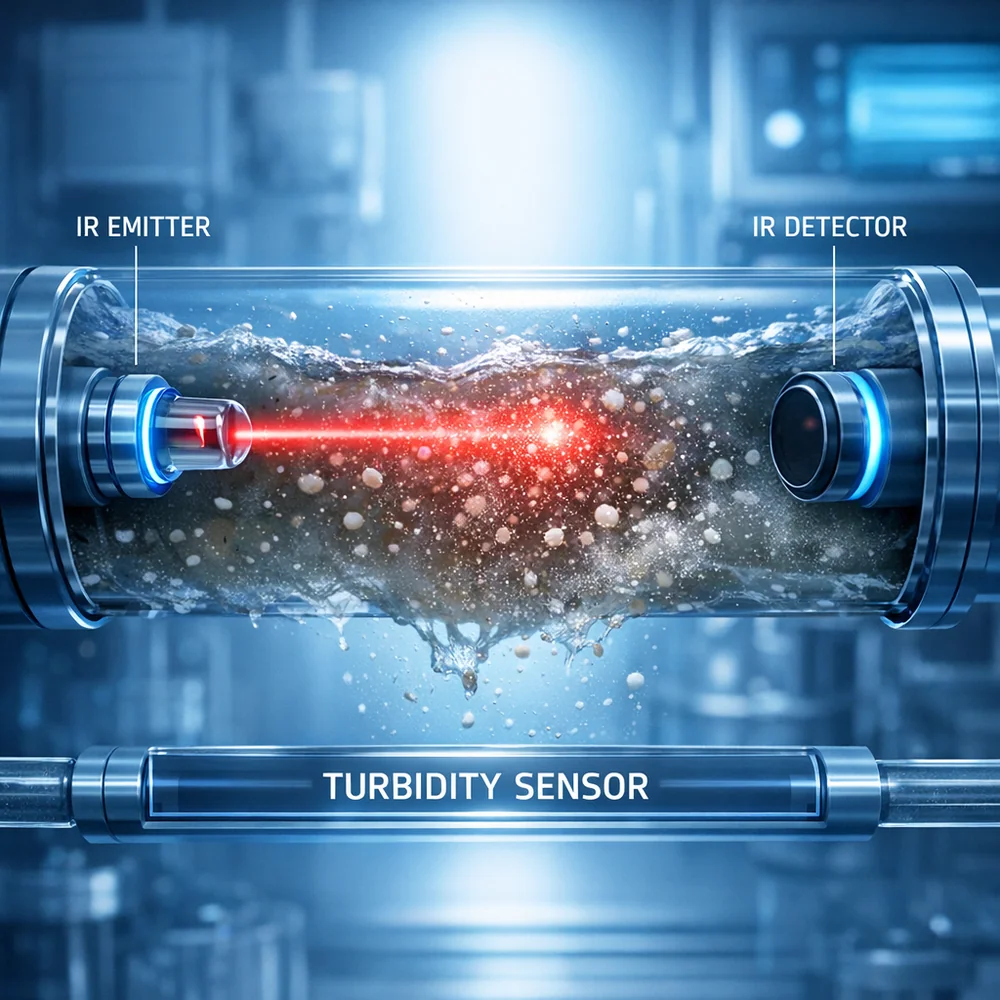
To understand how a machine knows how much soap to add, you first need to know how it “sees” dirt. The main monitoring device in a smart washer is a turbidity sensor, usually located at the lowest point of the drum assembly in what’s called the sump.
This sensor uses light refraction to work. An infrared LED shoots a focused beam across a small water channel to a detector on the other side. When the water’s perfectly clean, 100% of the light makes it through.
As dirt, oil, and dyes come off your clothes and into the water, those particles scatter the light beam. The amount of scattering, measured in Nephelometric Turbidity Units or NTU, tells the machine how dirty the load actually is.
But here’s a catch: the sensor doesn’t just see dirt. It sees suds too. A bunch of foam will scatter light just as much as actual grime, which can trick the machine into thinking the water’s dirtier than it really is.
That’s why using non-HE (High Efficiency) detergents in an auto-dosing machine is such a disaster for the system’s logic. All those suds blind the sensor, triggering unnecessary rinse cycles that waste a ton of water.
The bottom line: Turbidity sensors “see” dirt with light beams; excessive suds scatter this light, tricking the machine into wasting water on extra rinses.
The Peristaltic Pump: Positive Displacement
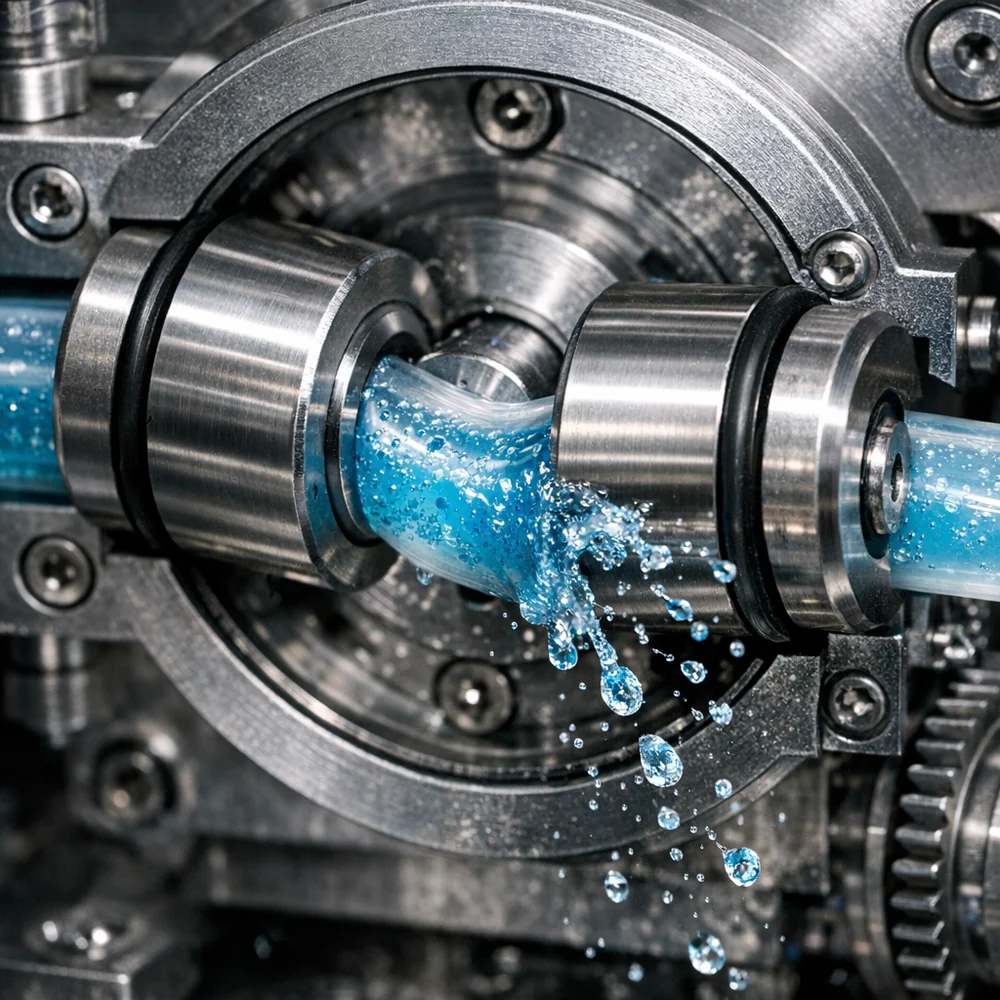
Once the machine figures out how much detergent is needed, it has to physically move the liquid from the reservoir to the drum. It doesn’t use gravity. Instead, it uses something borrowed from the medical field called a peristaltic pump.
This pump physically pushes liquid detergent using rollers that squeeze a flexible tube, kind of like how you’d push toothpaste out. Unlike old gravity-fed trays, this lets the machine dose with milliliter-level accuracy.
The pump works through positive displacement. A rotor with rollers turns against a flexible silicone tube. As the rollers turn, they pinch the tube shut, trapping a little pillow of liquid.
As the roller moves forward, it pushes that liquid ahead while the vacuum behind it draws in more. This system is super precise and clean because the pump mechanism never actually touches the soap, only the tube does.
The bottom line: Peristaltic pumps squeeze a flexible silicone tube like a tube of toothpaste; the machinery never touches the corrosive soap.
Conductivity Hysteresis and Dosing Lag
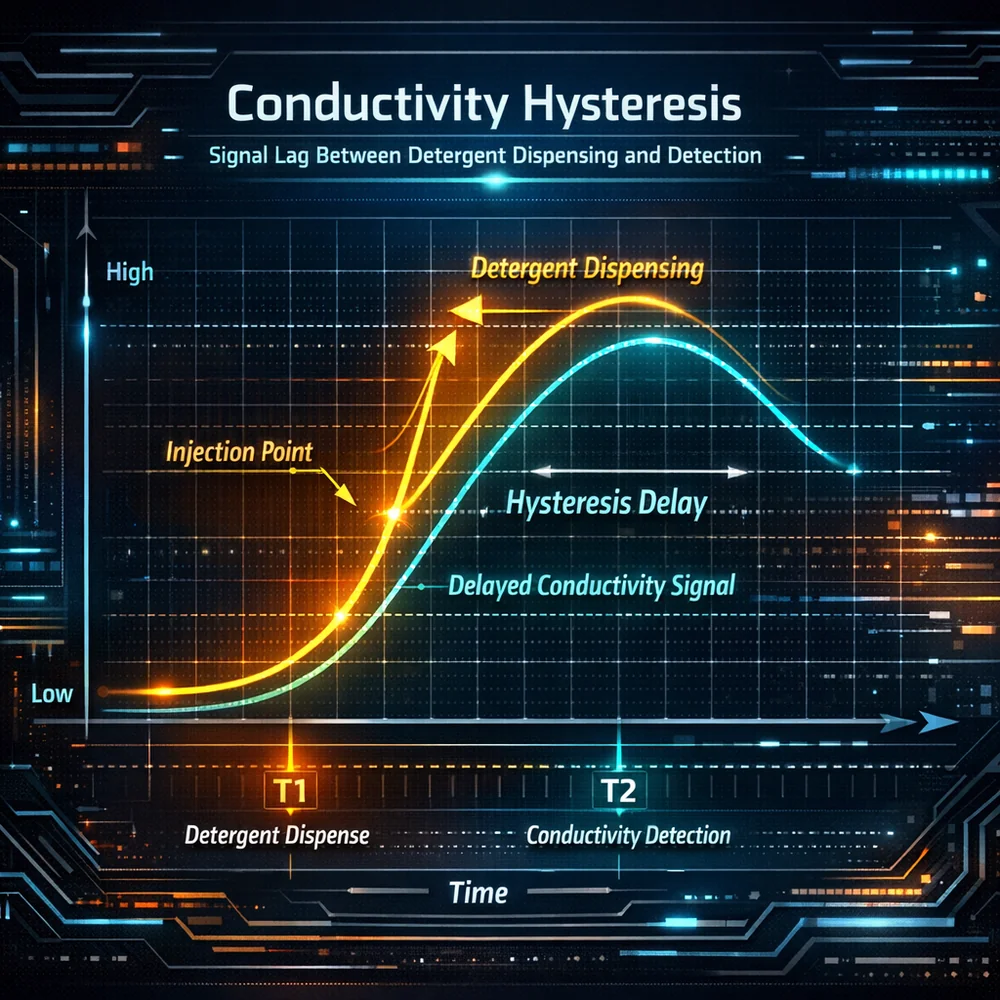
The trickiest part for an auto-dosing system is knowing when to stop adding soap. As detergent enters the water, surface tension drops and electrical conductivity changes. The machine monitors these to figure out when concentration is just right. But there’s a delay between when the pump dispenses soap and when the sensor picks up the change.
This is what’s called conductivity hysteresis. As detergent gets added, conductivity rises, but it often lags behind because the water isn’t mixing fast enough. This lag can cause the machine to overdose if it doesn’t pause and wait for things to even out.
It’s like adjusting a shower that’s slow to heat up. If you keep turning the handle during those ten seconds of delay, you’ll overshoot and burn yourself. The washing machine has the same problem. To handle this, smarter algorithms use a “pulse-and-wait” dosing strategy.
The pump puts in a small burst of detergent, then the drum rotates for about thirty seconds to mix everything before the sensor takes a reading. This stops the hysteresis loop from causing a massive overdose, though it does add some time to the cycle.
Viscosity Calibration: The Missing Variable
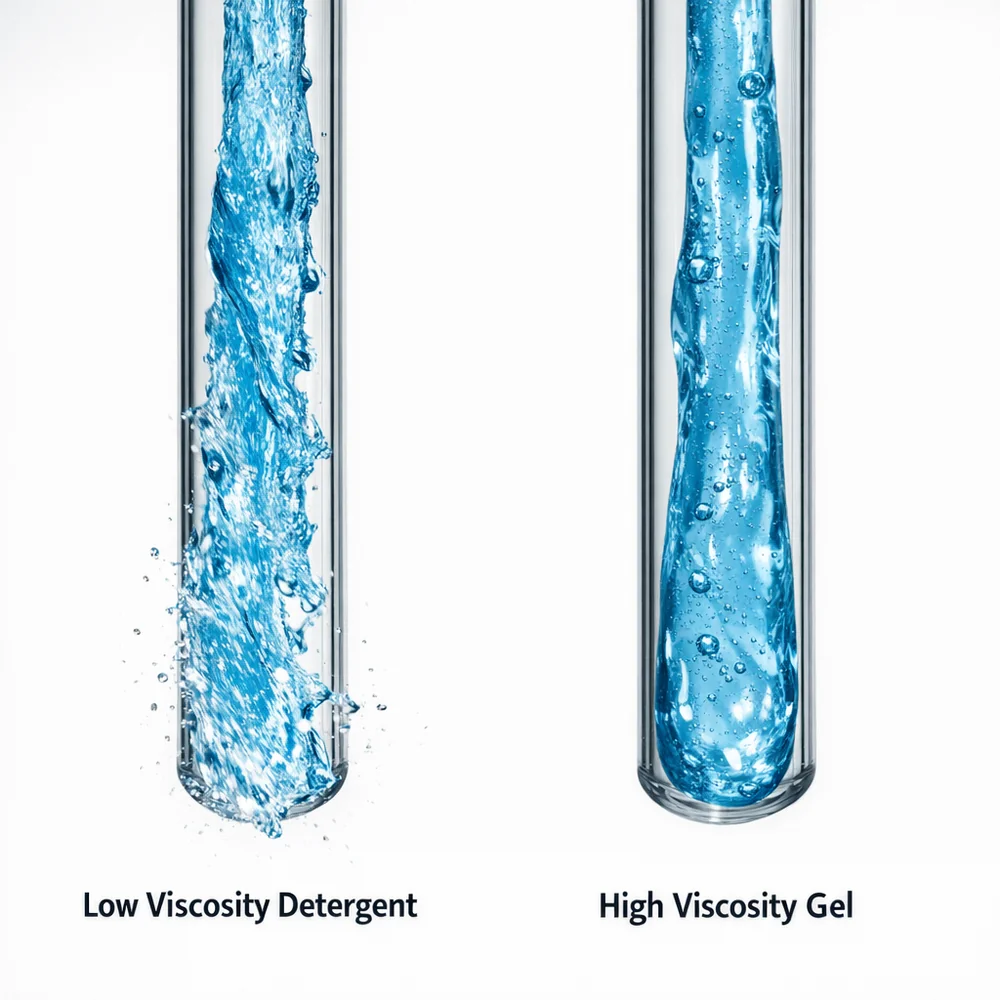
The single biggest failure point in most auto-dosing setups is user error around viscosity. Liquid detergents vary wildly in how they flow. A concentrated “Eco-Gel” might have a viscosity of 3000 centipoise (similar to honey), while a budget detergent might be around 500 centipoise (more like olive oil).
This is crucial for accuracy. Thick gels flow way slower than thin liquids, so the pump has to run longer to dispense the same amount. You’ve got to calibrate the machine for your specific detergent’s viscosity.
If your machine thinks you’re using a thin liquid but you’ve filled the tank with a thick gel, the peristaltic pump won’t draw enough fluid during its active cycle. The result is endless under-dosing. Your clothes come out smelling “wet” but not really clean because the gel’s thickness cut the flow rate in half.
The flip side is also true: using a thin liquid on a “high concentration” setting leads to huge overdosing.
You need to get into the calibration menu of your washer. This is often a hidden menu or a button sequence buried in the manual. The machine will usually ask you to dispense a test amount into a measuring cup and confirm the volume. Don’t skip this step whenever you switch detergent brands.
The bottom line: Viscosity is king. Thick gels flow 6x slower than thin liquids. If you don’t calibrate the machine, you will chronically under-dose.
The Problem of Dosing Drift
Even a perfectly calibrated system can lose accuracy over time. This is called dosing drift, and it happens because of mechanical wear and chemical buildup.
The silicone tube inside the peristaltic pump is under constant stress. After thousands of cycles, it loses elasticity. It doesn’t spring back open as quickly after the roller passes.
This reduces vacuum pressure, meaning less detergent gets drawn in with each rotation. A pump that delivered 50ml per minute when new might only deliver 42ml per minute after three years.
Chemical residue is another culprit. Detergents are designed to be sticky. If the machine sits unused for weeks, the detergent in the tube can dry out and crystallize, narrowing the inside of the line.
This increases friction and puts back-pressure on the pump. To prevent this, most manufacturers recommend running a “Clean Dosing System” cycle with warm water every month, or whenever the machine will be idle for more than two weeks.
High Efficiency (HE) Concentration Factors
Beyond viscosity, detergent concentration is a separate variable to deal with. Detergents come labeled as 2x, 4x, or even 10x concentrate. This number tells you how much active surfactant is in each unit of liquid.
A 2x detergent needs about 50ml for a standard load. An 8x ultra-concentrate only needs 12ml. If you put 8x detergent in but leave the machine set to default (usually 2x), you’ll inject four times the necessary soap.
This leads to “Sudsing Lock,” where the drum fills with so much foam that friction against the walls stops the motor from reaching high spin speeds. The machine will show an endless “time remaining” error as it tries over and over to rinse all those suds away.
Check the back of your detergent bottle for the recommended dose per load. Then compare that to the default setting in your washer’s “Hardness/Dosage” menu. Most smart washers assume “Medium” water hardness and “2x” detergent unless you tell them otherwise.
The bottom line: Configure your concentration settings. Using 8x detergent on a 2x setting causes “Sudsing Lock,” freezing the machine in an infinite rinse loop.
Optical Maintenance of Turbidity Sensors
The turbidity sensor is an optical device, which means it needs a clear view to work right. Over time, biofilm and mineral scale can build up on the glass lenses of the emitter and receiver. This gives the washing machine something like cataracts.
A clouded sensor detects less light even in clean water. It reads this as “dirty water” and adds more detergent or runs extra rinses trying to clear it. The result is a cycle that takes three hours instead of one and wastes a massive amount of water.
To keep the optical path clear, you need to regularly use a washing machine cleaner with citric acid. The acid dissolves mineral scale off the lens. Just running a “Hot” cycle won’t cut it; heat alone doesn’t remove calcium deposits.
For manual cleaning, you can usually access the sump filter at the bottom front of the machine. While the sensor itself is usually tucked away, keeping the sump free of lint and slime prevents the lens from getting dirty again too fast.
Fabric Softener Viscosity Issues
Auto-dosing systems often have a second tank for fabric softener. The physics here are even trickier. Fabric softeners are typically non-Newtonian fluids, basically animal fats (tallow) suspended in water.
Over time, these fats separate and clump up, creating a waxy sludge that’s brutally good at clogging peristaltic tubes. And since softeners get dispensed during the final rinse when the water’s cold, there’s no heat to help dissolve this gunk.
If you use auto-dosing for fabric softener, you need to thin it out first. Add a little warm water before filling the tank. A 50/50 mix of water to softener is usually enough to lower the viscosity and keep things flowing. This prevents the separation that kills pumps and keeps the dispenser drawer from getting all waxy.
That said, from a garment care standpoint, we’d generally recommend skipping liquid softeners entirely and using dryer balls or vinegar instead. Softeners coat technical fibers and wreck their moisture-wicking abilities.
Troubleshooting: The Air Lock Phenomenon
One of the most frustrating “silent failures” with auto-dosing is the air lock, or vapor lock. This happens when an air bubble gets stuck in the dispensing line. Because the pump is designed to move liquid, not gas, the bubble just compresses and expands with each pump action but never actually moves forward. This basically breaks the vacuum seal that’s needed to pull new detergent from the tank.
This usually happens when the detergent tank runs completely dry. When you refill it, a pocket of air often gets trapped between the new liquid and the pump intake. The machine thinks it’s dispensing soap (because the motor is running), but nothing is actually going into the drum.
To fix this, most smart washers have a priming sequence. This maintenance cycle forces the pump to run at max speed for a while to purge the line. If your machine doesn’t have a dedicated prime button, running three “Rinse and Spin” cycles in a row with auto-dose set to “High” usually pushes the air through. If you switch detergent brands often, we’d suggest flushing the line with warm water between brands to prevent thick spots that make air locks worse.
The bottom line: Air Locks occur when tanks run dry. The pump compresses the trapped air but moves no liquid. Prime the pump to fix it.
Conclusion
Switching to auto-dosing isn’t just about convenience; it’s about precision. By understanding how sensor optics, pump mechanics, and fluid viscosity all interact, you turn your appliance from a simple machine into a precise scientific tool. The payoff is clothes that last longer, skin that’s less irritated, and a significant cut in how many chemicals you’re sending down the drain.
References
-
Journal of Surfactants and Detergents. (2019). Impact of detergent viscosity on peristaltic dosing accuracy.
-
IEEE Sensors Journal. (2020). Optical turbidity sensing for feedback control in washing machines.
-
Water Science and Technology. (2018). Conductivity hysteresis in surfactant solutions.
-
Appliance Engineering. (2021). Failure analysis of peristaltic tubing in consumer dosing systems.
-
International Journal of Consumer Studies. (2017). Efficacy of auto-dosing systems in reducing chemical waste.