Washing Gore-Tex & Waterproof Gear: Membrane Maintenance & DWR Reactivation
Table of Contents
Things You'll Learn From This Article:
- Washing rain gear regularly keeps it working; dirt, sweat, and smoke slowly break down waterproof and breathable performance if you leave them in the fabric.
- Feeling wet inside a jacket often means the outside fabric is soaked, not that rain is leaking through.
- Breathability depends on tiny pores staying clean, and washing is what clears out sweat salt, oils, and grime that block them.
- Water beading on the outside comes from a surface treatment, not the membrane itself, and that treatment stops working when it’s dirty.
- Heat after washing (a medium dryer or careful ironing) helps restore water beading by reactivating the outer coating.
- Regular household detergents can ruin waterproof gear by leaving residues that attract water or clog pores.
- Powder detergents, fabric softeners, optical brighteners, and bleach are especially harmful and should never be used on waterproof gear.
- Specialized technical washes are safest, but a fragrance-free “free and clear” liquid detergent works if you use less and rinse more.
- Extra rinse cycles matter because leftover soap you can’t see can still kill breathability.
- Medium heat in a home dryer is generally safe and actually helps maintain waterproofing when used correctly.
- If water still soaks into the fabric after washing and heating, the outer coating needs to be reapplied.
- Spray-on waterproofing is best for jackets because it treats only the outside and doesn’t interfere with sweat movement on the inside.
- Wash-in waterproofing can make jackets feel clammy and is better reserved for items without inner linings, like pack covers or tent flies.
- Let muddy gear dry and brush it off before washing so grit doesn’t grind into the fabric in the machine.
- Washing frequency should match use: often for heavy use, less often for casual wear, but never store a jacket dirty.
- Body oils keep damaging fabrics even when a jacket sits unused, so end-of-season washing is essential.
- Long-term storage should be loose and hanging, not stuffed tightly, to avoid creases, mildew, and layer separation.
- Cool, dry, dark storage spaces protect waterproof fabrics better than garages, attics, or car trunks.
There’s this annoying myth floating around the outdoor community that you shouldn’t wash your expensive rain gear. People treat their $500 shell jackets like they’re made of spun sugar, terrified that water and detergent will strip away the waterproofing they paid a fortune for.
Here’s the reality: a dirty jacket is a dying jacket. All that body oil, campfire smoke, and trail dust that experienced hikers wear like badges of honor? They’re actually chemical agents of destruction slowly killing the very technology that keeps you dry.
Ever felt clammy and soaked inside your rain jacket even though the outside wasn’t leaking? That’s probably not a leak at all. That sensation usually comes from “wetting out”—a failure of surface tension mechanics caused by contamination.
Proper maintenance isn’t just about hygiene or smell. It’s essential for the membrane technology to actually work as intended.
This deep dive covers the physics of ePTFE (expanded polytetrafluoroethylene) membranes found in Gore-Tex, eVent, NeoShell, and similar products. Once you understand how DWR (Durable Water Repellent) fails—and recovers—you can keep gear worth hundreds or thousands of dollars performing like new.
Cleaning Technical Membranes Without Clogging
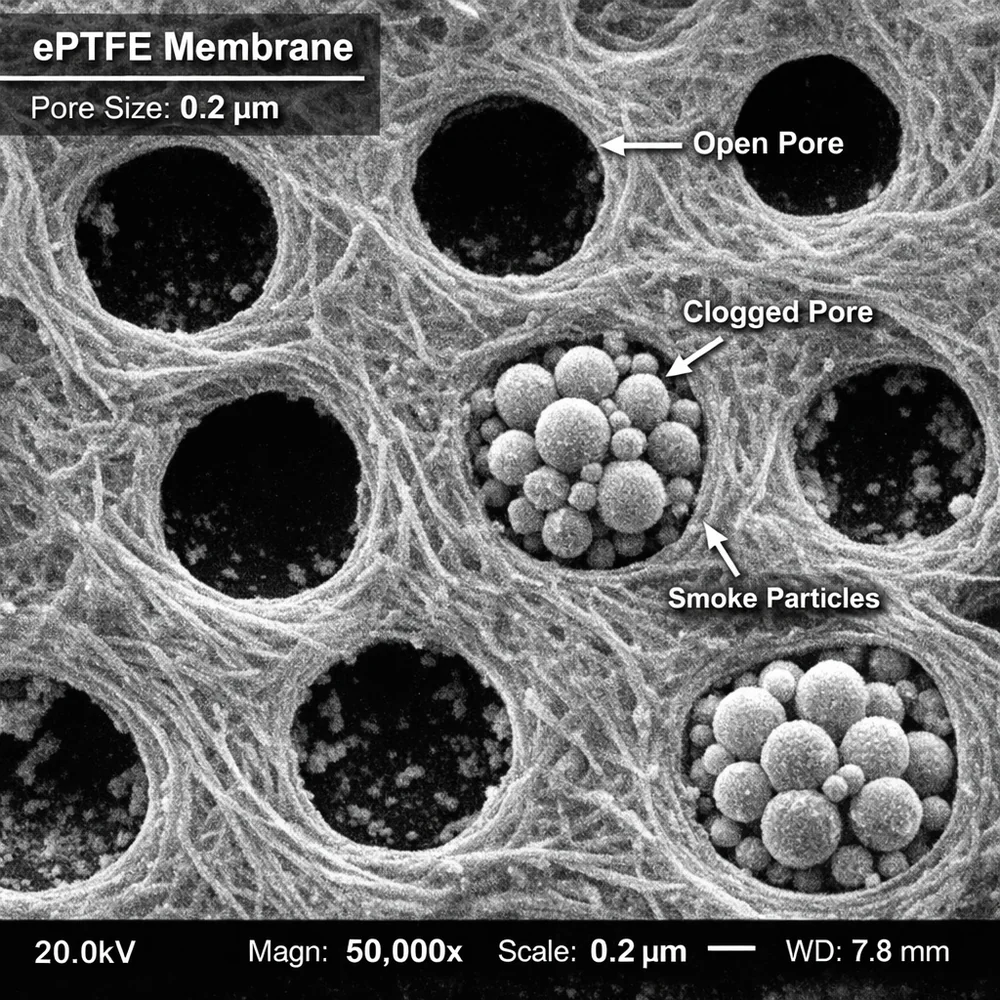
Modern waterproof breathable fabrics rely on an ePTFE membrane that’s been mechanically stretched to create a specialized lattice structure. This process produces a material with approximately 9 billion microscopic pores per square inch, each working as a selective gatekeeper.
These pores are engineered to precise dimensions—about 0.2 microns in diameter. A liquid water droplet measures roughly 20,000 microns across, making it physically too big to pass through these tiny openings no matter how hard the rain drives against you. That’s why rain can’t penetrate from outside.
But water vapor molecules from your sweat? They’re only about 0.0004 microns—thousands of times smaller than the pore diameter. These tiny molecules flow through effortlessly, carrying body heat and moisture away from your skin. That’s the “breathable” part of “breathable waterproof.”
The critical vulnerability: those pores need to stay open and unobstructed. Dirt particles, salt crystals from dried sweat, and microscopic smoke particles—they’re all small enough to lodge in the pore lattice.
Once enough contamination builds up, the vapor pathways get blocked. You’re effectively wrapped in a plastic bag, soaking in your own sweat despite wearing a garment designed specifically to prevent that.
Regular washing flushes these contaminants from the pore structure, restoring the airflow that makes breathability work. Clean membrane = works as designed. Contaminated membrane = fails regardless of quality or price.
The bottom line: Gore-Tex pores are 20,000 times smaller than a water droplet but 700 times larger than water vapor; dirt blocks these pores, trapping sweat inside.
Reactivating DWR Coatings with Heat
The ePTFE membrane is protected by an outer layer called the face fabric—usually nylon or polyester. This exterior material gets a DWR (Durable Water Repellent) polymer treatment during manufacturing that creates microscopic “spikes” on the fiber surface. These molecular projections increase surface tension, forcing water to bead up into spheres and roll off rather than soaking in.
When dirt, body oils, sunscreen, and environmental gunk mask these microscopic spikes, surface tension drops and water stops beading. Instead, droplets flatten and soak into the outer layer—that’s “wetting out.”
The membrane underneath is still completely waterproof even when the face fabric wets out. But a saturated outer layer creates two big problems. First, that water layer blocks vapor from passing through the membrane, killing breathability. Second, wet fabric conducts heat away from your body about 23 times faster than dry fabric, producing that clammy, cold feeling that feels like you’re leaking.
DWR polymers are thermoplastic—their molecular structure responds to heat. Over time, friction and abrasion make those microscopic spikes gradually lie flat. When they’re flat, water spreads instead of beading.
Heat energy makes the polymer chains regain mobility and stand back up, realigning into their original spiky, water-hating orientation. The fix is simple: after washing, toss the garment in a tumble dryer on medium heat for 20 minutes.
Test the results by sprinkling water on the sleeve. If it beads instantly and rolls off, you’re good. If water soaks in instead of beading, the DWR may need restoration beyond what heat reactivation can provide.
No dryer? A household iron set to synthetic/medium works too. Put a towel between the iron and jacket to prevent melting the face fabric. Work slowly across the entire surface for even heat distribution.
The bottom line: Heat reactivates DWR; tumble drying on medium heat for 20 minutes makes water bead up again by standing microscopic polymer “spikes” back up.
Detergent Selection for Waterproof Fabrics
The cleaning product you choose is the single most critical variable for membrane longevity beyond washing frequency. Standard household laundry products contain additives that actively harm technical fabrics.
Powder detergents use mineral fillers called zeolites to carry cleaning agents through wash water. These microscopic granules often don’t dissolve completely—especially in water-efficient washing machines.
When undissolved powder contacts a waterproof membrane, those particles become like microscopic shrapnel, lodging in pores and causing physical micro-abrasions from inside the fabric structure. Not good.
Standard liquid detergents contain surfactants specifically designed to help water penetrate fabric—the textile industry calls them “wetting agents.” If residues remain after rinsing, they actively attract water instead of repelling it. That’s exactly the opposite of what you need.
Optical brighteners deposit on fabric surfaces to create the visual perception of extra whiteness. These deposits clog pores exactly like dirt particles. Fabric softeners coat fibers with wax or silicone that feel soft but completely neutralize DWR on contact.
The bottom line: Powder detergent acts like shrapnel; undissolved crystals lodge in the membrane pores and physically cut the fabric from the inside.
Avoiding Powder Detergents and Bleach
Specialized “Technical Wash” products from companies like Nikwax or Grangers address these concerns through careful chemistry. They’re technically non-detergent soaps that clean effectively but rinse away completely without leaving residue that could harm membranes or DWR.
When specialized products aren’t available, choose a “Free and Clear” liquid detergent without optical brighteners, fragrances, or softening agents. Use half the recommended dose and add an extra rinse cycle.
Chlorine bleach is absolutely the worst thing you can put on technical fabrics—it’s like kryptonite. Bleach causes immediate oxidative degradation of the polyurethane protective layer that manufacturers apply inside ePTFE membranes to protect against body oil penetration.
Once this PU layer is damaged, the membrane becomes exposed to contamination that would otherwise never reach it. It’ll eventually crack and peel as it degrades without protection. Bleach also attacks nylon face fabrics, lowering tear strength and accelerating UV damage.
And yeah—using chlorine bleach voids the warranty of basically every major outdoor brand immediately and permanently.
The bottom line: Chlorine bleach destroys the internal PU protective layer and voids your warranty instantly. Never use bleach on technical outerwear.
Rinse Protocols to Ensure Breathability
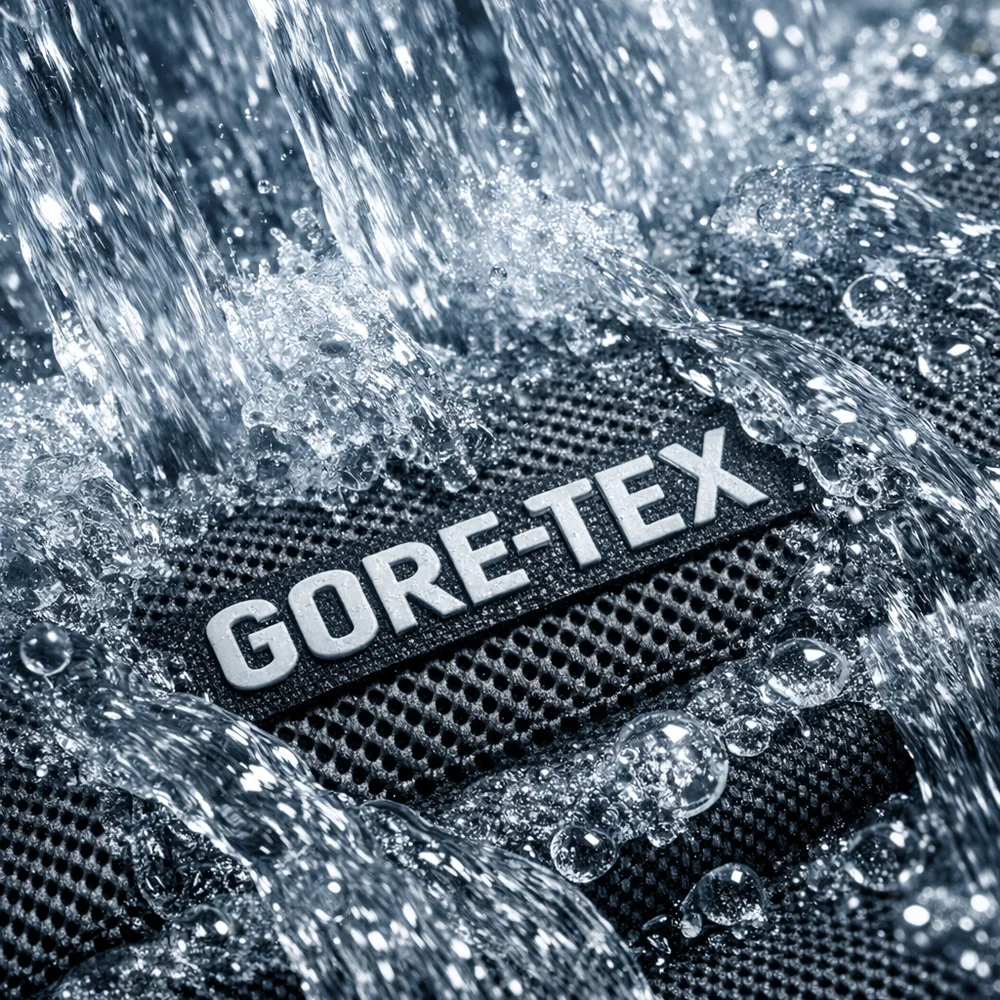
Any detergent residue left on fabric attracts water and promotes wetting out, so rinsing deserves as much attention as washing. Modern high-efficiency machines use minimal water, relying on mechanical tumbling rather than dilution to clean.
This water-efficient approach often proves insufficient for flushing thick, layered technical fabrics completely clean. Your outdoor gear needs more thorough rinsing than regular household laundry.
The solution: run two complete rinse cycles for every wash. After the main cleaning cycle, run a separate rinse and spin before considering the garment clean. If your machine has a high water or extra water setting, use it.
The goal is to reduce surfactant concentration to effectively zero. Residue you can’t see or feel can still attract water and kill performance.
When in doubt, add another rinse. The extra water and energy cost is nothing compared to replacing failed premium outerwear.
The bottom line: Detergent residue attracts water; two full rinse cycles are mandatory to ensure the fabric is completely free of surfactants.
Tumble Drying Instructions for Waterproofing
Concerns that tumble dryers will melt adhesives and destroy technical garments are largely unfounded for home equipment used at appropriate settings. The extreme heat that damages fabrics exists only in commercial equipment or when using the highest settings for extended periods.
Medium heat in a standard household dryer is both safe and necessary for proper maintenance. Seam tape adhesives are actually heat-activated during manufacturing, and gentle warming can help re-bond tape that’s started lifting at edges.
A few prep steps protect garments during drying:
- Close all zippers and fasten all velcro before starting
- Wet jackets bundle together, so check every 10 minutes to ensure even drying
- Once dry to the touch, continue for 20 more minutes specifically for DWR heat activation
That extended exposure at moderate temperature is where the beading restoration actually happens. But never let garments sit in the drum after the cycle stops with residual heat—contact heat from the stationary drum surface can damage fabric locally. Remove immediately when the cycle ends.
Spray-On vs Wash-In Waterproofing
DWR coatings aren’t permanent. Eventually, normal wear depletes the treatment beyond what heat reactivation can restore. When water no longer beads on freshly washed, heat-treated gear, you need to reapply DWR using aftermarket products.
Two methods exist with significantly different implications. Wash-in products go in the washing machine and coat the entire garment uniformly, inside and out. Spray-on products are applied manually to just the exterior face fabric.
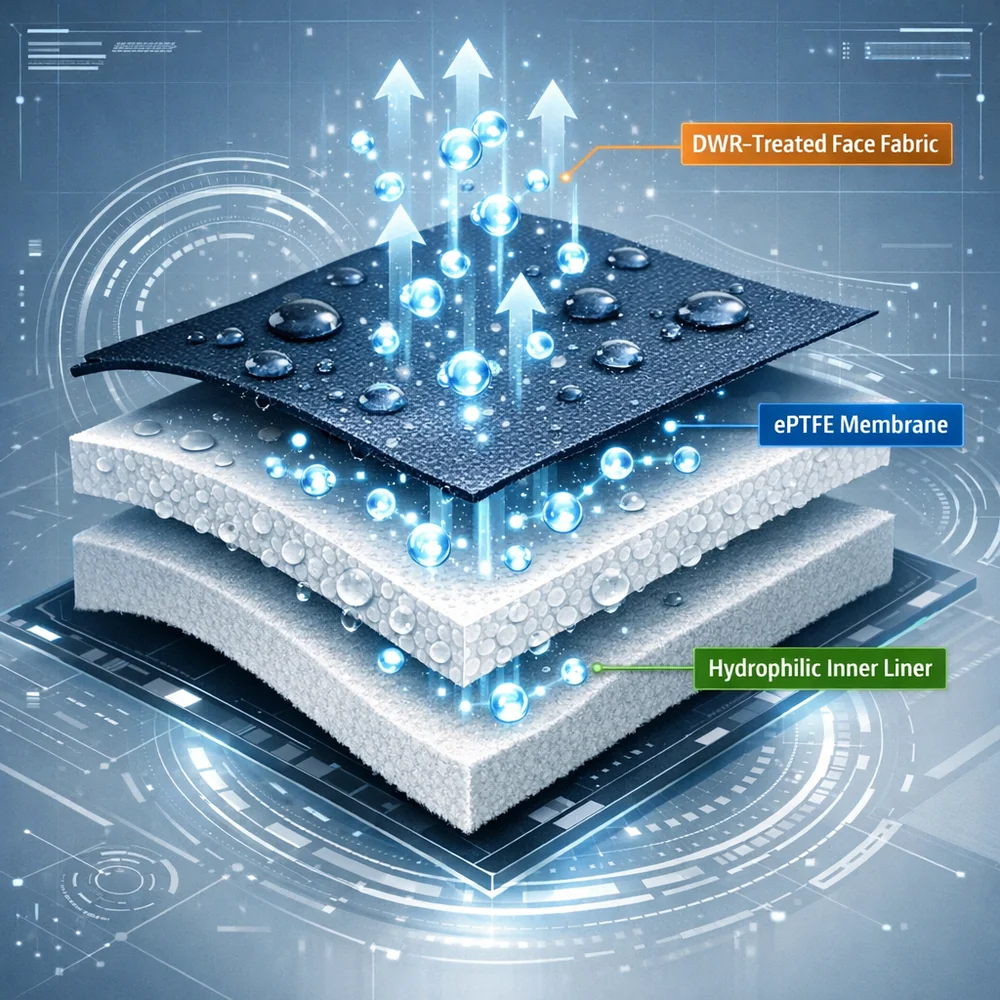
Here’s why spray-on is scientifically superior for most clothing: premium 3-layer jackets including Gore-Tex Pro use a hydrophilic inner liner specifically engineered to pull moisture away from your skin and push it toward the membrane for evaporation. This wicking action is essential for comfort.
Wash-in DWR coats this inner liner with the same water-repelling chemistry as the outside. A waterproof coating on a wicking liner completely destroys its ability to move moisture. Sweat will bead up on the inside of your garment instead of being transported out, leaving you clammy regardless of how well the membrane works.
Spray-on applied only to the clean, wet outer face restores beading without wrecking the internal moisture management system. For technical clothing with performance liners, spray-on isn’t just preferable—it’s functionally necessary.
Wash-in products work fine for unlined items like tent rain flies, pack covers, gaiters, or single-layer shell fabrics where there’s no internal wicking to protect.
The bottom line: Never use “Wash-In” DWR for lined jackets; it waterproofs the wicking liner, trapping sweat against your skin. Use “Spray-On” instead.
Removing Mud and Trail Dirt
Dried mud contains silica—essentially natural sandpaper. Throwing heavily muddy gear straight into the washing machine lets the agitation cycle grind these abrasive particles into the fabric, causing micro-tears in face fabrics and potentially damaging membrane layers.
Proper prep before machine washing: let mud dry completely first. Dried material releases more completely with less abrasion than wet mud. Once dry, use a stiff nylon brush to mechanically remove the bulk before the garment touches water.
After brushing, rinse with a garden hose or utility sink to flush remaining loose particles. Only once the three-dimensional surface contamination is physically gone should the garment enter the washing machine for chemical cleaning.
This multi-step approach prevents your washer from becoming an abrasion chamber that damages the very gear you’re trying to protect.
Frequency of Washing Expensive Gear
“Delamination by contamination” describes the primary failure mode for most technical jackets that never suffered mechanical damage. Body oils and acids in sweat slowly attack the adhesive bonds holding membrane laminates to their supporting layers. When these adhesives fail, layers separate and bubbling appears on the fabric surface. This is irreparable and terminal.
Appropriate wash intervals depend on use intensity:
- Heavy use (thru-hiking, ski guiding, multi-day mountaineering): wash every 10-12 days of actual use
- Casual use (dog walking, commuting, occasional day hikes): wash monthly or when you notice wetting-out
The most critical rule involves storage. Never store a dirty jacket for extended periods between seasons. Body oils continue attacking adhesives throughout storage, even without wearing.
Always wash and completely dry garments before putting them away for weeks or months. That end-of-season maintenance wash protects your investment during dormancy.
Storing Technical Fabrics to Prevent Delamination
Visible hyphae (fungal threads) weaving through the adhesive. Scientific focus, clinical lighting, 4k.” loading=“lazy” />
Compression stress accelerates many failure modes including delamination. Storing a waterproof shell rolled tightly in its stuff sack creates permanent creases at every fold point. At the apex of these sharp folds, the membrane experiences extreme mechanical stress that can cause cracking and permanent damage.
The sealed, compressed environment inside a stuff sack also prevents airflow that would otherwise inhibit mildew. Mildew organisms feed on the adhesive compounds bonding laminate layers, accelerating delamination from a biological angle.
The only acceptable long-term storage: hang on a wide plastic hanger. Avoid wire hangers that concentrate weight onto small points, creating permanent shoulder dimples.
Store in a cool, dry, dark closet away from direct sunlight. UV through windows will gradually yellow laminates and weaken nylon face fabrics. Climate-controlled interior spaces beat attics, garages, and car trunks every time.
The bottom line: Store gear on hangers, not in stuff sacks. compression creates creases that crack membranes and promotes mildew that eats adhesives.
Conclusion
Your waterproof gear is an engineering marvel designed literally to keep you alive in hostile conditions. The technology works when properly maintained, and fails when neglected.
Protection goes both directions. The membrane protects you from precipitation and wind. You must protect the membrane from contamination and degradation. Keep pores clean through regular washing, maintain DWR through heat activation, and store properly between seasons—your equipment will perform as designed when conditions demand it.
Don’t fear the washing machine. Fear the dirt accumulating on fabrics you treat with excessive caution. A clean, properly maintained jacket is a breathable, reliable, long-lasting jacket. The few minutes invested in appropriate care protects investments of hundreds or thousands of dollars.
References
- Journal of Applied Polymer Science. (2014).
Effect of contamination on water vapor transmission rates in ePTFE membranes. https://onlinelibrary.wiley.com/journal/10974628 2. Mountain Research and Development.
(2016). Durability and failure modes of outdoor apparel. 3.
W.L. Gore & Associates. Gore-Tex Care and Maintenance Technical White Paper. https://www.gore-tex.com/support/care 4.
Textile Research Journal. (2018). Adhesive failure mechanisms in laminated waterproof breathable fabrics.
https://journals.sagepub.com/home/trj 5. REI Expert Advice. How to wash and care for rain jackets.