Removing Storage Yellowing from White Clothes: Understanding Phenolic Yellowing
Table of Contents
Things You'll Learn From This Article:
- White clothes can turn yellow in storage because of chemicals from plastic packaging, not just age or dirt.
- Plastic bags, especially dry cleaning bags, can cause yellowing even if the clothes never looked dirty.
- Warm, humid, or fluctuating temperatures make storage yellowing happen faster.
- Cotton fabrics are more likely to yellow than many synthetics, especially if they were washed with high‑pH detergents.
- Oxygen bleach (like OxiClean) can often remove storage yellowing if you soak the fabric in warm water long enough.
- Bluing products can make yellowed whites look better quickly, but they hide the problem instead of removing it.
- Vinegar or citric acid rinses help when yellowing is linked to leftover detergent or other alkaline residues.
- Washing clothes before long‑term storage matters, even if they look clean, because invisible body oils turn yellow over time.
- Skipping fabric softener before storage helps prevent future yellowing and buildup.
- Acid‑free tissue paper protects white clothes in storage, while regular tissue or newspaper can make yellowing worse.
- Taking clothes out of dry cleaning plastic right away reduces the risk of yellow stains forming.
- Breathable storage, like cotton garment bags or uncovered hanging, is safer than sealed plastic.
- Air quality affects stored clothes; fumes from cars, gas dryers, or heaters can contribute to yellowing.
- Storage areas near garages, laundry rooms, or heating equipment are higher risk for discoloration.
- With the right cleaning, storage materials, and location, storage yellowing is mostly preventable.
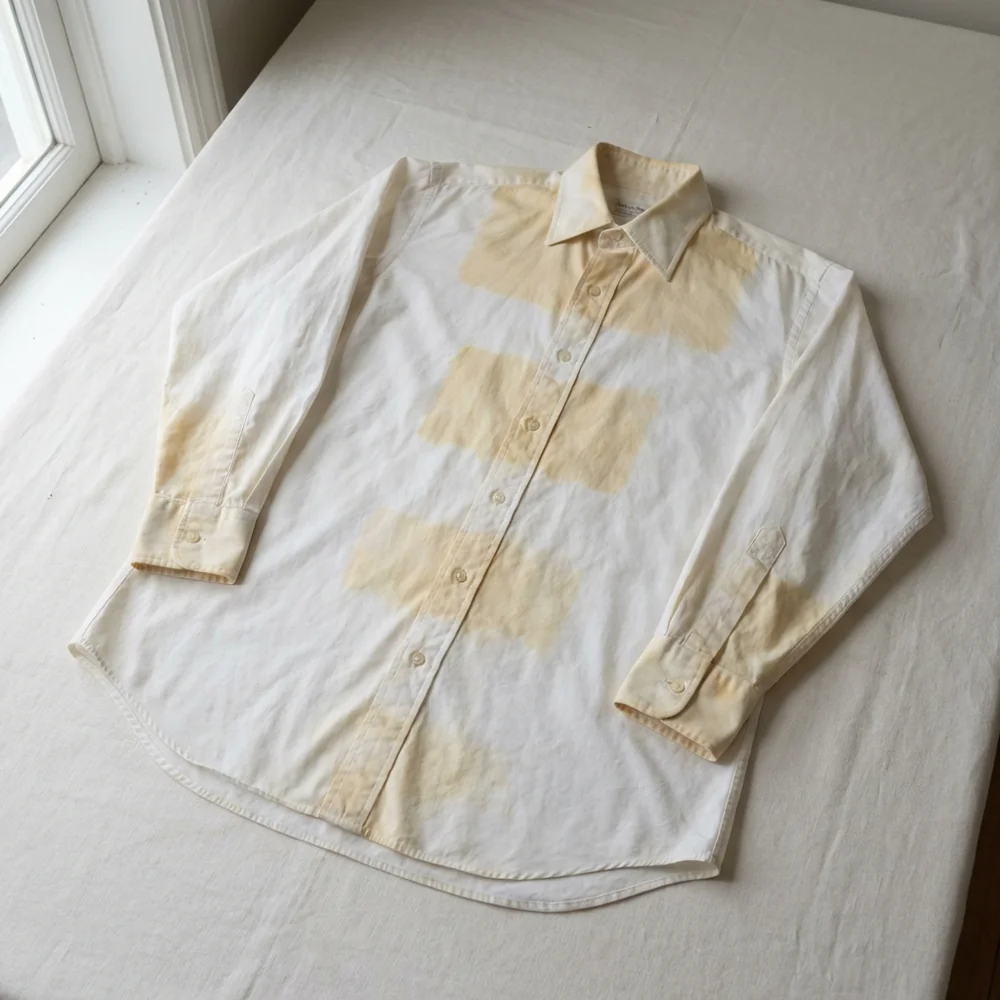
You pull that white shirt out of the closet where it’s been stored for a season, and suddenly it’s not white anymore. There’s an unmistakable yellow cast that wasn’t there before, and regular washing doesn’t seem to help. This isn’t your imagination, and it’s not just “getting old.”
This has a specific name: phenolic yellowing, sometimes called storage yellowing or package yellowing.
It happens because of chemical reactions involving compounds in common packaging materials. Unlike gradual age-related yellowing, this can develop relatively quickly and often appears in patterns matching where the fabric touched packaging. Once you understand what’s causing it, both fixing the problem and preventing it become straightforward.
Why White Clothes Turn Yellow in Storage
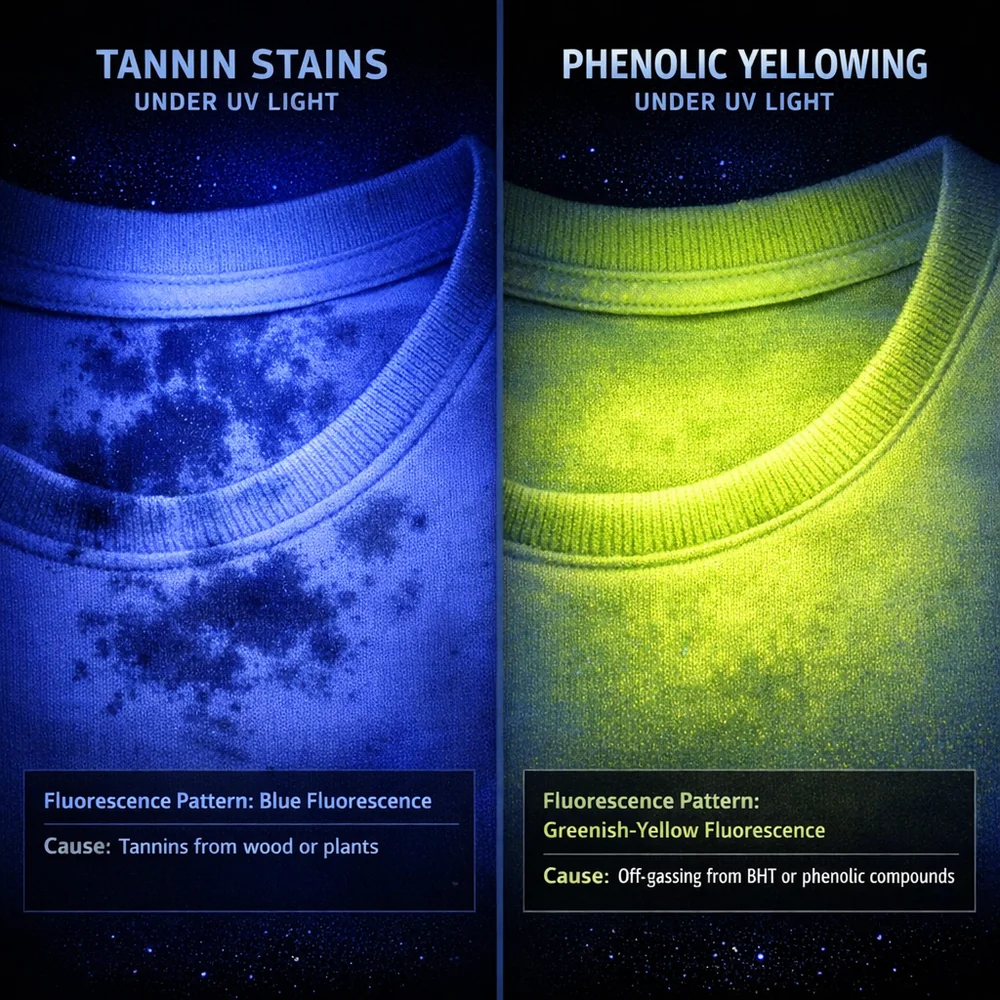
Several chemical processes can yellow stored white fabrics, but the most common involves a reaction between antioxidants in plastic packaging and nitrogen oxides floating around in normal air. This specific reaction produces the intense yellow discoloration that’s characteristic of phenolic yellowing, often more severe than ordinary age-related discoloration.
Temperature and humidity speed things up considerably. Warm storage environments (like attics or areas near heating vents) provide energy that drives the chemical reactions forward. Moisture helps reactive compounds move from packaging to fabric. Spaces with temperature swings are particularly problematic.
Time obviously matters, with longer storage allowing more discoloration. But even relatively brief storage, just a few months, can produce visible yellowing if conditions are right. This explains why clothes stored from one season to the next sometimes come out noticeably discolored.
Cotton absorbs and retains the yellowing compounds more readily than some synthetic materials. Finishes applied during manufacturing can either help or hurt, with alkaline finishes generally increasing susceptibility.
Key Insight: Phenolic yellowing often results from a reaction between BHT in plastic packaging and nitrogen oxides in the air.
What’s Actually Happening Chemically
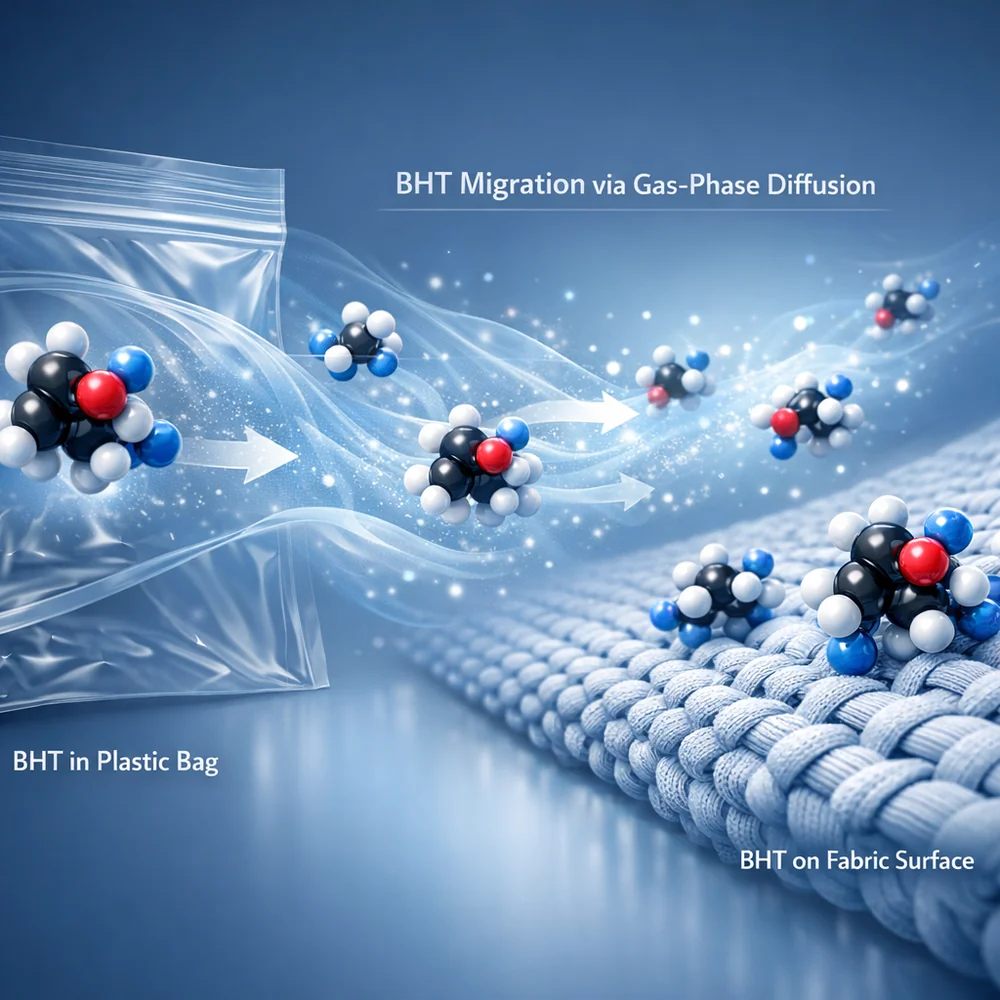
The chemistry centers on butylated hydroxytoluene, usually shortened to BHT. It’s an antioxidant that manufacturers add to polyethylene and polypropylene plastics to keep them from breaking down during processing and use. BHT slowly evaporates from plastic surfaces at room temperature.
When BHT vapors contact fabric, they condense on the fibers. This can happen even without direct contact, since the gaseous BHT moves through air.
Direct contact speeds things up and creates patterns matching creases, folds, or bag seams.
The actual yellowing requires nitrogen oxides, which are common air pollutants from car engines, furnaces, and industrial equipment. When nitrogen dioxide meets the BHT deposited on fabric, a reaction produces compounds that absorb blue light strongly, making them appear intensely yellow.
According to textile industry research, the reaction happens more readily under alkaline conditions. Fabrics finished with alkaline compounds, or washed with high-pH detergents and not rinsed thoroughly, show increased susceptibility.
Key Insight: Yellowing proceeds faster in alkaline conditions or warm environments, making thorough rinsing and cool storage critical.
Fixing Yellowed Clothes with Oxygen Bleach
Treating phenolic yellowing means breaking down the yellow compounds chemically. Oxygen-based bleaches do this through oxidation, a different type of reaction than what caused the problem in the first place.
Sodium percarbonate is the active ingredient in most oxygen bleach products like OxiClean. When dissolved in warm water, it releases hydrogen peroxide, which attacks the colored compounds and breaks them into smaller colorless molecules that wash away.
For this to work properly, you need the right concentration, temperature, and time. Use about one tablespoon of sodium percarbonate per quart of water, more for severe yellowing. Water temperature should be between 130°F and 150°F (54°C to 66°C), warm enough to activate the bleach but not so hot that it degrades before working.
Soaking time depends on how bad the yellowing is. Light discoloration might respond in one to two hours. Really yellowed fabrics might need overnight soaking or even multiple days with fresh solution changes. Check progress periodically by lifting part of the fabric out of the water.
Rinse thoroughly with clean water afterward to remove both the bleach and the dissolved yellow stuff. According to textile conservation centers, proper rinsing prevents redeposition of released compounds during drying.
Key Insight: Oxygen bleach releases hydrogen peroxide to oxidize and remove yellow discoloration safely, unlike chlorine bleach which can damage fibers.
Bluing Agents for Quick Cosmetic Fixes
When chemical whitening isn’t enough or you need a quick fix, optical brightening through bluing offers an alternative. This traditional approach doesn’t actually remove yellow discoloration. Instead, it adds a complementary blue tint that cancels out the yellow to your eye, making fabric appear whiter than it really is.
Laundry bluing products contain ultramarine blue, iron blue, or synthetic blue dyes at very low concentrations. Adding them to rinse water deposits an extremely thin layer of blue on fabric fibers. Since yellow and blue are complementary colors, they combine visually to appear neutral or white.
Be very careful with dilution. Bluing is intensely concentrated, and using too much creates visible blue streaks or an overall blue cast that looks worse than the original yellowing. Most products recommend just a few drops per full washer load, though specifics vary by brand.
Always dilute bluing in water before adding fabric to prevent concentrated spots. This approach works for clothes you plan to use rather than preserve, offering quick improvement without addressing the underlying problem.
Key Insight: Bluing agents add a complementary blue tint to cancel out yellowing visually, though they don’t remove the underlying residue.
Acidic Rinses for Alkaline-Related Yellowing
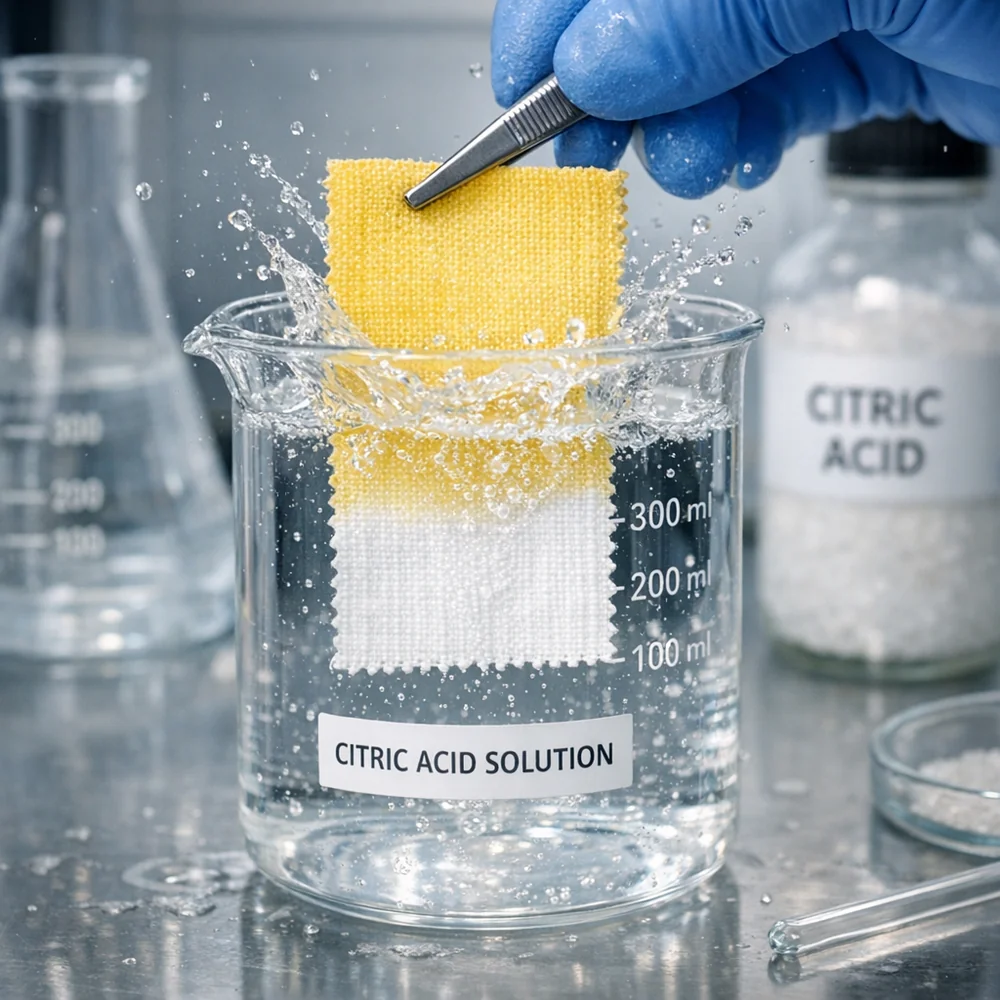
Some storage yellowing results from or gets worse because of alkaline conditions rather than the BHT mechanism. Fabrics finished with high-pH compounds, or washed with alkaline detergents and not rinsed well, may yellow through different pathways. For these cases, acidic rinses help.
The idea is to neutralize alkaline residues and shift the fabric toward neutral or slightly acidic, which creates conditions less favorable for yellowing chemistry. This works both to address existing discoloration and to prevent future problems.
White vinegar provides the most accessible option for home use. Add about one cup of distilled white vinegar to your rinse basin or fabric softener dispenser. The acetic acid neutralizes alkaline residues and helps remove detergent films that can trap yellowing compounds against fiber surfaces.
For stronger acidifying, citric acid dissolved in water works well. Use about one tablespoon per gallon of water as a final rinse. Let fabrics soak briefly, then rinse once more with plain water to remove excess acid. Unlike vinegar, citric acid leaves no residual odor after drying.
Key Insight: A vinegar or citric acid rinse neutralizes alkaline residues that promote yellowing, protecting fabrics before storage.
Preventing Yellowing with Proper Storage Materials
Prevention starts with understanding which packaging materials cause problems and which provide protection. Acid-free tissue paper, made specifically for archival storage, creates a barrier between fabric and problematic materials while itself remaining chemically harmless.
Regular tissue paper, newspaper, and most commercial packaging contain acids that migrate to fabric and promote yellowing. They can also trap moisture and limit airflow. Acid-free tissue has a neutral pH that doesn’t contribute reactive compounds.
Interleave folds of fabric with sheets of acid-free tissue to prevent fabric-to-fabric contact. Wrap individual folded garments completely before placing in storage containers. Replace tissue every few years, since even acid-free paper can absorb environmental contaminants over time.
The designation “buffered” on acid-free tissue indicates added alkaline compounds that neutralize any acids that might develop. Buffered tissue provides enhanced protection for cotton and linen but should be avoided for silk and wool, which can be damaged by alkaline conditions.
Key Insight: Acid-free tissue provides a safe barrier between fabric and packaging, preventing chemical migration and allowing air circulation.
Always Wash Before Long-Term Storage
Proper cleaning before storage eliminates residues that contribute to yellowing and removes compounds that attract pests. Many people store clothes that look clean but contain invisible body oils, deodorant, perfume, and food particles that become visible stains after months of oxidation.
Body oils deserve special attention. Sebum and skin secretions are invisible when fresh but oxidize into yellow-brown compounds that become permanent stains. A shirt worn “just for a few minutes” might contain enough oil to develop visible yellowing during storage. When in doubt, wash it before storing.
Leftover detergent can also cause problems. Alkaline residue promotes the reactions involved in phenolic yellowing. Make sure to rinse thoroughly by running an extra rinse cycle or adding vinegar to neutralize remaining detergent.
Skip fabric softener for items going into long-term storage. The waxy compounds can yellow over time, and they reduce absorbency that allows fabrics to release moisture. Any stiffness is easily fixed by washing before you wear the item again, while softener-induced yellowing is harder to address.
Key Insight: Invisible body oils and residues oxidize over months in storage, creating yellow stains that become very difficult to remove.
Remove Dry Cleaning Bags Immediately
Those plastic bags from the dry cleaner are one of the most common causes of phenolic yellowing. They typically contain BHT and other additives that transfer to fabric during storage. Despite their ubiquitous use, dry cleaning bags are meant as temporary protection during transport, not storage solutions.
Take the plastic off as soon as you get home. Let garments air briefly, especially if the dry cleaning involved significant solvent use. Then either return them to regular closet rotation or transfer to appropriate storage. If you need to store garments seasonally, replace the plastic with a breathable fabric garment bag or simply hang them uncovered in a clean closet.
The pattern of yellowing from dry cleaning bags often reveals the cause. Discoloration may appear worst along shoulders where fabric pressed against plastic, or in bands corresponding to the sealed bag bottom.
Cotton or muslin garment bags provide coverage without the chemical risks of plastic. They allow air circulation that reduces moisture buildup and prevents accumulation of reactive compounds. The Smithsonian Museum Conservation Institute recommends breathable storage for long-term fabric preservation.
Key Insight: Dry cleaning bags contain BHT and trap moisture. Always remove them and use breathable covers for long-term storage.
Air Quality Affects Yellowing Too
The nitrogen oxides that react with BHT come from combustion sources. In homes, these include car engines, gas heating systems, and various appliances. Notably, gas dryer vents can introduce significant nitrogen oxides into nearby spaces where textiles are stored.
When a gas dryer runs, combustion gases exit through the vent. If this vent terminates near a storage area, or if storage shares air with the laundry room without good ventilation, nitrogen oxides can reach stored textiles. The concentration may seem too low to matter, but phenolic yellowing happens even at very low levels if enough BHT is present.
Make sure dryer vents terminate well away from windows or air intakes. Attached garages where you might store clothes are problematic because vehicle exhaust is a major source of nitrogen oxides.
When unexplained yellowing happens despite using acid-free tissue and proper packaging, look at air quality. Spaces near gas stoves, fireplaces, or attached garages receive higher nitrogen oxide exposure than interior closets.
Key Insight: Combustion gases from dryer vents, furnaces, or vehicles introduce nitrogen oxides, a key component in the chemical reaction causing yellowing.
Conclusion
Phenolic yellowing is a specific, solvable problem rather than inevitable decay. Understanding the chemistry reveals both the cause and the solution. Clothes already showing this discoloration can often be restored with oxygen bleach treatment. Future occurrences can be prevented through better packaging choices and attention to storage conditions.
The convenience of plastic bags, whether from dry cleaners or bought for storage, proves false when weighed against the damage they cause. Better alternatives exist, cost little, and require minimal extra effort.
Simple changes to how you store clothes can protect them for years.
References
Fibre2Fashion. “Yellowing of Textiles: Causes and Prevention.” Technical Resources.
James Heal. “Understanding Phenolic Yellowing in Textiles.” Testing and Quality Publications.
Smithsonian Institution. “Care of Historic Textiles.” Museum Conservation Institute.
American Institute for Conservation. “Caring for Textiles in Home Collections.” Consumer Resources.
Tanatex Chemicals. “Anti-Yellowing Treatments for Textiles.” Technical Documentation.
CUNY Libraries. “Archival Storage Materials Guide.” Preservation Resources.