Sanitizing Thrift and Vintage Clothes: A Complete Disinfection Guide
Table of Contents
Things You'll Learn From This Article:
- Treat all secondhand clothes as potentially contaminated, but respond with simple precautions instead of worry or overdoing it.
- Heat is your most reliable tool—hot washing and especially a hot dryer cycle kill most bugs, bacteria, and fungi.
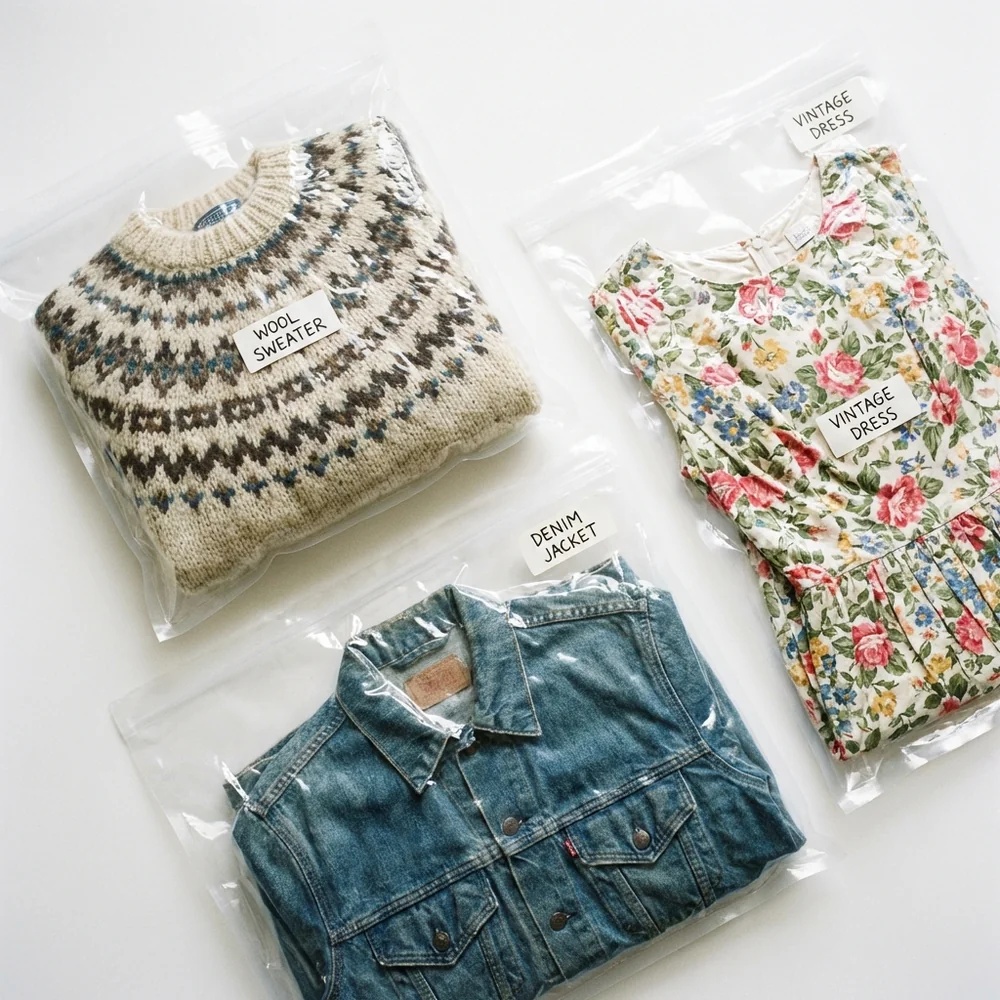
- Seal thrifted clothes in bags when you get home to keep any possible pests from spreading before cleaning.
- Freezing works when heat doesn’t, especially for wool and delicate items that might hide moth eggs or larvae.
- That thrift-store smell usually comes from trapped body oils and bacteria, not dirt, so enzyme soaks help more than extra detergent.
- Older garments often have weak seams and aging thread, so gentle hand washing or delicate cycles prevent damage.
- Always test cleaning solutions on a hidden spot first, since vintage dyes can bleed or change unexpectedly.
- Shoes need different care—sprays, wipes, or UV sanitizers disinfect them without soaking or ruining the structure.
- Items you can’t wash can still be treated using controlled methods like freezing, heat exposure in sealed bags, or careful ozone use.
- Drying fully is part of sanitation—leftover moisture lets bacteria and mold come back even after washing.
- Sunlight and good airflow help with air drying, but short exposure protects colors and delicate fibers.
- Matching the cleaning method to the fabric and real risk lets you wear secondhand finds comfortably and safely.
Buying secondhand clothes makes sense on multiple levels. Thrift stores and vintage shops offer unique styles, quality fabrics, and prices that let you build a wardrobe without financial stress. But there’s that nagging question about what the previous owner’s life was like and whether any of it is coming home with you.
The answer is a thoughtful approach to cleaning and disinfection.
Matching your cleaning method to both the actual risk level and what the garment can tolerate lets you confidently wear anything you find. This isn’t about paranoia; it’s about sensible precautions that cost little and provide peace of mind.
Understanding the Real Risks
The concern about acquiring pests through secondhand clothing has some basis in reality, but the actual risk depends heavily on where items came from and how they were handled. Understanding these risks lets you respond proportionally rather than either obsessing or ignoring legitimate concerns.
Bed bugs are remarkably resilient and can survive months without a blood meal. While they prefer hiding in furniture near sleeping areas, they can hitchhike on clothing. According to Cornell University’s Integrated Pest Management program, bed bugs may be present anywhere humans sleep, including hotels and shelters. Items donated from these environments could potentially carry bed bugs or eggs.
Head lice require human blood and typically die within 24 to 48 hours when separated from a host.
Body lice, less common in developed countries, can survive longer on clothing and may lay eggs in seams near the body. The Centers for Disease Control notes this is primarily a concern with items obtained directly from unknown individuals rather than thrift store purchases.
The practical risk from established thrift stores is generally lower. Most operations sort and store donations for some time before putting them on the floor, which naturally reduces pest populations. Still, treating all secondhand textiles as potentially contaminated is a sensible precaution that costs almost nothing.
How Heat Kills Everything
Heat remains the most reliable method for eliminating both pests and pathogens. Unlike chemicals that may leave residues or fail against certain organisms, sufficient heat kills through physical mechanisms that work universally.
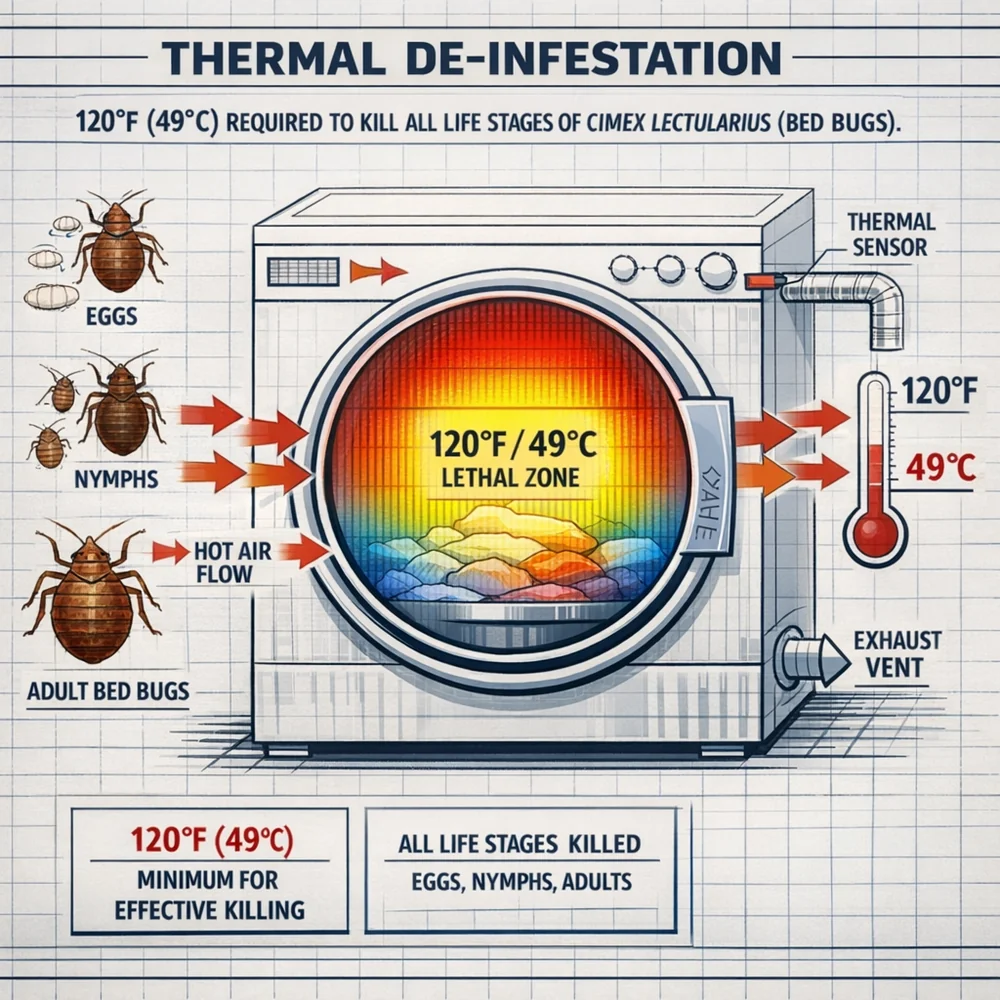
Research has established that bed bugs die when exposed to 120°F (49°C) for 20 minutes. Higher temperatures work faster, with 140°F (60°C) killing all life stages within minutes. Lice are more heat-sensitive, dying above 128°F (53°C) in about five minutes.
Most pathogenic bacteria die above 165°F (74°C), the familiar food safety standard. Fungi and mold spores mostly succumb above 140°F (60°C) when maintained long enough.
Standard home washing machines can achieve these temperatures on hot or sanitize cycles. Water heaters are typically set to 120°F to 140°F. For maximum disinfection, the dryer on high heat for at least 30 minutes after washing provides additional thermal treatment that’s especially hostile to most organisms.
Key Insight: Run your dryer on high heat for at least 30 minutes after washing. Dry heat is particularly effective against pests and pathogens.
Quarantine Your Haul First
Between bringing secondhand clothes home and introducing them properly to your closet, there’s an important intermediate step. Quarantine keeps any potential contamination contained while you assess and treat your purchases.
The simplest approach is sealing items in plastic bags as soon as you get home. Heavy-duty garbage bags work, though sealable storage bags with secure closures are better. Keep these bags outside living spaces if possible: garage, car trunk, or a sealed bin on the balcony.
How long to quarantine depends on your concerns and treatment plans. If you’re going to wash and dry on high heat within a day or two, brief quarantine mainly serves organizational purposes. But if immediate treatment isn’t possible, extended isolation itself works as a control measure. Bed bugs need periodic blood meals to reproduce, so isolation prevents population growth.
Items that can’t be washed or dried hot may need longer quarantine in extreme temperatures. Sealing in bags and putting them in a chest freezer at 0°F (-18°C) for at least 72 hours kills most pests. Summer heat works too: seal items in black garbage bags and leave in direct sun, where internal temperatures can exceed 130°F (54°C) on hot days.
Key Insight: Seal items in plastic bags immediately upon arrival to prevent any potential pests from escaping into your home before treatment.
Freezing to Kill Moth Larvae in Wool
Wool and other protein fibers face a unique threat from clothes moths whose larvae eat keratin. Vintage wool may harbor moth eggs or larvae from its previous home or thrift store storage. Freezing provides effective, gentle treatment that eliminates pests without subjecting delicate fibers to heat or aggressive washing.
The damaging stage is the larvae, which feed on fibers and leave characteristic holes and silken webbing. Adult moths don’t eat fabric, but their presence indicates active infestation.
According to University Extension pest management resources, all life stages die below 0°F (-18°C) when maintained long enough.
To freeze wool effectively, seal items in airtight plastic bags with as much air removed as possible. This prevents frost forming on the fabric. Use a chest freezer (not a refrigerator freezer) because it reaches lower temperatures and doesn’t fluctuate with door openings.
Maintain frozen storage for at least 72 hours. Some conservators recommend a full week for valuable pieces. After removal, let items reach room temperature while still sealed to prevent condensation. Then remove from bags and air thoroughly before storage.
Enzyme Soaking for Thrift Store Smell
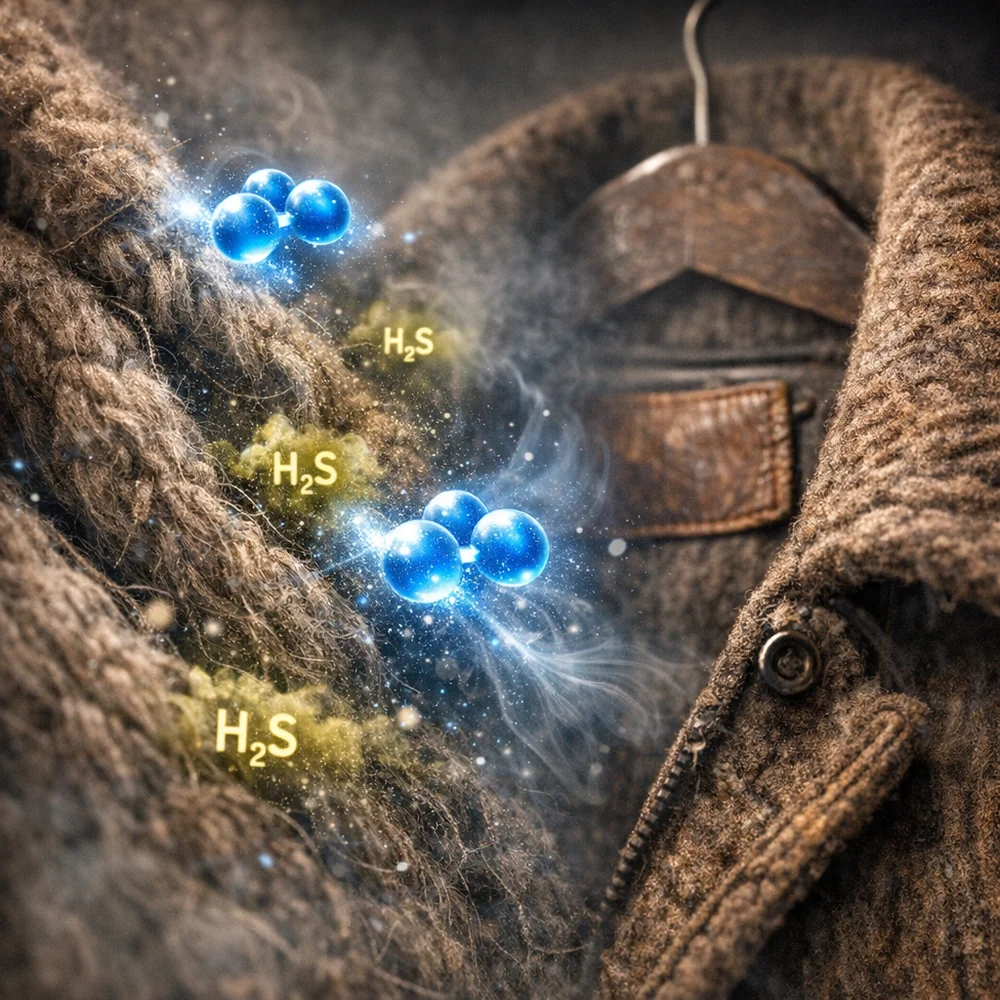
That distinctive thrift store smell comes from a mixture of previous owners’ body chemistry, storage conditions, detergent residues, and general mustiness. Beyond aesthetics, these odors indicate body oils, bacterial colonies, and organic materials that ordinary washing may not fully address.
Enzyme-based cleaners break down organic substances at the molecular level, attacking odor sources rather than masking them. Proteases digest proteins like sweat and skin cells. Lipases break down fatty substances like body oils. According to research in the Journal of Applied Microbiology, enzymes significantly reduce bacterial biofilms that trap odor compounds.
Dissolve enzyme-based laundry booster in warm water following product directions. Keep temperature below 140°F (60°C), since excessive heat destroys enzymes. Submerge garments completely and soak at least 30 minutes. Heavily odorous items benefit from several hours or overnight.
After enzyme soaking, wash normally. The predigestion lets detergent and mechanical action remove materials that would otherwise resist treatment.
Key Insight: Thrift store smell often signals the presence of organic residues like body oils and bacteria, which require enzymatic cleaning to fully remove.
Key Insight: Enzyme cleaners digest the organic source of odors like sweat and body oils rather than just masking the smell.
Washing Fragile Vintage Seams
Vintage garments often have construction that differs from modern clothing. Thread may have weakened with age, seams may lack reinforcement, original seam allowances may be narrow. Aggressive washing can stress these vulnerable points to failure.
Hand washing remains gentlest. Fill a basin with cool or lukewarm water and add mild detergent for delicates. Submerge the garment and gently agitate by pressing into the water rather than twisting or wringing. Soak 10 to 15 minutes, then drain and refill with clean rinse water.
If machine washing is necessary, mesh laundry bags prevent tangling and catching. The delicate cycle uses slower agitation and spin. Cold water reduces both mechanical and thermal stress.
For items with particularly fragile areas, basting or safety pins can provide temporary reinforcement. Close zippers, secure loose buttons, and turn items inside out. After washing, lay flat on a clean towel rather than hanging, which stresses seams. Roll the towel with the garment inside to remove water without wringing, then transfer to a flat drying surface.
Key Insight: Hand washing is safest for fragile vintage items. If machine washing, use a mesh bag and the delicate cycle.
Test Before Treating Vintage Dyes
Dyes used in older textiles often behave differently from modern colorfast processes. Natural dyes, early synthetics, and some mid-century formulations may bleed, fade, or shift color when wet.
Select an inconspicuous spot for testing: inside seam allowance, facing, or hem. Dampen a white cloth with your planned cleaning solution. Press it against the test area for 30 seconds, then examine both the garment and cloth for color transfer or change.
Color bleeding onto the white cloth means the dye isn’t colorfast in that solution. The garment can still be cleaned, but minimize treatment and wash alone. Some color transfer is acceptable if minimal, especially for items you’ll use rather than collect.
Watch for texture changes in the fabric itself. Some historical finishes react with water or detergent, causing stiffness or damage. If the test area shows problems after drying, consult a professional before proceeding. The American Institute for Conservation maintains referral services.
Key Insight: Always spot test cleaning solutions on an inconspicuous area like an inside seam to prevent irreversible damage to unstable dyes.
Disinfecting Shoes Without Water
Secondhand shoes present unique challenges. Their complex construction and adhesives can’t handle machine washing. Yet shoes contact the ground and absorb foot perspiration, making them among the most likely items to harbor bacteria and fungi.
Surface disinfection with commercial shoe sprays eliminates most bacteria and fungi on contact. For a gentler approach, wiping with equal parts water and white vinegar provides moderate disinfection and odor control.
Interior treatment requires reaching enclosed areas. Remove insoles if present for separate treatment. Spray interiors with disinfectant, let dry completely, and repeat if needed. UV shoe sanitizers that expose interiors to germicidal light offer a technology-based alternative without moisture.
Odor control often requires addressing the source rather than masking. Baking soda absorbs moisture and neutralizes acidic odors when sprinkled inside overnight. Commercial products with activated charcoal work similarly. For persistent smells indicating established bacterial colonies, enzyme-based cleaners digest the organic matter sustaining them.
Key Insight: Use UV sanitizers or enzyme sprays to disinfect shoe interiors without damaging glues or materials with excess moisture.
Ozone for Non-Washable Items
Ozone treatment can eliminate odors and pathogens in items that can’t be washed. Ozone (O₃) is a powerful oxidizing gas that destroys bacteria, viruses, fungi, and many odor compounds. Commercial generators designed for home use can treat items that can’t tolerate water.
However, ozone requires understanding both its capabilities and limitations.
The mechanism involves oxidative damage to cell membranes. Ozone gas penetrates porous materials and reaches organisms in crevices ordinary cleaning misses. Research from Purdue University has examined ozone against bed bugs, finding high concentrations effective, though practical applications vary.
Ozone carries significant cautions for textiles. The same oxidizing power that kills pathogens can damage rubber, elastic, and some synthetic fibers. Vintage items may contain vulnerable components.
Additionally, ozone itself poses health risks at effective concentrations. Treatment must occur in sealed, unoccupied spaces with thorough ventilation before reentry. After treatment (typically one to several hours), ventilate at least 30 minutes before handling items.
Key Insight: Ozone is powerful against odors and pests but requires strict safety precautions and ventilation because of its health risks.
Drying to Complete Sanitation
Proper drying completes disinfection and prevents conditions allowing organisms to recover. Moisture remaining in fabrics creates environments favorable to bacterial and fungal growth, potentially negating careful cleaning.
Machine drying on high heat provides both thermal disinfection and thorough moisture removal. According to state health department guidance, temperatures above 130°F (54°C) for 30 minutes ensures kill of most pathogens that might have survived washing.
For items that can’t tolerate machine drying, air drying in conditions that minimize moisture retention is essential. Good air circulation, whether from breezes or a fan, accelerates evaporation. Low humidity helps. Turn or reposition items periodically for even drying.
Sunlight provides additional disinfection during outdoor drying. UV radiation damages microbial DNA alongside the desiccating effect of air drying. However, prolonged sun exposure can fade colors and degrade silk and wool. Limit direct sunlight to an hour or two and turn items to distribute exposure.
Key Insight: Moisture encourages bacterial growth. Ensure items are completely dry using high heat or good air circulation to complete sanitation.
Conclusion
Buying secondhand clothing represents a practical, economical, and increasingly popular choice that doesn’t have to compromise hygiene. The methods here, applied according to what specific items need and your personal comfort level, transform unknown textiles into clothes you can wear confidently.
What separates thoughtful secondhand shopping from careless acquisition is precisely this willingness to invest some time in proper treatment. A few hours to quarantine, treat, and dry your thrift haul is minor compared to finding unique pieces at reasonable prices.
Extending garment life through reuse also reduces demand for new production with all its environmental impacts. Proper sanitization makes this sustainable choice both practical and safe.
References
Cornell University Integrated Pest Management Program. “Bed Bugs: IPM for Residents.” Cornell Cooperative Extension.
Centers for Disease Control and Prevention. “Parasites: Lice.” CDC Division of Parasitic Diseases and Malaria.
U.S. Food and Drug Administration. “Food Safety Temperatures and Guidelines.” FDA Food Safety Resources.
University of Minnesota Extension. “Clothes Moths.” Extension Pest Management Publications.
American Institute for Conservation. “Find a Conservator.” Cultural Heritage Resources.
Wisconsin Department of Health Services. “Bed Bug Information.” Public Health Resources.
Journal of Applied Microbiology. “Enzyme-Based Cleaning and Biofilm Removal.” Wiley Online Library.
Purdue University Extension Entomology. “Bed Bug Biology and Management.” Entomology Publications.