Removing Tomato and Oil Stains: The Science of Lycopene and Lipids
Table of Contents
Things You'll Learn From This Article:
- Tomato stains spread when you add water because the red pigment sticks to oil, not water.
- A tomato stain is really two problems at once: grease and red dye, and the grease has to go first.
- Hot water or a hot dryer can permanently lock a tomato stain into fabric.
- Cold water helps by stopping grease from spreading and keeping proteins from “cooking” into the cloth.
- Rinsing from the back of the fabric pushes sauce out instead of driving it deeper in.
- Dish soap works better than laundry detergent on tomato stains because it’s made to cut grease.
- Letting dish soap sit matters; it needs time to break apart the oil before rinsing.
- Meat or cheese in the sauce means protein is involved, which needs enzymes to break it down.
- Enzyme detergents work by cutting the invisible protein “glue” that holds stains in place.
- Hydrogen peroxide can fade leftover orange stains by chemically breaking the color molecule.
- Sunlight can erase tomato stains by using UV light to destroy the red pigment.
- The sun trick works on clothes and even on orange-stained plastic containers.
- Plastic stains easily because tomato pigment sinks into it when heat opens up the material.
- Cotton holds stains deeper than polyester, so it usually needs longer soaking.
- Polyester stains often sit on the surface, but heat can make them bond permanently.
- Scrubbing hard can damage fabric and make stains harder to remove.
- For couches or upholstery, foam is safer than liquid because it cleans without soaking cushions.
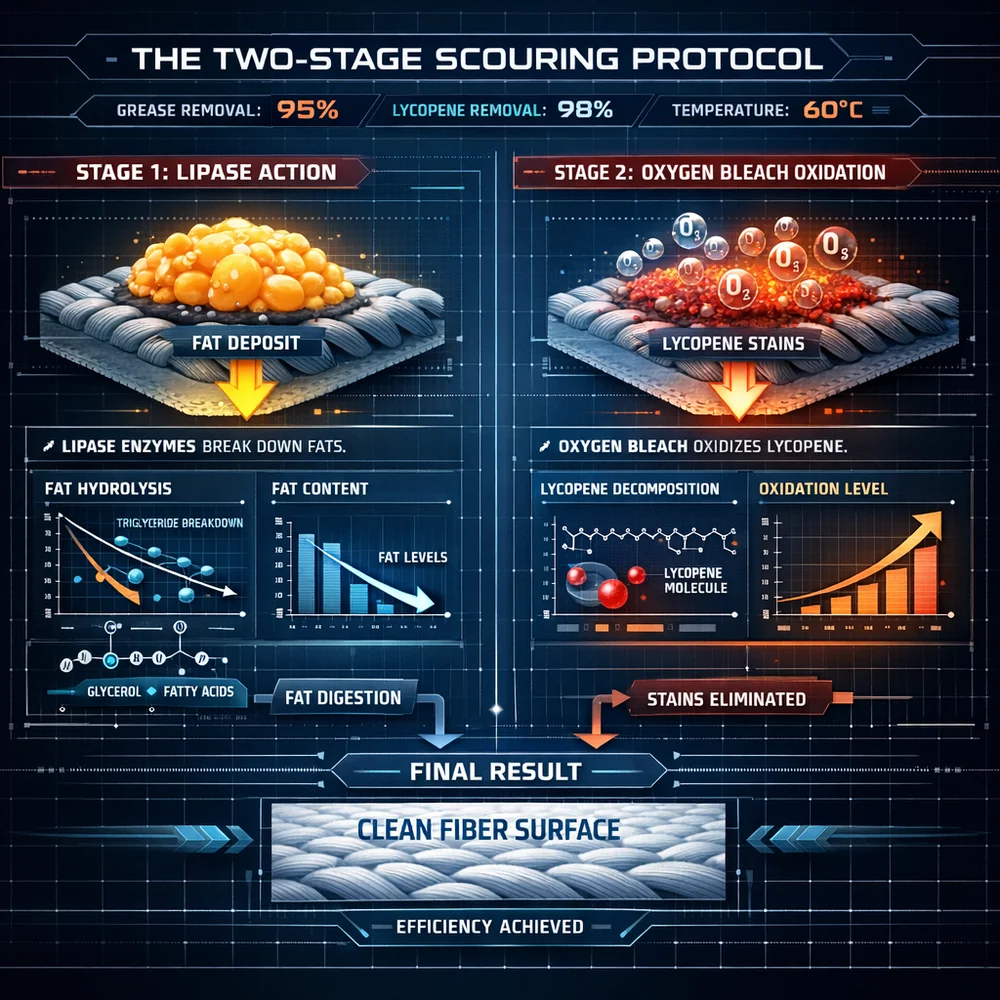
- The order matters: remove grease first, break down proteins next, then deal with color.
- Acting quickly makes every step easier and increases the chance of full removal.
- Keeping stains cold until they’re completely gone is the safest rule to follow.
It’s the classic dinner disaster. A fork twirls, a noodle slips, and suddenly there is a bright red splash of marinara sauce on your favorite white shirt.
The table goes quiet. You grab a wet napkin and start scrubbing, hoping to adhere to the “five-second rule” of stain removal. But as you scrub, you notice something horrifying: the stain isn’t going away. It’s spreading. It’s turning from a small red dot into a large, pale orange halo that seems to be bonding instantly with the fabric.
Tomato-based stains—whether from pizza, pasta sauce, ketchup, or salsa—are legendary for being difficult. It’s not just the red color; it’s the oil that comes with it.
Because tomato sauce is usually cooked with fat (olive oil, meat grease, cheese), you are actually fighting two stains at once: a grease stain and a dye stain. The grease coats the fiber and protects the red pigment from your detergent. If you don’t remove the oil first, you will never get the red out. And if you use hot water, you might as well throw the shirt away right now.
This comprehensive guide will show you how to peel back those layers chemically to save your clothes, using the principles of molecular disassembly.
Why It’s So Red: Meet Lycopene
The bright red color of a tomato comes from a fascinating biological molecule called lycopene.
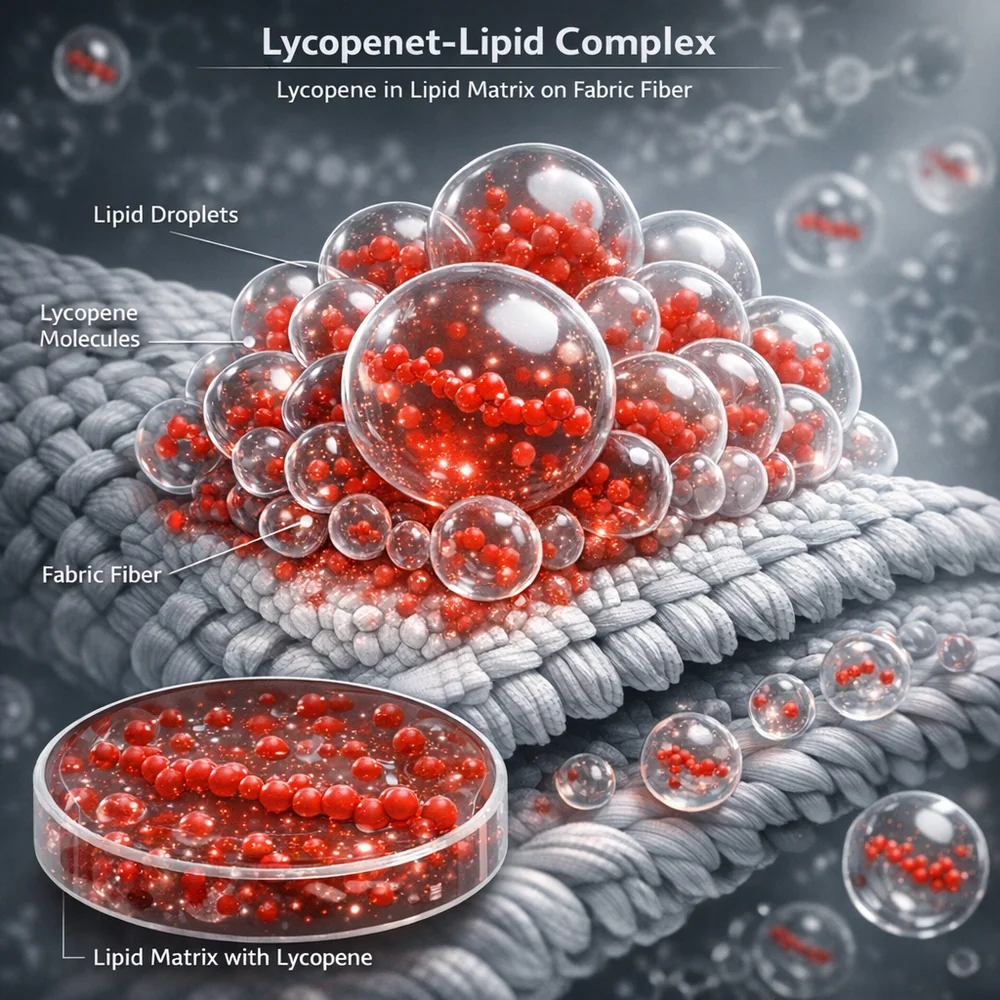
Lycopene is a carotenoid—a cousin to the beta-carotene that makes carrots orange. Chemically, it is a “hydrophobic” pigment. That means it hates water. It is almost impossible to dissolve in plain water, which is why rinsing a tomato stain often does nothing but spread it around.
At a molecular level, lycopene is a long chain of carbon atoms with “conjugated double bonds.” This structure is really good at absorbing blue and green light, which is why it reflects such a vivid red back to your eye. But this structure also makes it act like a powerful organic dye.
Lycopene loves oil and plastic. In the world of chemistry, “like dissolves like.” Because lycopene is oily and non-polar, it grabs onto other non-polar things—like the polyester fibers of your gym clothes (which are basically liquid plastic) and your plastic Tupperware containers. It bonds to them with a magnetic-like force that water simply cannot break.
The Oil Problem: A “Double Shield”
You cannot scrub lycopene away with water because the oil in the sauce (the olive oil or beef fat) acts as a waterproof shield.
Imagine the lycopene pigment trapped inside a microscopic bubble of olive oil. If you pour water or weak detergent on it, the water slides right off the surface of the oil. The red pigment stays safe and sound inside, laughing at your efforts.
To get the red out, you have to break the oil barrier first. This is why standard laundry detergents often fail on pizza stains. They are designed for general body soil, not heavy, concentrated food grease. You need something stronger—an emulsifier that can rip those oil bubbles apart.
The Bottom Line Tomato stains are a “double shield.” You must strip away the oily lipid layer using a degreaser before you can reach and remove the red lycopene pigment.
Heat is the Enemy: The Thermodynamics of Setting
If you do nothing else, remember this: Never put a tomato stain in hot water or a hot dryer.
Heat causes two chemical disasters that are usually irreversible:
- It cooks the binders: Tomato sauces don’t just contain tomatoes. They contain proteins (from meat or cheese) and starches (from pasta water). When you add heat, these proteins “denature” or cook. Just like a raw egg turns hard when fried, the proteins in the sauce harden and glue the stain into the fabric fibers.
- It oxidizes the oil: Heat accelerates the reaction between the oil and oxygen in the air. This turns fresh, liquid oil into a varnish-like resin that is yellow and hard. Once this resin forms, detergents can no longer penetrate it.
Always start your rescue mission with cold water. Cold water keeps the grease solid (so it doesn’t spread) and prevents the proteins from cooking.
The Bottom Line Heat cooks the protein binders and oxidizes the oils in tomato sauce, making the stain permanent. Always start with cold water and never dry a stained item until you are certain the mark is gone.
Step 1: The Cold Flush
Act fast. Speed is your ally.
Take the garment off and turn it inside out. Run cold water through the back of the stain. You want to push the physical sauce out of the fabric, not drive it deeper into the weave. If you run water from the front, you are just forcing the tomato solids into the core of the yarn.
Flush it for at least 30 seconds to remove as much loose sauce and oil as possible. You want to get rid of the “bulk” soil so your cleaning chemicals can focus on the stubborn residue.
Step 2: Degreasing (The Secret Weapon)
Here is where most people fail. They reach for laundry detergent.
Laundry detergent is often too dilute for this job. For a concentrated tomato oil stain, you need dish soap (specifically a high-surfactant grease cutter like Dawn). Dish soap is formulated specifically to break down lipids (fats) on pots and pans, and it works exactly the same way on fabric.
Apply a drop of dish soap directly to the wet stain. Gently massage it into the fibers with your fingers. Do not scrub hard with a brush, or you will fuzz the fabric and damage the weave.
Let it sit for at least 15 minutes. This “dwell time” is scientifically critical. It allows the surfactant molecules to surround the oil droplets and lift them away from the pigment. If you rinse too soon, the oil won’t be emulsified.
The Bottom Line Laundry detergent is often too weak for heavy grease. Use concentrated dish soap to emulsify the lipid barrier and expose the red pigment.
Step 3: The Enzyme Soak
If you spilled a meat sauce (bolognese) or a cheesy pizza topping, you have protein to deal with too. Even if the oil is gone, the protein can act as a glue.
After rinsing out the dish soap, fill a basin with cool water and add an enzymatic laundry detergent (or a bio-booster like Biz). Let the garment soak for 30 minutes.
The protease enzymes in the detergent will act as microscopic scissors. (See our guide on Laundry Enzyme Biology for a deep dive). They cut the protein chains that are binding the stain to the cloth. This step is “molecular surgery” that breaks down the invisible glues holding the red color in place. Without this step, you might remove the color but leave a stiff, crusty residue behind.
Step 4: Hydrogen Peroxide
Now that the grease and protein are gone, you might still see a faint orange shadow. That is the residual lycopene that has bonded to the fibers.
It’s time to oxidize it.
Apply a small amount of 3% hydrogen peroxide (the kind in the brown bottle) to the stain. You can also mix it with a drop of dish soap to create a boosting gel. Let it sit for 10 minutes. The peroxide releases oxygen ions, which attack the double bonds of the lycopene molecule. This breaks the “chromophore”—the part of the molecule that makes color.
Think of it as turning the “lights out” on the stain. For more on how this works, check out Whitening Without Bleach.
The Bottom Line Use hydrogen peroxide to oxidize the remaining lycopene pigment after the grease has been removed. It shatters the color bonds safely without the harshness of chlorine.
The “Sun Cure”: UV Light Magic
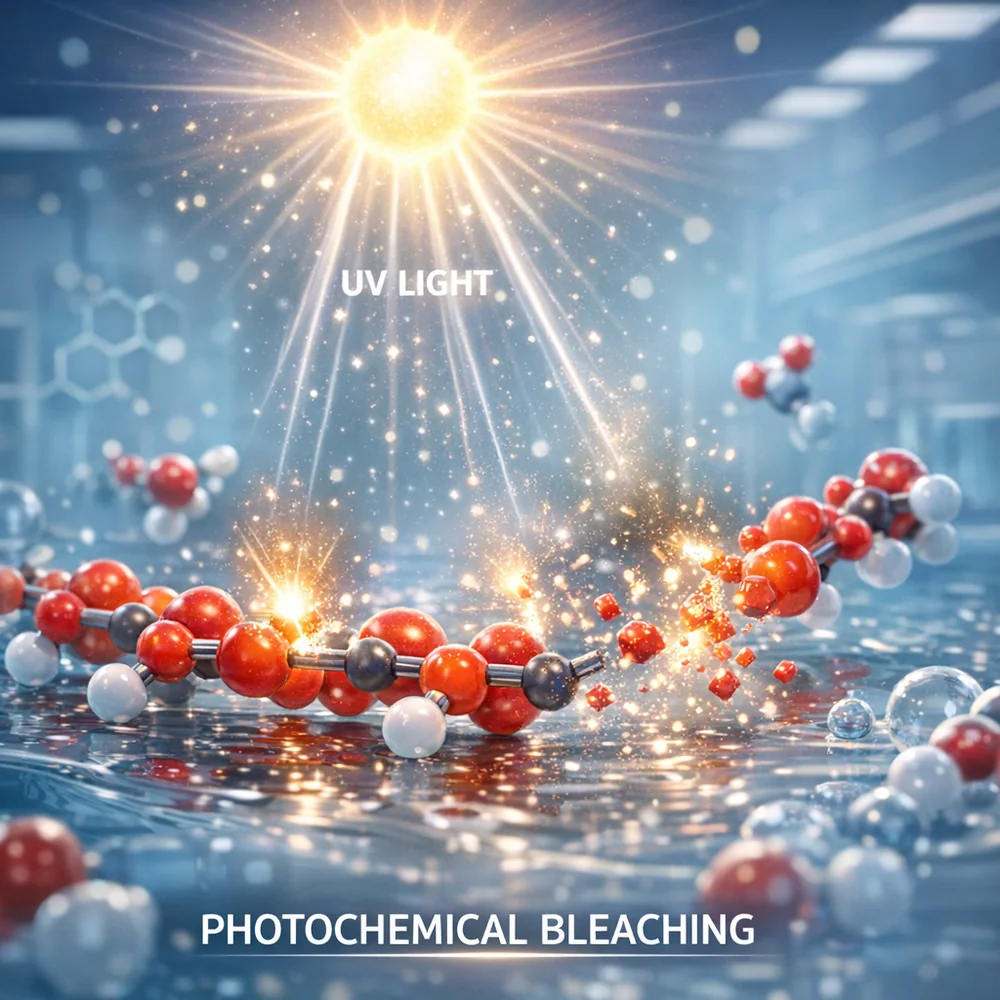
If chemical methods fail, turn to physics. Lycopene is incredibly sensitive to sunlight.
UV radiation (specifically UV-B) breaks down the specific molecular bonds that make lycopene red. It is a process called “photolysis.” The high-energy photons from the sun strike the pigment molecule and shatter it.
Take the wet garment and lay it flat in direct, bright sunlight.
Leave it there for 2 to 4 hours. You will be amazed as the orange stain simply fades away. This is safer for your clothes than chlorine bleach and works particularly well on white cottons and linens. It is the oldest and best trick in the book for tomato stains, and it works even when chemicals have given up.
The Bottom Line Direct sunlight is a powerful tool against tomato stains. UV rays break down the lycopene molecule via photolysis, erasing the color naturally.
Plastic Containers: Why Your Tupperware Stays Orange
Ever notice how tomato sauce ruins your plastic containers forever? You put spaghetti in a plastic bowl, microwave it, and boom—it’s permanently orange.
Plastic is chemically very similar to oil (they are both hydro-carbons). When hot tomato sauce hits plastic, the lycopene migrates directly into the plastic structure. It’s a process called “diffusion.” The heat from the microwave opens up the pores of the plastic, allowing the dye to slip inside.
You can’t scrub it off because the color is inside the plastic wall.
The solution? The Sun Cure. Put your stained containers on a sunny windowsill for a day or two. The UV light will penetrate the clear plastic and destroy the pigment trapped inside. No scrubbing required.
The Bottom Line Tomato stains migrate chemically into plastic containers. Use UV sunlight to bleach the pigment that is trapped inside the plastic walls.
Synthetics vs. Cotton
Believe it or not, tomato stains are often easier to remove from polyester than cotton.
Polyester is hydrophobic (like the stain), and while it attracts the oil, it is a smooth, solid filament. The stain sits on the surface. Cotton, on the other hand, is hollow and absorbent; it sucks the oil deep into the core of the fiber “lumen.”
For cotton, you need patience and longer soaking times to draw the oil back out.
For polyester, just be careful not to use heat, or the oil will bond with the plastic fibers. If you catch it early, polyester releases tomato stains quite easily with a simple degreasing step. Check out our Diagnostic Stain Guide to identify your fabric type before starting.
The Bottom Line Cotton traps tomato oil deep in its hollow fibers, requiring soaking. Polyester releases stains easier but bonds permanently if heat is applied.
Upholstery Protocol: The Foam Method
If a slice of pizza lands face-down on the couch, do not pour water on it.
If you saturate the couch cushion, the tomato juice will soak into the foam padding below. You will never get it out, and it will eventually mold. The smell of rotting tomato inside a sofa is not something you want.
Use the “Foam Method.”
Mix water and dish soap in a bowl and whisk it vigorously until you have dry, stiff peaks of suds. Scoop only the foam onto a sponge and gently dab the stain. The foam holds the cleaning agents on the surface fabric without soaking the cushion underneath. Blot away with a clean white cloth. Repeat until the stain is gone.
The Bottom Line Never soak upholstery. Use “dry suds” (whipped detergent foam) to clean the surface fabric without wetting the foam padding underneath.
Conclusion
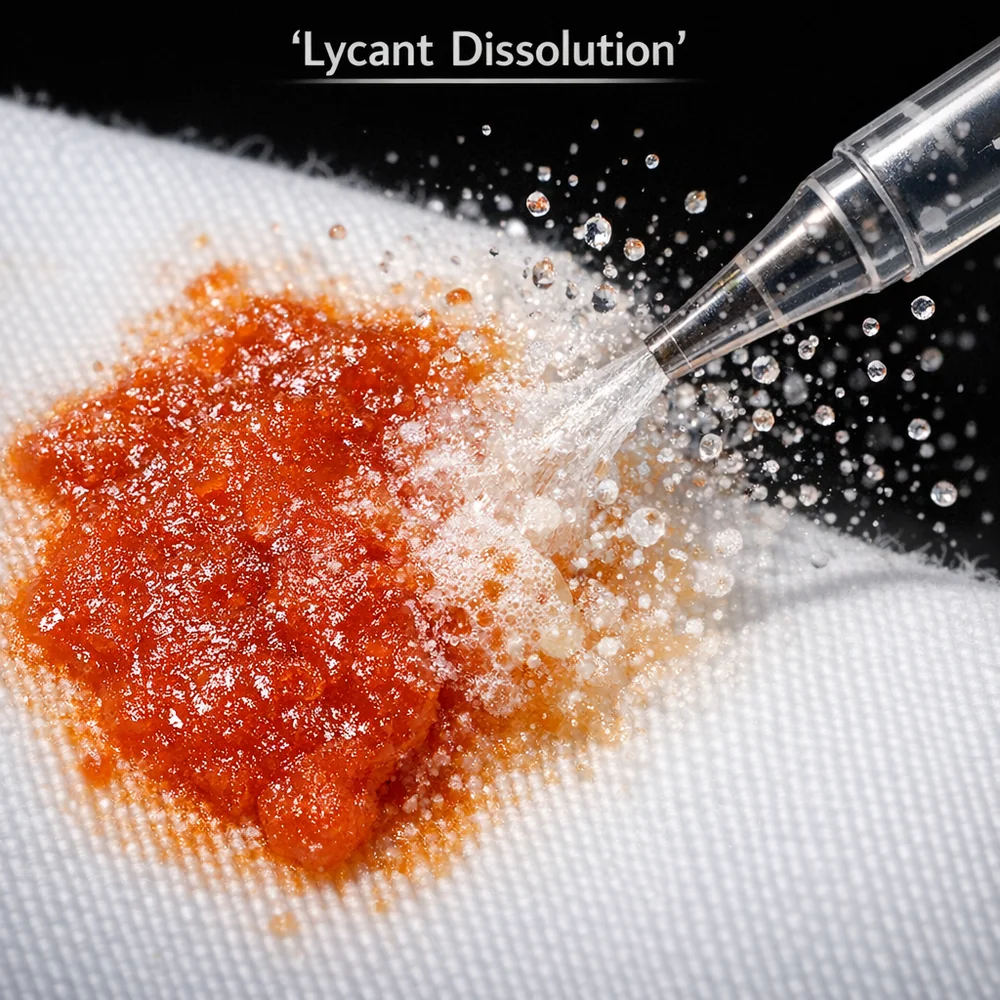
Tomato stains are a triple threat: oil, pigment, and protein. They rely on the grease to protect them and the heat to set them.
But they aren’t invincible. The key is sequence. If you degrease first, digest the proteins second, and oxidize (or sun-bleach) the pigment third, you will win every time. You are dismantling the stain molecule by molecule.
Just remember the golden rule: keep it cold until the stain is gone. Once you master this protocol, you can wear white to an Italian dinner with zero fear.
References
Journal of Agricultural and Food Chemistry. “The Molecular Mechanisms of Lycopene Photodegradation.” ACS Publications
American Cleaning Institute. “Technical Protocols for Carotenoid and Lipid Extraction in Domestic Laundering.” https://www.cleaninginstitute.org/
Textile Research Journal. “Surfactant-Oil Interactions and the Mechanics of Emulsification in Cellulosic Fibers.” Sage Journals
Consumer Reports. “Stain Removal Efficiency: Comparative Analysis of Enzymatic and Surfactant Treatments for Complex Food Contaminants.” https://www.consumerreports.org/
Journal of Surfactants and Detergents. “The Impact of Thermodynamic Fluctuations on the Stability of Plant-Based Pigments in Aqueous Environments.” Springer Link