Removing Sunscreen Stains: The Science of Avobenzone and Iron Rust
Table of Contents
Things You'll Learn From This Article:
- Orange sunscreen stains on clothes are actually rust, not dye from the sunscreen itself.
- The ingredient avobenzone reacts with iron in water during washing, which is why the stain appears after laundry.
- Regular detergent doesn’t work because it’s made for food and dirt, not metal-based stains.
- Using chlorine bleach on these stains makes them permanent by locking the rust into the fabric.
- Dish soap is useful because it breaks down the greasy, waterproof oils in sunscreen.
- Rust removers work because they dissolve the iron causing the orange color, often making the stain disappear quickly.
- Treating the oil first and the rust second prevents the stain from coming back in future washes.
- Rinsing thoroughly after using strong cleaners protects fabric from long-term damage.
- Enzyme detergents help clean up leftover sunscreen ingredients that soap and rust remover might miss.
- Swimsuits need gentle handling since scrubbing or stretching can damage elastic fibers.
- Upholstery stains should be treated with foam and blotting, not soaking, to avoid mold and water damage.
- Lemon juice and salt can act as a mild rust remover for furniture and fabrics that can’t handle harsh chemicals.
- A final rinse with diluted vinegar helps neutralize leftover cleaning chemicals and minerals.
- Letting sunscreen dry on your skin before dressing reduces how much transfers to clothes.
- Mineral sunscreens with zinc or titanium don’t cause this rust reaction and wash out more easily.
It is the classic summer mystery. You wash your white t-shirts after a day at the beach, and they come out of the machine covered in bright orange streaks.
You look at the bottle of sunscreen you used. It was white. So where did the orange come from? Did you ruin your clothes?
The short answer is no, but you are dealing with a chemical reaction that most people don’t understand.
That orange mark is actually rust. It is caused by a specific ingredient in your sunscreen reacting with the iron in your water. If you try to treat it like a normal stain—especially if you use bleach—you will make it permanent.
This guide will explain exactly why this happens and how to reverse it using simple chemistry.

The “Rusty” Truth About Avobenzone
The culprit behind the orange stain is a common UV filter called avobenzone.
Avobenzone is great for protecting your skin from the sun because it absorbs the full spectrum of UVA rays. It is an oil-soluble ingredient found in many “chemical” sunscreens. However, it has a nasty habit of grabbing onto iron particles. When you throw your sunscreen-soaked clothes into the wash, the avobenzone meets the iron minerals in your water (especially if you have hard water).
They bond together instantly to create a new compound that is essentially rust.
This is a chemical process called “chelation.” The avobenzone molecule wraps around the iron ion, forming a reddish-orange complex. That is why the stain doesn’t show up until after you wash the clothes. You are literally dyeing your fabric with iron oxide. Because it is a mineral stain, regular soap won’t touch it. Regular detergents are designed for organic food and dirt, not heavy metals. You need a chemical that dissolves rust.
The Bottom Line Orange sunscreen stains are caused by the ingredient avobenzone reacting with iron in your wash water to form rust. This is a mineral stain, not a dye or oil stain.
Why Bleach is a Disaster

When you see a stain on white clothes, your instinct is probably to grab the chlorine bleach.
Stop. Put the bottle down. Chlorine bleach is an oxidizer, which means it adds oxygen to the chemical party. When you add oxygen to rust, you make more rust.
Bleach will turn that orange stain into a deep, permanent red-brown mark.
It effectively “tans” the rust into the fabric fibers. Once this happens, it is nearly impossible to fix. For sunscreen stains, bleach is your worst enemy. It also hardens the oily residue of the sunscreen, creating a waterproof barrier over the stain. You need to do the exact opposite of bleaching: you need to strip the oxygen away.
The Bottom Line Chlorine bleach accelerates the rusting process, turning orange stains into permanent brown marks. Never use bleach on sunscreen stains.
The Secret Cure: Rust Remover
Since the stain is rust, you need a rust remover.
Go to the hardware store (or the laundry aisle) and look for a stain remover specifically designed for rust. These are often sold for removing rust from bathrooms or concrete, but many are safe for colorfast fabrics. Look for ingredients like oxalic acid or hydrofluoric acid alternatives. These are “reductive” chemicals that do the opposite of bleach.
They break the bond between the iron and the fabric, making the rust soluble in water again.
Apply the commercial rust remover directly to the orange stains (test it on a hidden area first to be safe). You should see the orange color disappear almost immediately as the chemical reaction takes place. It feels like magic, but it is just reduction chemistry at work. Rinse the area thoroughly with cold water to flush out the iron. See our full guide on rust and metallic stains for more details on these products.
The Bottom Line Use a commercial rust remover containing oxalic acid to dissolve the iron-avobenzone complex. The orange color should vanish on contact.
Step 1: Degreasing the Oil
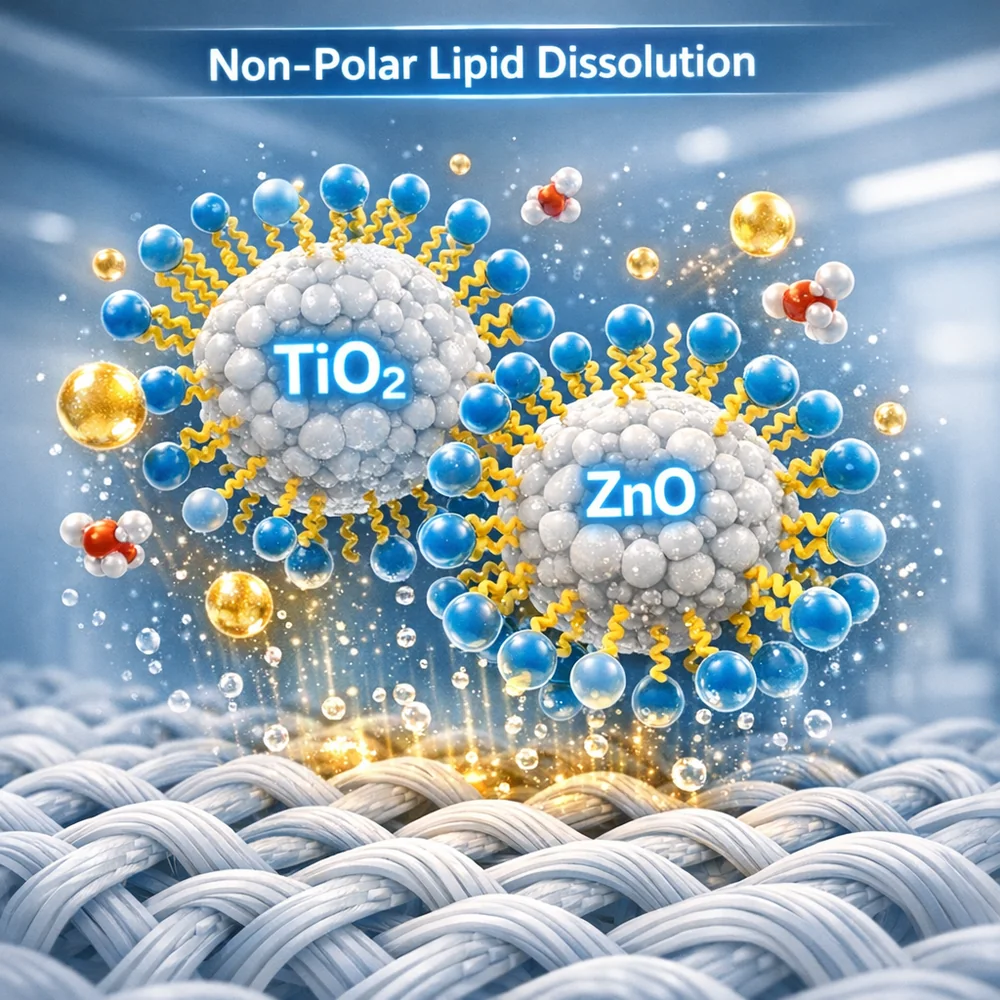
While rust remover takes care of the color, you still have the oil to deal with.
Sunscreen is designed to be waterproof and greasy so it stays on your skin while you swim. That grease is what holds the avobenzone in place. If you don’t get rid of the oil, the stain will just come back the next time you wash the clothes because the sticky residue will grab more iron from the water.
Treat the area with a high-quality dish soap.
Dish soap is formulated to cut through grease (lipids) better than laundry detergent. Rub it into the dry fabric and let it sit for 15 minutes. This breaks down the waterproof oils and clears the way for the rust remover to work effectively. This is the same principle used in removing oil and grease stains.
The Bottom Line Sunscreen has an oily base that traps the stain. Pre-treat with dish soap to break down the waterproof oils before attacking the rust.
Step 2: The Rust Removal Phase
Once you have rinsed out the dish soap, apply your rust remover as described above.
Remember, this is a harsh acid, so wear gloves and work in a ventilated area. Don’t let it sit on the fabric longer than necessary—just until the color is gone (usually less than a minute). Rinse, rinse, rinse. You want to ensure no acid remains on the fabric, as it can weaken cotton fibers over time.
Step 3: The Enzyme Soak
To be absolutely sure you got everything, finish with an enzyme soak.
Sunscreen often contains other organic ingredients like preservatives and emollients that can leave a residue. Soaking the garment in warm water with an enzyme-rich detergent ensures that any remaining “glue” is digested and washed away. This leaves your fabric purely clean and ready for the dryer.
Check out our guide on laundry enzyme biology to understand why enzymes are critical for this final cleanup step.
The Bottom Line A final soak in enzyme detergent digests any remaining organic binders, ensuring the fabric is completely stripped of sunscreen residue.
Swimwear Rescue
Synthetic swimsuits (Lycra, Spandex, Elastane) are magnets for sunscreen.
Because these fibers are essentially plastic, the oil sits on the surface and creates a film. The good news is that they are chemically tough. You can generally use the same dish soap and rust remover method, but be gentle with mechanical scrubbing.
Avoid stretching the wet fabric while scrubbing.
When Spandex is wet, it is vulnerable to distortion. If you scrub too hard, you can break the elastic fibers, leading to that “saggy swimsuit” look. Instead, gently work the soap into the fabric with your thumbs. Rinse thoroughly, as residual chemicals can degrade elastic over time.
The Bottom Line Synthetics like Spandex trapped oils on the surface. Use the standard protocol but avoid uneven stretching and rinse aggressively to protect the elastic elasticity.
Upholstery and Furniture
If you sat on the patio furniture after applying sunscreen, those cushions might turn orange too.
For upholstery, you cannot rinse it under the tap like a shirt. If you soak the foam inside the cushion, it will never dry and will grow mold. You need to use the “foam method.” Mix your dish soap with water in a bowl and whip it until it makes a thick foam. Sponge only the foam onto the stain to lift the oil. Blot it away with a damp cloth.
For the orange color on furniture, try lemon juice and salt.
It is a gentler, natural version of rust remover. Make a paste of lemon juice and salt, apply it to the stain, and let it sit. Keep it away from direct sunlight while the lemon juice is on it, as citrus can bleach fabric colors in the sun. Blot it up and rinse by dabbing with a clean, wet cloth. Use a fan to dry it quickly so you don’t get water rings.
The Bottom Line Clean furniture with soap foam to avoid soaking the cushion. Use lemon juice and salt as a gentle rust remover for non-washable fabrics.
The Neutralizing Rinse
After using strong acids (rust remover) or alkalines (dish soap), your fabric’s pH environment is all over the place.
To finish the job professionally, give the garment a final rinse with a little white vinegar in the water. This neutralizes any leftover chemicals and returns the fabric to a neutral state. It also helps to strip away any final mineral deposits that might cause graying.
Maintaining a pH-neutral environment is key to the long-term health of natural fibers like cotton and linen.
The Bottom Line A final vinegar rinse neutralizes the pH regarding of the cleaning chemicals, protecting the fiber structure from long-term damage.
Prevention: Dry Before You Dress
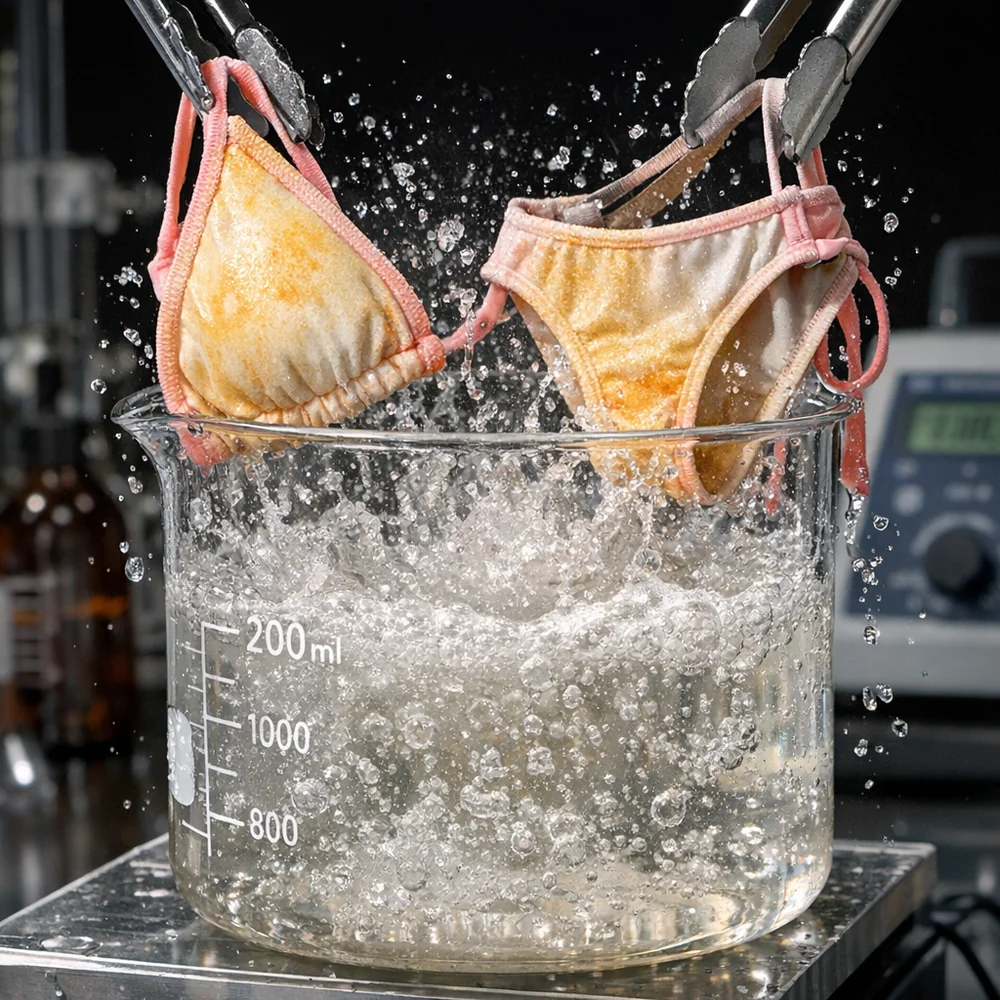
The best way to avoid this whole chemistry experiment is to change your routine.
Apply your sunscreen 15 to 20 minutes before you get dressed. This gives it time to soak into your skin and dry. The “carrier oils” evaporate, leaving just the UV filter bonded to your skin.
Dry sunscreen transfers much less than wet sunscreen.
Also, consider switching to “physical” or “mineral” sunscreens that use zinc oxide or titanium dioxide. These work by sitting on top of the skin and reflecting UV rays. They do not contain avobenzone, so they technically cannot cause that chemical rust reaction. They might leave a white white mark if you aren’t careful, but that white mark washes out easily with regular soap and water.
The Bottom Line Let sunscreen dry completely on your skin before dressing to minimize transfer. Consider zinc-based sunscreens to avoid the avobenzone-rust reaction entirely.
Conclusion
Orange sunscreen stains are shocking, but they are not the end of the world.
Once you realize it is just rust, the solution is simple. It is a chemical problem with a chemical solution. Put away the bleach, grab the dish soap and rust remover, and you can save your summer wardrobe. It is a perfect example of how a little bit of science can save you a lot of money on new clothes.
Keep your cool, treat the chemistry, and enjoy the sun.
The Bottom Line Treat orange sunscreen stains as rust. Degrease with dish soap, dissolve with rust remover, and never use chlorine bleach.
References
Journal of Surfactants and Detergents. “Synergistic Effects of Surfactant HLB on the Emulsification of UV-Filter Matrices.” Springer Link
American Cleaning Institute. “Technical Protocols for the Removal of Mineralized Cosmetic Stains in Domestic Laundering.” https://www.cleaninginstitute.org/
Textile Research Journal. “The Impact of Chelating Agents on the Extraction of Inorganic-Organic Complexes in Natural Fibers.” Sage Journals
Consumer Reports. “Stain Removal Efficiency: Comparative Analysis of Reductive and Oxidative Treatments for Cosmetic Rust Accidents.” https://www.consumerreports.org/
Journal of Chemical Technology. “Mechanism of Avobenzone-Iron Chelation and its Visual Correction in Aqueous Environments.” Wiley Online Library