Washing Newborn Clothes: Safe Detergents, Residue Removal, and Infant Skin Protection
Table of Contents
Things You'll Learn From This Article:
- Always wash brand-new baby clothes before use, because they often carry manufacturing chemicals that can irritate or harm sensitive newborn skin.
- Pick detergents labeled “Fragrance-Free” and “Free & Clear,” not ones marketed with baby imagery or powdery smells.
- Don’t trust the word “Unscented,” since it can still contain masking fragrances that bother infant skin.
- Enzyme detergents are safe and helpful for baby laundry because they break down milk, poop, and spit-up without harsh chemicals.
- Use an extra rinse cycle for baby clothes so detergent residue doesn’t stay in the fabric and react with sweat or drool.
- Check for leftover soap by soaking a clean baby item in water; any suds mean it needs more rinsing.
- Treat regular baby clothes gently and skip harsh sanitizers, since only cloth diapers truly need heavy-duty cleaning.
- Change crib sheets at least twice a week because warm, damp bedding builds bacteria fast and can cause skin rashes.
- Wash baby clothes separately unless the whole household switches to fragrance-free detergent and skips fabric softener.
- Handle milk and formula stains with cold water first, since heat will permanently set protein stains into fabric.
- Avoid fabric softener completely, as it coats clothes with irritants, reduces breathability, and increases fire risk.
- Skip dryer sheets and use wool dryer balls instead to soften clothes without adding chemicals.
- Dry baby clothes on low or medium heat to prevent shrinkage and keep fabrics comfortable against delicate skin.
Bringing a new baby home is an exercise in overwhelming love and terrifying vigilance. Suddenly, every object in your house is a potential hazard. Among these, the humble pile of laundry requires special attention. The clothes that swaddle your newborn are not just fabrics; they are the environmental envelope that your baby lives inside for huge stretches of time.
Newborn skin is not just smaller version of adult skin; it is structurally different. The stratum corneum, the outer protective barrier, is 30% thinner in infants than in adults. This means your baby is essentially a sponge, absorbing chemicals and irritants at a rate far higher than you do. A residue that might cause a mild itch on your arm can cause a blistering rash or systemic absorption in a 7-pound infant. For this reason, laundry ceases to be a chore and becomes a health protocol. The goal is not just to remove dirt, but to ensure that the fabric touching your baby is chemically neutral and physically safe.
Removing Manufacturing Residues (Formaldehyde)
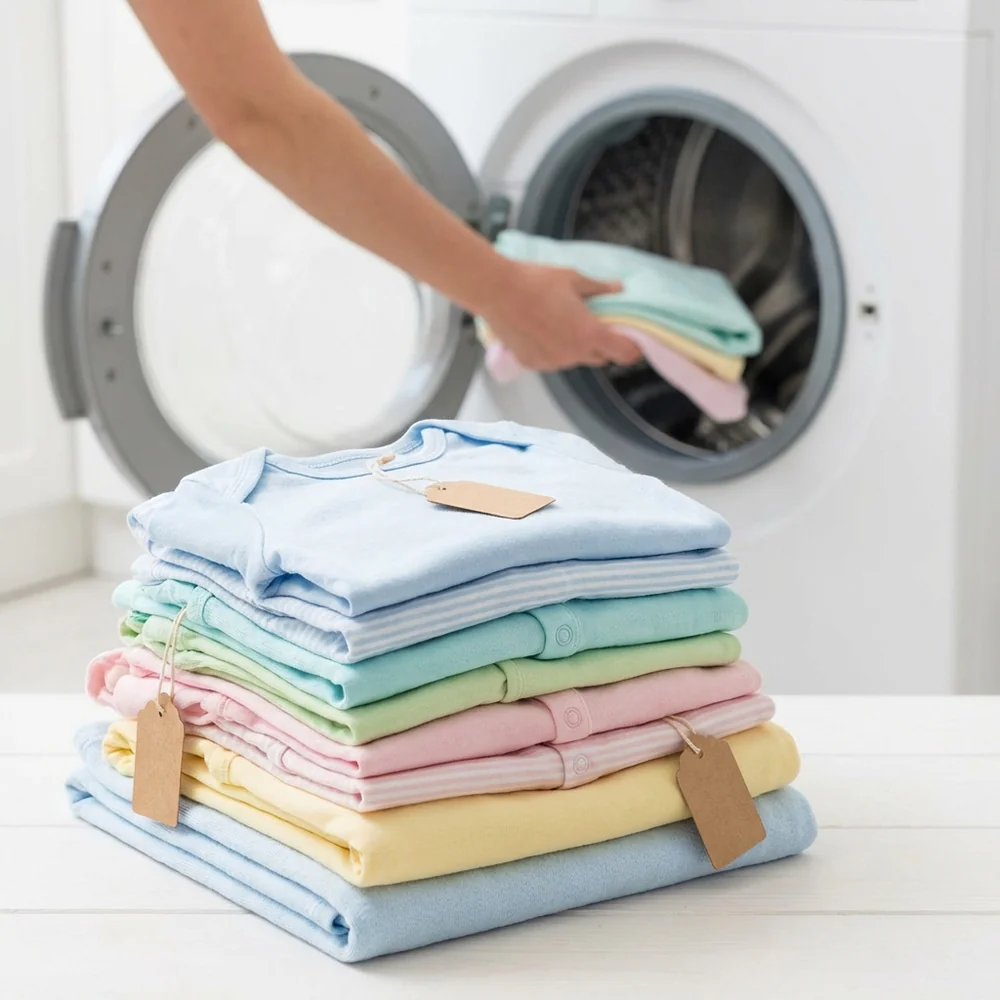
The first rule of baby laundry is counter-intuitive: “New” does not mean “Clean.” That distinct, crisp smell of a brand-new onesie is not freshness; it is chemistry. Specifically, it is often formaldehyde resin. Manufacturers coat clothing in these resins to prevent wrinkles and mildew during the long journey from a factory in Asia to a store shelf in your town. It keeps the merchandise looking sharp, but it is a known carcinogen and a potent skin irritant.
Because infant skin is so permeable, placing unwashed new clothes directly on a baby is essentially wrapping them in a chemical bandage. The warmth and moisture of their body will off-gas these volatile compounds directly into their pores. The International Agency for Research on Cancer classifies formaldehyde as a carcinogen, yet it remains common in the textile industry. You must break the seal of manufacturing. Every single item, from socks to hats to blankets, must go through a wash cycle before it ever touches your child. This initial wash isn’t about removing dirt; it’s about stripping away the industrial ” armor” the clothes were shipped in.
The Bottom Line That “new clothes smell” is hazardous. It is formaldehyde. Wash every new item to strip off the factory chemicals before dressing your baby.
Choosing Baby Safe Detergents
Once you commit to washing, the question becomes: “With what?” The baby detergent aisle is a trap of pastel marketing. You will see bottles with teddy bears, clouds, and smiling infants, often priced 30% higher than regular detergent. This “Pink Tax” (or “Blue Tax” for babies) suggests you are buying safety. Often, you are just buying a weaker detergent with a “baby powder” scent added to it.
True safety comes from ingredients, not mascots. A safe detergent for a newborn is defined by what is missing: no dyes, no brighteners, and absolutely no fragrance. Ironically, some “Baby” detergents are heavily fragranced because parents associate the smell of powder with cleanliness. To a baby’s skin, that fragrance is just another chemical irritant. You do not need a specific “Baby” brand; you need a “Free & Clear” detergent from a reputable brand. As for enzymes? Don’t fear them. The myth that enzymes cause diaper rash has been debunked by decades of research. Enzymes like protease are actually your best friend, as they are the only things that effectively eat dangerous proteins (poop and milk) without needing harsh bleach.
The Bottom Line Ignore the teddy bears on the label. Look for “Free & Clear.” You want a detergent with zero fragrance and plenty of cleaning enzymes.
Fragrance Free vs Unscented Definitions
Navigating the label claims requires semantic precision. You will see two terms that look identical but mean opposite things: “Unscented” and “Fragrance-Free.” In the world of chemical regulation, “Unscented” is a legal loophole. It means the product has no detectable smell. However, because raw soap ingredients often smell like chemicals or fat, manufacturers add masking fragrances to neutralize the odor. You are literally buying a product with extra chemicals added to make it smell like nothing.
“Fragrance-Free” is the term you must hunt for. This means the formula contains no fragrance compounds whatsoever. It might have a slight clinical smell, but it is chemically pure. For a newborn with a developing immune system, avoiding the “cocktail” of hundreds of hidden chemicals in fragrances (even masking ones) is a critical step in preventing early-onset contact dermatitis.
The Bottom Line “Unscented” means they added chemicals to hide the smell. “Fragrance-Free” means they added nothing. Always choose Fragrance-Free.
Rinsing Protocols for Sensitive Skin
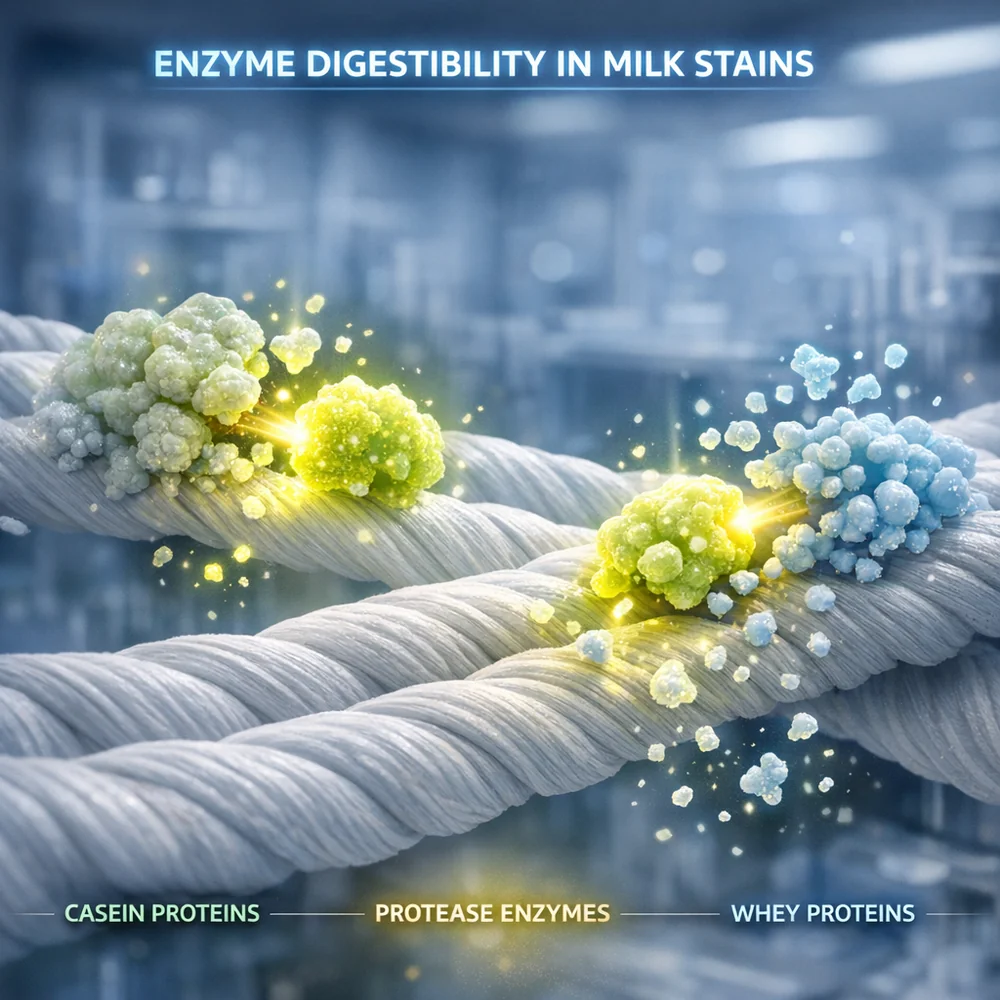
You have bought the right soap; now you must ensure you get it out of the fabric. Detergent residue is the invisible enemy. Modern high-efficiency (HE) washing machines are designed to save water, which is great for the planet but terrible for rinsing. They often leave a microscopic film of surfactant on the fibers. When your baby wears that onesie and drools or sweats, that moisture reactivates the soap.
Suddenly, your baby is not just wearing cotton; they are wearing a wet, concentrated soap solution. This can cause a rash that looks exactly like eczema or a heat rash, leading to misdiagnosis. The solution is mechanical: flush it out. Add an “Extra Rinse” option to every single baby load. If you want to be sure, do the “Bowl Test”: dip a clean dry onesie in a bowl of warm water and squeeze. If you see suds, your machine is failing you. Rinse it again until the water is clear.
The Bottom Line Drool reactivates trapped soap, burning your baby’s skin. High-Efficiency washers are bad at rinsing. Always add a second rinse cycle.
Sanitizing Cloth Diapers vs Clothes
There is a distinction to be made between “dirty” and “contaminated.” A onesie with some spit-up is dirty. A cloth diaper full of feces is contaminated. New parents often panic and treat all laundry as biohazards, soaking everything in vinegar or bleach. This is unnecessary and damages the clothes.
Regular baby clothes, even those with minor leaks or spit-up, can be safely cleaned with a warm wash and a good enzyme detergent. You do not need to “sanitize” every sock. Cloth diapers, adhering to their own specific rules (see our cloth diaper guide), are the exception. They require hot water and occasional bleaching because they harbor fecal bacteria. For the rest of the wardrobe, gentleness is key. Over-sanitizing with harsh chemicals just introduces new irritants to the equation.
The Bottom Line Diapers need heat and heavy cleaning. Regular clothes just need a gentle wash. Don’t nuke the onesies with bleach; it’s overkill.
Washing Frequency for Baby Bedding
While you might change your baby’s outfit three times a day, the crib sheets often get forgotten. Yet, your baby spends up to 16 hours a day pressing their face against that fabric. The crib is a unique environment: it is warm, humid (from breath and sweat), and often contained by a waterproof mattress protector that prevents airflow. It is essentially a Petri dish.
Bacterial counts on crib sheets can skyrocket in just a few days. Drool, leaked milk, and dead skin cells provide a feast for dust mites and bacteria. You should aim to change the crib sheet at least twice a week, more often if there is any visible dampness. This keeps the bacterial load low and prevents the “acne” or facial rashes that often plague newborns.
The Bottom Line The crib is a warm, damp germ factory. Change the sheets twice a week to stop facial rashes and bacterial growth.
Separating Baby Clothes from Family Laundry
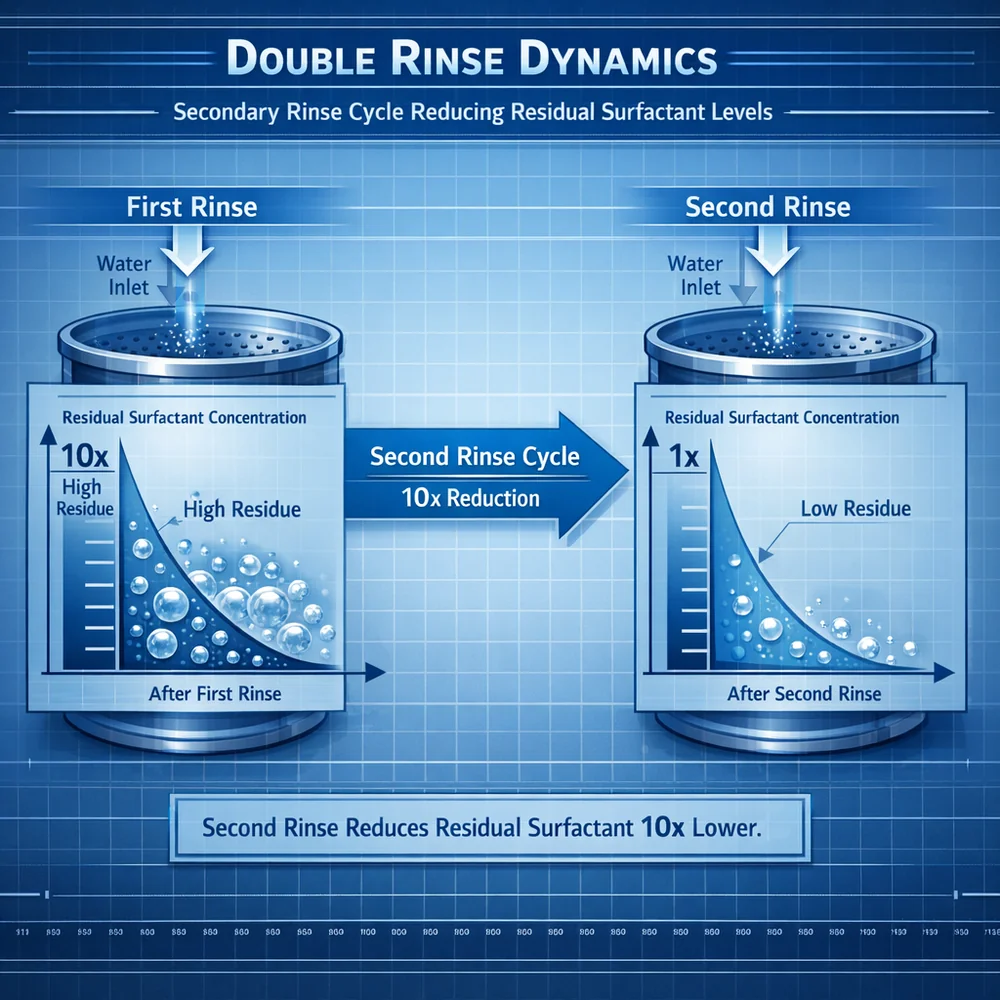
A common question is: “Can I wash my baby’s clothes with mine?” The answer depends on your habits. If you wash your gym clothes in “Mountain Breeze” detergent with fabric softener and scent beads, then no, you absolutely cannot. Those chemicals are tenacious hitchhikers. If you wash a baby blanket in that same load, it will come out coated in the same allergens.
However, if you are willing to switch the entire household to a Free & Clear detergent and ditch the fabric softener, then combining loads is perfectly safe. In fact, it is often easier to just “detox” the family laundry routine for a year than to run separate tiny loads for the baby. But if you cling to your scented softener, you must maintain a strict quarantine between your laundry and the baby’s.
The Bottom Line Fragrance and softener jump from one garment to another in the wash. Either segregate the baby’s clothes or switch the whole house to safe detergent.
Stain Removal for Formula and Spit Up
Baby stains are biological. Breast milk, formula, and spit-up are all protein-based. This means they react to heat just like an egg white: they cook. If you see a yellow stain on a bib and throw it in a hot wash, you are effectively frying the milk protein into the cotton fibers. It will set permanently.
The golden rule for baby stains is “Cold First.” Flush the stain with cold water immediately. This lifts the protein without denaturing it. Once the bulk is gone, you can apply an enzyme stain remover (or just liquid detergent) and let it sit for ten minutes. The enzymes act as microscopic Pac-Man, eating the protein structure. Only after this cold pretreatment should you put the item in the washing machine.
The Bottom Line Hot water cooks protein stains (milk/poop) into the fabric. Rinse with cold water first to flush the “egg,” then wash.
Fabric Softener Risks for Infants
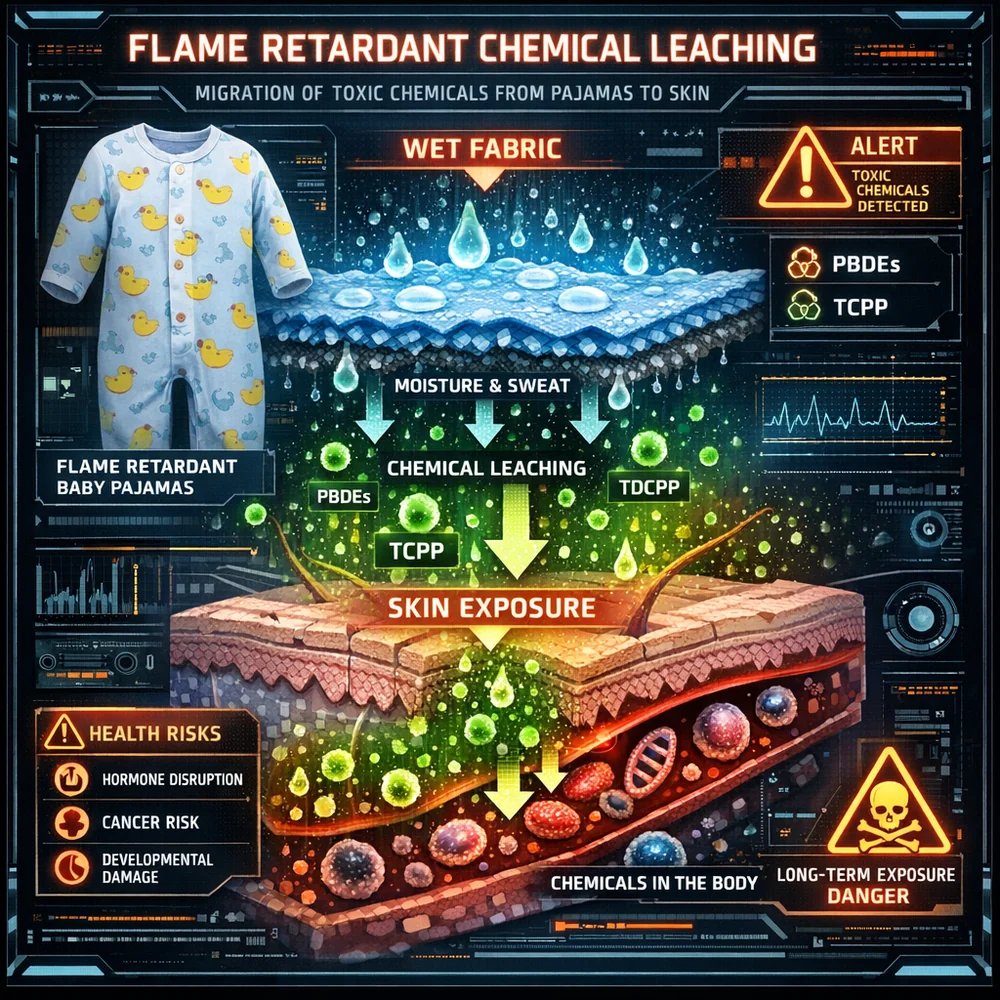
Fabric softener is perhaps the most dangerous product in the nursery, for two reasons. First, it works by coating fibers in a thin layer of fat or wax. This destroys the breathability of the fabric, which can contribute to overheating, a known risk factor for SIDS. Second, and more legally significant, it destroys the flame resistance of sleepwear.
By law, children’s sleepwear is designed to be self-extinguishing. The waxy coating of fabric softener acts as a fuel acceleration, negating this safety feature. Flammability aside, the coating reduces absorbency (useless for towels) and is a massive skin irritant. There is zero medical or safety justification for using fabric softener on baby clothes.
The Bottom Line Fabric softener coats clothes in wax, making them flammable and less breathable. It is dangerous for babies. Never use it.
Drying Baby Clothes Safely
Finally, we reach the dryer. Just as with the washer, you want to avoid chemical additives. Dryer sheets are simply fabric softener that has been dried onto a polyester sheet. The heat melts the wax, coating your clothes. They carry all the same risks: flammability, irritation, and reduced absorbency.
If you want soft clothes without static, use physical agitators. Wool dryer balls are excellent; they bounce around the drum, separating the clothes and softening them through mechanical impact rather than chemical coating. They reduce drying time and leave zero residue. Keep the heat on “Low” or “Medium” for cotton items to prevent the inevitable shrinkage that turns a 3-month onesie into a newborn size.
The Bottom Line Dryer sheets are just solid fabric softener. Throw them out. Use wool dryer balls to soften clothes physically, not chemically.
Conclusion
Laundering for a newborn is a temporary season of high vigilance. It can feel burdensome to check every label, rinse every load twice, and pretreat every stain. But remember, you are not just cleaning fabric; you are managing the ecosystem that touches your child’s defenseless skin.
By removing the industrial residues of new clothes, eliminating the chemical burden of fragrances and softeners, and ensuring thorough rinsing, you eliminate a massive source of potential toxicity. The goal is simple: when you hug your baby, there should be nothing between you and them but clean, safe, neutral cotton.
References
-
International Agency for Research on Cancer. “Formaldehyde and Leather Dust.” IARC Monographs. https://www.iarc.who.int/
-
American Academy of Dermatology. “Contact Dermatitis: Overview.” https://www.aad.org/
-
Contact Dermatitis Institute. “Fragrance Allergy.” https://www.contactderm.org/
-
Journal of Investigative Dermatology. “Development of Skin Barrier Function in Infants.” Elsevier Publications.