Laundry Routine for Eczema: Reducing Detergent Triggers and Skin Irritation
Table of Contents
Things You'll Learn From This Article:
- Clothes can keep irritating your skin all day if detergent residue is left behind, even when they look clean.
- Adding an extra rinse cycle removes most leftover soap and can noticeably reduce itching and flare‑ups.
- Liquid detergents often contain strong preservatives that can trigger rashes, so checking labels matters.
- Powder detergents are usually safer because they don’t need those preservatives.
- Detergents with a very high pH can weaken your skin’s natural protection if residue stays on clothes.
- Smooth fabrics like soft cotton or bamboo are easier on sensitive skin than rough or scratchy materials.
- Wool and coarse synthetics can cause itching just from rubbing, even without any chemicals involved.
- Heavy moisturizers and ointments build up in clothes and need warm or hot water to fully wash out.
- Enzyme detergents help break down greasy cream residue that regular washing leaves behind.
- Old detergent, softener, and mineral buildup can stay trapped in clothes for years unless you deep‑clean them.
- A one‑time “stripping” soak can reset your wardrobe and remove hidden buildup.
- Hot water or high dryer heat sanitizes clothes without leaving harsh chemical residue.
- Oxygen bleach is a gentler option than chlorine bleach when you need extra cleaning power.
- Hard water makes detergent harder to rinse out and can worsen skin irritation.
- Adding a water softener to the wash helps detergent rinse away properly in hard‑water areas.
- Clean clothes can pick up dust allergens if left out in the open.
- Storing clothes in drawers, bins, or zippered bags helps keep them skin‑safe until you wear them.
For the millions of adults and children living with eczema, the laundry room is not just a place for chores; it is a battleground. You meticulously choose your body wash, your moisturizer, and your diet, yet you still wake up scratching. Often, the culprit is the one thing touching your compromised skin barrier for twenty-four hours a day: your clothing.
The relationship between your laundry and your skin is a two-way street. On one hand, poorly rinsed clothing deposits invisible chemical irritants directly onto skin that is already struggling to defend itself. On the other hand, the mechanical friction of rough fabrics acts like sandpaper, physically disrupting the healing process. When you sweat, these two factors combine, moisture reactivates the dormant chemicals in the fabric, creating a concentrated irritant soup that is held against your skin by the very shirt meant to protect you. Transforming your laundry routine is often the missing piece in the eczema management puzzle, turning your clothes from a source of constant irritation into a protective second skin.
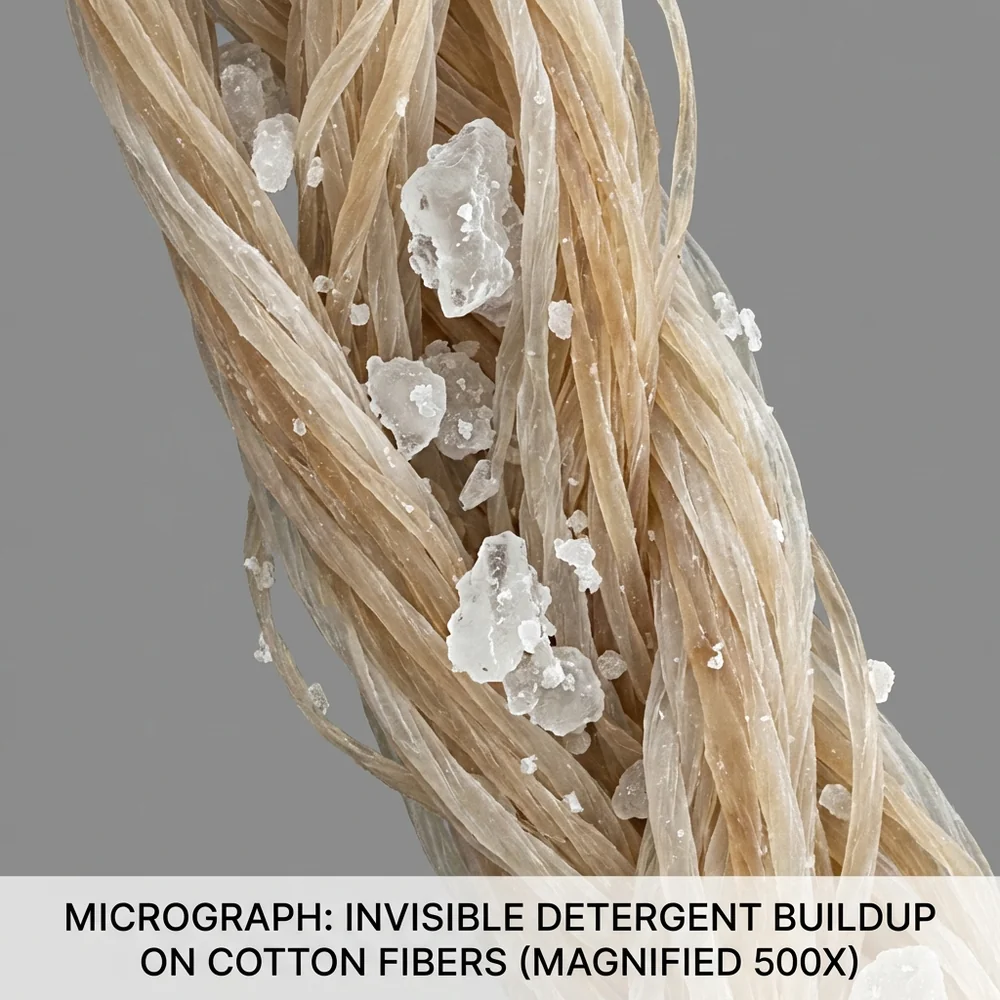
Detergent Residue as a Trigger
To understand why laundry triggers eczema, we must first understand that “clean” clothes are rarely chemically empty. Modern washing machines, driven by efficiency standards, use less water than ever before. Combined with highly concentrated detergents, this creates a perfect storm for residue. What looks like a clean, dry T-shirt is often microscopically coated in leftover surfactants, the active cleaning agents in your soap.
For a person with a healthy skin barrier, this residue is annoying but manageable. For an eczema patient, it is a continuous chemical attack. Surfactants work by dissolving oils; that is how they clean grease from your clothes. When they sit on your skin, they don’t stop working. They begin to dissolve the natural lipids of your stratum corneum, the outer layer of skin that is already weak in eczema sufferers. This effectively strips away your body’s natural defense, allowing moisture to escape and allergens to enter. Research confirms that even tiny amounts of surfactant residue can degrade skin barrier function. The insidiousness of this trigger lies in the delay: you put on a shirt in the morning, feeling fresh, but as the day warms up and you perspire, that moisture reactivates the dried soap, leading to an itch that starts hours later, often leaving you baffled as to the cause.
The Bottom Line Your clothes act as a sponge for detergent. When that residue touches your skin, it dissolves your natural protection. You must focus on removing soap, not just adding it.
Double Rinse Cycle Benefits
Since we know that residue is the enemy, the solution is dilution. A single rinse cycle in a modern high-efficiency machine is simply mathematically insufficient to remove all the chemical load. Textile lab tests reveal a stark reality: a standard wash cycle leaves behind approximately 20% to 30% of the initial detergent load in the fabric.
By adding a second rinse, you dramatically alter this equation. A second rinse removes the vast majority of the remaining chemicals, bringing the total removal rate up to nearly 98%. For normal skin, that first 80% removal is “good enough.” For eczema skin, the remaining 20% is the difference between a rash-free day and a flare-up. You must force your machine to prioritize rinsing over water conservation. This means selecting the “Extra Rinse” option on every single load, or manually running a “Rinse & Spin” cycle after the wash is done. It adds twenty minutes to your laundry time, but it subtracts days of itching from your life.
The Bottom Line One rinse leaves soap behind. Two rinses flushes it out. That extra gallon of water is the cheapest eczema medicine you will ever buy.
Avoiding Methylisothiazolinone and Preservatives
While rinsing helps remove the bulk of cleaning agents, some ingredients are so potent that even trace amounts can trigger a reaction. As we moved from powder detergents to convenient liquids, we introduced a new problem: bacteria. To keep liquid soap from spoiling on the shelf, manufacturers add powerful preservatives. The most notorious of these is Methylisothiazolinone (MI), a chemical so sensitizing that the American Contact Dermatitis Society named it “Allergen of the Year.”
For an eczema sufferer, MI is a non-negotiable red flag. It is a contact allergen that can cause severe, blistering rashes that mimic eczema itself, making it hard to diagnose. You might think your eczema is getting worse, when in reality you are having an allergic reaction to your “gentle” liquid detergent. The solution is vigilance. You must become a label detective, scanning for “methylisothiazolinone” or “Kathon CG.” Alternatively, you can bypass the risk entirely by switching to powder detergents. Because powders are dry, bacteria cannot grow in them, meaning they rarely require these aggressive preservatives. It is a simple swap that eliminates one of the most common modern allergens.
The Bottom Line Liquid detergents require preservatives like MI to stop mold. These preservatives are massive eczema triggers. Switch to powder or MI-free formulas to dodge this hidden bullet.
pH of Laundry Detergents and Skin Barrier
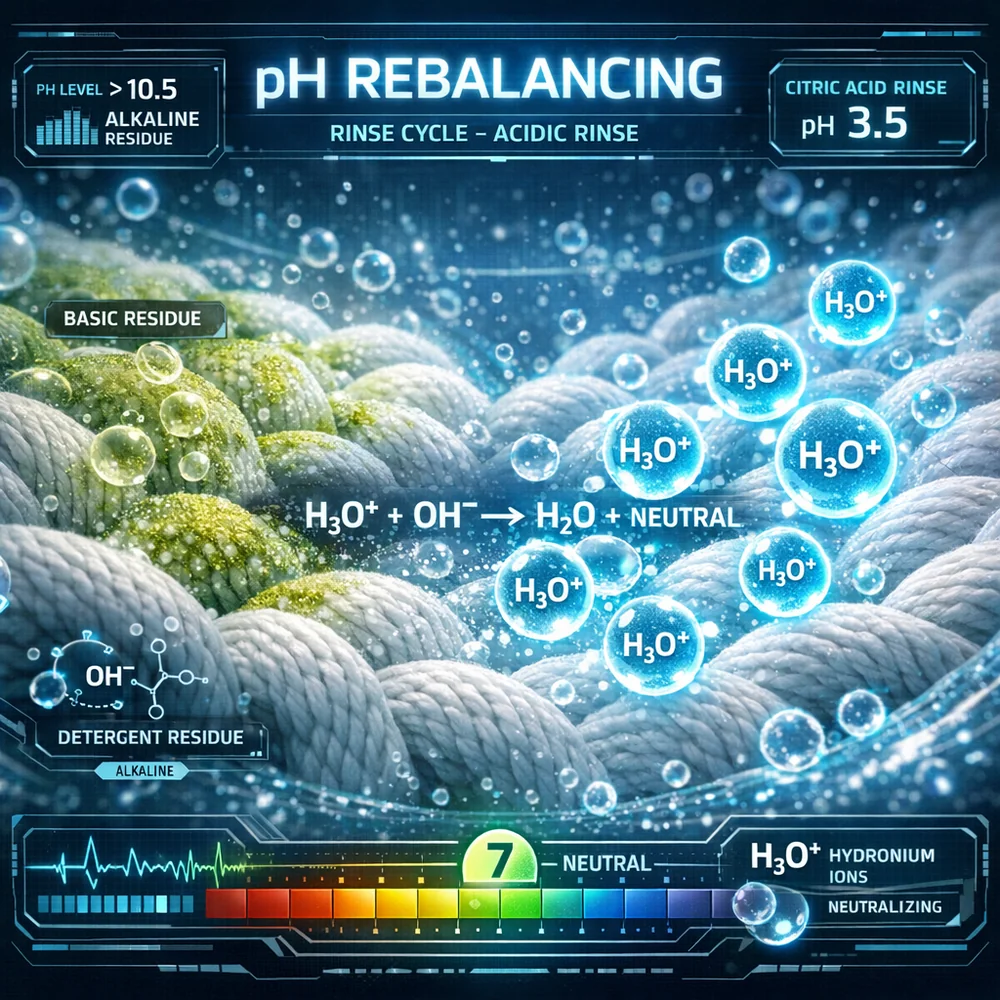
We have addressed the chemical ingredients, but we must also consider the chemical environment, specifically, pH. Your skin is naturally acidic, with a pH around 5.5. This “acid mantle” is a critical part of your immune defense, keeping bad bacteria like Staph aureus in check. Eczema skin often has a higher, more alkaline pH, which weakens its defenses.
Most laundry detergents are alkaline, with a pH between 9 and 11. This high pH helps swell the fabric fibers to release dirt, which is great for cleaning but terrible for your skin. When alkaline residue remains on your clothes, it disrupts your skin’s acid mantle, pushing your pH up and creating an environment where eczema thrives. Ideally, you should look for detergents labeled “pH neutral.” If you must use a strong alkaline detergent for heavy stains, the double-rinse rule becomes even more critical to dilute that alkalinity back down to neutral levels before the fabric touches your body.
The Bottom Line Alkaline detergents fight your skin’s natural acidity. Use a pH-neutral detergent to support your acid mantle, or rinse excessively to wash away the alkalinity.
Fabric Roughness and Mechanical Irritation
Chemistry is only half the battle; physics is the other. Even a chemically perfect shirt can cause a flare-up if it feels like sandpaper. Eczema skin is hyper-sensitive to mechanical friction. Every time you move, your clothes rub against your body. Rough fibers catch on the microscopic cracks in your skin barrier, triggering a “scratch” signal to your brain. This mechanical irritation can start the itch-scratch cycle even without an allergen present.
Wool is the classic villain. Its fibers have microscopic scales that act like tiny barbs. While wool is natural, it is mechanically hostile to eczema skin. Synthetic fibers like polyester can also be abrasive if the weave is coarse. The gold standard for eczema is smooth, high-quality cotton or bamboo viscose. These fibers are round and smooth, gliding over the skin rather than catching on it. When buying clothes, close your eyes and run the fabric over your inner wrist and neck. If you feel any texture at all, it will likely feel like steel wool after eight hours of wear.
The Bottom Line Texture is a trigger. Wool and rough synthetics physically attack your skin barrier. Stick to smooth, high-thread-count cotton or bamboo that glides instead of scratches.
Moisturizing Creams on Clothes
Eczema management usually involves slathering your body in thick, greasy moisturizers or ointments like petrolatum. This creates a unique laundry problem: your clothes get greasier than your actual skin. Over time, these emollients transfer to the fabric, building up a waxy, waterproof coating that standard detergents struggle to remove.
This buildup is dangerous because it traps dirt, dead skin, and bacteria in the fabric weave, holding them against your skin day after day. Cold water washes will not touch this grease; you cannot melt butter with an ice cube. To remove emollient buildup, you need warm or hot water to liquefy the grease, and a detergent containing lipase enzymes. Lipase specifically digests fats and oils, breaking down the ointment residue so it can be washed away. If your “clean” clothes feel heavy or waxy, they are likely saturated with your own medicine.
The Bottom Line Your lotion builds up on your clothes, trapping bacteria. Use warm water and enzyme-rich detergent to break down the grease and keep fabrics breathable.
Stripping Residue from Existing Wardrobe
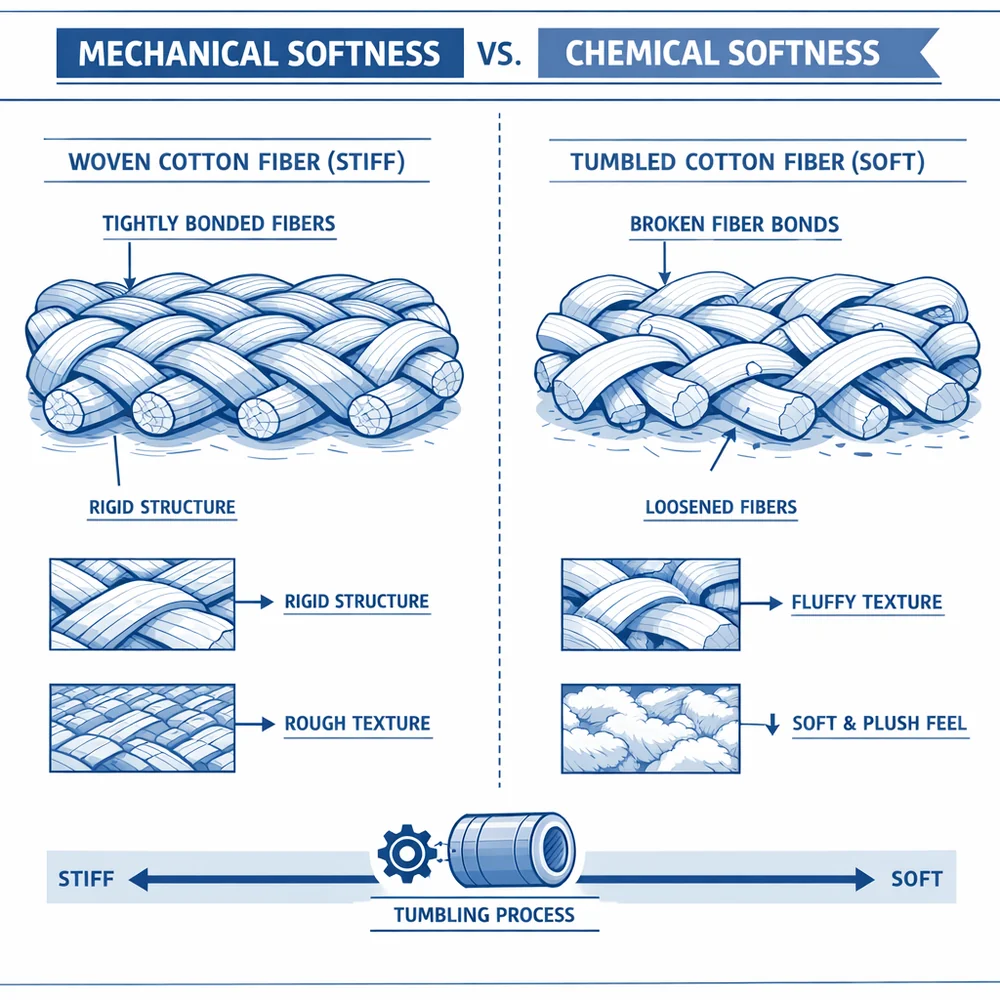
If you are reading this and deciding to change your routine today, you still have a problem: your entire wardrobe is contaminated with your old routine. Years of fabric softener, alkaline detergent, and hard water minerals are locked into the fibers. You need a clean slate. This process is called “stripping.”
Stripping is a one-time deep cleaning event. It involves soaking your clean clothes in a bathtub filled with hot water and a mineral-releasing agent like washing soda (sodium carbonate). You will be shocked by what comes out; the water often turns grey and murky as years of trapped gunk are released. Soak for four to six hours, then run the clothes through a water-only wash cycle. This resets your fabrics to their factory setting, allowing your new, gentle routine to actually work.
The Bottom Line You can’t fix the future without cleaning the past. Strip your clothes once to remove years of chemical buildup, then proceed with your new safe routine.
Sanitizing Without Bleach
Eczema skin is prone to infection, particularly from Staph bacteria that colonize the weeping lesions. Keeping clothing sanitary is crucial, but the standard weapon, chlorine bleach, is far too harsh. Bleach residue can cause severe irritation on open skin. Instead of chemical warfare, we use thermal warfare.
Heat is the safest sanitizer. Bacteria cannot survive sustained high temperatures. Washing clothing at 140°F (60°C) kills the vast majority of pathogens without leaving any chemical residue behind. If your fabrics can’t handle hot water, the dryer is your backup. A cycle on “High Heat” for at least 30 minutes acts as a dry sterilization chamber. If you absolutely must use a chemical aid, choose oxygen bleach (sodium percarbonate) over chlorine. It breaks down into water and oxygen, providing a safer boost for fighting organic stains.
The Bottom Line Kill germs with heat, not bleach. Hot water and hot air sanitize your clothes without leaving chemical burns on your skin.
Hard Water Eczema Connection
Even if you choose the perfect detergent and rinse twice, the water coming out of your pipes might be sabotaging you. Hard water contains high levels of dissolved calcium and magnesium. These minerals bind to detergent molecules, preventing them from dissolving and turning them into a sticky soap scum that clings to fabric.
Studies have actually linked living in hard water areas to higher rates of childhood eczema. The mechanism is simple: the minerals glue the detergent to your clothes, making it impossible to rinse out. If you have hard water, you simply cannot achieve a residue-free wash with water alone. You must add a water softener to the drum, like washing soda or a commercial additive, to sequester the minerals and allow the detergent to rinse away freely.
The Bottom Line Hard water glues soap to your clothes. If you have hard water, you must use a water softening additive, or you will never get the residue out.
Clothing Storage to Prevent Dust

Finally, the journey doesn’t end when the dryer stops. Where you put your clothes matters. Many eczema sufferers are also allergic to dust mites. If you store your clean clothes on open shelves, they become dust magnets. By the time you put that shirt on a week later, it is covered in microscopic allergens.
Protect your hard work by using closed storage. Dresser drawers, plastic bins with lids, or zippered garment bags create a physical barrier against dust. This is especially important for seasonal items like winter coats, which can gather months of dust if left hanging exposed in a closet. Keep the “clean” state locked in until you are ready to wear it.
Conclusion
Building an eczema-safe laundry routine is not about buying the most expensive “specialty” product on the shelf. It is about understanding the physics and chemistry of irritation. It is about realizing that “clean” to the eye is not “clean” to the skin. By prioritizing thorough rinsing, eliminating dangerously sensitizing preservatives like MI, and managing pH and texture, you can turn your clothing from an antagonist into an ally.
Start by adding that extra rinse cycle today. It is the single most effective intervention you can make. Once you have detoxed your wardrobe and established a routine that respects your skin barrier, you may find that your “uncontrollable” flare-ups become a lot more manageable. Your skin is fighting a hard enough battle; don’t let your clothes fight against it too.
References
-
British Journal of Dermatology. “Surfactant Effects on Atopic Skin Barrier.” https://onlinelibrary.wiley.com/doi/10.1046/j.1365-2133.1998.02426.x
-
American Contact Dermatitis Society. “Allergen of the Year: Methylisothiazolinone.” https://www.contactderm.org/resources/allergen-of-the-year
-
National Eczema Association. “Seal of Acceptance Program.” https://nationaleczema.org/eczema-products/seal-of-acceptance/
-
Journal of the European Academy of Dermatology and Venereology. “Hard Water and Atopic Eczema: A Systematic Review.”