Hypoallergenic Detergent Guide: Understanding Labels, Allergens, and Safe Choices
Table of Contents
Things You'll Learn From This Article:
- The word “hypoallergenic” on a detergent bottle doesn’t have a legal meaning, so it doesn’t guarantee the product is safe for your skin.
- Front-of-bottle claims like “gentle,” “sensitive,” or “dermatologist recommended” are often marketing, not proof of real testing.
- The ingredient list on the back of the bottle matters more than any slogan on the front.
- Fragrance is the most common cause of detergent-related skin reactions, even when it comes from “natural” sources.
- “Unscented” can still contain masking fragrances; “fragrance-free” is the term that actually matters.
- Preservatives in liquid detergents, especially isothiazolinones like MI and MCI, are frequent triggers for allergic rashes.
- Enzymes in detergent are not harsh on skin and usually rinse out completely, even for people with eczema.
- Optical brighteners are designed to stay on fabric and can cause rashes, especially when clothes are exposed to sunlight.
- Regular detergent dyes don’t help clean clothes and only add unnecessary risk for sensitive skin.
- Third-party seals like the National Eczema Association acceptance are more trustworthy than brand-made claims.
- Even a “safe” detergent can still bother your skin, so testing it on a small area or one item first helps avoid full-body reactions.
- Skin reactions to detergents can take days to appear, so quick spot checks aren’t enough.
- Powder detergents often contain fewer preservatives than liquids because bacteria can’t grow in dry products.
- Powder detergent needs to fully dissolve, or leftover grains can irritate skin trapped in fabric.
- “Plant-based” or “natural” doesn’t automatically mean gentler, since many plant ingredients are strong allergens.
- Simple formulas with fewer ingredients are usually easier on sensitive skin than complex or heavily scented ones.
- A synthetic detergent without fragrance, dyes, brighteners, and harsh preservatives can be safer than a natural one full of essential oils.
The modern detergent aisle is a minefield of comforting adjectives. You see bottles adorned with clouds, feathers, and babies, all promising “gentle,” “sensitive,” or the gold standard of safety: “hypoallergenic.” For the millions of people living with contact dermatitis, eczema, or simple skin sensitivity, these words feel like a lifeline. They suggest a product that has been rigorously tested, stripped of irritants, and certified safe by medical professionals. Unfortunately, that sense of security is largely an illusion. Unlike terms such as “Organic” or “FDA Approved,” which are guarded by strict government regulations, the word “hypoallergenic” has literally no legal definition in the United States laundry market.
A manufacturer can slap the word “hypoallergenic” on a bottle based entirely on their own internal feelings or a simple marketing decision. There is no required safety testing, no government standard to meet, and no guarantee that the product won’t leave you covered in a red, itchy rash. In fact, many popular “gentle” detergents are packed with the exact same preservatives and masking fragrances found in standard detergents, just in lower concentrations or different combinations. This regulatory vacuum leaves you, the consumer, navigating a marketplace where marketing claims substitute for meaningful information. To actually protect your skin, you have to stop reading the reassuring slogans on the front of the bottle and start decoding the complex chemistry list on the back.
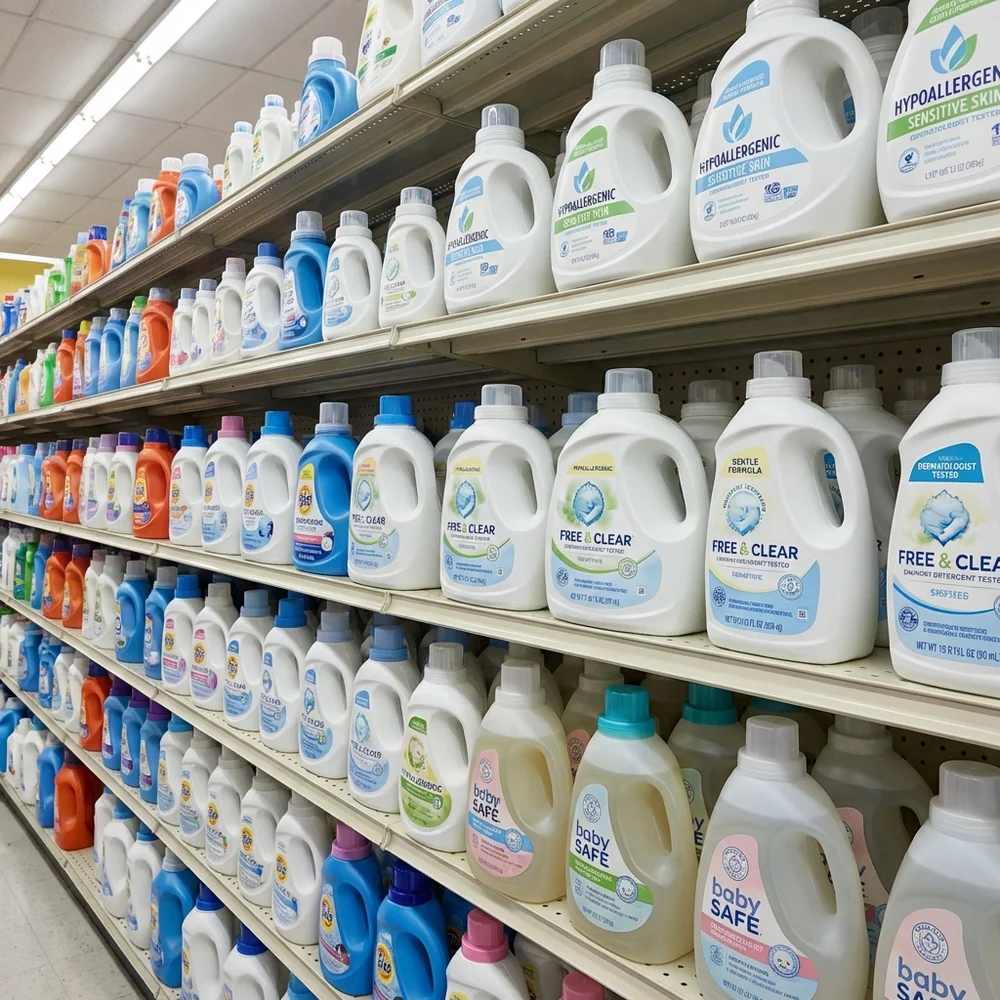
Interpreting Hypoallergenic Labels
Since we established that the “hypoallergenic” label is effectively a marketing decoration rather than a scientific classification, we must understand what manufacturers actually mean when they use it. The FDA explicitly states that there are no Federal standards or definitions that govern the use of the term. In practice, this means the definition shifts from brand to brand. For one company, it might mean they removed the blue dye. For another, it might mean they added a massive amount of “masking fragrance” to cover up the chemical smell of the soap, ironically introducing more allergens in the process.
This lack of standardization creates a dangerous false confidence. A consumer sees “hypoallergenic” and assumes the product is free from known allergens like methylisothiazolinone or limonene. When they inevitably react to the product, they often blame themselves or their diet, never suspecting the “safe” detergent. The reality is that a product labeled hypoallergenic may still contain a cocktail of known irritants, while a product without that label might be perfectly safe simply because it has a simpler formula. The label is noise. The truth is in the ingredients.
The Bottom Line “Hypoallergenic” is an unregulated marketing term with no legal definition. A manufacturer can use it without proving their product is safe. Do not trust the front label; you must read the ingredient list to find the truth.
Common Contact Allergens in Laundry
If the label is unreliable, we must turn to the chemistry itself to identify what actually causes skin reactions. Contact dermatitis from laundry products is rarely caused by the “harshness” of the cleaning agents themselves. It is almost always a specific allergic reaction to an additive, a chemical added not to clean your clothes, but to make the product smell nice, look pretty, or sit on a shelf for two years without spoiling. The single largest category of laundry allergens is fragrance.
Fragrance is often described as a “Trojan Horse” ingredient because the single word “Fragrance” or “Parfum” on a label can represent a mixture of dozens or even hundreds of individual proprietary chemicals. The American Contact Dermatitis Society consistently identifies fragrance additives as the leading cause of allergic contact dermatitis. Even natural scents are not safe; compounds like limonene (from citrus) and linalool (from lavender) are potent allergens that oxidize on fabric to become even more irritating. When you see “Unscented,” be wary, as this often means the product contains masking fragrances to hide the chemical smell. “Fragrance-Free” is the only reliable descriptor for avoiding this entire class of allergens.
Beyond fragrance, preservatives are the second most common trigger. Because liquid detergents are mostly water, they are a perfect breeding ground for bacteria and mold. To prevent this, manufacturers add potent biocides. The most notorious of these are the isothiazolinones, specifically Methylisothiazolinone (MI) and Methylchloroisothiazolinone (MCI). These chemicals are so effective at causing allergies that they were named “Allergen of the Year” by dermatology societies. They are sensitizers, meaning you can use them for months with no issue, and then suddenly develop a lifelong allergy that triggers a reaction every time you touch them.
The Bottom Line The two biggest villains in laundry allergies are Fragrances (even natural ones) and Preservatives (specifically MI and MCI). These additives cause the vast majority of reactions, not the soap itself.
Enzyme Sensitivity Myths
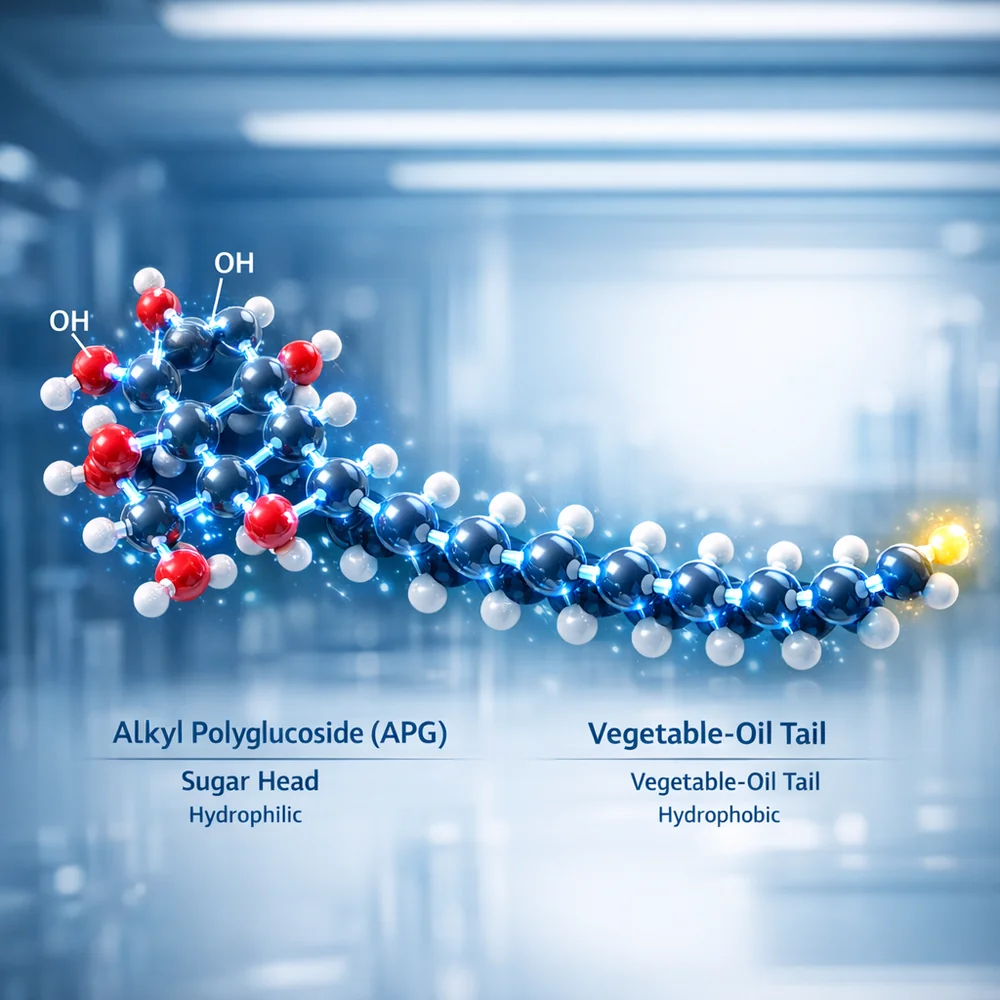
While we have identified fragrance and preservatives as the true enemies, we must address a chemical that has been wrongfully accused for decades: enzymes. You will often see “non-bio” detergents, especially in European markets, marketed as safer options for sensitive skin because they lack biological enzymes. This fear stems from the 1970s, when factory workers inhaling concentrated enzyme dust developed respiratory issues. However, over thirty years of dermatology research has proven that this fear is unfounded for the consumer.
Enzymes like protease and lipase act as “molecular scissors,” cutting up protein and fat stains into smaller pieces that can be washed away. Once they do their job, they rinse out. A systematic review in the British Journal of Dermatology examined multiple double-blind studies and found absolutely no difference in skin reactions between enzyme-containing and enzyme-free detergents, even among people with severe eczema. The belief that “biological” detergents are harsh is a myth that persists solely due to marketing momentum. In reality, enzymes are beneficial for sensitive skin because they allow you to get clothes clean at lower temperatures and without using harsh alkalinity or bleach, which are actual irritants.
The Bottom Line Science has cleared enzymes of all charges. Decades of testing show they do not irritate skin. In fact, they help clean clothes without needing harsh bleach or hot water, making them a friend to sensitive skin.
Optical Brightener Skin Reactions
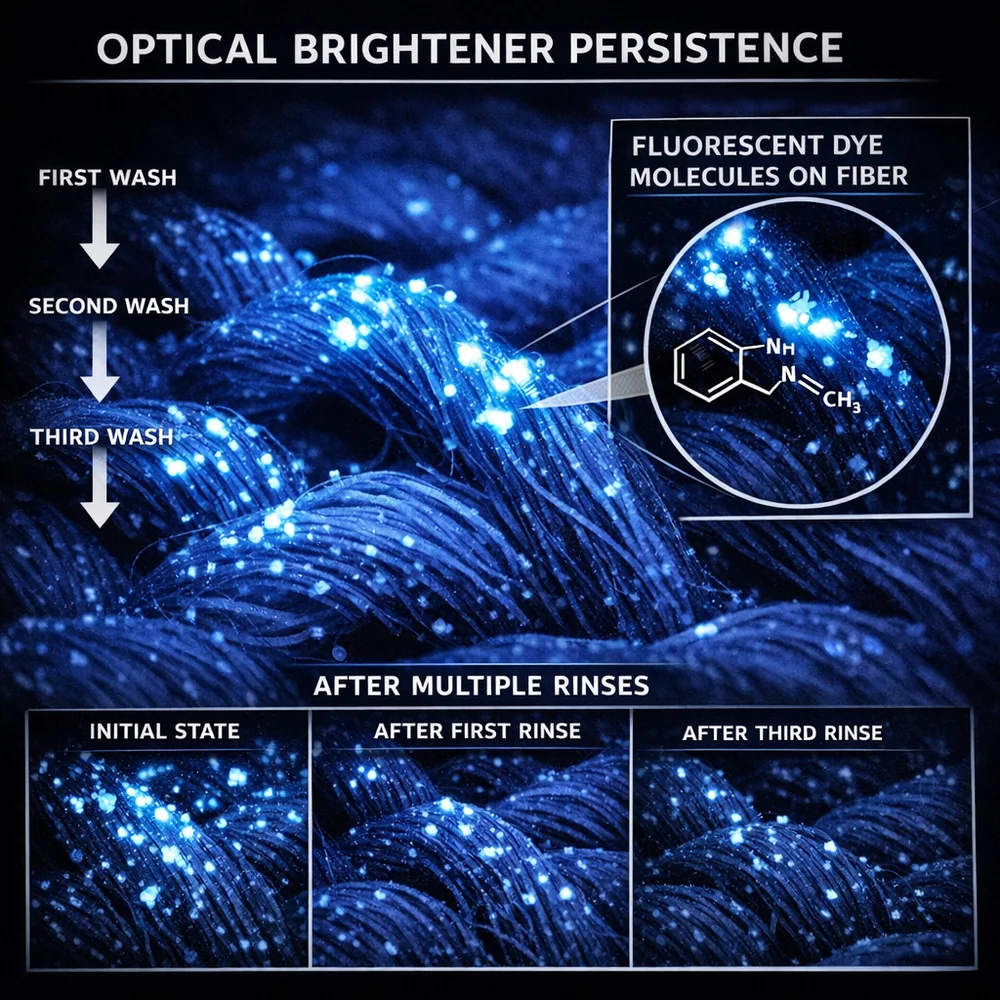
While enzymes rinse away innocently, another class of chemicals is designed specifically to stay behind. Optical brighteners, also known as fluorescent whitening agents, are chemical dyes that absorb invisible ultraviolet light and re-emit it as visible blue light. This trick of physics makes yellowing fabrics appear stark, glowing white. They are effectively “glow-in-the-dark paint” for your laundry. Because their entire function relies on staying attached to the fabric fibers, they create a permanent chemical interface between your clothes and your skin.
The dermatological risk here is specific: photocontact dermatitis. This is a reaction that occurs only when the chemical is present and exposed to sunlight. You might wear a shirt indoors with no problem, but step outside and develop a rash where the sun hits the fabric. The UV light excites the brightener molecule, causing it to react with the skin. While less common than fragrance allergies, brightener reactions are distinct and annoying. If you find yourself getting rashes specifically on sun-exposed areas of your body while wearing white clothes, optical brighteners are the likely culprit. To avoid them, you must look for detergents explicitly labeled “brightener-free,” as standard “free and clear” detergents often still include them.
The Bottom Line Optical brighteners are designed to stick to your clothes forever to make them glow. If you get rashes on sun-exposed skin, these chemicals are likely reacting with UV light to irritate you.
Dye Free Importance
If optical brighteners are “functional” dyes, standard colorants are purely cosmetic. Synthetic dyes like Liquitint Blue or Yellow 5 serve absolutely no cleaning purpose. They exist solely because marketing research shows that consumers believe blue liquid cleans better than clear liquid. For someone with sensitive skin, these dyes represent an entirely unnecessary risk. While the concentration of dye in detergent is low, and the rinse cycle removes most of it, the risk calculation makes no sense. Why expose your compromised skin barrier to a chemical that does literally nothing but make the soap look pretty?
Textile dye allergies, reactions to the actual dye in the clothing itself, are well documented. While detergent dyes are chemically different, the philosophy of “avoidance” suggests eliminating every non-functional ingredient. Switching to dye-free products is the easiest, lowest-cost change you can make. It requires no sacrifice in cleaning performance because color has never cleaned a single stain in human history.
The Bottom Line Dyes are useless. They are marketing decorations that introduce unnecessary chemical risk. Always choose clear, dye-free detergents to eliminate this variable.
Dermatologist Recommended Brands
We have dismantled the “hypoallergenic” label, but what about the impressive claim of “Dermatologist Recommended”? Unfortunately, this phrase is often just as hollow. It can legally mean that the company paid a single dermatologist to review their formula, or that they surveyed a group of doctors and a percentage of them nodded their heads. It implies a medical consensus that rarely exists. However, there are third-party certifications that carry actual scientific weight.
The gold standard in the United States is the National Eczema Association (NEA) Seal of Acceptance. Unlike a marketing slogan, this seal represents a rigorous review process. A product must submit safety data, test results, and ingredient lists to a panel of experts. They specifically check for known irritants like formaldehyde releasers, specific preservatives, and fragrances. If a product has the NEA seal, it means it has actually passed a toxicology review, not just a marketing meeting. In other regions, similar bodies like Allergy UK provide reliable, science-backed certifications that you can trust far more than the manufacturer’s own promises.
The Bottom Line Ignore “Dermatologist Recommended” on the bottle; it’s practically meaningless. Look for the specific “Seal of Acceptance” from the National Eczema Association, which proves the ingredients were actually reviewed by experts.
Testing New Detergents (Patch Test Method)
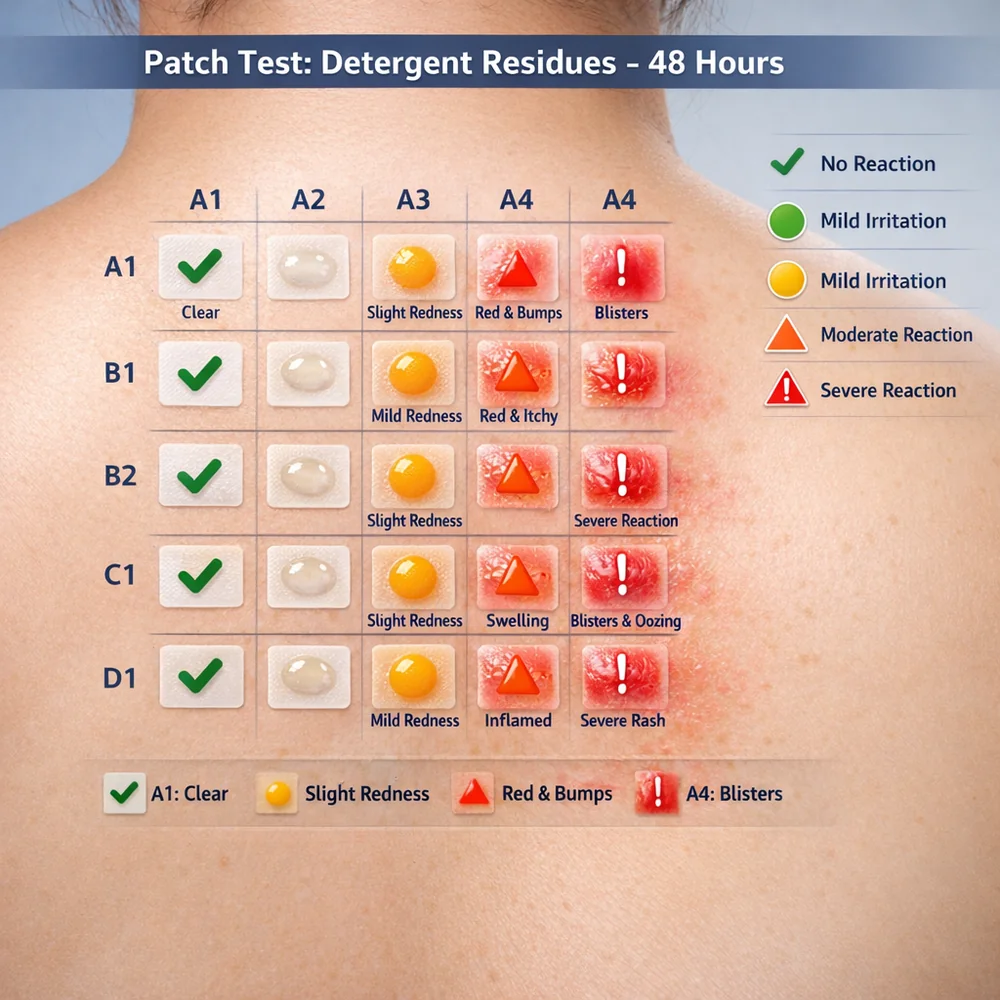
Even with the best certifications and the safest ingredient lists, your skin is unique. You might be the one-in-a-million person allergic to a specific coconut-derived surfactant. Therefore, you should never switch your entire laundry routine to a new product overnight. You need to act like a scientist and run a clinical trial of one: yourself. The most effective way to do this at home is the “Repeat Open Application Test” (ROAT), which is a simplified version of a medical patch test.
To perform this test, dilute a small amount of the new detergent in water and apply it to a small patch of skin on your inner forearm, where the skin is thin and sensitive. Repeat this twice a day for a full week. You need to wait a full week because allergic contact dermatitis is a delayed-type hypersensitivity reaction. It can take 48 to 72 hours, or even longer, for the immune system to ramp up a response. If you just dab it on and wait ten minutes, you learn nothing. If you prefer a real-world test, wash a single pillowcase or t-shirt in the new detergent and use it for a week while monitoring your skin. Only once you have passed this probationary period should you pour the new detergent into your machine for a full load.
The Bottom Line Don’t gamble with your whole wardrobe. Test a new detergent on your inner arm for a week before switching. Allergic reactions can take days to appear, so a quick “sniff test” tells you nothing.
Liquid vs Powder for Rinsing
Once you have identified a safe formula, you must choose the right form: liquid or powder. This choice is not just preference; it changes the chemical profile of the wash. Liquid detergents are convenient because they dissolve instantly, ensuring you never find chalky white streaks on your dark clothes. However, because they are water-based, they are prone to bacterial growth. To stop the bottle from turning into a petri dish, manufacturers must load liquids with strong preservatives, those same isothiazolinones we identified as major allergens earlier.
Powder detergents offer a chemically simpler alternative. Because they are dry, bacteria cannot grow in the box, which means powders often require few or no preservatives. This eliminates a huge category of potential allergens instantly. The trade-off is mechanical: powder must dissolve fully to work. If you wash in ice-cold water or overload the machine, undissolved powder crystals can get trapped in fabric folds, creating tiny pockets of concentrated chemical burn against your skin. The safest path for many eczema sufferers is to use a high-quality powder dissolved in warm water, combining the preservative-free benefits of powder with the solubility of a liquid.
The Bottom Line Liquids are easier to use but contain allergenic preservatives. Powders are preservative-free but can leave residue if not dissolved. Warm water washing with powder is often the safest “Goldilocks” choice.
Bio-Based vs Synthetic Hypoallergenic Options
Finally, we must address the “Naturalistic Fallacy”, the belief that because something comes from a plant, it is safer than something made in a lab. In the world of chemistry, a molecule does not care where it came from. Sodium Lauryl Sulfate (SLS) is a common surfactant that can be irritating to some skin. It can be made from petroleum, or it can be refined from coconut oil. To your skin cells, these two molecules are identical. They have the same shape, the same charge, and the same potential to strip oils from your skin barrier.
“Plant-based” does not automatically mean “gentle.” In fact, many natural brands rely heavily on essential oils for fragrance and preservation. While these smell lovely, they are chemically complex and often highly allergenic. Poison ivy is 100% natural and plant-based, yet you wouldn’t wash your clothes in it. When choosing a safe detergent, look for chemical simplicity, not just botanical origins. A synthetic detergent that is free of dyes, fragrances, and brighteners is often safer for sensitive skin than a natural detergent loaded with lavender oil and citrus extracts.
The Bottom Line “Natural” does not mean safe. A coconut-derived chemical can be just as irritating as a petroleum one, and “natural fragrances” are still allergens. Judge a product by its chemical simplicity, not its plant origin.
Conclusion
Navigating the world of hypoallergenic laundry is a journey from blind trust to informed scrutiny. We began by revealing that the label “hypoallergenic” is a largely unregulated marketing tool, often hiding a cocktail of fragrances and preservatives. We learned that the true villains are not the cleaning agents themselves, but the additives, the perfumes that mask smells, the preservatives that extend shelf life, and the brighteners that trick the eye. By shifting our focus from the front of the bottle to the ingredient list on the back, we reclaim control over our skin health.
The path to a reaction-free life is built on elimination: eliminating fragrances, broad-spectrum preservatives, unnecessary dyes, and optical brighteners. It involves ignoring myths about enzymes and embracing the rigorous testing of certifications like the National Eczema Association seal. Ultimately, finding the right detergent is a personal scientific experiment. By patch testing new products and prioritizing simple, transparent formulas, you can turn your laundry room from a source of irritation into a zone of safety, ensuring that the fabrics hugging your skin all day offer nothing but comfort.
References
-
U.S. Food and Drug Administration. “Hypoallergenic Cosmetics Labeling.” https://www.fda.gov/cosmetics/cosmetics-labeling-claims/hypoallergenic-cosmetics
-
British Journal of Dermatology. “Enzyme-Containing Laundry Detergents: A Review of Evidence for Skin Problems.”
-
National Eczema Association. “Seal of Acceptance Program.” https://nationaleczema.org/eczema-products/seal-of-acceptance/
-
Allergy UK. “Allergy Friendly Product Certification.” https://www.allergyuk.org/get-help/allergy-friendly-products/