Washing a Jiu Jitsu Gi: Hygiene, Shrinkage, and Blood Removal
Table of Contents
Things You'll Learn From This Article:
- Wash your Gi in cold water to avoid surprise shrinkage, especially in the sleeves and pants.
- Use a heavy-duty wash cycle so water and soap actually reach deep into the thick fabric.
- Skip hot water and the dryer unless you are intentionally trying to shrink an oversized Gi.
- Set dye on new blue or black Gis by soaking them in cold water with vinegar before the first wash.
- Treat blood stains right away with hydrogen peroxide and cold water, never heat.
- Avoid chlorine bleach because it weakens the fabric, damages collars, and can ruin gym mats.
- Wash your belt after every training session because it holds sweat and bacteria like the Gi.
- Put your belt in a mesh laundry bag so it doesn’t tangle or whip around in the washer.
- Air-dry your Gi in a well-ventilated area and keep the collar fully open so it dries completely.
- Keep Gis out of direct sunlight to prevent fading and brittle fabric.
- Expect air-dried Gis to feel stiff, which actually makes them harder for opponents to grip.
- Wash rash guards separately and add baking soda to remove trapped body oils and odors.
- Never use fabric softener on rash guards because it locks in smells and bacteria.
- Give hemp Gis extra rinsing and avoid heat so they don’t turn stiff and abrasive.
- Protect patches by washing cold, securing velcro, and checking stitching so they don’t tear your Gi.
A Brazilian Jiu-Jitsu (BJJ) Gi is not merely a uniform. It is a heavy-duty tactical tool designed to withstand extreme torque, friction, and tensile stress. Constructed from dense, reinforced cotton weaves (Single, Double, Pearl, or Gold weave), the Gi performs two functions. It provides armor for the wearer and a grip surface for the opponent.
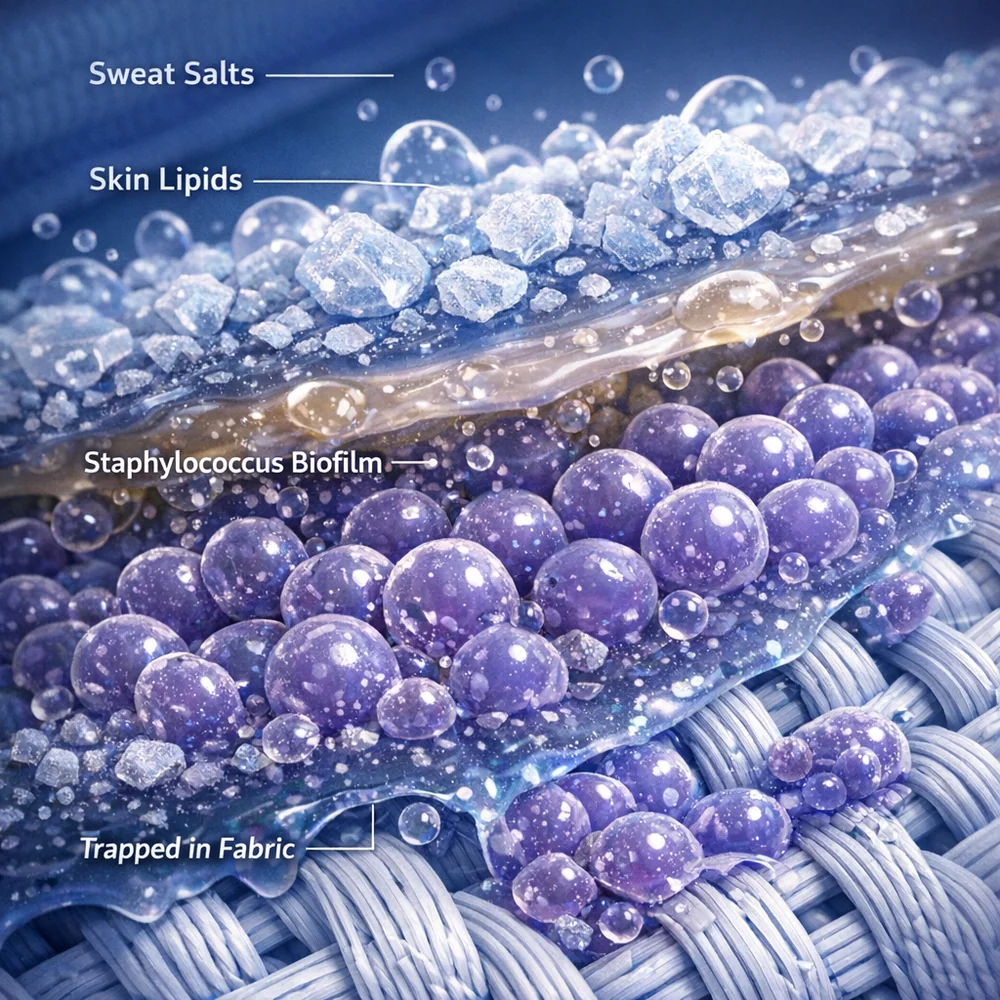
However, this thick, absorbent fabric also acts as a perfect sponge for sweat, blood, and cutaneous bacteria. If not washed with clinical precision, a Gi becomes a biological hazard, functioning as a vector for Staphylococcus aureus (Staph), Ringworm (Tinea corporis), and other skin infections. Washing a Gi is a balance between rigorous sterilization and structural preservation. The cotton fibers must remain strong to resist tearing during sparring, yet the fabric must be chemically disinfected to prevent fungal colonization.
Why Heat Shrinks Your Gi
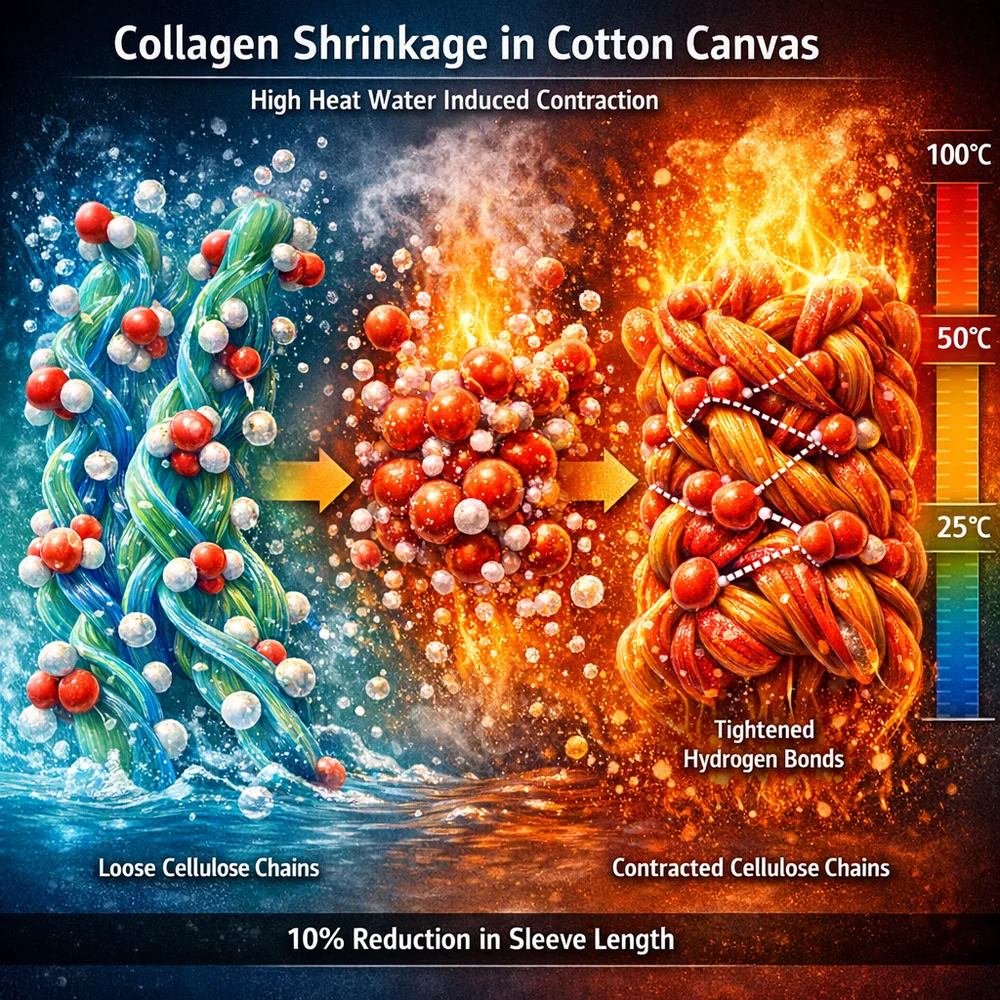
Cotton weaves naturally want to shrink. When raw cotton fibers are spun into yarn and woven into a thick Pearl or Gold weave, they are stretched under immense mechanical tension. This potential energy is stored in the fabric memory. Heat, whether from hot wash water or a tumble dryer, acts as a catalyst that releases this tension. The fibers relax, snapping back to their shorter, natural state.
This thermal relaxation can shrink a sleeve by 3 inches in a single wash cycle. Unless you are intentionally trying to shrink an oversized Gi, always wash in cold water (below 85°F or 30°C). Cold water maintains the fiber tension. Use the Heavy Duty cycle to ensure the thick fabric is fully penetrated by the water and detergent, but strictly ensure the temperature remains thermal-neutral.
For colored Gis (Royal Blue, Black, Navy), the dye is often unstable for the first few washes. Before the very first machine wash, soak the Gi in a solution of cold water and white vinegar (1 cup vinegar to 1 gallon water) for 30 minutes. The acetic acid acts as a mordant, helping to set the dye molecules into the cotton fiber. This prevents the color from bleeding onto the mat or staining your rank belt.
The Bottom Line Heat releases the tension in cotton fibers, causing rapid and irreversible shrinkage. Wash in cold water to maintain size. Use a vinegar soak on the first wash to lock in the dye color chemically.
How to Remove Blood from a Gi
Combat sports involve bodily fluids. If you bleed on your Gi, or an opponent bleeds on you, you must treat the hazard immediately. Dried blood bonds to the cellulose proteins of the cotton, becoming a permanent rust-colored stain.
Do not scrub fresh blood with hot water, as heat cooks the protein, setting the stain. Instead, pour 3 percent hydrogen peroxide directly onto the fresh blood. It will foam vigorously white. This is the catalase enzyme in the blood reacting with the peroxide, breaking down the hemoglobin pigment. Rinse with cold water once the foaming stops.
Never use chlorine bleach (Sodium hypochlorite) on a Gi. Bleach degrades the cellulose bonds, weakening the fabric. A bleached collar is easy for an opponent to rip. Furthermore, hazardous bleach residue can remain in the thick weave. When you sweat, this residue reactivates and transfers to the gym mats (Tatami). Bleach chemically melts the vinyl surface of expensive grappling mats, causing them to crack and harbor bacteria.
The Bottom Line Flush blood immediately with cold water and hydrogen peroxide. Never use chlorine bleach, as it weakens the Gi fabric and chemically destroys the vinyl surface of training mats.
Why You Must Wash Your Belt
Never wash your belt. It washes away the knowledge. This old martial arts superstition is a microbiological disaster. From a scientific perspective, your belt absorbs just as much sweat, dead skin, and bacteria as the jacket. However, unlike the jacket, the belt is often tied tightly around the waist, staying damp for longer. A dirty belt is a common vector for transferring Ringworm and Staph infections directly to your training partners’ faces and necks during close grappling.
You must wash your belt. To prevent it from acting like a whip inside the drum or getting tangled in the agitator, confirm it is placed in a mesh laundry bag. Wash it after every single session. The knowledge is in your neuronal synapses, not in the cotton fibers.
If a belt smells musty, it has mold deep in the core. Soak it in a bucket with a laundry sanitizer (like Lysol Laundry Sanitizer) or a cup of white vinegar for an hour before washing. This lowers the pH, creating an acidic environment that destroys the cell walls of fungal spores.
The Bottom Line The unwashed belt tradition spreads Staph and Ringworm. Wash your belt in a mesh bag after every session. Use vinegar or sanitizer to kill fungal spores deeply embedded in the thick weave.
How to Dry a Gi Without Ruining the Collar
Never put a Gi in the dryer unless you are resizing it. Tumble drying not only shrinks the cotton skirt but also damages the rubberized collar. Most modern Gis use an EVA foam core in the collar to prevent bacteria absorption. High dryer heat can melt or warp this foam, ruining the lapel’s stiffness.
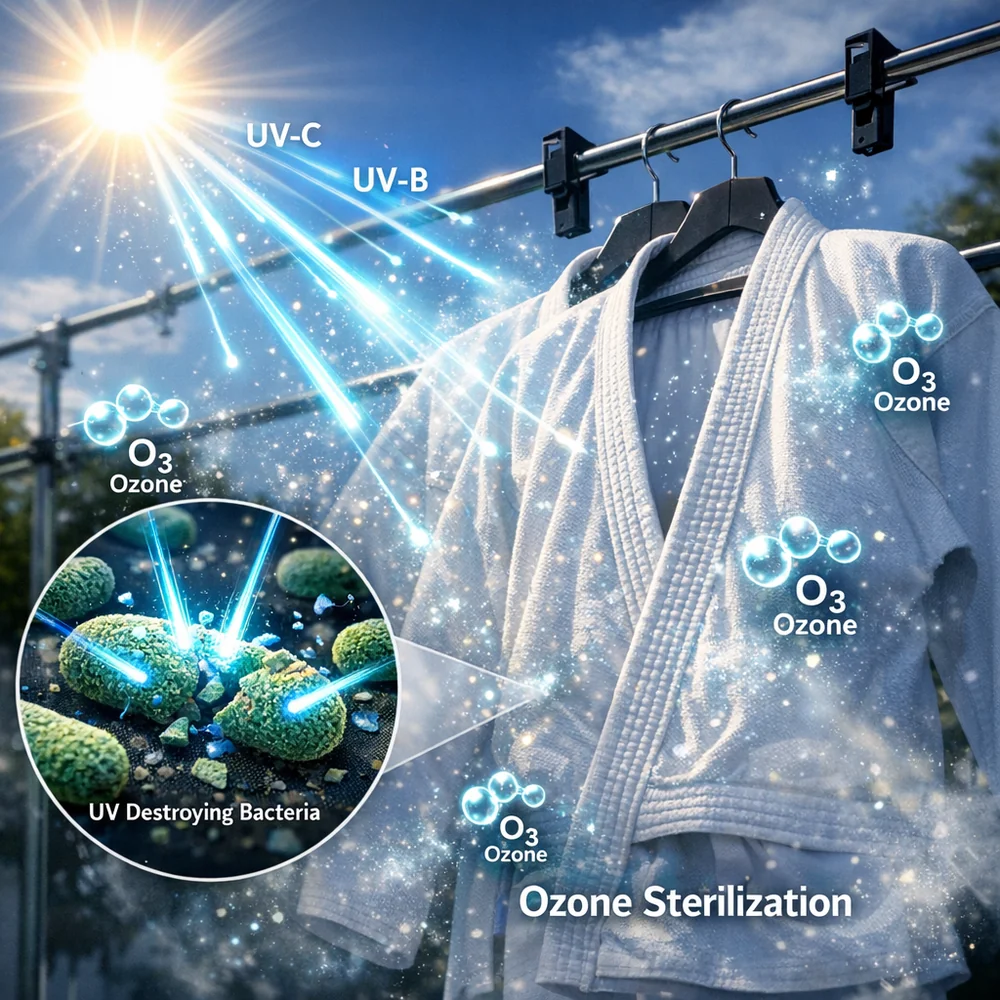
Hang the Gi to air dry in a well-ventilated area with a fan. Do not dry it in direct sunlight. UV rays are a powerful oxidizer. They will fade the dye of black and blue Gis rapidly and make the cotton fibers brittle and prone to tearing.
Air-dried thick cotton often feels stiff or crispy like cardboard. In BJJ, this is a tactical advantage. It makes it harder for opponents to establish a grip on your sleeve. If you require softness for comfort, snap the Gi vigorously like a whip before hanging it. You can also tumble it on Air Only (No Heat) with three tennis balls for 10 minutes after it is fully dry to soften the fibers mechanically.
The thick collar takes 3x longer to dry than the rest of the Gi. Ensure the Gi is hanging wide open or upside down so the collar is not folded against the wet body fabric. If the collar stays damp for more than 24 hours, mildew will colonize the fabric-foam interface, creating a permanent musty stench.
The Bottom Line Air dry only. UV light fades color and weakens fibers. A stiff, air-dried Gi is harder to grip (a tactical advantage). Ensure the collar dries within 24 hours to prevent deep-core mildew.
How to Wash Rash Guards
Underneath the Gi, most practitioners wear a synthetic rash guard (spandex/polyester). These garments require different care. They retain odors (permastink) more than cotton because the synthetic fibers are oleophilic. They absorb body oils.
To remove the funk from rash guards, standard detergent is often insufficient. Add half a cup of baking soda to the wash cycle. The baking soda acts as an alkali buffer, breaking down the acidic body oils stuck to the polyester. Do not use fabric softener. It coats the spandex, trapping the bacteria and oils against your skin.
Wash rash guards in a separate mesh bag from your Gi pants. The velcro closures on Gi pants or MMA shorts will shred the delicate stitching of a rash guard in seconds during the spin cycle.
The Bottom Line Synthetic rash guards trap oil and odors. Use baking soda to strip the oils. Wash in a mesh bag to protect them from the velcro on Gi pants. AVOID fabric softeners.
How Hemp Gis Differ from Cotton
The BJJ market has seen an explosion of hemp Gis. Proponents claim hemp is naturally antimicrobial and 3x stronger than cotton. From a laundry perspective, hemp fibers (bast fibers) are indeed more resistant to mold growth than cotton (seed fibers) due to their lignin content. However, they are also more prone to felting or becoming incredibly stiff if dried with heat.
Hemp requires even more hydration than cotton. It absorbs water deeper into the fiber core. When washing a hemp Gi, add an extra rinse cycle. If hemp is not rinsed perfectly, the residual soap hardens within the fiber, making the Gi feel like sandpaper.
Unlike cotton, which softens with wear, hemp can harden. To soften a stiff hemp Gi, tumble it cold with dryer balls. Do not use chemical softeners, as they clog the micropores that give hemp its breathability.
The Bottom Line Hemp Gis are naturally antimicrobial but prone to stiffness. Use an extra rinse cycle to remove all detergent. Soften mechanically with dryer balls, never chemically with fabric softener.
How to Protect Patches When Washing
A Gi is often a canvas for team patches. How these patches are attached dictates your washing protocol. If you have iron-on or glued patches, hot water will reactivate the adhesive, causing the patch to peel off in the wash. These must be washed in cold water only.
Sewn patches are more durable but create stress raisers in the fabric. The needle holes are potential tear points. Inspect your patches regularly. If the stitching is coming loose, the flapping patch can get caught on a finger or toe during training, ripping a hole in the Gi itself.
Some modern Gis have velcro patches. Always remove these before washing, or cover them with the provided loop fabric strip. Exposed velcro acts like a scouring pad in the washer, fuzzing up the collar and ruining the embroidery.
The Bottom Line Wash iron-on patches in cold water to prevent peeling. Inspect sewn patches for loose stitching that could cause fabric tears. Cover velcro to prevent abrasion.
Conclusion
Mastering the care of a BJJ Gi is a sign of respect for your dojo, your partners, and the sport itself. The effectiveness of any protocol rests on the disciplined removal of blood and bacteria without compromising the cotton weave’s structural integrity. By washing cold to prevent shrinkage, avoiding bleach to protect the mats, and rejecting dangerous hygiene superstitions about belts, we can train safely for years in the same armor.
This technical approach respects the martial tradition of cleanliness. Every clean, well-fitting Gi is a testament to the synergy between biological safety and fabric care. Moving away from the throw it in the bag and forget it habit prevents the gym-wide outbreaks of skin infections that close schools. It ensures that your gear remains legal for IBJJF competition and comfortable for drilling. By treating your Gi as medical equipment rather than gym laundry, you protect the health of the entire team.
References
- Journal of Athletic Training. “Microbial Flora on Grappling Equipment: Staph Risks.”
- American Cleaning Institute. “Sanitizing Heavy Cotton Weaves: Penetration Protocols.”
- Textile Research Journal. “Dimensional Stability of Cotton Weaves Under Thermal Stress.”
- Consumer Reports. “Stain Removal Guide: Enzymatic vs Oxidative Cleaners for Blood.”
- Journal of Hospital Infection. “Efficacy of Laundry Sanitizers on Fungal Spores.”