Soap Nuts (Wash Berries) Guide: Saponin Release, Usage, and Recipes
Table of Contents
Things You'll Learn From This Article:
- Soap nuts only clean well when heat and water movement help release their natural soap, so cold washes need extra steps.
- Hot or warm water works best; plain cold water with raw shells barely cleans anything.
- For cold washes, making a quick “tea” with boiling water activates the soap before it goes into the machine.
- Bigger Mukorossi soap nuts last longer and suit regular laundry, while smaller Trifoliatus ones dissolve faster and are better for liquid soap.
- Loosely packing soap nuts in a mesh bag helps water circulate and release the cleaning agents properly.
- High‑efficiency washers handle soap nuts well because they don’t make lots of foam.
- Short or express wash cycles don’t give raw shells enough time, so liquid concentrate works better for those.
- Liquid soap nut concentrate makes cold washing simple but needs refrigeration or acid added to stop spoilage.
- Clothes washed with soap nuts come out scent‑free, so any fragrance has to be added during the drying or final rinse stage.
- Soap nuts clean clothes but don’t truly disinfect, so heat or oxygen bleach is still needed for sanitizing.
- Stored dry and airtight, soap nuts stay usable for years, but humidity makes them sticky and messy.
- Whites can look dull over time because there are no brighteners, which oxygen bleach fixes easily.
- Gym clothes may need baking soda help to remove stubborn synthetic fabric odors.
- Using too many shells or hard water can leave residue on dark clothes, which a vinegar rinse prevents.
- Reusing each batch several times keeps the cost per load very low compared to regular detergents.
- Spent shells can go straight into compost once they’re thin and papery.
- Laundry water from soap nuts is safe for greywater systems and garden irrigation.
Soap nuts, also known as wash berries, are the dried fruit of the Sapindus mukorossi tree. While often grouped with other natural alternatives, they require specific handling to function effectively as a laundry detergent. Unlike synthetic pods that dissolve effortlessly, soap nuts rely on physical and thermal conditions to release their cleaning agents.
Mastering the use of soap nuts involves understanding the mechanics of saponin release. Without the right temperature and water conditions, the shells remain inert, leading to poor cleaning performance. When used correctly, however, they offer a completely plastic-free, compostable, and greywater-safe laundry solution.
This guide details the practical mechanics of using soap nuts, moving beyond general efficacy claims to the specific protocols required for success in a modern washing routine.
Choosing Between Mukorossi and Trifoliatus
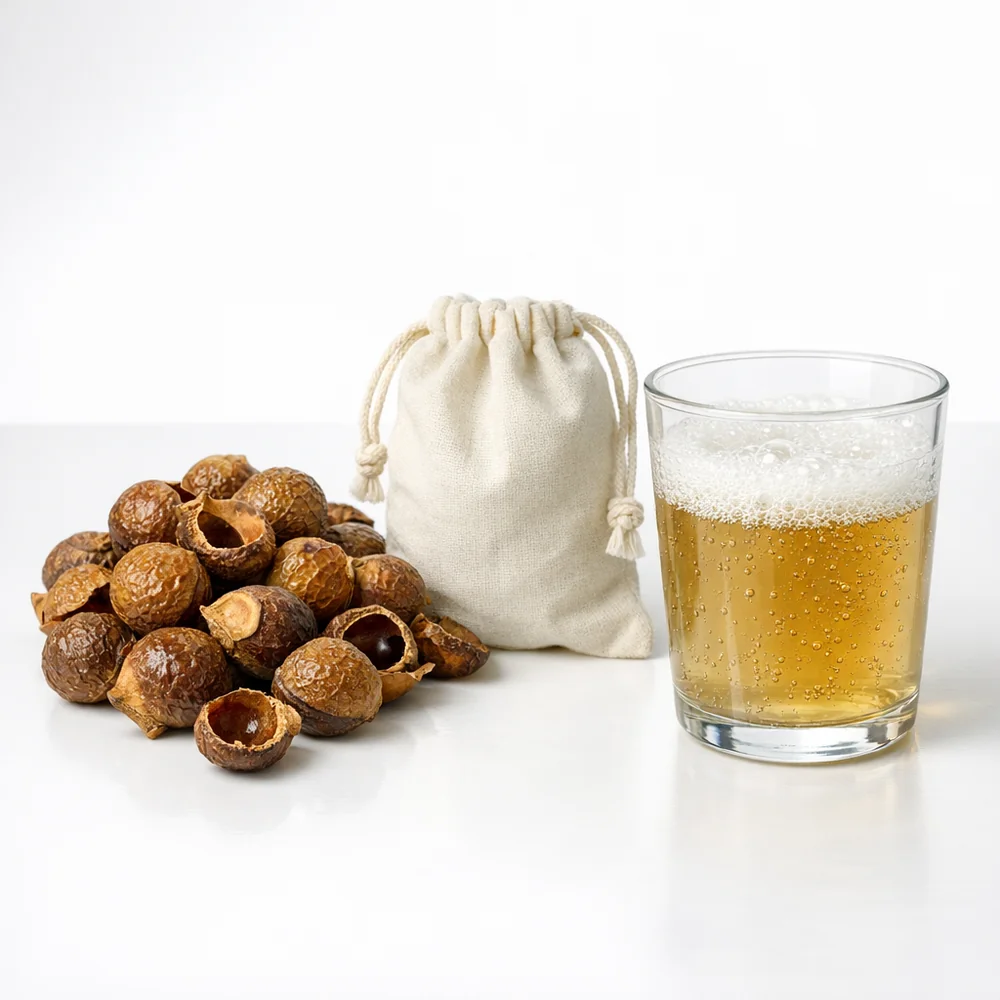
Not all soap nuts are created equal. The market primarily offers two species, each with distinct properties that affect how you use them.
Sapindus mukorossi, the large soap nuts native to Northern India and Nepal, are the “heavy-duty” version. They are larger, thicker, and contain the highest concentration of saponins, up to 15 percent by weight. Because of their durability, they can typically be reused for 5 to 6 wash cycles.
Sapindus trifoliatus, found in Southern India, are smaller and darker. While they release saponins more quickly due to thinner shells, they lack the longevity of Mukorossi and may only last for 2 to 3 cycles. They are often preferred for making liquid concentrates because they dissolve more easily.
Mesh bags are essential tools for using these products. They contain the shells while allowing water flow. If the bag is packed too tightly, water cannot circulate around individual shells, inhibiting release. A loose pack of 4 to 6 shells allows adequate tumbling and extraction.
Key Insight: For laundry longevity, choose Large Himalayan Sapindus mukorossi shells. For rapid liquid extractions, smaller Trifoliatus shells are often more efficient.
Understanding Saponin Chemistry
Saponins are a class of chemical compounds found in various plant species. In soap nuts, the primary active molecules are triterpenoid saponins.
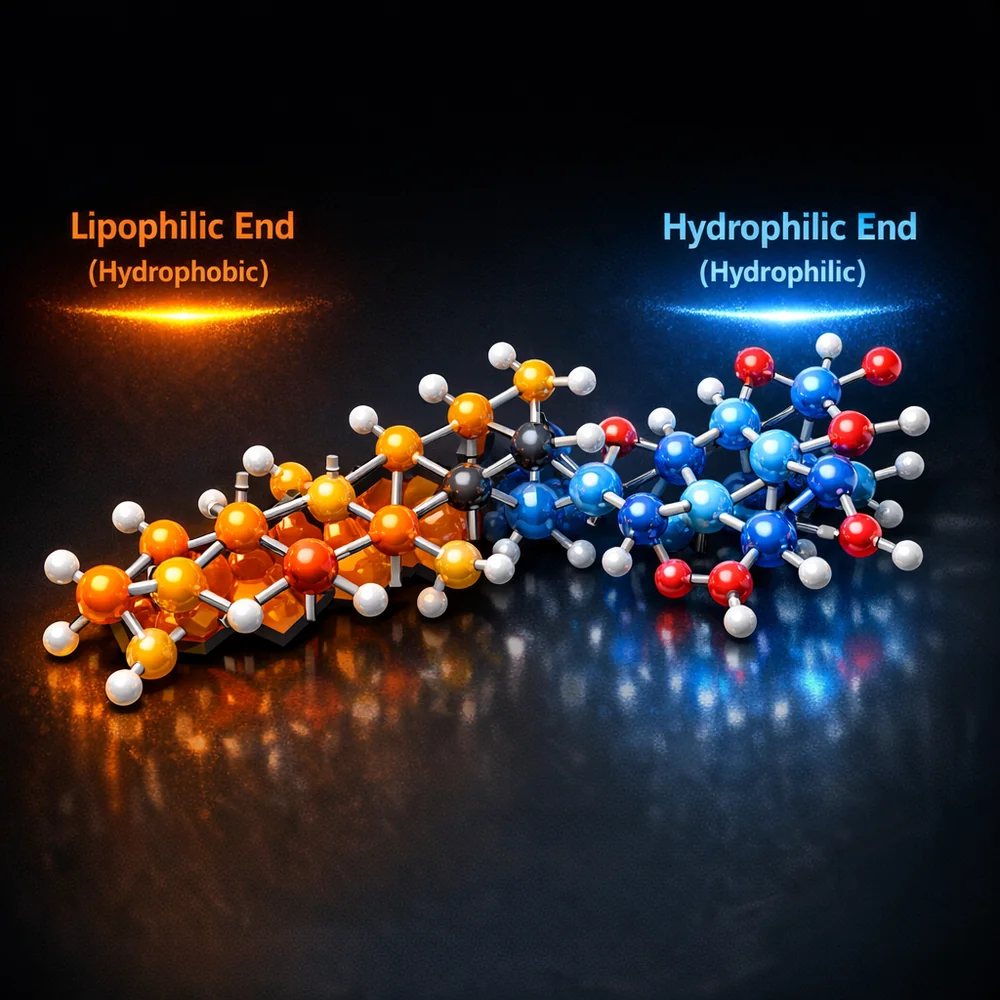
Structurally, these molecules are amphiphilic. They consist of a fat-soluble, or lipophilic, sterol or triterpene backbone and one or more water-soluble, or hydrophilic, sugar chains. When agitation occurs, the fat-soluble end attaches to oily soils on fabric, while the water-soluble end attaches to the wash water.
This dual attraction allows the saponins to lift grease and sweat from the fibers, forming micelles, which are tiny bubbles of oil encased in surfactant, that are then rinsed away.
Research published in the Journal of Surfactants and Detergents indicates that soap nut saponins exhibit lower critical micelle concentration compared to many synthetic sulfates, meaning they start cleaning at lower overall concentrations. However, they are less effective at surface tension reduction than petroleum-derived detergents, which explains why they produce less foam.
Temperature Is Everything
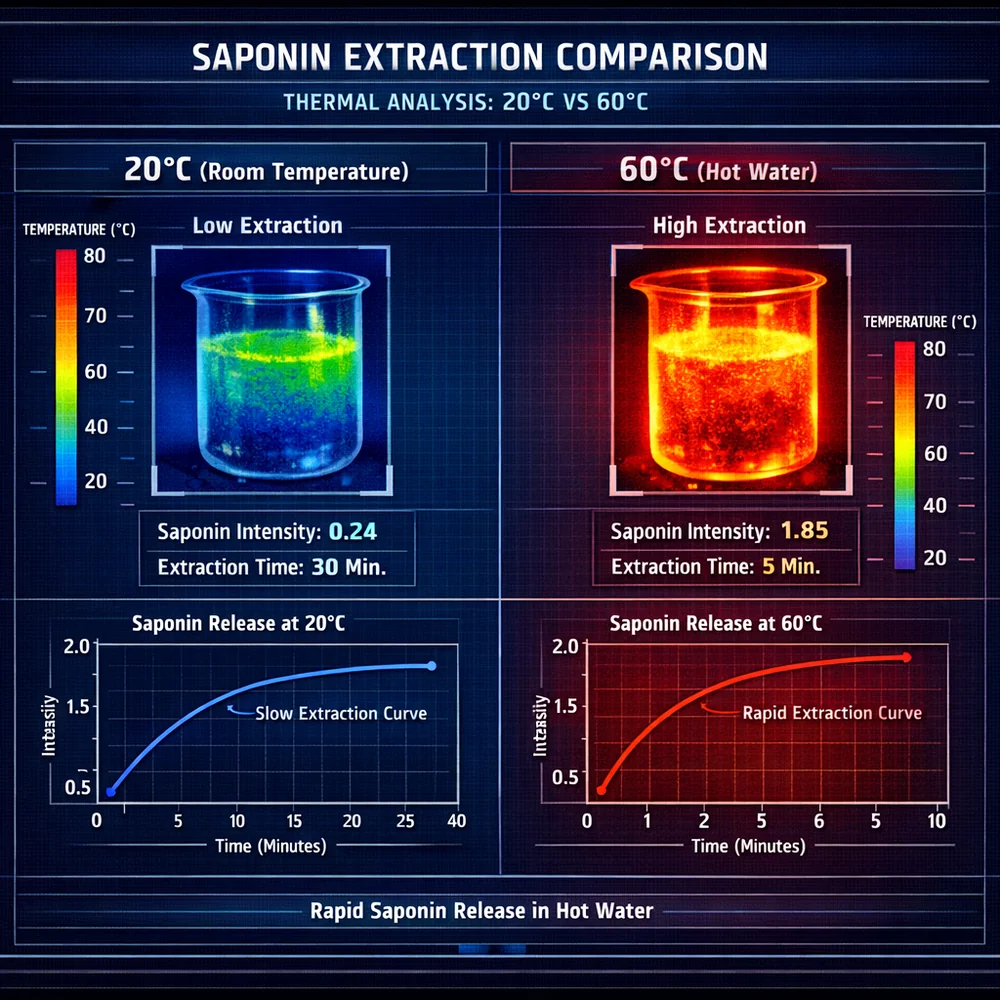
Temperature is the single most critical variable in soap nut performance. Saponins are highly soluble in hot water but dissolve slowly in cold water.
In cold water, below 30°C or 85°F, saponin release is negligible. Washing in cold water with raw soap nuts often results in cleaning performance no better than plain water. In warm water around 40°C or 104°F, you get moderate release that is adequate for lightly soiled clothes but may require longer cycles. Hot water at 60°C or 140°F and above provides optimal release, as the heat softens the shell and rapidly dissolves saponins.
For cold water washes, you must create a “tea” by steeping the bag of soap nuts in a cup of boiling water for 5 to 10 minutes prior to the wash. Both the liquid and the bag are then added to the drum. This pre-activation step ensures surfactant is present even if the wash cycle itself is cool.
Increasing the dosage is also required in hard water. While 4 to 5 shells suffice for soft water, hard water conditions may require 6 to 8 shells to achieve comparable cleaning power.
Key Insight: Soap nuts need heat to release saponins. For cold washes, pre-soak shells in boiling water to create “soap nut tea” before adding to the machine.
Optimizing for HE Machines
Soap nuts are naturally “low-sudsing” agents, which makes them ideal for modern High-Efficiency front-loading washing machines. HE machines use very little water and rely on the high-speed tumbling action to clean. Synthetic detergents often create too many suds for these machines, triggering “Sud” errors or damaging the electronic sensors.
Saponins provide the necessary surfactant action without the voluminous foam. However, because HE machines use less water, the “soaking” phase is limited. You should place the soap nut bag inside a sock or a dedicated scrubbing bag and put it in the center of the load, not in the detergent drawer.
If using an “Express” or “Quick Wash” setting under 30 minutes, the raw shells will not have enough time to activate. For short cycles, always use the liquid concentrate method described below or pre-soak the bag in hot water for ten minutes before the cycle starts.
Key Insight: HE machines love soap nuts because they produce minimal suds. Place the nut bag in the drum, not the detergent dispenser.
Making and Using Liquid Concentrate
For maximum convenience, especially with cold water washing, preparing a liquid soap nut concentrate eliminates the temperature barrier entirely.
To make concentrate, add approximately 12 to 15 soap nut shells to 6 cups of water in a pot. Bring to a boil, then reduce heat and simmer for about 30 minutes. The water will turn a dark amber color. Allow to cool, strain out the shells, and you have liquid soap nut concentrate.
Use 2 to 3 tablespoons per standard laundry load.
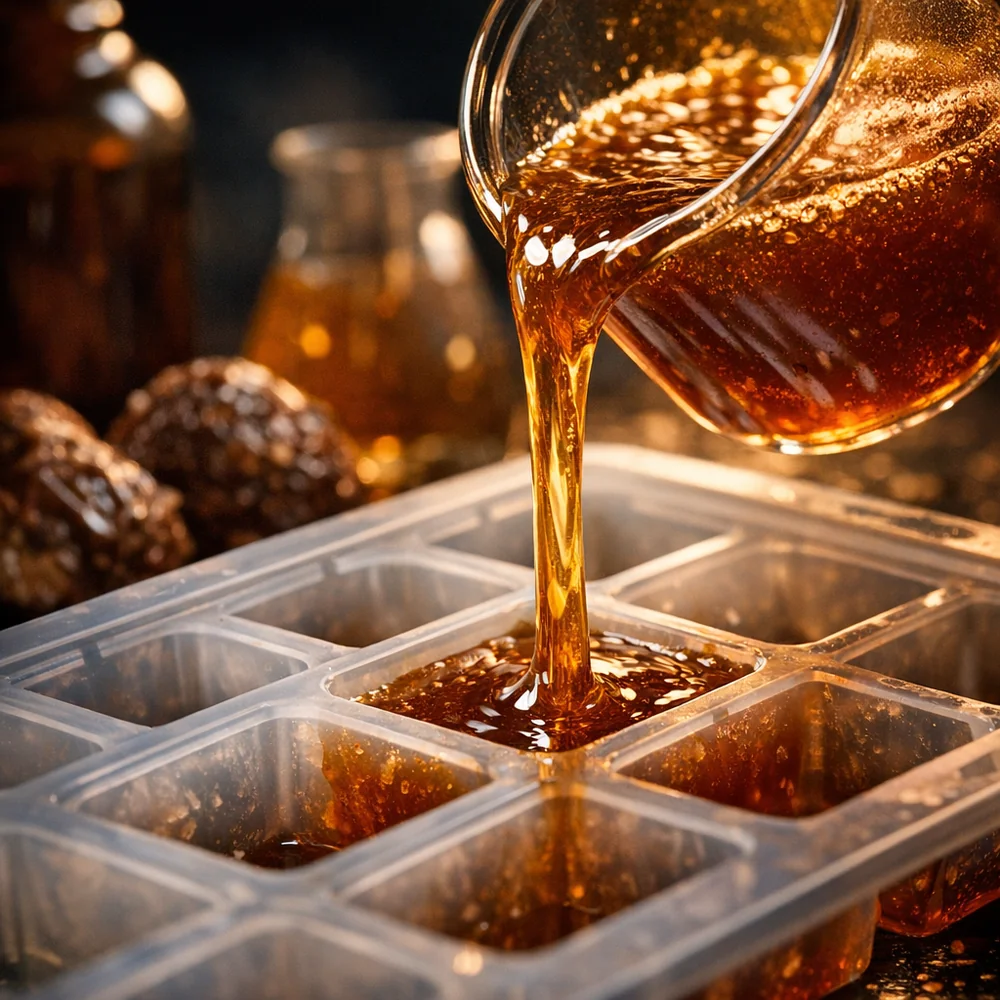
The concentrate must be refrigerated, as it lacks preservatives and will spoil within 1 to 2 weeks at room temperature. Freezing excess liquid in ice cube trays extends shelf life indefinitely.
To keep your concentrate shelf-stable without synthetic preservatives, add citric acid or vinegar to lower the pH below 3.5, which inhibits bacterial growth. Adding 1 tablespoon of citric acid powder per 2 cups of soap nut liquid not only extends the shelf life to about 1 month unrefrigerated but also acts as a powerful limescale remover for bathroom surfaces.
Key Insight: Liquid soap nut concentrate works in any water temperature and can be frozen into ice cubes for long-term storage.
Adding Scent to Soap Nut Laundry
One distinct characteristic of soap nut laundry is the absence of scent. The shells themselves smell faintly vinegar-like when wet, but this odor rinses away completely, leaving clothes smelling like neutral wet fabric.
For those accustomed to fragranced laundry, this neutrality can be jarring. Essential oils can be used to add scent, but adding them directly to the wash cycle is often ineffective as the heat and rinsing remove volatile oils.
The most effective method for scenting is applying essential oils to wool dryer balls in the drying phase. This deposits scent on the dry fabric without thermal degradation. Alternatively, a few drops of oil can be added to the fabric softener compartment, mixed with vinegar, for release during the final rinse.
Antimicrobial Reality Check
A common concern with natural laundry is whether it actually kills bacteria. Pure saponins extracted from Sapindus mukorossi have demonstrated significant antifungal and antibacterial activity in laboratory settings.
Research published in Scientific Reports shows that soap nut extracts can inhibit common pathogens like Staphylococcus aureus and Escherichia coli. However, the concentration in a standard laundry load, where approximately 5 shells are diluted in several gallons of water, is typically too low to act as a true disinfectant.
If you are washing items requiring actual sanitization, you must supplement with heat at 140°F or above, or a natural sanitizer like oxygen bleach.
Key Insight: Soap nuts are excellent for everyday soil and odors. For cloth diapers or post-illness bedding, add oxygen bleach or wash at 140°F+.
Storing Soap Nuts Properly
Dried soap nuts are remarkably stable if kept dry. Their natural moisture content is low enough to prevent microbial growth. Stored in an airtight container in a cool, dry place, they remain effective for 2 to 3 years.
However, humidity is the enemy. Soap nuts are hygroscopic, meaning they absorb moisture from the air. If left in an open bag in a humid laundry room, they will become sticky, dark, and gummy. While still usable, these “wet” nuts are messy to handle and may eventually mold.
The saponin content does not degrade significantly over time in dry storage. Effectiveness is determined by the physical condition of the shell rather than chemical expiration.
Troubleshooting Common Problems
Many users abandon soap nuts after 2 to 3 weeks due to predictable, fixable issues. Understanding these problems helps you persist through the learning curve.
White cotton often begins to look “dingy” after 10 to 15 washes because soap nuts lack optical brighteners, which are fluorescent dyes that mask yellowing. The fix is adding 2 tablespoons of sodium percarbonate, also known as oxygen bleach, to every white load. This provides the oxidation needed to keep whites bright without the toxicity of chlorine bleach.
Soap nuts may struggle with the trapped odors inside polyester and spandex gym clothes. The fix is adding half a cup of baking soda to the wash. The baking soda neutralizes the acidic odor molecules that saponins might miss.
If you use too many shells or have very hard water, you may see tiny white specks on black fabrics. This is actually mineral soap scum, or calcium saponate. The fix is reducing the number of shells and ensuring you use a vinegar rinse. The acetic acid in vinegar dissolves the mineral deposits before they can settle on the fabric.
Key Insight: Whites graying? Add oxygen bleach. Synthetics smell? Add baking soda. White specks on darks? Reduce shells and add a vinegar rinse.
Cost Per Load Analysis
The economic case for soap nuts depends on reuse. A 1kg bag costs approximately $20 to $25.
With about 300 to 350 shells per kilogram and using 5 shells per load with each batch reusable for 4 to 6 times, you get approximately 350 loads from a single bag. This works out to about $0.07 per load.
Compared to liquid detergents at $0.20 to $0.40 per load or pods at $0.30 to $0.50 per load, soap nuts offer significant savings, assuming you are willing to manage the reuse tracking.
Composting Spent Shells
The end-of-life cycle for soap nuts is their strongest environmental feature. Once the saponins are exhausted, indicated by the shells becoming thin, papery, and light tan, they are simply biomass.
Used shells can be tossed directly into a home compost pile, where they break down in 3 to 6 months. They contribute carbon, or “browns,” to the pile. Unlike “biodegradable” pods that require industrial high-heat composting facilities, soap nuts require no special conditions.
They are safe for worm bins if leached thoroughly, though moderation is advised to avoid acidity spikes.
Greywater System Compatibility
For households diverting laundry water to landscape irrigation, or greywater systems, soap nuts are the gold standard.
Synthetic detergents often build up sodium in the soil, which is toxic to plants over time. Borax-based homemade detergents pose boron toxicity risks. Soap nuts contribute negligible sodium or boron. The saponins themselves are mild pesticides in nature, repelling insects, but degrade rapidly in soil biomes without harming plant roots.
Greywater containing soap nut residue is safe for fruit trees, ornamental shrubs, and lawns. It maintains a pH generally compatible with most landscapes, unlike the high alkalinity of washing soda-heavy detergents.
Soap nuts represent one of the most genuinely sustainable laundry options available, but they demand more engagement than commercial products. The learning curve involves understanding temperature activation, adjusting for water hardness, and developing routines for concentrate preparation or proper pre-soaking.
For households willing to embrace this learning curve, the rewards include complete freedom from plastic packaging, greywater-safe wastewater, compostable waste at end of life, and dramatically lower cost per load. The product aligns well with a comprehensive zero-waste laundry routine while avoiding the chemical disposal burden that even safe disposal of cleaning chemicals requires.
Soap nuts are not the right choice for everyone. Those prioritizing convenience, fragrance, or maximum stain-fighting power may find commercial products better aligned with their priorities. But for those prioritizing environmental impact and willing to invest in technique, soap nuts deliver genuine benefits that no synthetic product can match.
Key Insight: Soap nuts are the safest choice for greywater irrigation. They add no sodium, boron, or persistent chemicals to soil.
The Bottom Line
References
- Healthline. “What Are Soap Nuts and Do They Really Work?”
- WebMD. “Health Benefits of Soap Nuts.”
- Treehugger. “The Pros and Cons of Using Soap Nuts for Laundry.”
- ACS JAFC. “Characterization of Saponins in Sapindus mukorossi.”
- Greywater Action. “Detergent Selection for Greywater Systems.”