Removing Turmeric and Curry Stains: The Science of Curcumin Extraction
Table of Contents
Things You'll Learn From This Article:
- Water makes fresh turmeric stains worse because the pigment hates water and bonds tighter to fabric when it gets wet.
- Rubbing alcohol or hand sanitizer works better than water because it dissolves the turmeric dye so it can be blotted out.
- Dish soap is useful first when curry is oily, since breaking down grease lets the alcohol reach the yellow pigment.
- Blotting lifts the dye out; scrubbing just pushes it deeper into the fabric.
- A turmeric stain turning red with soap or detergent is normal and reversible—it’s just reacting to pH, not getting worse.
- Lemon juice or vinegar can turn a red turmeric stain back to yellow, making it easier to remove.
- Sunlight can erase leftover yellow shadows because UV light breaks down the turmeric color naturally.
- Heat from a dryer can permanently set a turmeric stain, so air-drying and checking first is critical.
- Hydrogen peroxide paste can help on stubborn white fabrics, but it can fade color and needs spot testing.
- Plastic containers and fingernails stain because turmeric likes oily surfaces, so soap alone often won’t work.
- Sun exposure is especially effective for stained plastic since light can bleach the color from within.
- Upholstery needs minimal liquid—foam and careful blotting prevent the stain from spreading deeper.
It’s the yellow nightmare.
You are enjoying a beautiful curry, and one drop lands on your white shirt. You grab a wet napkin and rub it. Big mistake. Now the stain is five times bigger, and it’s turning… red?
Turmeric is not just a spice; it is one of the most powerful natural dyes on earth. In fact, monks used to dye their robes with it because it is so permanent and vibrant. It latches onto cotton and silk with a ferocity that puts artificial dyes to shame. If you treat it like a normal food stain—with water and soap—you will almost certainly ruin your clothes.
But if you understand the chemistry of “curcumin” (the pigment in turmeric), you can reverse the damage. You just have to stop treating it like food and start treating it like a dye.
Why Turmeric is Different
Most food stains—like berries or jam—are water-soluble. Sugar, salt, and even some proteins dissolve in water. You add water, and the stain breaks apart.
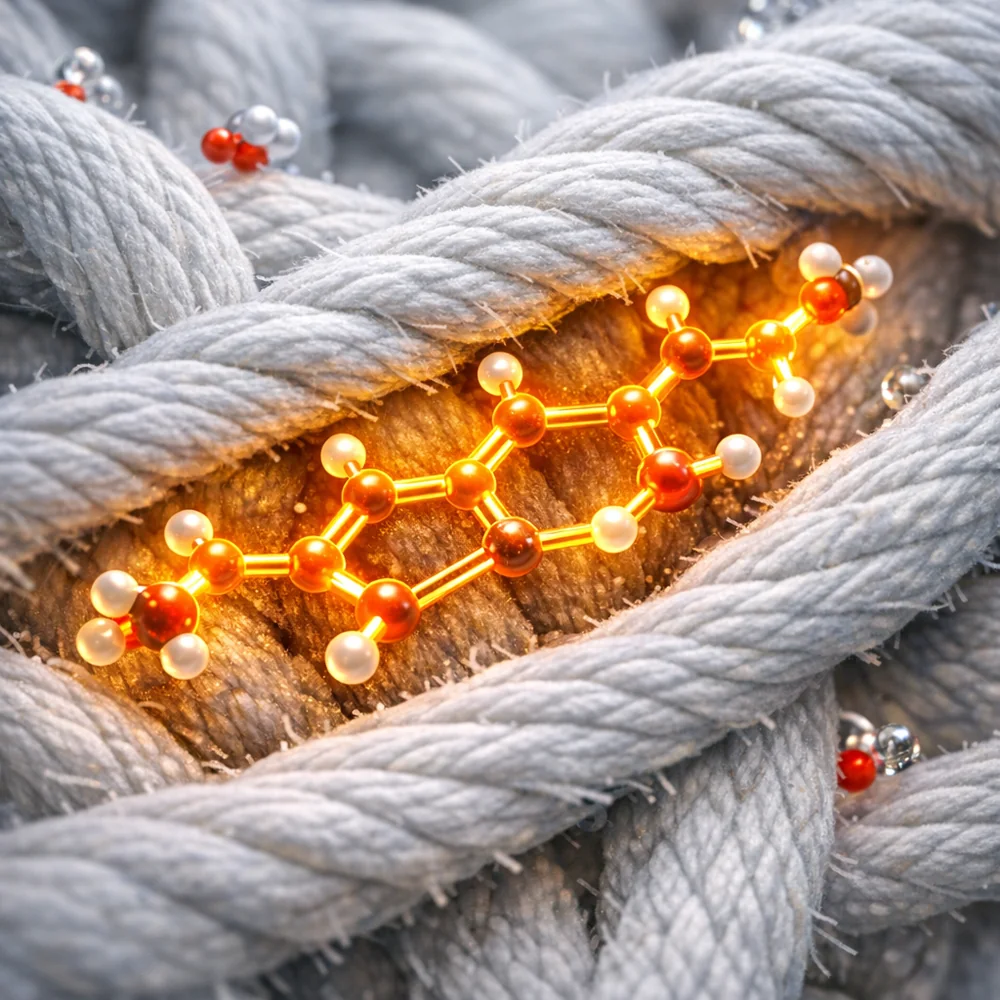
Turmeric is fundamentally different. It is hydrophobic. The molecule responsible for that electric yellow color, curcumin, hates water. It is a polyphenol that acts exactly like a direct dye for natural fibers.
When you splash water on a fresh turmeric stain, the curcumin molecules panic. To get away from the water, they bond harder to the fabric fibers, burying themselves deep in the microscopic twists of the yarn. Scrubbing with a wet cloth just drives the pigment deeper into the weave, locking it away from future cleaning attempts.
To remove it, you need to stop thinking about “washing” and start thinking about “solvents.”
The Liquid Gold Rule: Use Alcohol, Not Water
Since curcumin hates water, what does it love? Alcohol.
High-percentage rubbing alcohol (isopropyl alcohol) or hand sanitizer is the kryptonite for turmeric. Why? Because alcohol is a solvent that matches the polarity of the curcumin molecule. It dissolves the hydrophobic pigment instantly, turning it back into a liquid that you can wipe away.
The Golden Rule: Never put water on a fresh turmeric stain until you have treated it with a solvent first.
The Bottom Line Curcumin is hydrophobic. Water causes it to bond harder to fabric. Use rubbing alcohol or hand sanitizer as your first line of defense to dissolve the pigment.
The Red Panic: Why Soap Turns It Red
You might have noticed that when you put bar soap or laundry detergent on a yellow curry stain, it suddenly turns deep red.
Don’t panic. You didn’t make the stain worse.
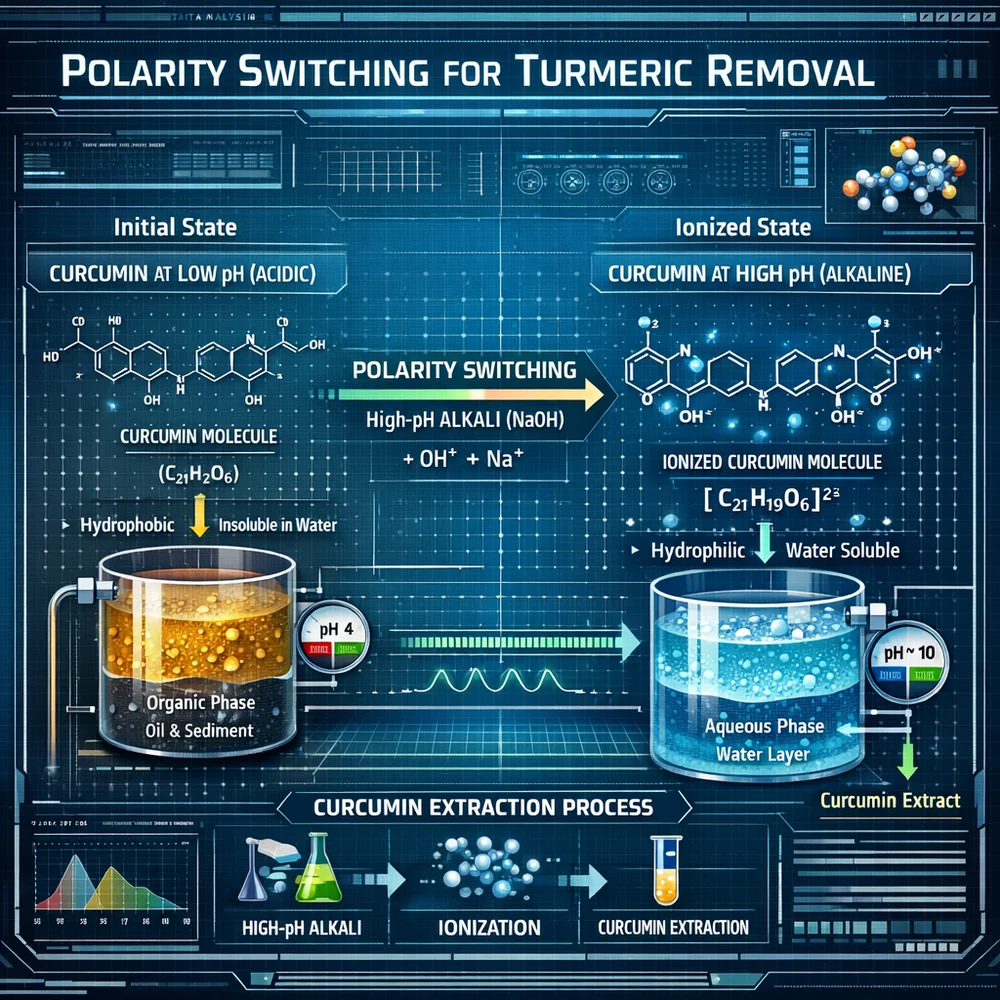
Curcumin is a natural pH indicator. Physics dictates its color based on the acidity of the environment. In an acid or neutral environment (pH < 7), it is yellow. In an alkaline (basic) environment—like soap or baking soda (pH > 8)—it turns red. It works just like litmus paper in a chemistry lab.
In fact, this is a good sign. If it turns red, you know it’s definitely turmeric, and you know your soap is reaching it. You can reverse the color instantly with a drop of lemon juice or vinegar (acids). This “Red Shift” is reversible and harmless.
The Bottom Line Turmeric turns red in alkaline environments (soap) and yellow in acidic environments (vinegar). This color shift is reversible and does not mean the stain is permanent.
Step 1: The Oil Barrier (Ghee and Grease)
Before you can attack the yellow dye, you probably have to deal with the vehicle: the grease.
Curry is almost always cooked in ghee, vegetable oil, or coconut milk. This fat coats the fibers and protects the pigment. If you skip this step, your alcohol solvent won’t be able to reach the dye to dissolve it.
Apply a high-quality dish soap (like Dawn) to the stain to break down the oil. Check out our guide on Removing Oil and Grease for more on why surfactants are key here.
Gently massage the soap in, but don’t rinse it yet. You are just breaking the lipid barrier to open up the path to the pigment.
Step 2: The Solvent Flush
Now, while the dish soap is still there, grab your rubbing alcohol.
Apply the alcohol generously to the stain. You want to flood it. Blot—do not rub—with a clean paper towel. You will see bright yellow (or red, if the soap is mixing in) pigment transfer to the towel.
Keep applying alcohol and blotting until the towel comes away clean.
This is the most critical step in the entire process. You are physically moving the dye molecules out of the fabric and onto the paper towel. If you throw the shirt in the wash before doing this, the dye will spread and set during the agitation cycle.
The Bottom Line Flood the area with rubbing alcohol and blot consistently. This transfers the dissolved pigment out of the fabric before it can set during the wash.
Step 3: The Sun Cure
If you have washed the garment and there is still a yellow shadow, do not reach for the chlorine bleach. Turmeric laughs at chlorine. Instead, use the sun.
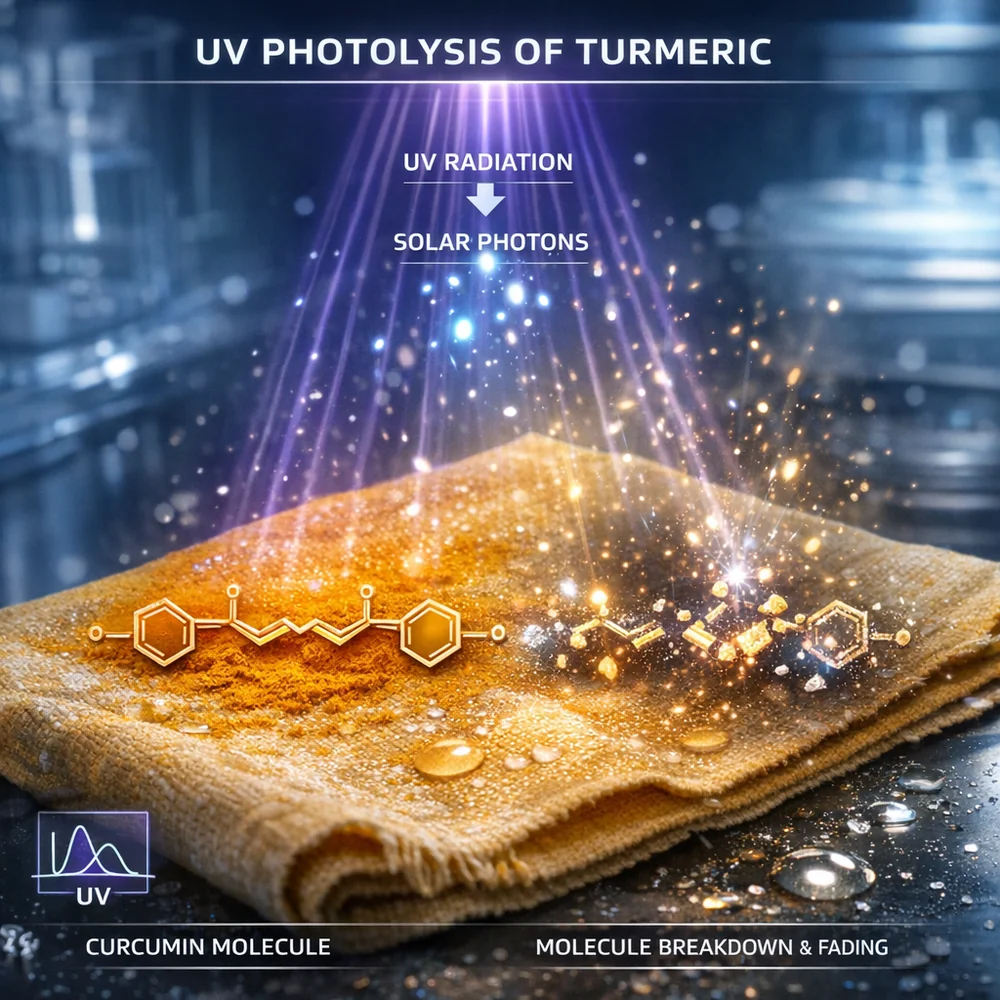
Curcumin is extremely photosensitive. It is chemically unstable under UV light.
Take the damp garment and lay it flat in direct sunlight. In as little as one hour, the UV radiation will shatter the chromophores (color bonds) in the curcumin molecule. It is like magic. I have seen “permanent” turmeric stains vanish completely after an afternoon in the sun.
It is safer for your fabric than chemical bleach and works 100% of the time for faint residues. For more on how light affects stains, see Whitening Without Bleach.
The Bottom Line Sunlight is the most effective bleach for turmeric. UV rays cause “photolysis,” breaking the chemical bonds of the yellow pigment and turning it colorless.
Step 4: Hydrogen Peroxide Paste
For stubborn stains on white heavy cottons (where sunlight isn’t an option or isn’t working fast enough), you can use oxidation.
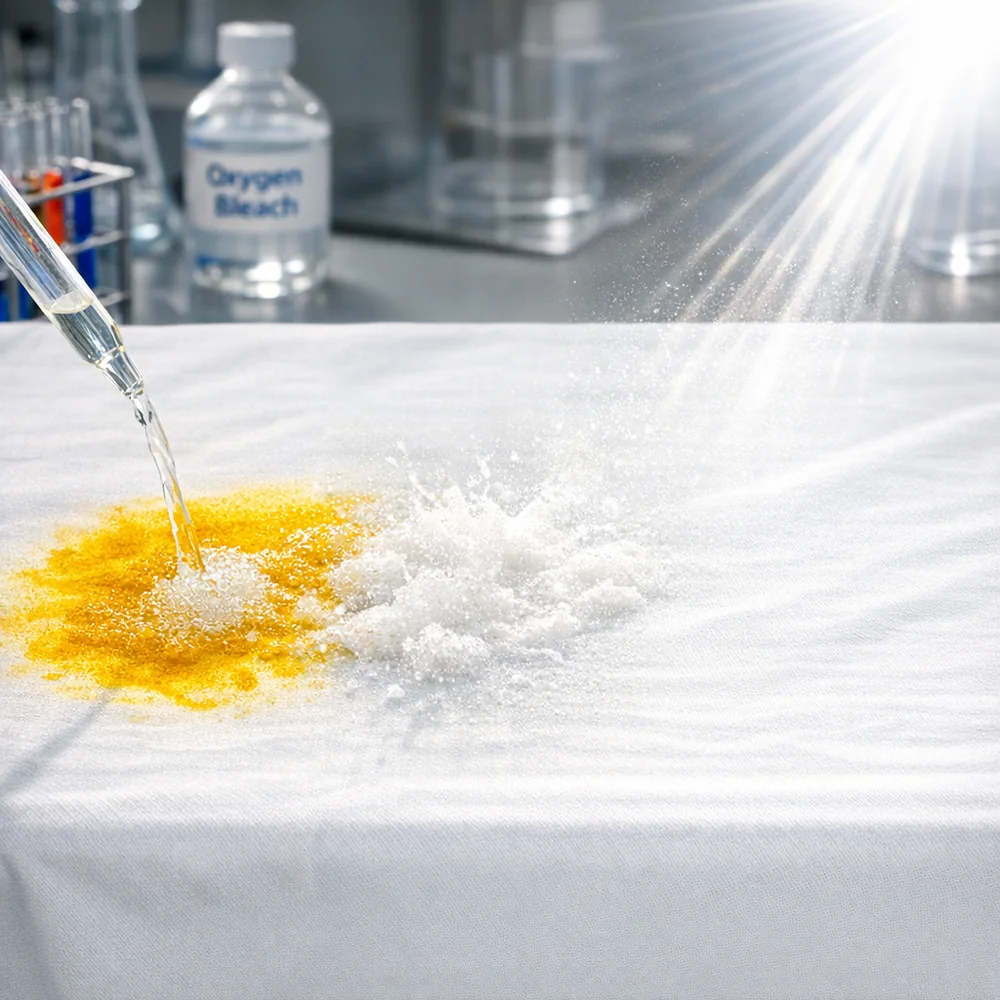
Mix 3% hydrogen peroxide with a little baking soda to make a paste.
The baking soda adds abrasion and alkalinity (turning the stain red/orange), opening up the dye structure. The peroxide then oxidizes the pigment. Let it sit for 10 minutes, then rinse.
Warning: This can fade colors, so test it on a hidden seam first if your garment isn’t white.
Plastic & Fingernails: The Oleophilic Trap
Turmeric doesn’t just stain clothes; it ruins manicures and Tupperware.
For fingernails, the alcohol trick works well, but a paste of lemon juice and baking soda is often more effective for skin. The acid in the lemon helps neutralize the dye, while the baking soda exfoliates the stained skin cells.
For plastic containers, the “Sun Cure” is your best friend.
Soap won’t work because the dye has migrated into the plastic. Plastic is oleophilic (oil-loving), just like turmeric. The dye diffuses into the polymer wall. Leave the container on a sunny windowsill for two days. The UV light passes through the clear plastic and bleaches the stain from the inside out.
The Bottom Line For stained fingernails, use lemon juice. For stained plastic containers, leave them in the sun for 48 hours to bleach the internal pigment.
Cotton vs. Synthetic: The Fiber Battle
Cotton is a hollow fiber (like a straw). Turmeric gets inside that hollow tube (“luminal entrapment”) and is very hard to get out. You need lots of solvent and plenty of sunlight to reach the pigment hiding inside the lumen.
Polyester is a smooth plastic rod. Turmeric sticks to the outside.
Surprisingly, synthetic fabrics are often harder to clean because the turmeric forms a chemical bond with the plastic surface (since both are hydrophobic). You really need the alcohol solvent to break that bond. Water will just bead up and roll off, leaving the stain behind.
Check our Diagnostic Stain Guide to understand your fabric type better.
Heat Warning: The Permanent Seal
I cannot stress this enough: Heat sets turmeric.
If you put a curry-stained shirt in the dryer before you are sure the stain is gone, you are essentially baking the dye into the fabric. Once heat-set, turmeric is almost impossible to remove chemically.
Always air-dry the garment on a drying rack. Inspect it in natural light. If you still see yellow, you can treat it again with alcohol or sun. If you bake it, it’s game over.
The Bottom Line Never put a turmeric stain in the dryer. Heat chemically bonds the pigment to the fiber, making it permanent. Always air dry until the stain is fully removed.
Upholstery Protocol
If you drop curry on the couch, do not pour alcohol or water directly on it. The liquid will soak into the cushion foam and drive the stain deeper.
Use the “Foam Method” with a solvent twist.
Mix dish soap and a little water to make foam. Apply the foam only to the stain. Then, dampen a cloth with rubbing alcohol and blot the foam. This keeps the moisture on the surface while still delivering the solvents needed to break the dye.
Blot, blot, blot. Then dry quickly with a fan.
The Bottom Line On upholstery, use dish soap foam and a cloth dampened with alcohol. Avoid pouring liquids, which will drive the stain into the cushion padding.
Conclusion
Turmeric is scary because it is fast and bright. But it is also chemically predictable.
It hates alcohol and it hates sunlight. By stopping the water-wash reflex and reaching for the rubbing alcohol instead, you can save almost any garment. You are smarter than the stain.
Remember: Degrease the oil, dissolve the pigment with solvent, and let the sun finish the job.
References
Journal of Chemical Education. “The Chemistry of Natural Polyphenols: Curcumin Solubility and Dyeing Properties of Cotton.” ACS Publications
American Cleaning Institute. “Technical Protocols for Pigmented Spice Extraction in Domestic Laundering.” https://www.cleaninginstitute.org/
Textile Research Journal. “UV-induced Photolysis of Curcumin Chromophores in Cellulose and Synthetic Matrices.” Sage Journals
Consumer Reports. “Stain Removal Efficiency: Comparative Analysis of Isopropyl Alcohol and Aqueous Detergents for Turmeric.” https://www.consumerreports.org/
Journal of Surfactants and Detergents. “Synergistic Effects of pH Management and Solvent Application in the Removal of Hydrophobic Natural Dyes.” Springer Link