Removing Chocolate and Cocoa Stains: The Science of Triple-Threat Extraction
Table of Contents
Things You'll Learn From This Article:
- Chocolate stains are hard because they’re a mix of fat, protein, and dark dye, and each part needs a different approach.
- Hot water is risky at the start because it can cook the milk protein into the fabric and make the stain permanent.
- Cold water is your safest first step since it keeps proteins loose and washable instead of locked in.
- Scraping off solid chocolate before adding any liquid makes the rest of the job much easier.
- Chilling soft chocolate with ice helps it harden so it flakes off instead of smearing deeper.
- Dish soap works better than regular laundry detergent at this stage because it’s designed to break down grease.
- Letting soap sit for a while matters; quick rinsing doesn’t give it time to pull fat out of the fibers.
- Enzyme detergents are useful for older or heavier stains because they break fat and protein into pieces that rinse away.
- Lukewarm water helps enzymes work, while very hot water can undo all the progress.
- A faint brown or yellow shadow after washing usually means tannins are left behind, not grease.
- Hydrogen peroxide can remove that leftover color by breaking apart the stain molecules, but it can also lighten fabric dye.
- The dryer can permanently set any remaining chocolate because heat triggers sugar and protein reactions in the fabric.
- Air-drying and checking the fabric in good light helps you catch stains before they become permanent.
- Hard water can make chocolate stains harder to remove because minerals interfere with soap and trap color.
- Old, dried chocolate needs to be softened first so cleaning products can actually reach the stain.
- Upholstery needs much less water than clothing, since soaking can push chocolate into padding and cause mold.
- Milk chocolate usually needs more enzyme work because of extra dairy, while dark chocolate often needs more color removal.
Chocolate is one of the most challenging stains because it attacks fabric on three fronts simultaneously. The cocoa butter is fat. The milk solids are protein. The dark color comes from tannins that act like natural dye. Each component requires different treatment, and treating one incorrectly can permanently set the others.
The classic mistake is using hot water to “melt the chocolate out.” This does remove the visible fat, but it cooks the protein into the fabric and locks the tannin pigment in place forever. What seemed like progress becomes a permanent gray shadow.
Success requires treating each layer in the right order with the right temperature.
The Molecular Complexity of Chocolate
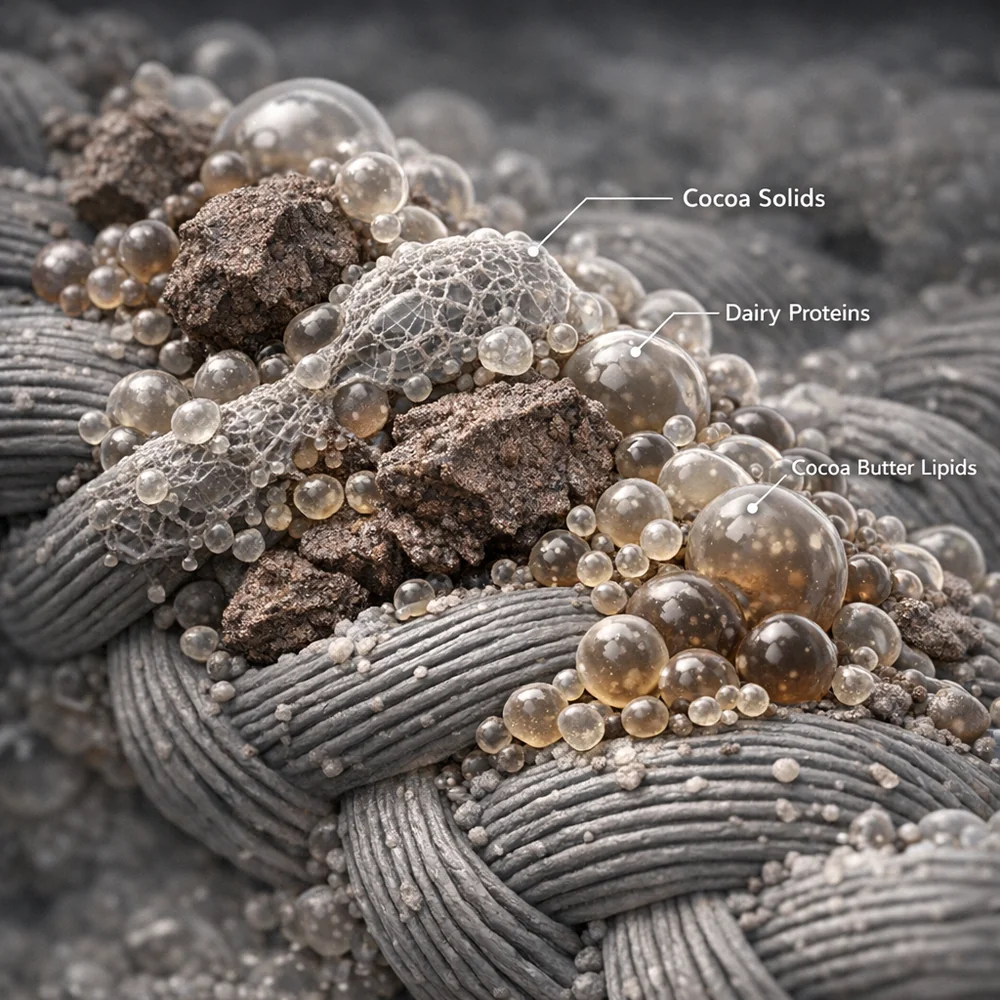
Chocolate is not a simple substance. It is a carefully engineered emulsion of three chemically distinct components, each with different behaviors on fabric.
Cocoa butter is a saturated fat composed primarily of palmitic, stearic, and oleic fatty acids. These triglycerides have a melting point around body temperature, which is why chocolate melts in your mouth. On fabric, cocoa butter acts as a hydrophobic carrier that drives the other pigments deep into yarn twists. It creates a waterproof barrier that prevents water-based detergents from reaching the fiber core.
Milk proteins from the dairy components add biological complexity. These polypeptide chains are highly sensitive to heat and will permanently bond to fabric when denatured. The same chemistry that makes milk curdle when boiled makes chocolate stains permanent when washed hot.
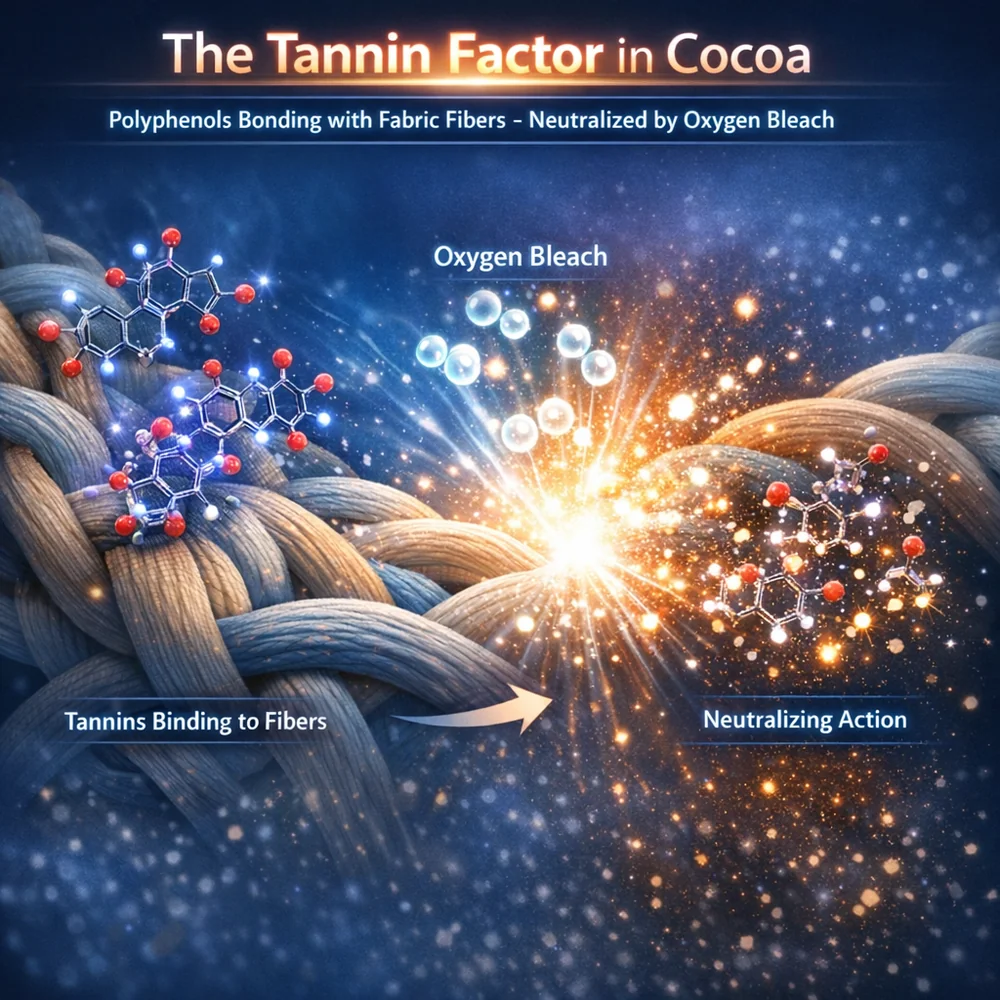
Cocoa powder contains polyphenolic compounds called tannins that give chocolate its dark color. These are the same type of molecules found in tea and red wine. Tannins are natural dyes with a strong chemical affinity for cellulose fibers like cotton and linen. Once bonded, they require oxidative bleaching to remove.
Understanding this triple-threat structure explains why generic stain removal fails on chocolate. You need a sequenced approach that addresses each layer without setting the others.
The Bottom Line Chocolate contains fat, protein, and tannin components that each require different treatment. Sequencing matters.
Why Cold Water Comes First
Milk chocolate contains proteins from dairy and cocoa beans that behave like blood proteins. Heat denatures them.
When you expose these proteins to water above about 104°F (40°C), the molecular chains unfold and bond to the fabric. Once this happens, no enzyme can fully reverse it. The protein becomes permanent adhesive anchoring the cocoa pigments to your fibers.
The denaturation process is irreversible. Heat provides enough energy to break the weak hydrogen bonds holding protein chains in their folded configuration. Once unfolded, the protein exposes reactive groups that form new, much stronger bonds with fabric fibers. These covalent bonds cannot be broken by subsequent enzyme treatment.
Cold water keeps the proteins mobile and soluble. Rinse from the back of the fabric to push contamination out rather than driving it deeper. Continue until the water runs mostly clear.
Only after the protein layer has been safely addressed can you move to warmer temperatures for fat removal.
The Bottom Line Hot water cooks protein into fabric, making stains permanent. Always start with cold water to keep proteins removable.
Remove Solid Chocolate First
Before applying any liquid, scrape off as much solid chocolate as possible. Rubbing soft chocolate is a disaster. It spreads the high-viscosity cocoa butter horizontally across the fabric and drives it deeper into the yarn.
Cocoa butter at room temperature has the consistency of thick grease. Mechanical rubbing smears this grease into an ever-larger area and pushes it into the internal capillary spaces between yarn fibers. This creates a much larger stain that is harder to treat.
If the chocolate is still soft, apply an ice pack for 60 seconds. This hardens the cocoa butter into a brittle mass that flakes off cleanly with a credit card or dull knife edge.
The “freeze and flake” method works because cocoa butter solidifies when chilled below about 65°F (18°C). In its solid state, the chocolate loses its adhesive properties and can be mechanically lifted without spreading.
Work from the outside edge toward the center to prevent expanding the stain’s boundary. Every milligram you remove mechanically reduces the chemical work needed later.
The Bottom Line Freeze soft chocolate until brittle, then scrape. Never rub soft chocolate.
Dish Soap Cuts Through Cocoa Butter
After cold rinsing and mechanical removal, cocoa butter remains trapped in the fiber weave. This fat is hydrophobic and resists water-based detergents.
The molecular structure of fats makes them naturally incompatible with water. Fat molecules have no polar regions for water to interact with. This is why grease sits on top of water rather than dissolving.
Concentrated dish soap contains the grease-cutting surfactants needed to emulsify cocoa butter. Apply a drop directly to the stain and massage it gently into the fabric. The surfactant molecules surround fat droplets and make them water-soluble.
Surfactants work through a dual-nature structure. Each molecule has a water-loving head and an oil-loving tail. The tails penetrate the fat globules while the heads remain in the water. This creates microscopic fat droplets surrounded by surfactant molecules that can be rinsed away with water.
Let the soap sit for at least 15 minutes to penetrate the full depth of the yarn. Then rinse with cool or lukewarm water. The emulsified fat rinses away cleanly.
This step is critical because any remaining fat creates a waterproof barrier protecting the tannin pigments underneath.
The Bottom Line Dish soap emulsifies cocoa butter. Apply directly, wait 15 minutes, rinse. Fat must be removed before addressing color.
Enzymes Finish What Soap Started
For older stains or heavy contamination, soap alone may not fully clear the fiber matrix. This is where laundry enzymes become essential.
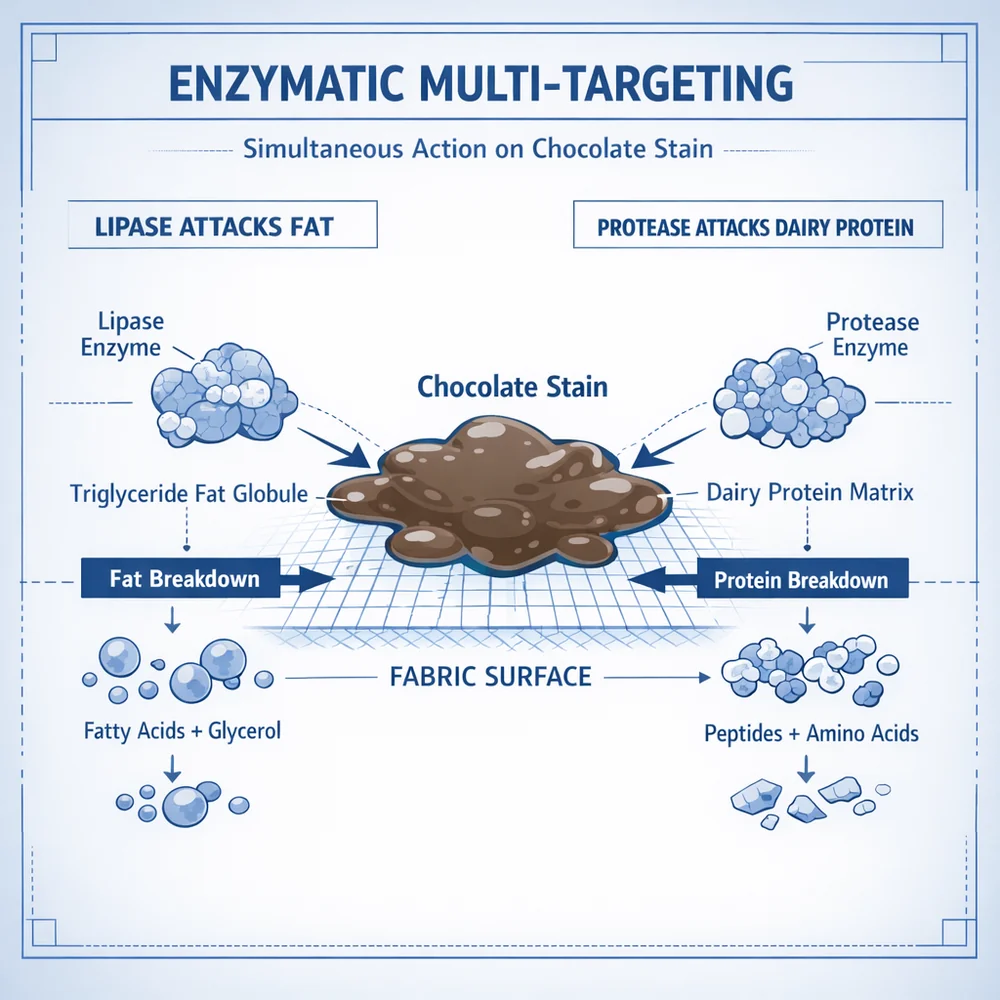
Lipase enzymes target the fat, breaking cocoa butter into water-soluble components. The enzyme cuts ester bonds in triglycerides, releasing glycerol and free fatty acids. These breakdown products dissolve easily in wash water.
Protease enzymes attack the milk proteins, cutting them into amino acids that rinse away. Together, these biological catalysts disassemble the “glue” holding the brown pigment to your fabric.
Soak the garment in enzyme detergent for several hours or overnight. Maintain lukewarm water (85°F to 95°F) for optimal enzyme activity. This temperature is warm enough to activate enzymes but cool enough to avoid protein denaturation.
Enzymes require moisture to function. Keep the fabric submerged throughout the soak period. Drying out deactivates the enzymes.
The Bottom Line Enzyme soaks digest fat and protein residue that soap misses. Use lukewarm water for several hours.
Hydrogen Peroxide Removes the Final Shadow
After fat and protein are gone, a faint yellow-brown shadow often remains. This is the tannin pigment from the cocoa bean, which acts like natural dye.
Tannins are polyphenolic compounds that bond to cellulose fibers through hydrogen bonds and hydrophobic interactions. These bonds are stable enough to survive normal washing but can be broken through oxidation.
Three percent hydrogen peroxide bleaches these chromophores without the harshness of chlorine bleach. Apply directly to the shadow and watch for mild bubbling as the peroxide releases active oxygen that breaks apart the color molecules.
The oxidation process breaks the conjugated double bond systems in the tannin molecules. These double bonds are what allows the molecules to absorb visible light and appear colored. When the bonds break, the molecules become colorless.
Let it sit for 10 to 15 minutes but do not let it dry on the fabric. Rinse thoroughly with cold water.
Use caution on colored fabrics. Peroxide can bleach some dyes. Always test in a hidden area first.
The Bottom Line Hydrogen peroxide bleaches tannin shadows after fat and protein removal. Do not let it dry on fabric.
The Dryer Creates Permanent Caramelization
Chocolate contains sugars that undergo Maillard reactions at high temperatures. This is the same chemistry that browns bread crust and seared meat. On fabric, it creates a permanent brown polymer fused to the fibers.
The Maillard reaction occurs between amino acids and reducing sugars when heat is applied. The reaction creates melanoidins, which are brown polymers. These polymers bond covalently to fabric fibers and cannot be removed by any normal cleaning process.
If any residual protein or sugar remains in the fabric when it goes through a hot dryer, you trigger this caramelization. The stain you thought was almost gone becomes a permanent feature.
Always air dry chocolate-stained items and inspect them in good lighting before finishing. If any ghost of the stain remains, retreat while the fabric is damp. Repeat enzyme treatment as needed.
The Bottom Line Dryer heat triggers permanent caramelization. Air dry and verify complete removal before applying heat.
Managing Hard Water
If you have hard water, dissolved minerals can interfere with chocolate removal. Calcium and magnesium react with soap to form sticky films that trap pigments.
Hard water minerals also form complexes with tannins that are harder to remove than the tannins alone. The mineral ions act as bridges between the tannin molecules and the fabric, creating additional bonding sites.
Add borax or washing soda to your treatment water to sequester these minerals. This keeps your surfactants working at peak efficiency.
A final white vinegar rinse strips away any mineral-tannin complexes that might cause persistent dullness.
The Bottom Line Hard water minerals trap chocolate pigments. Use water softeners and vinegar rinses.
Rehydrating Dried Chocolate
Old chocolate stains form a hard, waterproof crust that standard cleaning solutions slide over. The dried fats and proteins need rehydration before treatment can work.
As chocolate dries, the fats oxidize and the proteins dehydrate into a rigid matrix. This crust is essentially waterproof and prevents cleaning solutions from reaching the interior of the stain.
Apply vegetable glycerin directly to the dried stain. Glycerin is a humectant that pulls moisture into the hardened crust, softening it over 30 minutes or more. Once the crust becomes pliable, proceed with the standard soap and enzyme protocols.
This patience-first approach prevents fabric damage from aggressive scrubbing of brittle, dried residue.
The Bottom Line Glycerin rehydrates dried chocolate crusts. Apply and wait 30 minutes before treating normally.
Upholstery Requires Moisture Control
On furniture, you cannot soak or rinse freely. Too much water pushes dissolved chocolate into the padding, where it rots and creates mold.
Whisk dish soap into water until it produces stiff foam. Apply only the foam to the stain, which delivers surfactants without flooding the fabric with liquid.
The foam method works because air bubbles carry surfactant to the stain surface without the liquid volume. You get cleaning power without saturation.
Blot with a clean, dry white cloth using a press-and-lift motion. Move to fresh sections of the cloth constantly to avoid redepositing. Speed dry the area with a fan or cool hair dryer to prevent water rings.
The Bottom Line Use foam only on upholstery to avoid saturating padding. Blot and dry quickly.
Milk Chocolate vs. Dark Chocolate
The exact treatment depends on what kind of chocolate you are facing.
Milk chocolate has more fat and protein. It requires thorough cold-water rinsing and extended enzyme soaks for the dairy component. It is also more likely to smell sour if not fully removed because the milk proteins can support bacterial growth.
Dark chocolate has less fat and more concentrated tannins. The surfactant phase may go quickly, but the peroxide whitening phase may need multiple passes to eliminate the intense pigment.
Identify your contaminant to target your effort efficiently.
The Bottom Line Milk chocolate needs protein-first treatment. Dark chocolate needs more aggressive whitening.
Conclusion
Chocolate removal follows a strict sequence: cold water preserves protein solubility, mechanical scraping removes bulk solids, dish soap emulsifies fat, enzymes digest residue, and peroxide bleaches the tannin shadow.
Skip or rearrange these steps and you risk permanent staining. Follow the chemistry and even the darkest chocolate disasters become solvable problems.
References
- Journal of Surfactants and Detergents. “Lipid Emulsification and Lipase Activity Thermodynamics.” Springer Link
- American Cleaning Institute. “Complex Organic Stains: Fats, Proteins, and Tannins.” https://www.cleaninginstitute.org/
- Textile Research Journal. “Maillard Reactions and Sugar-Protein Setting in Cellulose.” Sage Journals
- Consumer Reports. “Enzymatic and Surfactant Chocolate Stain Treatments.” https://www.consumerreports.org/
- Journal of Agricultural and Food Chemistry. “Cocoa Polyphenol Bonding with Textiles.” ACS Publications