Fragrance-Free vs Unscented: Understanding Laundry Product Claims and Chemical Differences
Table of Contents
Things You'll Learn From This Article:
- “Unscented” products can still contain perfume chemicals that hide smells, even if they don’t smell floral or strong.
- “Fragrance-free” means no perfume ingredients were added at all, which is usually safer for sensitive skin.
- The ingredient list matters more than the front label; words like “fragrance,” “parfum,” or “essential oils” mean scents are present.
- Masking fragrances in unscented detergents can trigger the same headaches, rashes, or allergies as regular scented products.
- Phthalates, which can affect hormones, often hide under the generic word “fragrance” and aren’t listed by name.
- Essential oils aren’t automatically safer; they contain many of the same allergy‑causing chemicals as synthetic perfumes.
- Older or oxidized essential oils can become more irritating than fresh ones, especially citrus-based scents.
- Long-lasting laundry smells are designed to stick to fabric and can be very hard to wash out later.
- Fragrance residue builds up inside washing machines and can transfer from one person’s laundry to the next load.
- Hot water, extra rinses, washing soda, and sunlight help remove stubborn perfume smells from secondhand clothes.
- Some laundry scents are released later through movement because they’re trapped in tiny capsules bonded to fabric.
- Dryer vents release fragrance chemicals into the outdoor air, which can affect nearby neighbors and windows.
If you’re trying to avoid perfumes in your laundry, you’ll see two terms everywhere: “fragrance-free” and “unscented.”
They sound like the same thing, don’t they? In normal conversation, they basically are. But on a product label, they mean wildly different things. And if you’re the person who gets a migraine or a rash from perfumes, mixing them up is a recipe for disaster.
One means “we didn’t add any perfume.” The other often means “we added more chemicals to hide the smell of the other chemicals.”
It’s not just semantics—it’s actual chemistry. If you’re trying to avoid allergens, you need to know which one is safe and which one is a trap.
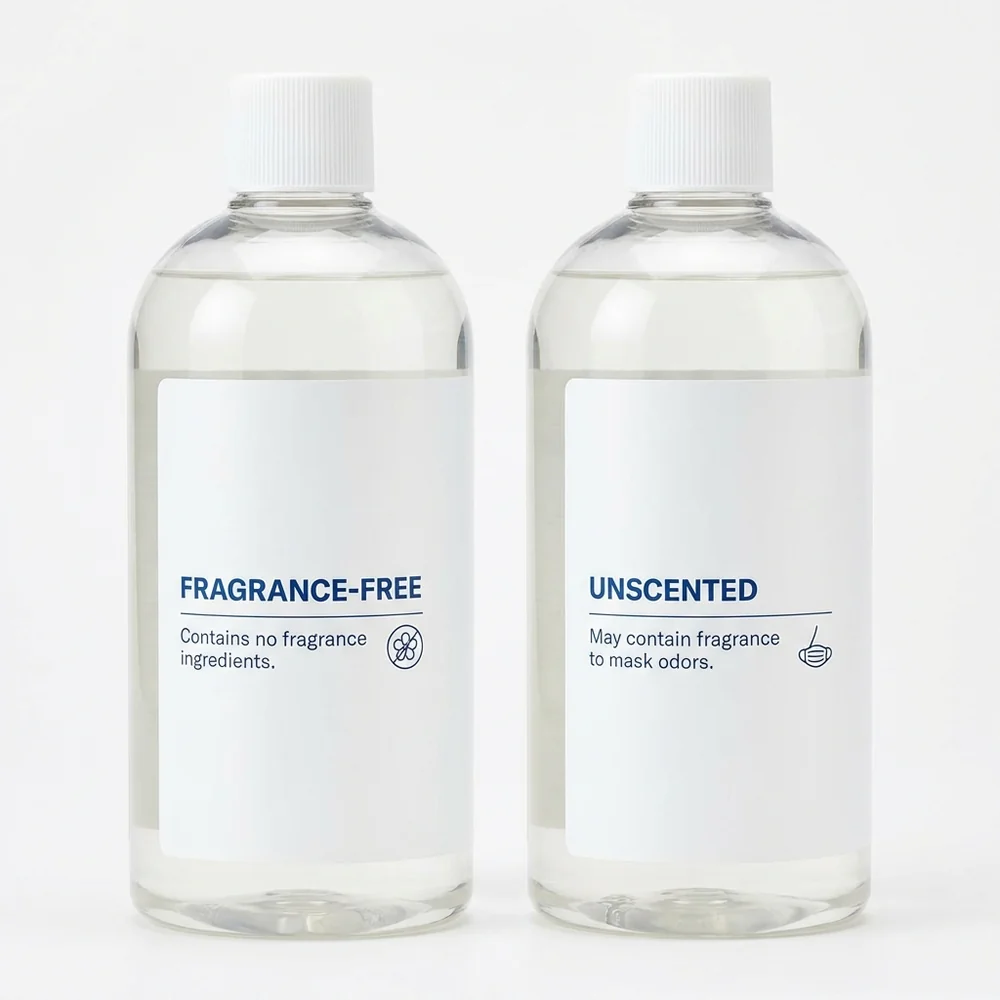
Masking Scents in Unscented Products
Here’s the trick with “unscented” products: they are designed to have no smell.
That sounds great, right? But the raw ingredients of laundry detergent (the soaps and solvents) actually smell kind of gross on their own—often chemical-like or fatty. If a manufacturer just left them alone, you probably wouldn’t want to wash your clothes in them.
So, to make the product smell like “nothing,” they add masking fragrances.
These are specific scent chemicals formulated to neutralize the bad natural odors of the detergent. They don’t smell like flowers or ocean breeze; they are chemically tuned to cancel out the base odor.
But chemically? They are perfumes.
They contain the same types of allergens—linalool, limonene, aldehydes—that are in the scented version. If you are allergic to fragrance, an “unscented” product can cause the exact same reaction as a scented one.
This is why “Fragrance-Free” is the gold standard for sensitive skin. For more help picking safe detergents, check our hypoallergenic detergent guide.
Key Insight: “Unscented” often means masking fragrances were added to hide chemical smells. These masking agents can trigger allergies just like regular perfume.
Chemical Definitions of Fragrance Free
“Fragrance-free” is the label you want. It means exactly what it says: no fragrance ingredients have been added. No perfumes, no masking agents, nothing.
The product will smell like its ingredients. Sometimes that means it has a faint chemical or earthy smell, but that’s a good thing—it means nothing is hiding therein.
Legally, manufacturers can be sneaky with ingredients. The FDA Cosmetics Labeling Guide allows companies to bundle hundreds of chemicals under the single word “fragrance” to protect trade secrets.
Always check the back of the bottle.
If you see words like “fragrance,” “parfum,” “natural fragrance,” or even “essential oils,” the product is not fragrance-free, no matter what the front label claims. The ingredient list is the only place that tells the truth.
Practically speaking, people with fragrance allergies usually do fine with fragrance-free products but often react to unscented ones.
Key Insight: “Fragrance-free” means zero added scent chemicals. It might smell a little like raw soap materials, but that’s safer than hidden masking agents.
Phthalates in Laundry Fragrance
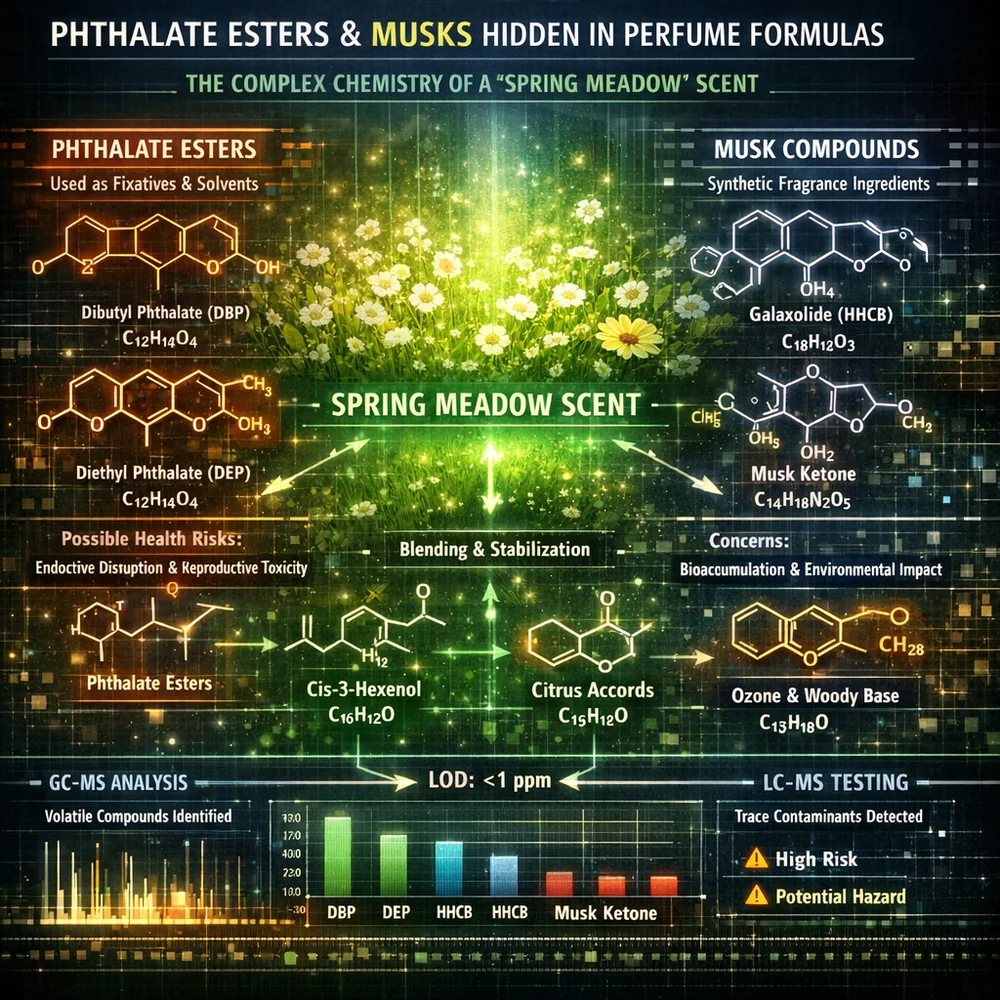
Phthalates (pronounced THAL-ates) are a group of chemicals used to make plastics flexible, but they’re also used as solvents in fragrances.
specifically, diethyl phthalate (DEP) is used to make scents last longer. It acts like an anchor, slowing down the evaporation so your clothes still smell “fresh” days later.
The problem is that phthalates are documented endocrine disruptors—chemicals that mess with your hormones.
There’s growing concern about this. The National Institute of Environmental Health Sciences links phthalate exposure to reproductive and developmental issues.
The annoying part? Labels don’t have to list phthalates.
Because they are part of the “fragrance” formula, they hide under that generic label. You won’t see “phthalates” on the ingredient list. The safest way to avoid them is simply to buy products that have no fragrance at all.
Some brands voluntarily pledge to go phthalate-free, but “Fragrance-Free” is the surest bet. If you want to know more about how scents are engineered to stick, see our scent chemistry breakdown.
Key Insight: Phthalates help scents stick to clothes but can disrupt hormones. Look for “phthalate-free” or stick to fragrance-free options.
Essential Oil Allergies
A lot of natural brands swap synthetic perfumes for essential oils and call it “safe.”
It sounds nice—lavender oil certainly sounds better than “chemical fragrance.” But for your immune system, the difference is often zero. Essential oils are just concentrated mixtures of chemicals, and they contain the exact same allergens found in synthetic perfumes.
Lavender, tea tree, and citrus oils are loaded with linalool and limonene—two of the most common contact allergens in the world.
A single essential oil can contain over a hundred different compounds. Tea tree oil, famous for being antimicrobial, is increasingly causing allergic reactions as it gets put into more cleaning products.
Research in the Journal of the American Academy of Dermatology confirms that people with fragrance allergies react just as badly to botanical oils as they do to lab-made scents.
It gets worse when they age.
When essential oils (especially citrus ones) are exposed to air, they oxidize. Oxidized limonene can be ten times more allergenic than fresh limonene. So that old bottle of “natural” detergent might be far more irritating now than when you bought it.
If you have sensitive skin, “natural fragrance” is still fragrance. Check our eco-friendly section for more on this.
Key Insight: Your skin can’t tell the difference between “natural” allergens and synthetic ones. Essential oils cause reactions just like perfumes do.
Health Risks of Synthetic Musk
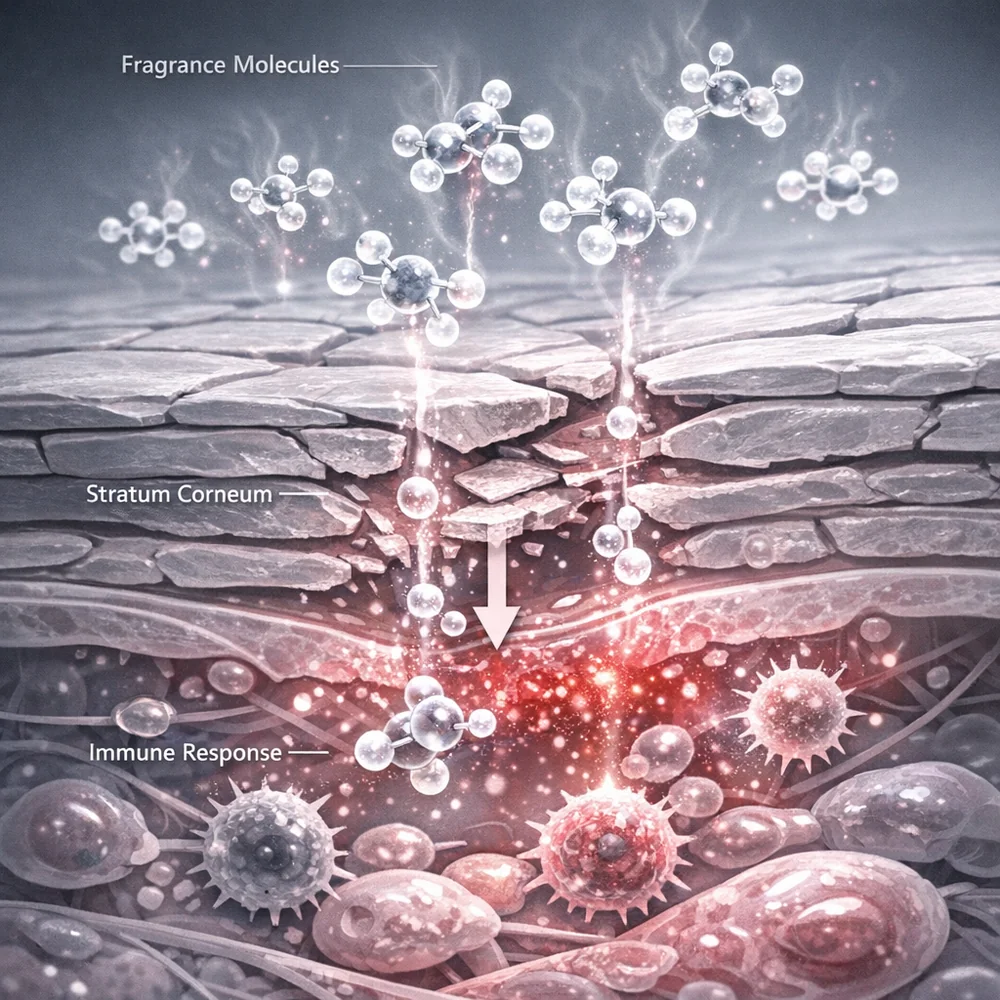
Synthetic musks are the heavy hitters of the fragrance world. They are the “base notes”—the deep, rich smells that linger long after the flowery top notes drift away.
Chemicals like galaxolide and tonalide are designed to be sticky. They stick to fabric, and they stick around for a long time.
That persistence is great for laundry marketing, but worrying for health.
These chemicals are lipophilic, which means they love fat. They accumulate in fatty tissues in the body. Studies have found synthetic musks in human blood and even breast milk. They also accumulate in fish and aquatic life because wastewater treatment plants can’t fully break them down.
Research in Environmental Science & Technology suggests some of these compounds might act like estrogen or interfere with how our bodies process nasty stuff.
While experts debate exactly how much is “safe,” the fact that these chemicals build up in our bodies and the environment is a good reason to be cautious. Laundry products use high levels of them because consumers want that “fresh” smell to last for weeks. For more on sticky fragrances, see scent beads and wax buildup.
Key Insight: Synthetic musks are designed to cling to things. This means they build up in the environment and even in human bodies over time.
Eliminating Fragrance Transfer in Shared Machines
Living in a mixed-fragrance household is tough. If your roommate or family member uses “Spring Explosion” detergent and you need fragrance-free, you might be in trouble.
Fragrance residue coats the inside of the washing machine—the drum, the seals, deeply into the plastic—and transfers to the next load.
Fragrances are oily and waxy by design. They don’t just rinse away; they cling. A single scented load can contaminate the next several “fragrance-free” loads. Front-loaders with their rubber gaskets are the worst offenders.
To protect yourself, you need to clean the machine. Run an empty cycle on the hottest setting with 2 cups of white vinegar. Wipe down the rubber gasket manually.
Ideally, try to run a rinse cycle in between users, or convince the household to ditch the super-sticky stuff like scent beads.
Key Insight: Scent residue sticks to washer drums and seals. Run a hot, empty cycle with vinegar to strip it out before your load.
Removing Perfume Smells from Secondhand Clothes

We’ve all been there: you buy a great shirt at a thrift store, bring it home, and it reeks of industrial-strength floral detergent. Even after washing it, the smell lingers.
This is because modern laundry fragrances are engineered to stay put.
The scent compounds embed deeply into the fibers. To get them out, you need to be aggressive. This overlaps with sanitizing vintage clothes.
Use the hottest water the fabric can handle (heat helps mobilize the oils). Do extra rinse cycles—dilution is your friend. If it’s really bad, soaking it in washing soda helps break down the waxy fragrance deposits.
Finally, hang it outside. Sunlight and fresh air help the volatile chemicals evaporate.
Key Insight: Modern scents are stubborn. Use hot water, extra rinses, and outdoor air drying to get the smell out.
Fragrance Durability on Fabric
It’s not an accident that your clothes still smell strongly of detergent a week later. Scientists spent a lot of time making that happen.
They use “microencapsulation technology.”
Basically, they trap fragrance oil inside tiny microscopic plastic-like shells. These shells stick to your clothes during the wash. They survive the dryer. Then, when you wear the clothes, friction (like moving your arm) breaks the shells and releases fresh puffs of scent.
This is why you might not smell the detergent when you pull the shirt out of the drawer, but you catch a whiff of it later in the day. It also explains why it’s so hard to wash out—it’s physically bonded to the fabric. Scent beads are the extreme version of this. Eliminating this might require laundry stripping.
Key Insight: “Scratch and sniff” technology is real. Microcapsules on your clothes break open while you wear them to release scent.
Air Quality Impact of Dryer Vents
When you dry scented laundry, all those volatile chemicals have to go somewhere. They get blown out of your dryer vent.
Ideally, this goes outside. But it means you are pumping fragrance chemicals (and other VOCs) into the neighborhood air.
Studies in Environmental Science & Technology found that dryer vents emit a cocktail of chemicals, including things like acetaldehyde and benzene, which aren’t exactly vitamins.
If you live in an apartment where vents are close together, your neighbor’s laundry choices can become your air quality problem.
Make sure your dryer vents properly to the outside and away from windows. If you smell dryer sheets in your backyard, you’re breathing those emissions.
Key Insight: Your dryer exhaust pumps fragrance chemicals into the air. This can affect neighbors or drift back into your own home.
Conclusion
The difference between “fragrance-free” and “unscented” isn’t just wordplay—it’s the difference between clean ingredients and hidden masking chemicals.
If you have sensitive skin, stick to “Fragrance-Free.” It’s the only label that guarantees no perfumes were added. Unscented products are often just chemically masked perfumes.
Between the potential hormone disruptors like phthalates, bio-accumulating musks, and the sheer staying power of modern scent technology, avoiding fragrance is a smart move for health and skin. It takes a little label-reading vigilance, but your skin (and your indoor air quality) will thank you.
References
-
U.S. Food and Drug Administration. “Fragrances in Cosmetics.” https://www.fda.gov/cosmetics/cosmetics-labeling-regulations/fair-packaging-and-labeling-act
-
National Institute of Environmental Health Sciences. “Phthalates Fact Sheet.” https://www.niehs.nih.gov/health/topics/agents/endocrine
-
Environmental Science & Technology. “Volatile Emissions from Consumer Products.” https://pubs.acs.org/doi/10.1021/es102230q
-
Journal of the American Academy of Dermatology. “Essential Oil Contact Allergens.” https://www.jaad.org/