Washing Wool and Cashmere: The Physics of Scale Felting and Fiber Care
Table of Contents
Things You'll Learn From This Article:
- Wool and cashmere shrink because of friction, heat, and movement together, so controlling those three things is how you keep garments safe.
- Warm water and scrubbing are what cause wool fibers to lock together permanently, not just water alone.
- Regular laundry detergent is too harsh for wool and can slowly damage it, even if the sweater doesn’t shrink right away.
- A wool-specific, pH‑neutral detergent keeps fibers soft and prevents long-term weakening.
- Enzyme detergents can literally eat away at wool over time, leading to thinning and holes.
- Hand washing works best because your hands let you clean without creating enough friction to cause felting.
- Matching the rinse water temperature to the wash water helps prevent sudden fiber shock and shrinkage.
- Machine “wool” cycles reduce risk but still need a mesh bag and careful handling.
- Never wring or twist wet wool; pressing water out gently avoids fiber damage.
- Hanging wet sweaters stretches them out because wet wool is heavy and elastic.
- Rolling wool in a towel is the safest way to remove water before drying.
- Shaping a sweater while it’s damp lets you fix length, seams, and overall fit as it dries.
- Drying wool slowly, away from heat and sun, keeps it soft instead of stiff and brittle.
- Washing wool before storage is the most effective way to prevent moth damage.
- Breathable storage bags protect wool better than airtight plastic bins.
- Cedar and lavender can help deter moths but need regular refreshing to stay effective.
- Pills are normal on wool and should be shaved off gently, not pulled by hand.
- Cashmere needs even gentler handling than most wool because its fibers are finer and weaker when wet.
- Untreated merino should be washed like cashmere, even if some merino items claim to be machine washable.
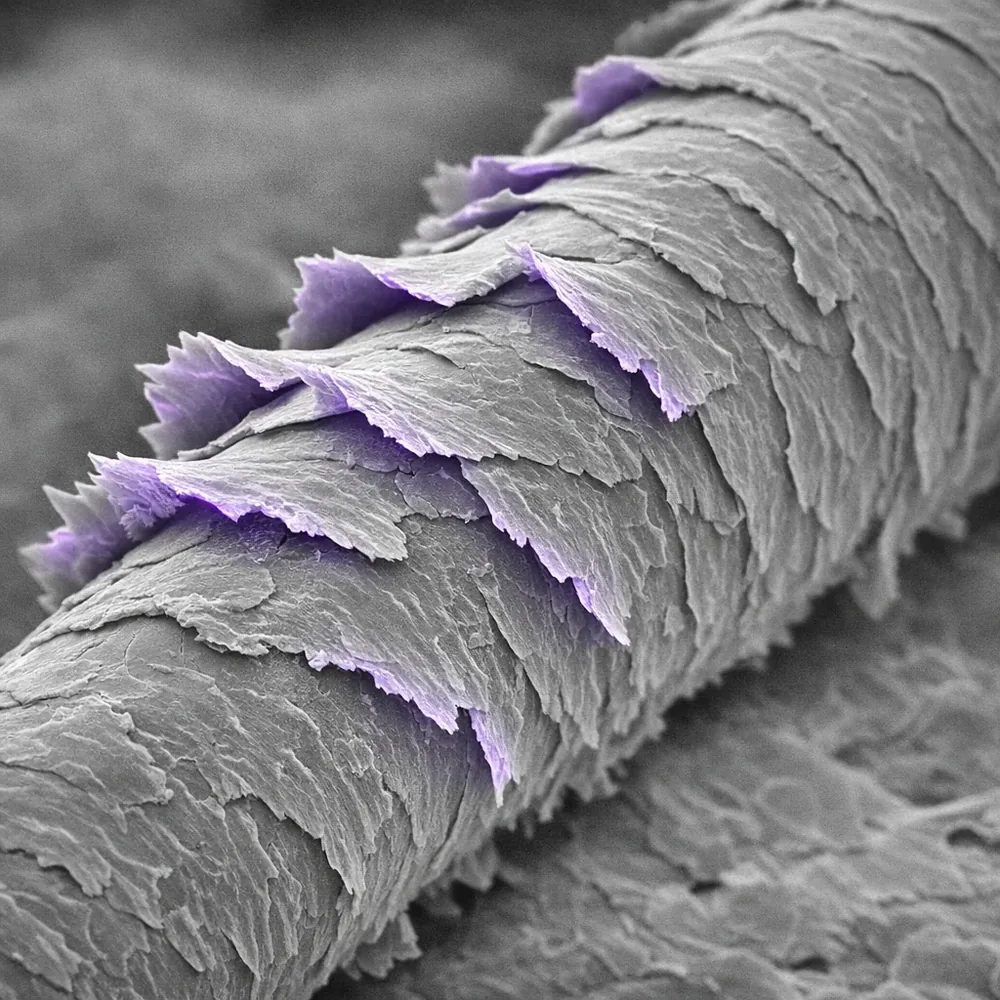
Wool and cashmere are protein fibers derived from the hair of sheep and goats, respectively. Unlike the smooth cellulose structure of cotton or linen, these animal fibers possess a complex external architecture known as the cuticle. This cuticle is composed of overlapping cells, or scales, arranged like shingles on a roof. These scales are the key to the fiber’s ability to trap air (insulation), but they are also the mechanism behind its most catastrophic failure mode: felting.
When wool is subjected to heat, moisture, and mechanical agitation simultaneously, these scales open up and ratchet against each other. Once they interlock, they cannot be separated without destroying the fabric. The garment becomes dense, thick, and permanently shrunken to a fraction of its original size. Washing wool correctly is fundamentally an exercise in preventing this mechanical interlocking while still removing biological soils.
Why Wool Shrinks

Felting is not shrinkage in the traditional sense of polymer relaxation. It is a one-way mechanical ratchet effect. In cold, dry conditions, the scales of the wool fiber lie flat against the shaft. However, warm water causes the hair shaft to swell and the scales to lift outward, creating a jagged surface. If you agitate the fibers in this swollen state (by rubbing, twisting, or tumbling), the directional scales snag on one another. As the agitation continues, the fibers migrate deeper into the weave, pulling the fabric tighter and tighter until it becomes a solid mat.
This process is thermodynamically irreversible. No amount of hair conditioner or physical stretching can unlock millions of microscopic scale interactions once they have fused. Therefore, the laundry protocol must eliminate at least two of the three felting factors (heat, moisture, agitation). Since we must use moisture to clean the garment, we must strictly control heat and agitation. This also serves to minimize surface wear, a concept explored in our pilling prevention guide.
The Bottom Line Wool shrinkage is caused by the interlocking of microscopic fiber scales (felting), triggered by heat and agitation. This mechanical ratchet effect is irreversible, making strict temperature and motion control mandatory during washing.
Why Regular Detergent Damages Wool
Wool is composed of keratin, an amphoteric protein that is uniquely sensitive to alkalinity. Standard laundry detergents are formulated with a high pH (alkaline) to help saponify grease and oil on durable cottons. However, alkalinity acts as a swelling agent for keratin. It causes the wool scales to open aggressively and can even chemically dissolve the protein bonds over time. Washing a cashmere sweater with regular heavy-duty detergent (like Tide or Persil) will strip the natural oils and leave it feeling rough, dry, and brittle.
The technical requirement is a pH-neutral or slightly acidic wool wash. Products like Woolite (Dark), The Laundress Wool and Cashmere Shampoo, or Eucalan are formulated to match the natural acidic pH of the hair fiber (around 5.5-6.5).
Many of these specialized detergents also contain lanolin. Lanolin is the natural sebaceous oil secreted by sheep to keep their wool waterproof and soft. By replenishing this lipid layer during the wash, you maintain the fiber’s elasticity and softness.
Protease enzymes, found in most biological detergents, are designed to eat protein stains. Unfortunately, they cannot distinguish between a blood stain and a wool fiber. Over repeated washings, enzymatic detergents will literally digest your sweater, causing thinning and the appearance of small holes.
The Bottom Line Alkaline detergents and protease enzymes damage the keratin protein of wool fibers. Utilizing a pH-neutral, non-enzymatic wool wash prevents chemical degradation and preserves the softness of the knit.
How to Hand Wash Wool
The gold standard for wool care is, and always will be, hand washing. The human hand provides the ultimate control over agitation, ensuring that the friction threshold for felting is never crossed. Fill a basin with cool water (below 85°F or 30°C) and mix in the wool wash. Submerge the sweater. Let it soak for 15-20 minutes. This allows the surfactant to lift the soil passively without scrubbing.
Gently squeeze the suds through the fabric. Never wring, twist, or scrub the fabric against itself. Use a press and release motion.
Rinsing must be done with water of the exact same temperature as the wash water. Thermal shock (moving from warm wash water to cold rinse water) can shock the fibers and trigger immediate shrinkage. Keep the thermal gradient flat.
Modern washing machines with a Wool or Hand Wash cycle can be safe, but they carry inherent risk. These cycles use a rocking motion rather than a full tumble to minimize agitation. However, the spin cycle can still compress the fibers. If using a machine, always use a mesh bag to protect the garment from friction against the metal drum.
The Bottom Line Hand washing provides the best protection against agitation-induced felting. If using a machine, a mesh bag and a dedicated Wool cycle are required to minimize kinetic stress on the wet fibers.
How to Dry and Block Wool
Wet wool is heavy, elastic, and malleable. If you hang a wet sweater on a hanger or clothesline, the weight of the absorbed water will stretch it out of shape, creating dinosaur arms and a distorted torso. Gravity is the enemy of wet knitwear.
The correct method for water removal is the towel roll. Lay the wet sweater flat on a clean, white towel. Roll the towel up like a sleeping bag with the sweater inside. Gently press on the roll to transfer the moisture from the wool to the cotton towel. Unroll and repeat with a dry towel if necessary.
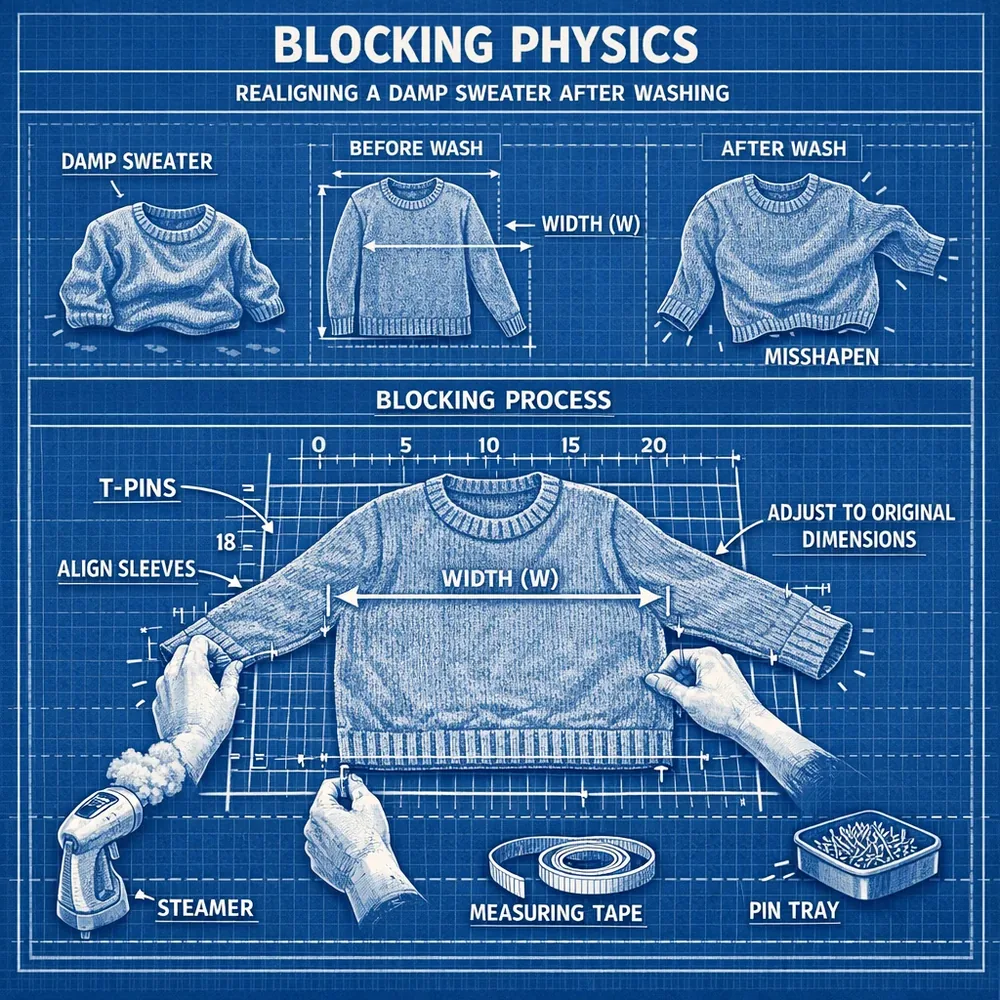
This is the moment for blocking. Blocking means manually shaping the damp garment back to its original dimensions. Lay the sweater on a fresh dry towel or a mesh drying rack. Gently pull the sleeves to the correct length. Straighten the hem and align the shoulder seams. Button the cardigan to ensure the placket dries straight. The wool has a memory, and it will dry in whatever shape you leave it. This is your opportunity to fix a twisted seam or a slightly shrunken cuff.
Let it air dry away from direct heat or sunlight. Heat from a radiator will conduct rapidly into the wet fiber, causing it to become brittle and harsh (baking the wool). Slow, ambient evaporation yields the softest finish.
The Bottom Line Hanging wet wool causes permanent stretching. The roll and press towel method removes water safely, followed by blocking the garment flat to restore its original dimensions and shape.
How to Protect Wool From Moths
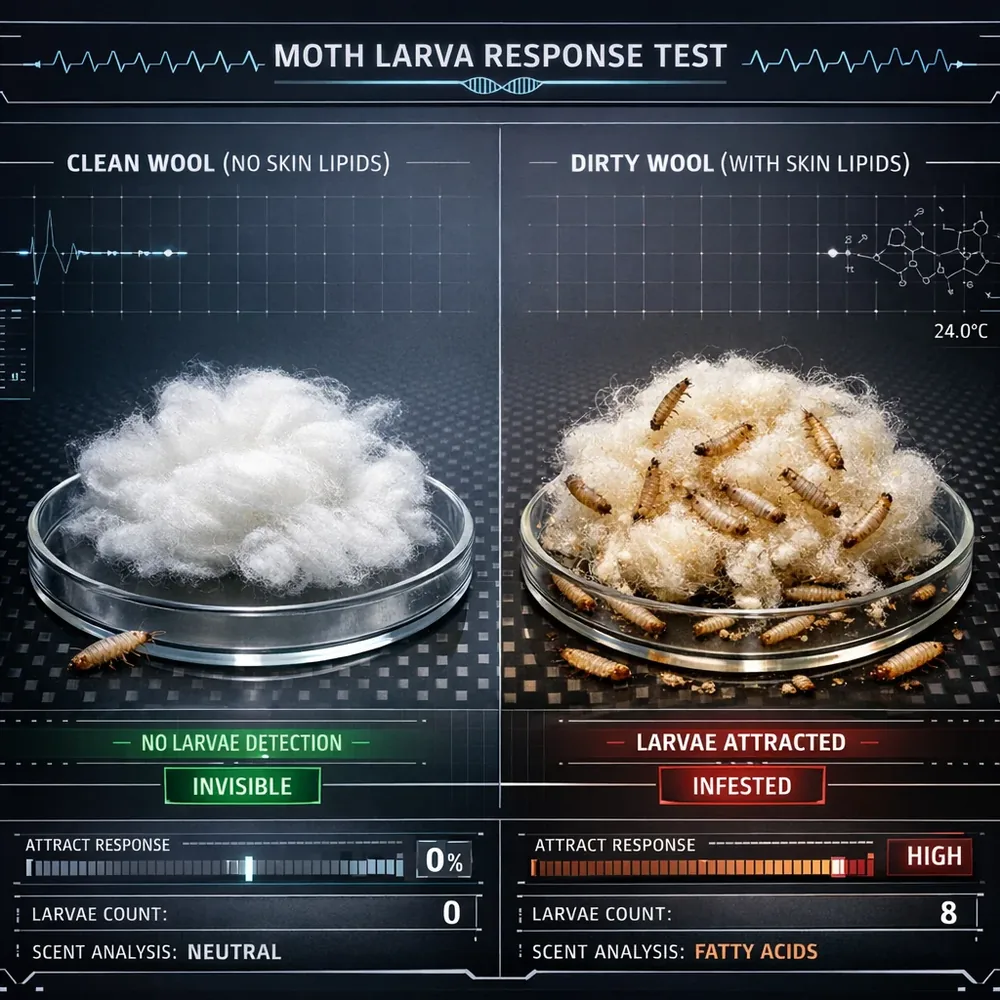
Wool and cashmere are the primary food source for clothes moth larvae (Tineola bisselliella) and carpet beetles. Storing dirty wool is essentially setting a dinner table for these pests. Moths are attracted to the scent of human sweat, skin cells, and microscopic food spills on the fabric, not just the wool itself. Therefore, the most important step in moth prevention is to wash every single wool item before putting it into seasonal storage.
Do not store wool in airtight plastic bins or vacuum bags. Wool needs to breathe to maintain its moisture balance. Trapping it in plastic can lead to mildew and yellowing. Use breathable cotton canvas bags or zippered duvet storage cases. These inhibit moth entry but allow air circulation.
Cedar blocks and lavender sachets can act as natural repellents. The oils in cedar mask the scent of the keratin, confusing the moths. However, these lose potency over time and must be sanded or replaced annually. Note: Do not let cedar wood directly touch the fabric, as the oil can transfer and stain.
The Bottom Line Moths are attracted to biological residues on unwashed wool. Always wash garments before seasonal storage and use breathable cotton bags to create a physical barrier against pests.
How to Remove Pills from Wool
Even with perfect washing, friction from wear will cause pilling, which are small balls of fuzz that form on the surface of the knit. This is natural migration of short fibers. Do not pull them off by hand, as this pulls more long fibers out of the twist, creating a new pill in its place.
Use a fabric comb or a specialized tool like a Gleener to shave the pills off. Lay the garment flat and taut. Drag the comb gently across the surface in one direction. This cuts the pill away cleanly without disturbing the structural yarn.
The Bottom Line Do not pull pills. Use a fabric shaver or comb to slice them off cleanly, preventing further fiber migration.
Cashmere vs. Merino: Key Differences
While both are protein fibers, the laundry tolerance of cashmere differs from merino wool due to fiber diameter. Cashmere, sourced from the undercoat of the Hircus goat, has exceptionally fine fibers (14-19 microns). This fineness makes them weaker when wet and more prone to felting than sheep’s wool. Cashmere requires strictly zero-agitation washing. It is also more susceptible to stretching if hung dry.
Merino sheep produce a crimped fiber that has excellent elasticity and memory. High-performance merino gear is often treated with a superwash process (coating the scales with polymer or acid-washing them off) to make it machine washable. However, this treatment can degrade over time. Treat untreated merino with the same caution as cashmere.
The Bottom Line Cashmere is significantly finer and weaker than merino wool, requiring strictly zero-agitation washing. Superwash merino has treated scales for machine washability, but caution should still be exercised to preserve the polymer coating over years of use.
Conclusion
Mastering the care of wool and cashmere requires a disciplined respect for the microstructure of the animal fiber. The effectiveness of any protocol rests on the foundation of friction reduction and pH balance. By respecting the volatile nature of the fiber scales and the sensitivity of the keratin, we can maintain our knits for a lifetime.
This technical approach respects the luxury of the material while providing a predictable result. Every soft, perfectly shaped sweater is a testament to the synergy between gentle handling and chemical awareness. Moving away from the dry clean only mindset allows for a more personal stewardship of your wardrobe. It prevents the chemical harshness of industrial solvents and keeps the natural oils of the wool intact.
References
- Journal of Textile Institute. “The Mechanism of Felting in Wool: Scale Interactions and Frictional Directionality.”
- American Cleaning Institute. “Chemistry of Wool Care: pH and Enzyme Compatibility.”
- Textile Research Journal. “Dimensional Stability of Knitwear: The Physics of Blocking and Drying.”
- Consumer Reports. “Wool Detergents: A Review of Efficacy and Fiber Safety.”
- Journal of Applied Polymer Science. “Keratin Degradation by Protease Enzymes in Laundry Detergents.”