Washing Weighted Blankets: The Physics of Load Distribution and Filler Hygiene
Table of Contents
Things You'll Learn From This Article:
- Check the blanket’s weight and your washer’s size before washing, because heavy blankets can break home machines.
- Look at the care label to find out if the filler is glass beads or plastic pellets, since heat affects them very differently.
- Use a laundromat machine for very heavy blankets (around 20 pounds or more) instead of risking your washer.
- Spread the blanket evenly in the washer and don’t stuff it in a ball, so it doesn’t slam around during spinning.
- Add a couple of large towels to help balance the load and reduce violent shaking.
- Stop the machine if it starts banging or walking, and rearrange the blanket before continuing.
- Use less detergent than normal, because thick blankets trap soap and are hard to rinse clean.
- Skip fabric softener and use white vinegar instead to avoid buildup inside the blanket.
- Choose extra water and extra rinse settings so soap and dirt can fully wash out.
- Wash the removable cover often, but only wash the weighted insert a few times a year.
- Spot clean spills on the insert instead of doing a full wash whenever possible.
- Freshen musty inserts by airing them in sunlight rather than soaking them in water.
- Dry the blanket flat when air-drying so the weight doesn’t stretch or tear the stitching.
- Use low heat or air-only settings in the dryer to avoid melting pellets or weakening seams.
- Pause the dryer regularly to unball and reposition the blanket so it dries evenly.
- Roll the blanket for storage instead of folding to reduce stress on seams.
- Store it in a breathable fabric bag, not plastic, to prevent trapped moisture and mold.
- Keep heavy blankets on low shelves so they don’t become a falling hazard.
Weighted blankets are therapeutic tools that utilize deep pressure stimulation (proprioceptive input) to reduce anxiety and improve sleep quality. This therapeutic weight is achieved through the use of high-density fillers, typically glass microbeads or plastic pellets, which are sewn into small quilted pockets distributed throughout the fabric.
While highly beneficial for the user’s nervous system, this construction presents a significant engineering challenge for the home laundry process. The sheer mass of the blanket can unbalance washing machines, while the individual pockets can trap water and detergent, leading to hygiene failures and catastrophic mechanical damage.
The cleaning strategy must be bifurcated based on the weight of the blanket and the capacity of the washing machine. For blankets under twelve pounds, a residential machine can often handle the load if careful balancing protocols are followed. However, for blankets exceeding twenty pounds, a commercial-grade machine at a laundromat is a mechanical necessity. Attempting to wash a twenty-pound blanket in a standard 4.5 cubic foot residential drum can strip the transmission gears, burn out the motor, or cause the suspension springs to snap.
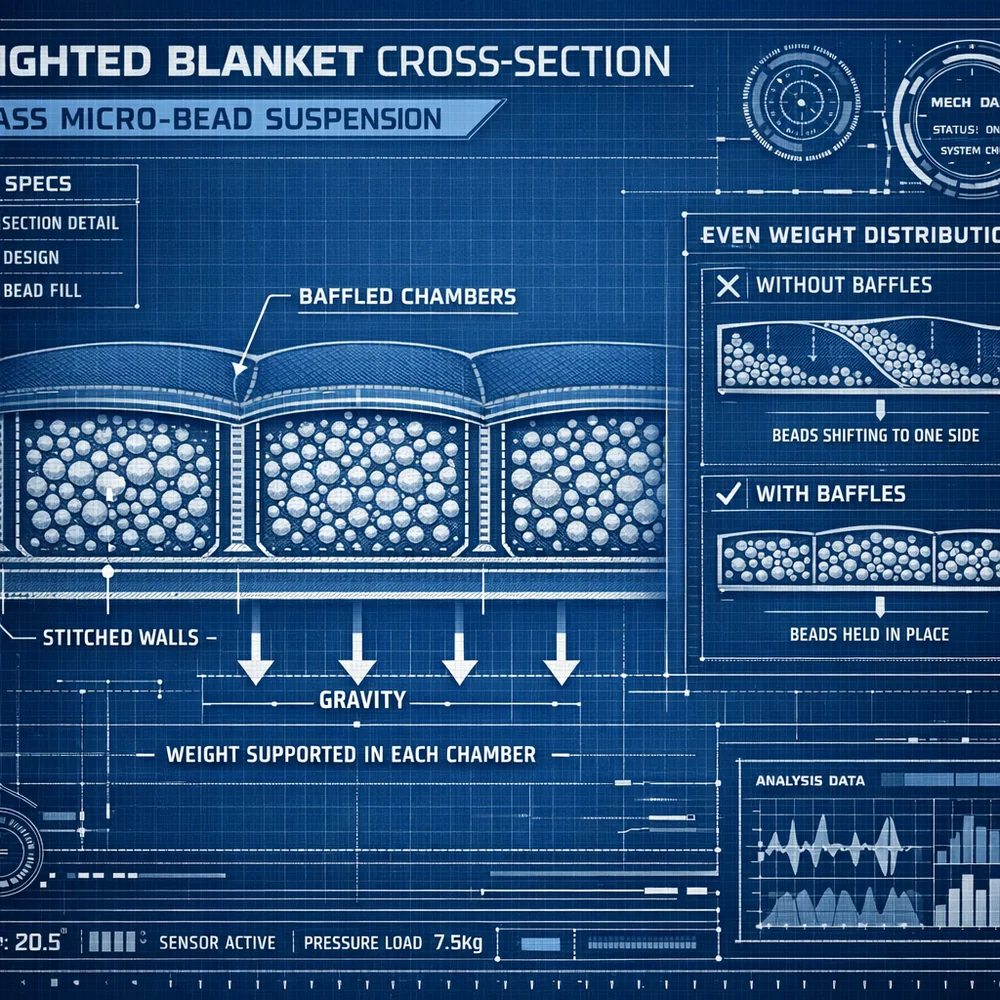
Glass Beads vs. Plastic Pellets

The washing protocol for any weighted blanket is fundamentally dictated by the material used to provide the weight. Modern, high-quality weighted blankets typically use glass microbeads. These are dense, sand-like particles that are chemically inert and highly heat-resistant. They are easier to wash because they do not absorb water, and they can tolerate warm temperatures. However, their incredibly small size means they can leak through even tiny stitch failures, turning your washing machine drum into a grinder filled with abrasive sand.
Older or less expensive blankets often utilize polypropylene plastic pellets. These beads are larger and lighter than glass, requiring more volume to achieve the same weight. Crucially, they have a lower melting point. If a plastic-filled blanket is exposed to high heat in a dryer, the pellets can soften and fuse together, creating hard, uncomfortable lumps that permanently ruin the blanket’s drape.
Identifying the filler type via the care label is mandatory before selecting a wash temperature. Glass beads can safely tolerate specific warm water cycles, while plastic pellets demand strict cold water and air-drying or ultra-low heat. This material awareness prevents the thermal de-structuring of the internal components.
The Bottom Line Glass microbeads are heat-resistant but prone to leakage (abrasive hazard), while plastic pellets are susceptible to thermal fusion (melting). Identifying the filler type is critical for setting safe wash temperatures and preventing the internal destruction of the blanket.
How to Load a Weighted Blanket Without Breaking the Machine
The most common failure mode when washing a weighted blanket is not the blanket itself, but the washing machine. A wet weighted blanket is significantly heavier than a dry one. A fifteen-pound blanket can weigh upwards of twenty-five to thirty pounds when saturated with water. When this concentrated mass spins at 1200 RPM, it generates massive centrifugal force. If the blanket is bunched on one side of the drum, this force can act like a wrecking ball, damaging the drum bearings and suspension springs.
To prevent this, the blanket must be distributed evenly around the central agitator or the drum perimeter. For top loaders, drape the blanket in a loose spiral around the agitator/impeller. Do not stuff it in a ball. For front loaders, fold the blanket accordion-style or spiral it along the outer wall. It is often safer to add two large bath towels to the load. These towels act as counter-weights, helping to distribute the mass more evenly across the drum and preventing the thumping that indicates a dangerously unbalanced load.
If your machine starts to walk across the floor or bang violently during the spin cycle, the cycle must be stopped immediately. The blanket should be manually redistributed before continuing. For blankets over twenty pounds, the risk is simply too high. In these cases, the large-capacity extractor washers at a commercial laundromat are the only technically sound option.
The Bottom Line The centrifugal force of a wet weighted blanket can destroy residential washing machine bearings. Distributing the load evenly or using commercial-grade laundromat machines for blankets over 20lbs is mandatory for mechanical safety.
Why Less Detergent Is Better
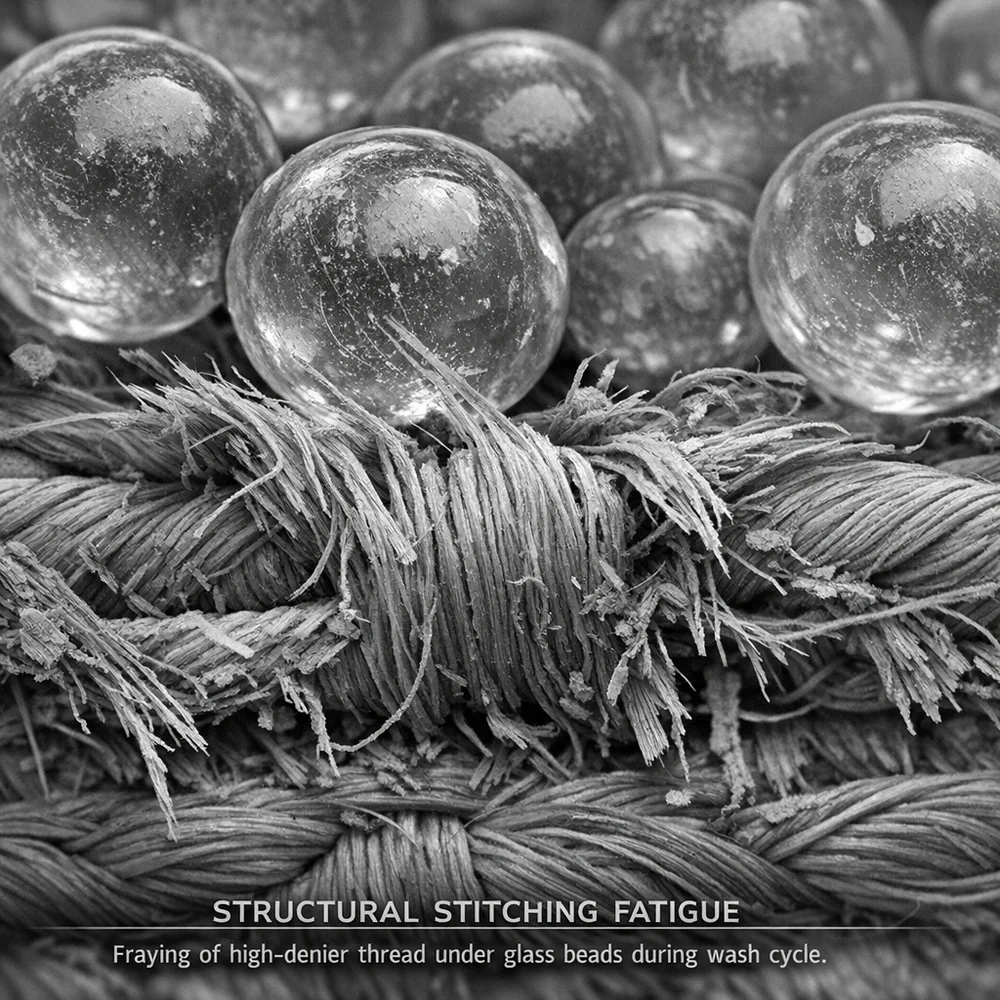
Because weighted blankets are thick, multi-layered sandwiches, they are uniquely prone to trapping detergent residue. The filler pockets can act as reservoirs that hold onto suds, which are notoriously difficult to rinse out. If this residue remains, it creates a sticky film that attracts dirt and causes skin irritation for the sleeper. Additionally, residue can gum up the glass beads, causing them to clump together rather than flow freely.
The technical solution is to use a high-efficiency (HE) detergent in minimal quantities. Use half the recommended dose for a normal load. The sheer weight of the blanket often prevents the tumble action needed to rinse heavily sudzing soaps.
Avoid fabric softeners entirely. The waxy coating they leave behind is nearly impossible to flush out of the internal filler layer. This build-up reduces the breathability of the blanket and can degrade the stitching over time. Instead, use white vinegar in the fabric softener dispenser. The acetic acid acts as a natural rinse aid, cutting through alkalinity and suds, ensuring the beads remain clean. It also helps to keep your appliance clean, reducing the need for aggressive maintenance cycles.
The wash cycle should be set to Deep Water or Extra Rinse if your machine allows it. Standard Eco cycles often do not provide enough water volume to fully penetrate the dense fabric and flush out the soil. You need a high water-to-fabric ratio to ensure that suspended soils are actually carried away.
The Bottom Line The multi-layered construction of weighted blankets traps detergent. Using minimal HE detergent and an acidic vinegar rinse prevents residue buildup that causes filler clumping and skin irritation.
When to Spot Clean Instead of Full Wash
Given the logistical challenges and risks of a full wash, spot cleaning should be the primary maintenance protocol for weighted blankets. Most weighted blankets are engineered as a two-part system: a weighted core that is inserted into a removable duvet cover. The cover is the hygienic barrier that touches the skin and absorbs body oils. This cover should be washed frequently, weekly or bi-weekly, just like regular sheets.
The weighted insert itself typically only needs washing 2-4 times a year. If a spill occurs on the insert, localized treatment is preferred over a machine cycle. Blot the stain with a dry cloth to remove liquid. Apply a mild enzyme cleaner to the spot. Dab with a damp cloth to rinse. Do not saturate the filler pockets excessively.
If the insert develops a general musty odor, air-drying it in direct sunlight is a powerful sanitizing option. UV radiation kills surface bacteria and refreshes the fabric without the mechanical risks of immersion. This hybrid maintenance approach, washing the cover often and the core rarely, is the most sustainable way to own a weighted blanket.
The Bottom Line The cover-wash, core-spot-clean protocol extends the life of weighted blankets. Washing the removable cover weekly while only spot-cleaning the heavy insert minimizes mechanical wear and tear on the structural stitching.
How to Dry a Weighted Blanket Without Distorting It
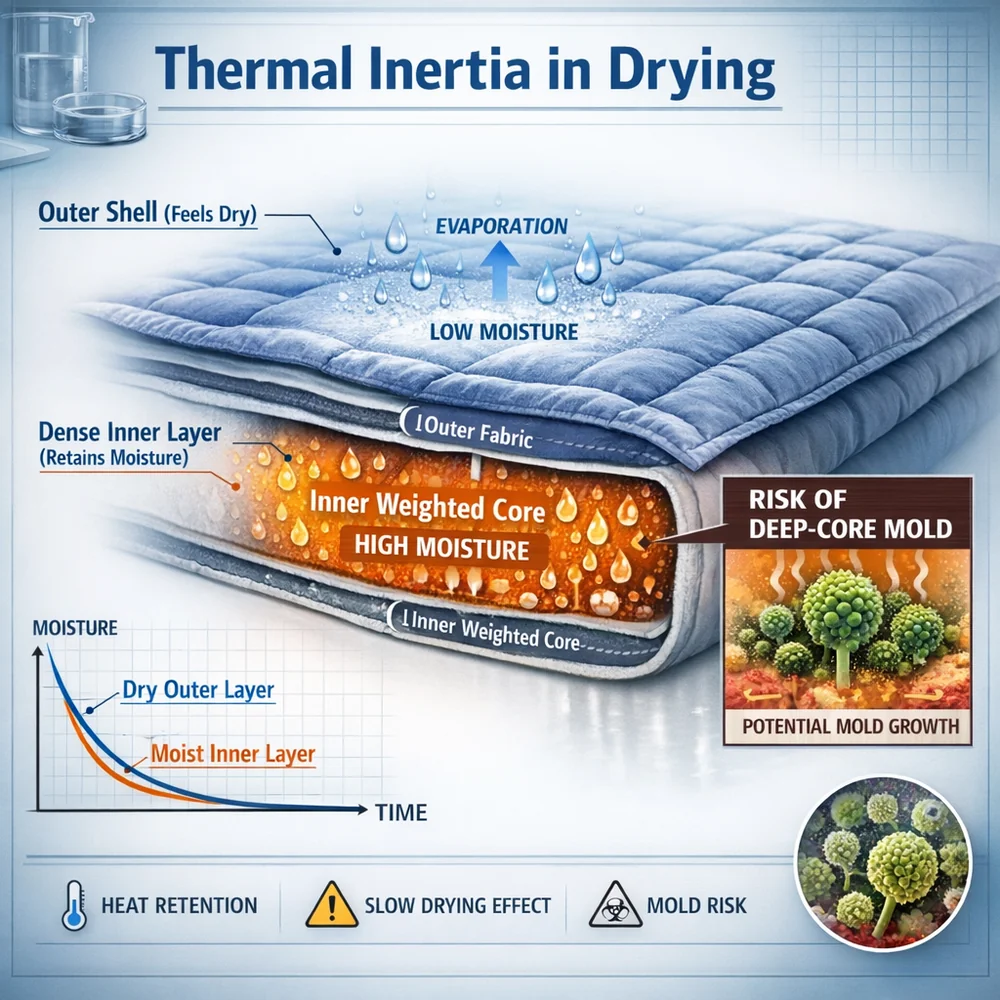
Drying a weighted blanket is arguably more perilous than washing it due to the forces of gravity on wet fabric. If a heavy blanket is hung vertically on a clothesline, gravity will pull the wet, heavy filler to the bottom of the pockets. This concentrated stress can stretch the fabric and pop the horizontal stitching, leading to bead migration where the weight pools in the bottom corner of the blanket. Once the internal baffles are blown, the blanket loses its even distribution and functionality.
Flat drying is the only geometrically safe method for air-drying. The blanket should be laid out horizontally on a sturdy drying rack. Ideally, place the rack in a sunny spot or near a fan to accelerate evaporation. This ensures that the weight is supported evenly and that gravity does not distort the shape. It requires significant space and time, often 24 to 48 hours, but it guarantees structural preservation.
If using a machine dryer, the low and slow rule applies. High heat can melt plastic pellets and weaken synthetic threads. Set the dryer to Low or Air Fluff. Adding heavy wool dryer balls helps to punch through the heavy wet fabric, creating air gaps that allow the center of the bundle to dry.
Mid-cycle rotation is mandatory. Like washing, the blanket tends to ball up in the dryer, creating a damp, hot core that breeds mildew. Every twenty minutes, pause the cycle, open the door, and manually un-ball and redistribute the blanket.
The Bottom Line Hanging a wet weighted blanket causes vertical gravitational stress that can rip internal stitching. Always dry weighted blankets flat to support the load uniformly, or use a low-heat dryer cycle with frequent manual redistribution.
How to Store a Weighted Blanket
When not in use, how you store a weighted blanket impacts its longevity. Rolling a weighted blanket is generally superior to folding. Folding creates sharp creases where the weight of the blanket presses down on specific seam lines, potentially weakening them over time. Rolling distributes the weight over a continuous curve.
Store the blanket in a breathable cotton bag or a pillowcase. Never store it in a plastic bin or vacuum seal bag. Trapping moisture in a blanket filled with glass beads or plastic pellets can lead to internal mold growth that is impossible to clean.
Store the blanket on a bottom shelf or in a chest. Storing a 20lb object on a high shelf is a safety hazard. If it falls when you open the closet, it can cause injury.
The Bottom Line Roll weighted blankets instead of folding them to prevent seam fatigue. Store in breathable bags to prevent mold, and keep on low shelves to manage the lifting hazard.
Conclusion
Mastering the care of weighted blankets requires a disciplined respect for mass, gravity, and thermodynamics. The effectiveness of any protocol rests on the foundation of load balancing and thermal caution. By respecting the mechanical limits of your washing machine and the melting point of the filler material, you can achieve total restoration without catastrophic equipment failure.
This technical approach respects the therapeutic value of the item while providing a predictable, hygienic result. Every successful wash cycle is a testament to the synergy between mechanical awareness and textile science. Moving away from the stuff and pray laundry mindset allows for a more protected investment. It prevents the clumping of fillers and preserves the even distribution of weight that is critical for the blanket’s proprioceptive function.
References
- Journal of Consumer Product Safety. “Mechanical Failure Modes in Residential Washing Machines Due to Overloading.”
- American Cleaning Institute. “Technical Protocols for the Cleaning of Heavy Bedding and Comforters.”
- Textile Research Journal. “Thermodynamic Stability of Polypropylene Pellets in Tumble Drying Environments.”
- Consumer Reports. “Weighted Blankets: A Guide to Filler Materials and Washability.”
- Journal of Occupational Therapy. “Hygiene Standards for Sensory Integration Tools in Clinical Settings.”