Washing Down Jackets and Pillows: The Physics of Loft Restoration
Table of Contents
Things You'll Learn From This Article:
- Down only keeps you warm when it’s fluffy, because the trapped air—not the feathers themselves—does the insulating.
- Regular laundry detergent ruins down by stripping its natural oils and even breaking down the feathers, so it’s the wrong tool for the job.
- Specialized down wash cleans out sweat and dirt without damaging the feathers or leaving residue behind.
- Rinsing twice isn’t optional, because leftover detergent stops down from puffing back up.
- Tennis balls or dryer balls in the dryer physically knock apart wet clumps and help the down regain its loft.
- Low heat and a long drying time are safer than high heat, which can damage both the shell fabric and the feathers.
- A jacket can feel dry on the outside while still being damp inside, so stopping the dryer too early risks mildew and rot.
- Pausing the dryer to break up lumps by hand helps warm air reach the center of the insulation.
- Reapplying a water‑repellent coating after washing helps the outer fabric shed rain so the down stays dry.
- Storing down items loosely—hanging or in large breathable bags—keeps the feathers from being permanently crushed.
- Long-term compression, plastic bins, or vacuum bags damage down and shorten the life of jackets and pillows.
- Washing down properly and regularly prevents body oils from slowly destroying its warmth over time.
Washing down-filled items like jackets, pillows, and comforters is a high-stakes maintenance task. The unique structure of a down cluster represents a complex biological engineering feat. These clusters are essentially three-dimensional spheres of microscopic keratin filaments designed to trap air. This trapped air provides the thermal insulation necessary for surviving extreme cold.
When this structure becomes wet, the filaments collapse due to the surface tension of the water. This forms a dense, soggy mass with zero insulating value. Successfully restoring this loft is not just about cleaning the fabric shell. It is about managing the hydrodynamics of the feather cluster itself. Standard laundry detergents are the primary enemy of high-quality down. These formulations contain hydrophilic surfactants designed to strip oils from synthetic fibers, and this action strips the natural hydrophobic oils from the goose or duck down. This causes the filaments to become brittle and lose their elasticity.

Why Down Needs Specialized Detergent
To understand why down requires specialized care, one must appreciate its biological engineering. A down cluster is a thermal undercoating that lacks a central quill. Its efficiency comes from its ability to create millions of tiny air pockets that trap body heat. This structure is naturally hydrophobic thanks to a coating of natural oils produced by the bird.
When a down jacket gets dirty, it is usually because body oils and sweat have contaminated these clusters. These contaminants act as hydrophilic agents that attract moisture and cause the filaments to clump together. This clumping destroys the air pockets and leads to a dramatic loss of warmth. The goal of washing is to remove these contaminants safely while protecting the natural oils that keep the filaments pliable and resilient.
This is why specialized down wash products are chemically distinct from regular laundry detergents. They are typically soap-based and rinse away cleanly without leaving residue that attracts water. Preserving the hydrophobic balance of the cluster is the secret to performance. It ensures that the jacket can be washed repeatedly without losing its loft or puff.
The Bottom Line Down clusters rely on natural hydrophobic oils to maintain their loft and insulating air pockets. Using specialized soap-based cleaners instead of stripping detergents preserves these oils, preventing the filaments from becoming brittle and collapsing.
Why Regular Detergent Destroys Down
The most critical decision in the down washing workflow is the selection of the cleaning agent. Standard household detergents are formulated with proteolytic enzymes to break down protein stains like blood. However, down and feathers are composed almost entirely of keratin, which is a protein. Washing down with a biological detergent is essentially digesting the insulation itself.
Over time, this enzymatic attack weakens the filaments and causes them to shatter into dust. Furthermore, standard detergents often contain optical brighteners and perfumes that leave a chemical film. This film acts as a glue, causing the individual barbs to stick together even after drying. The result is a jacket that feels heavy and lacks rebound.
The technical solution is to use a dedicated technical down cleaner. These products are pH-neutral and free of proteases and hydrophilic residues. They are designed to lift dirt from the shell fabric while leaving the delicate feather structure intact. Investing in the correct chemistry is the cheapest insurance policy for a high-value jacket.
The Bottom Line Standard enzymatic detergents digest the keratin proteins of down feathers and leave hydrophilic residues that cause clumping. Utilizing pH-neutral, non-enzymatic technical down cleaners is mandatory for preserving the structural integrity and loft of the insulation.
How Tennis Balls Restore Loft
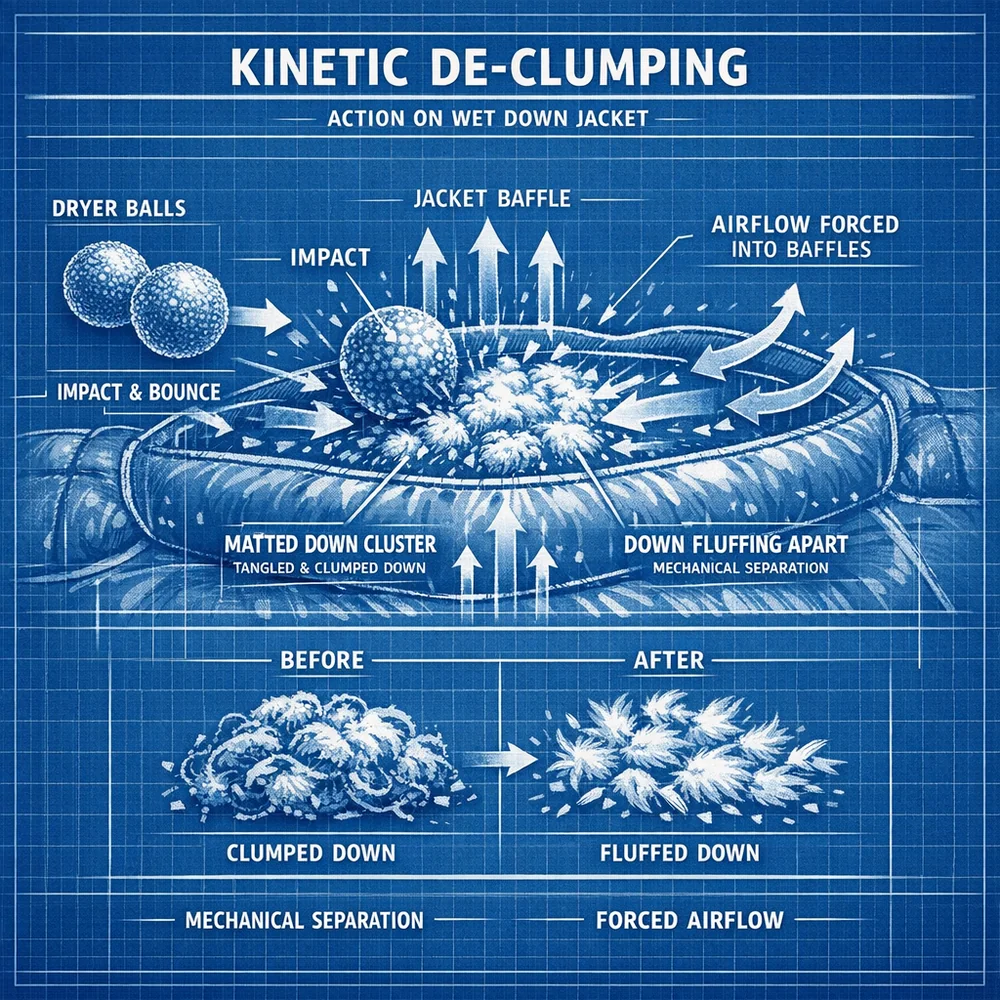
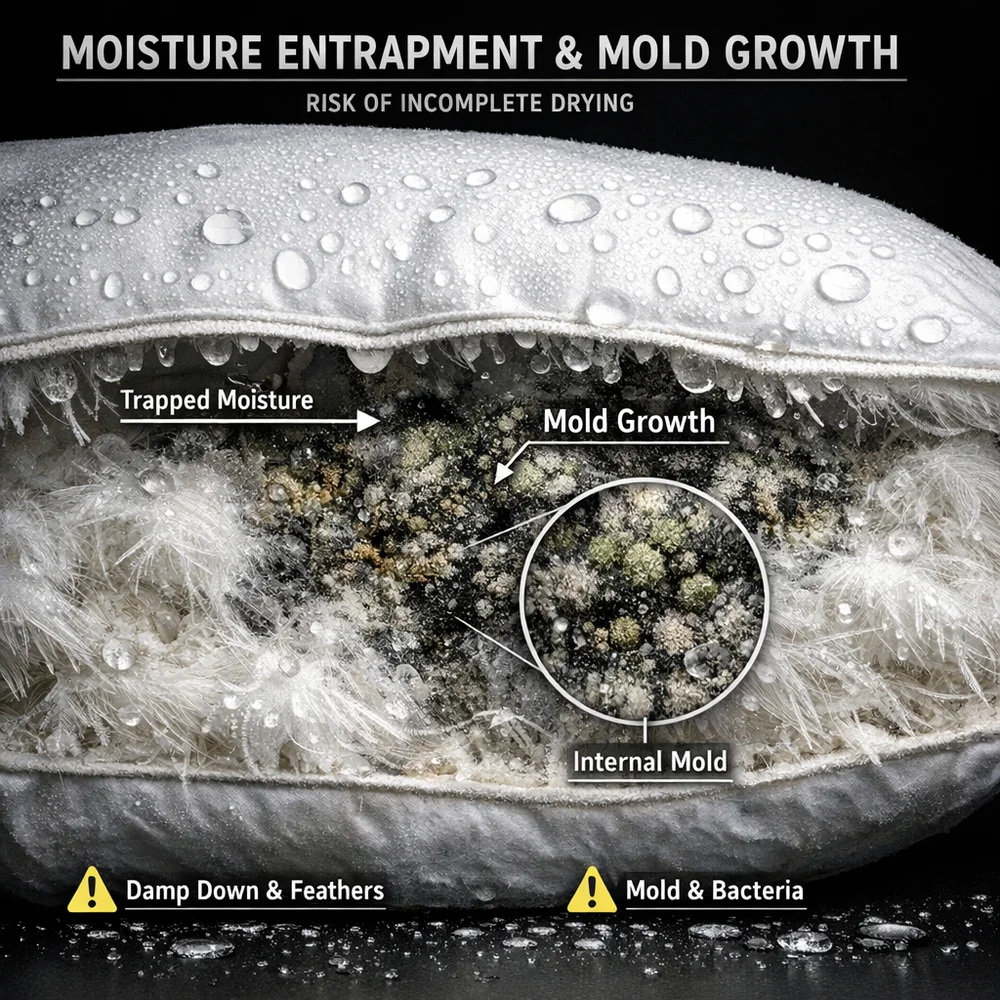
The drying phase of down maintenance is where the physics of loft restoration truly happens. This process relies heavily on mechanical impact to break up clusters. When wet, down clusters form tight, dense clumps that can take days to dry if left undisturbed. As water evaporates from the outside, the inside remains damp. This creates a perfect environment for mildew growth within the insulation baffles.
To prevent this, the clumps must be physically shattered during the drying process. This is achieved by adding agitator balls to the dryer drum. Clean tennis balls or specialized wool dryer balls serve this kinetic function perfectly. As the dryer spins, these balls are lifted and dropped onto the tumbling jacket. They act like dozens of tiny hammers to strike the insulation. This repeated impact breaks the hydrogen bonds holding the wet feathers together and fluffs them back into their expanded state systematically.
The difference in physics between a tennis ball and a wool ball is significant for different items. Tennis balls are dense and elastic, providing a sharp impact for heavy clumps in parkas. Wool balls are softer and absorbent, providing a gentler agitation for pillows.
The Bottom Line Wet down clumps require significant mechanical impact to break apart liquid bridges and restore loft. Adding dense agitators like tennis balls to the dryer provides the kinetic energy needed to shatter these clumps and fluff the insulation during the drying cycle.
Why Double Rinsing Is Mandatory
One common reason for a failed down wash is inadequate rinsing. Down is a dense material with high surface area that traps detergent deep within its baffles. If even a microscopic layer of surfactant remains, it will reduce surface tension. This prevents the filaments from springing back apart after the dry cycle. The residue effectively keeps the down in a semi-collapsed state permanently.
A standard washing machine rinse cycle is rarely sufficient for a bulky down item. The bulk of the jacket often prevents water from penetrating the core of the baffles. To counter this, the technician must program a second rinse manually. For top-loading machines, it is beneficial to press the air out of the floating jacket. This ensures it is fully submerged during the rinse phase.
Visual inspection of the drain water is the ultimate quality control check. If any suds are visible, the process must be repeated until the water runs clear. This commitment to total chemical extraction ensures the mechanical drying phase works at maximum efficiency. This principle is shared with our laundry stripping protocols for heavy residue removal.
The Bottom Line Highly absorbent down clusters trap surfactant residues that inhibit loft recovery. Implementing a mandatory double-rinse protocol ensures the total removal of these chemicals, allowing the natural hydrodynamics of the feather to restore insulation volume.
How Long to Dry a Down Jacket
Patience is the primary variable in the drying equation for down items. Unlike synthetic insulation which dries quickly, down holds moisture within the keratin structure itself. A jacket may feel dry to the touch on the outside while the core remains damp. If the cycle is stopped too early, this moisture leads to rot.
The protocol requires a low-heat setting over a very long duration. High heat can melt the nylon shell of the jacket and make natural oils volatile. This leads to brittleness and a permanent loss of function. The goal is to create a warm environment that encourages slow evaporation. A typical down jacket can take three to four hours to dry completely.
Mid-cycle redistribution is a hands-on technique that ensures success. Every thirty minutes, the technician should pause the dryer and manually massage any lumps. This hand-breaking of clumps allows warm air to reach the center of the clusters. It prevents the formation of hard balls of down that become permanent after drying.
The Bottom Line Down clusters retain internal moisture long after the shell fabric feels dry. A multi-hour, low-heat drying cycle combined with manual lump breaking intervals is required to prevent mildew and ensure the complete re-expansion of the insulation.
How to Restore the DWR Coating
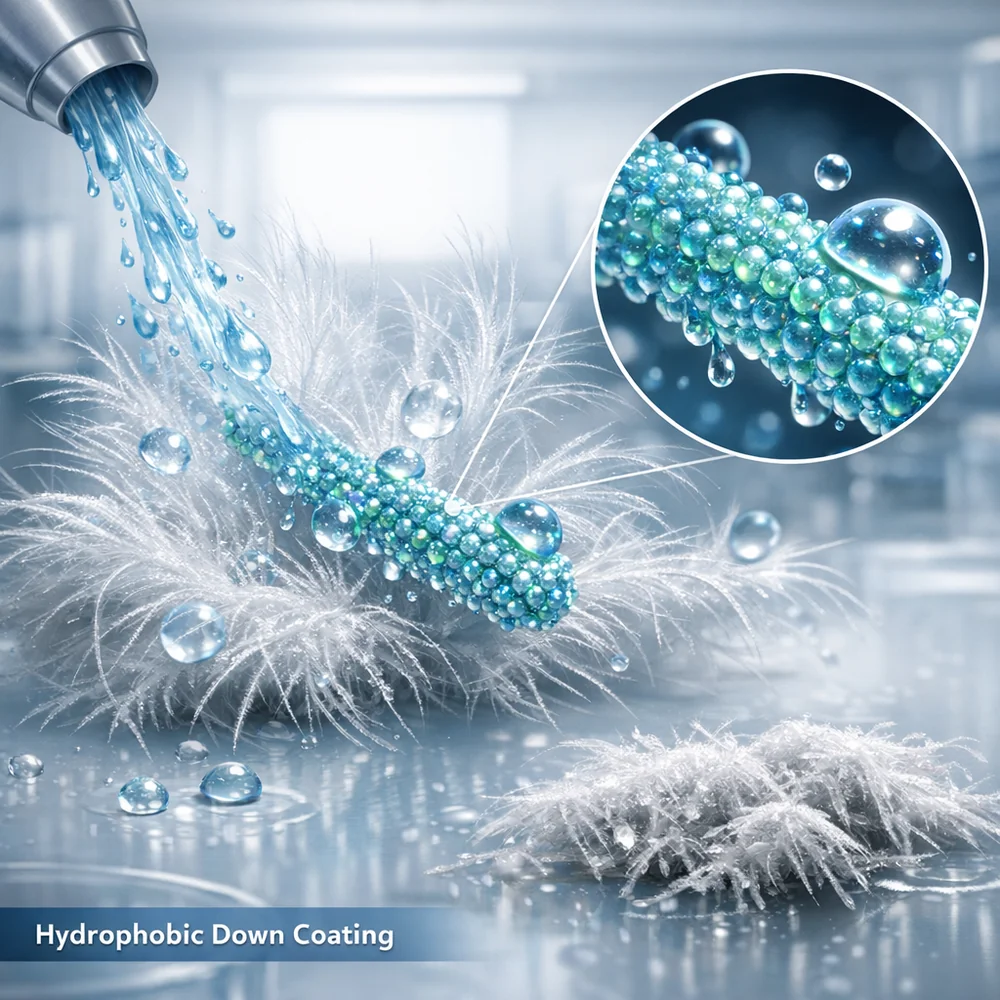
While the down provides warmth, the outer shell fabric provides the protection that keeps that down dry. Most down jackets are treated with a Durable Water Repellent (DWR) coating. This coating causes water to bead up and roll off the surface. Over time, abrasion and dirt compromise this polymer chain. When the shell gets saturated, it presses against the down and conducts heat away from the body.
Washing is the perfect opportunity to re-proof the shell fabric. Many technical down washes include a waterproofing agent that is heat-activated. Alternatively, a spray-on DWR treatment can be applied to the wet jacket. The heat of the dryer then cures the polymer and bonds it to the fibers. Restoring the DWR is critical for the functional performance of the garment. It ensures the jacket can withstand light rain without the insulation collapsing.
The Bottom Line The DWR coating on the jacket shell prevents water saturation that crushes the underlying down. Re-applying a heat-activated waterproofing treatment during the wash cycle restores this protective barrier, maintaining the garment’s thermal efficiency in wet weather.
How to Store Down Without Crushing It
The care of a down item extends beyond the wash cycle into seasonal storage. Down is resilient but it has a memory limit for compression. If a jacket is stored compressed in a stuff sack for months, the filaments fracture. This results in a jacket that never fully lofts up again.
The breathable loft storage method is mandatory for long-term preservation. Down items should be stored hanging up or in large cotton storage sacks. These sacks allow them to remain fully expanded during the off-season. This keeps the filaments in their natural relaxed state and prevents humidity buildup.
This is a key strategy in general wardrobe maintenance for high-value items. Avoid plastic bins or vacuum-seal bags at all costs. These trap moisture and impose crushing forces that destroy the three-dimensional cluster structure. Give the feathers room to breathe and they will perform for decades. Compress them into a suffocating ball and they will degrade into dust.
The Bottom Line Long-term compression fractures the delicate keratin filaments of down clusters, permanently reducing loft. Storing items uncompressed in breathable cotton sacks prevents structural damage and allows the insulation to maintain its thermal potential.
Conclusion
Mastering the washing of down jackets and pillows requires a disciplined adherence to the physics of loft. The effectiveness of any protocol rests on the foundation of specialized soap selection. Kinetic energy from mechanical agitation serves as the catalyst for volume recovery.
By respecting the structure of the keratin cluster, we achieve total restoration of flattened items. This technical approach respects the thermal engineering of the garment while providing a predictable result. Every successful down rescue is a testament to the synergy between patience and proper hydrodynamics. Precision in these protocols ensures the longevity of your investment.
Moving away from the fear of washing allows for a more proactive maintenance routine. It prevents the accumulation of body oils that naturally degrade the feathers. Restoring the DWR protection keeps you dry and thermally efficient in harsh conditions. By treating the laundry room as a laboratory, you maintain gear at the highest standard.
References
- Journal of Textile Institute. “The Impact of Surfactants on the Hydrophobicity and Loft of Goose Down Clusters.”
- American Cleaning Institute. “Technical Protocols for the Cleaning of Natural Fill Bedding and Outerwear.”
- Textile Research Journal. “Mechanical Agitation Dynamics in Tumble Drying: Effects on Fibre Cluster Expansion.”
- Consumer Reports. “Down Jacket Maintenance: Comparative Analysis of Detergents and Drying Balls.”
- Journal of Applied Polymer Science. “Reactivation of DWR Coatings on Nylon Substrates via Thermal Curing.”