Washing Pet Bedding and Toys: Odor Neutralization and Hair Removal
Table of Contents
Things You'll Learn From This Article:
- Always get as much pet hair off beds and toys before washing, or it will clump, trap dirt, and clog your washer.
- A vacuum, lint roller, and a short no-heat dryer tumble work together to pull out hair better than washing alone.
- Hair-removing enzyme additives are only safe for synthetic items; they can destroy wool or natural fibers.
- Hot water (around 140°F / 60°C) or high-heat drying is what actually kills fleas, mites, and bacteria.
- Regular detergent doesn’t remove urine smells that pets can still detect; enzymatic cleaners are needed to break those scent markers.
- Scented detergents, fabric softeners, and dryer sheets can irritate your pet’s skin and breathing and should be avoided.
- White vinegar in the rinse softens fabric safely by removing residue instead of coating it with chemicals.
- Wash pet bed covers and foam inserts separately; foam should never go in the washing machine.
- Sunlight and airflow help disinfect foam inserts after spraying them with vinegar or an enzymatic cleaner.
- Zip bed covers closed before washing so the zipper doesn’t damage other laundry or the machine.
- Balance very large pet beds with towels in the washer to prevent the drum from slamming during spinning.
- Put plush toys in a mesh bag to keep eyes, noses, and squeakers from tearing loose.
- Brush plush toys while they’re still damp so the fur dries soft instead of matted.
- Avoid high heat when drying squeaky toys, or the squeaker can melt and stop working.
- Never put mud-covered horse blankets straight into a home washer; hose or pressure-wash them first.
- Use special rug wash for waterproof horse blankets so you don’t strip the water-repellent coating.
- Buckle and contain straps and metal parts so they don’t smash the washer door.
- Collars collect more bacteria than beds and need regular cleaning to prevent skin issues.
- Soak and scrub nylon collars by hand instead of machine washing to protect your washer.
- Clean leather collars without soaking them, or the leather will stiffen, crack, and rot.
Pet bedding represents the most challenging category of household laundry, combining extreme biological loading with significant mechanical obstacles. It demands a level of decontamination usually reserved for clinical settings, yet it involves obstacles like dense fur, waterproof liners, thick orthopedic foam, and delicate squeakers.
If handled incorrectly, pet laundry can do more than just fail to clean. It can permanently damage your washing machine by clogging the drainage pump with matted fur or fail to neutralize the allergens that trigger respiratory reactions in humans. Washing for pets requires a dual strategy: mechanical hair removal followed by deep chemical sanitization. The objective is to strip the sebum (body oils), urine crystals, and dander without using the harsh surfactants or fragrances that could irritate the animal’s sensitive skin.
Why You Must Remove Hair Before Washing

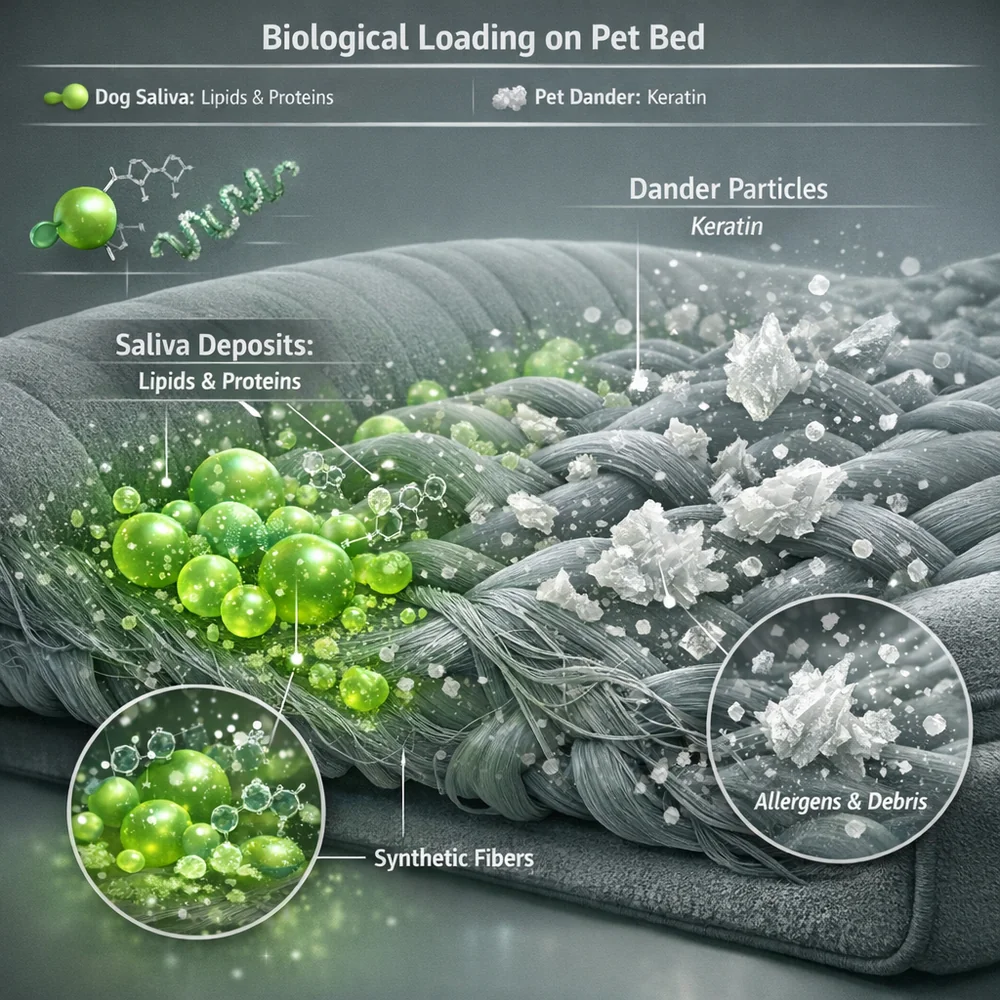
The first rule of pet laundry is absolute: remove the hair before the water hits the fabric. If you throw a hairy dog bed directly into the washing machine, the water will cause the loose fur to mat together into a felt-like sludge. This sludge traps dirt, preventing the detergent from penetrating the fabric weave. More catastrophically, it coats the inside of your drum and the filter of your drainage pump, leading to expensive appliance repairs.
Start with a high-suction vacuum using a turbo-brush attachment to lift the embedded hairs. Go over the seams and corners with a sticky roller to catch the fine undercoat hairs that the vacuum missed. Then put the dry bedding in the dryer on Air Only (No Heat) for 10 minutes along with a specialized pet hair dryer sheet or wool dryer balls. The tumbling action and static electricity will pull the remaining hair out of the fabric and into the lint trap.
For synthetic bedding with stubborn hair, consider using a pet-hair dissolving laundry additive. These products contain enzymes that specifically target the keratin protein structure of the hair shaft. They weaken the hair, allowing it to break apart during the wash cycle and flush safely down the drain. Note: Use these only on synthetic bedding. Never use them on wool or natural fibers, as the enzymes cannot distinguish between sheep wool and dog hair.
The Bottom Line Remove hair mechanically (vacuum/air tumble) before washing to prevent pump clogs. For synthetic bedding, use a hair-dissolving laundry additive to digest keratin residues.
How to Kill Fleas and Bacteria in Pet Bedding
Pet odors are caused by bacteria (such as Proteus and Staphylococcus) feeding on the sebum and urine trapped in the fabric. Fleas, ticks, and mites are exoskeleton-based parasites that require specific conditions for eradication.
To effectively kill flea larvae, tick eggs, and dust mites, you must wash at a temperature of at least 140°F (60°C). Most Warm cycles only reach 90-100°F, which effectively gives the bacteria a warm bath rather than sterilization. If the care label on the bedding allows, always use the Sanitize or Hot cycle.
If the fabric is delicate and cannot handle hot water, you must rely on the dryer for sterilization. Tumble drying on High Heat for 40 minutes guarantees the sustained core temperature needed to dehydrate and kill parasites.
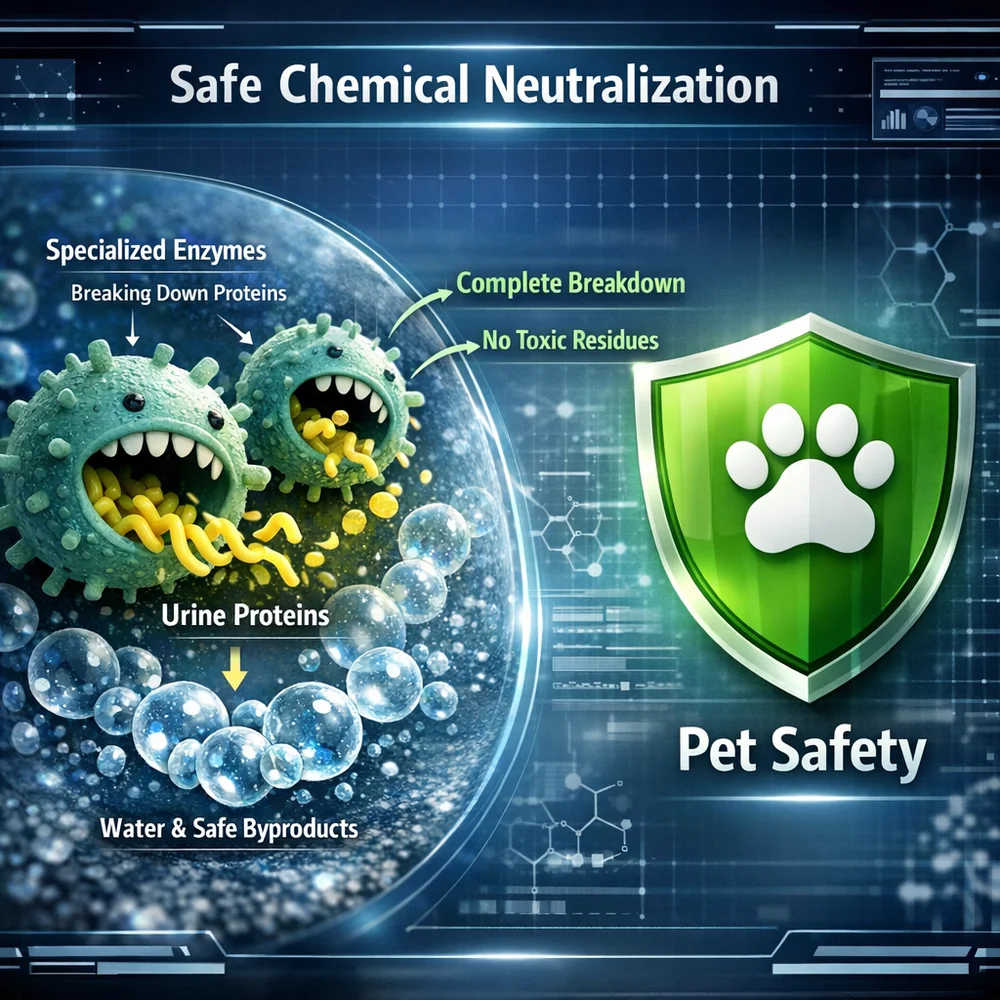
Standard detergent does not break down uric acid crystals. It simply masks the smell with perfume. This is dangerous because if the pet can still smell the urine marker (even if you cannot), they will be encouraged to re-soil the spot. You must use an enzymatic cleaner specifically formulated for urine in the pre-wash soak. These enzymes digest the urea proteins and break the chemical bond of the uric acid, permanently removing the scent marker.
The Bottom Line Wash at 140°F+ to kill parasites and bacteria. Use enzymatic cleaners to digest uric acid crystals. Standard detergent cannot remove the scent marker that triggers re-soiling.
Why Scented Products Harm Your Pet
Pets absorb chemicals through their paw pads and skin much more readily than humans do. They also spend 12-16 hours a day in direct contact with their bedding. Using standard fresh scent laundry products can disastrously impact their health.
Always use a Free and Clear detergent that is devoid of dyes and perfumes. Never use fabric softener or dryer sheets on pet bedding. The volatile organic compounds (VOCs) that create the fresh scent can trigger asthma and respiratory issues in cats and dogs. The cationic surfactants in softeners remain on the fabric surface and can cause severe itchy rashes on the animal’s belly and paws. Softeners coat the fibers in wax, reducing the breathability of the bed and making it harder for the animal to regulate its body temperature.
To soften the bedding safely, add half a cup of white distilled vinegar to the rinse cycle. This strips away detergent residue that causes stiffness without leaving any toxic chemicals behind.
The Bottom Line Avoid fabric softeners and scented detergents. The chemicals cause contact dermatitis and respiratory distress in pets. Use vinegar as a safe, natural softener.
How to Wash Pet Bed Covers vs. Foam Cores
Most high-quality pet beds are engineered systems consisting of a removable textile cover and a structural foam core (orthopedic memory foam or egg-crate foam). Wash the cover in the machine following the protocols above. Crucially, zip the cover closed before washing. An open zipper acts like a chainsaw in the washer, shredding other fabrics and scratching the glass door.
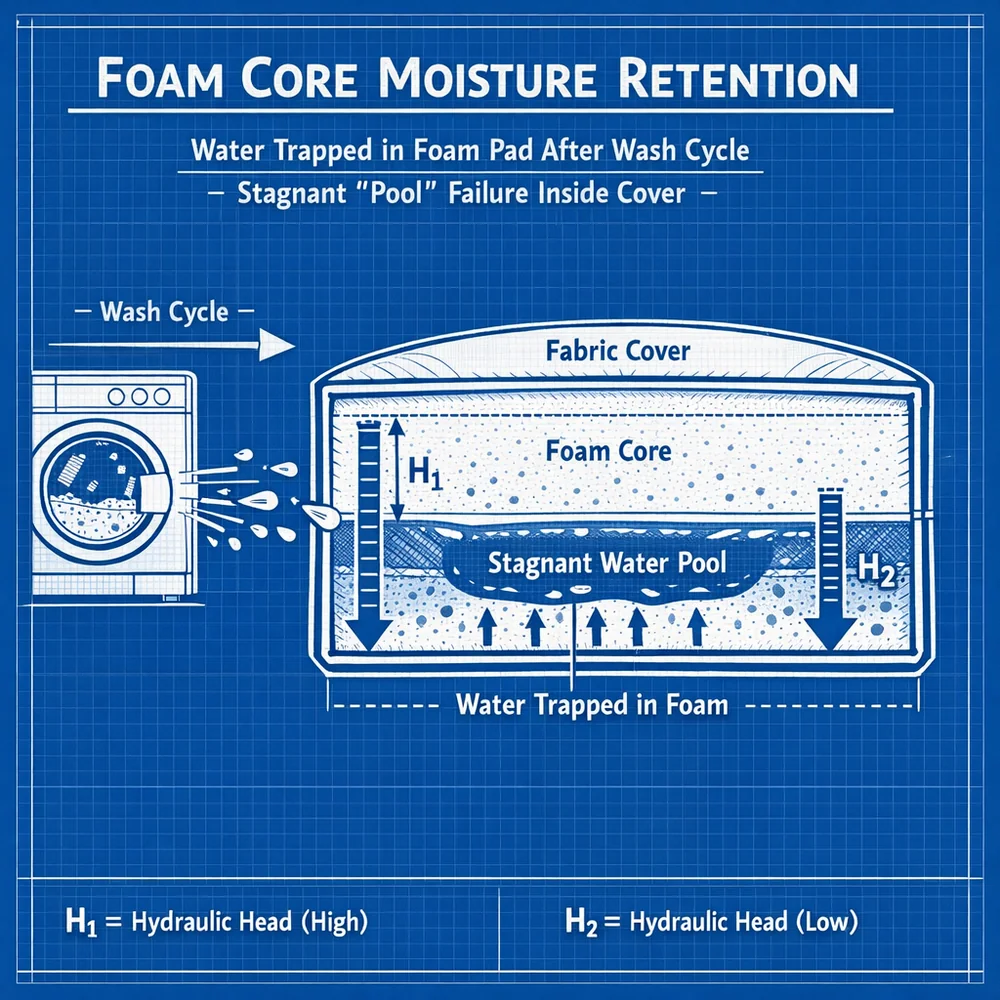
Never, under any circumstances, put the foam insert in the washing machine. The mechanical agitation will tear the wet, heavy foam into chunks, destroying the bed.
Instead, use the Spray and Sun method. Vacuum the foam thoroughly. Spray heavily with a solution of 50 percent water and 50 percent white vinegar (or an enzymatic cleaner). Place the foam in direct bright sunlight for 3-4 hours. The UV radiation kills bacteria and mold spores, while the airflow evaporates the moisture.
If washing a large, heavy bed cover (like a Great Dane sized bed), do not wash it alone. The heavy wet fabric will throw the drum off-center during the spin cycle. Balance the load by adding two or three old towels to the other side of the drum to equalize the weight distribution.
The Bottom Line Machine wash the cover (zipper closed), but only spot clean and sun-dry the foam core. UV light sanitizes the foam without mechanical damage. Balance large loads with towels.
How to Wash Squeaky Toys
Plush toys (squeaky toys) are biologically identical to bedding but structurally more fragile. They are often filled with plastic squeakers, crinkle paper, and loose poly-fill.
Place all soft toys in a mesh laundry bag before washing. This prevents hard plastic eyes or noses from being ripped off by the agitator (creating choking hazards). It also keeps the toy from being crushed against the drum wall, preserving the delicate plastic reed of the squeaker.
Wash toys on a hot cycle with a splash of vinegar. If the toy contains a battery or electronic voice box, it cannot be washed. Period. Surface cleaning is the only option, or freezing the toy in a ziplock bag for 24 hours to kill mites (though this does not remove dirt).
To keep the fur on plush toys from matting and looking like a wet rat, brush them with a wire slicker brush (a standard dog brush) while they are still damp from the washer. This separates the fibers before they dry.
Do not use high heat to dry toys with squeakers. The heat can melt the plastic reed, silencing the toy forever. Tumble on Low or Air Only.
The Bottom Line Wash toys in a mesh bag to protect eyes and squeakers. Brush damp fur to prevent matting. Dry on low heat to avoid melting internal plastic components.
How to Wash Horse Blankets
For those managing larger animals, washing horse blankets (rugs) or large burlap sack beds requires industrial considerations. These items are often caked with mud and manure. Never put them directly into a residential machine. Hang the rug over a fence and use a pressure washer (or a stiff brush and hose) to blast off the surface mud.
Horse turnout rugs have a waterproof coating. Washing them with standard detergent strips this DWR (Durable Water Repellent) layer. You must use a specialized Rug Wash surfactant that cleans without stripping. After washing, you often need to apply a wash-in reproofer to restore the hydrostatic head of the fabric.
Buckle all surcingles and chest straps inside a wash bag or an old pillowcase. Flying metal buckles can shatter the glass door of a front-loading washer in seconds.
The Bottom Line Pressure wash horse blankets to remove mud before machine washing. Use specialized rug wash to preserve waterproofing. Buckle all metal hardware to prevent machine damage.
How to Clean Collars and Leashes
While the bed is the primary reservoir of dander, the collar is the filthiest item a pet owns. Nylon collars absorb skin oils and trap dirt, creating a perfect culture for bacteria around the neck. This can lead to hot spots (moist dermatitis).
Do not machine wash heavy collars, as the metal D-rings will bang against the drum. Instead, soak them in a bowl of hot water and a tablespoon of baking soda for an hour. Use an old toothbrush to scrub the nylon webbing. Rinse thoroughly and dry flat.
Leather collars cannot be submerged. Wipe them down with saddle soap or a leather cleaner, then treat with a leather conditioner to prevent cracking. Water will turn leather brittle and cause it to rot.
The Bottom Line Hand wash nylon collars in a baking soda soak to remove oils. Never machine wash heavy metal hardware. Treat leather collars with saddle soap, never water immersion.
Conclusion
Mastering the laundry of pet items is a matter of protecting your appliances as much as cleaning the fabric. The effectiveness of any protocol rests on the disciplined removal of hair before the wash and the use of enzymatic chemistry to tackle biological odors at the molecular level. By respecting the sensitivity of the animal’s skin and the mechanical limits of the washing machine, we can maintain a hygienic home for all species.
This technical approach respects the biology of the user. Every clean, hair-free dog bed is a testament to the synergy between enzymatic cleaning and mechanical separation. Moving away from the mask it with perfume mindset ensures that your pet remains healthy and your home smells truly clean. It prevents the costly repair of clogged drain pumps and eliminates the cycle of re-soiling driven by lingering scent markers.
References
- Journal of Small Animal Practice. “Dermatitis in Dogs Caused by Laundry Detergent Residues.”
- American Cleaning Institute. “Pet Laundry Protocols: Hair Removal and Pump Safety.”
- Veterinary Dermatology. “Efficacy of 60°C Washing in Killing Flea Larvae and Eggs.”
- Consumer Reports. “Pet Hair Removers: Dryer Sheets vs Mechanical Agitation.”
- Journal of Applied Microbiology. “Enzymatic Degradation of Uric Acid in Textiles.”