Washing Electric Heated Blankets: Wiring Safety and Solvent Risks
Table of Contents
Things You'll Learn From This Article:
- An electric blanket isn’t just fabric; it’s a delicate electrical system, so cleaning it is really about protecting the wires inside.
- Always unplug and remove the controller before washing, and never let the controller or plug touch water.
- Check the connector pins for rust or discoloration before washing; damaged pins mean the blanket isn’t safe anymore.
- Look at the blanket against bright light to spot broken, shifted, or bunched wires before you wash it.
- Never dry clean or use bleach, because harsh solvents and chemicals can destroy the wire insulation and create fire risks.
- Use gentle or delicate wash cycles with cool or warm water, and avoid high spin speeds that stretch and snap wires.
- Don’t wring or twist the blanket; twisting damages the internal wiring just like twisting a power cord.
- Use the dryer only briefly on air-only or low heat, then finish drying flat or draped so moisture escapes safely.
- Make sure the connector port is completely dry before plugging the blanket back in.
- Store the blanket by loosely rolling it instead of folding it to avoid sharp creases that weaken wires over time.
- Turn fleece blankets inside out before washing and skip fabric softener to prevent heat buildup and fabric damage.
- Wash heavier faux fur or velvet styles with extra care, since their weight puts more strain on the wires when wet.
- Keep the controller clean and dust-free, and loosely coil its cord to avoid internal wire damage.
- Error codes or blinking lights after washing usually mean internal damage, and the blanket should no longer be used.
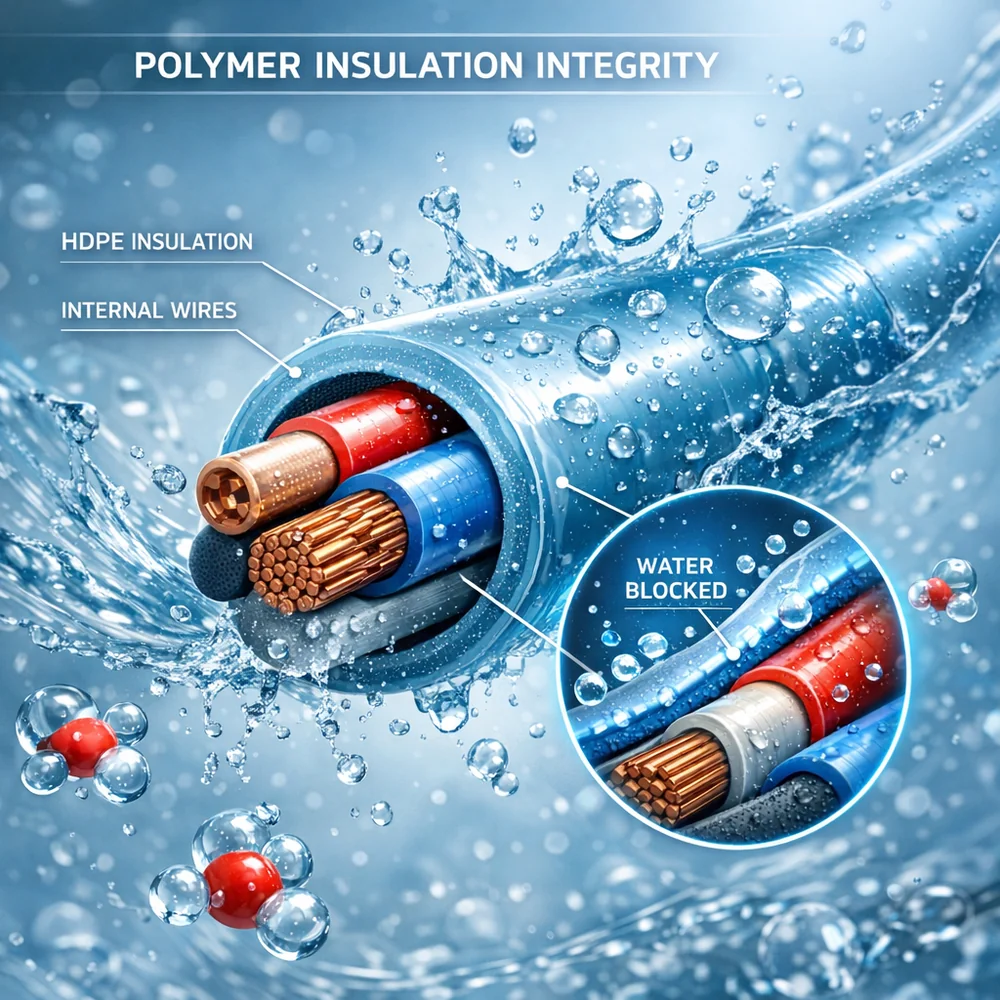
Modern electric blankets are technically rated as machine washable, but this manufacturing claim often leads to catastrophic user error. The electric blanket is not simply a piece of textile. It is a flexible, integrated electrical circuit. Threaded through the fabric channels are hundreds of feet of thin, insulated copper or alloy wires designed to generate resistive heat. These wires are protected by a polymer sheath, but they are fragile.
If they are kinked, stretched, or exposed to excessive centrifugal force, they can break (open circuit) or cross-touch (short circuit). Washing an electric blanket is therefore less about cleaning the fabric and more about protecting the wiring harness. The objective is to remove biological soils (sweat, skin cells, dust mites) without chemically degrading the insulation or mechanically fracturing the conductor. This requires a specific departure from standard laundry physics.
Why You Must Disconnect the Controller First
The most vulnerable point of any electric blanket is the connection port, the hard plastic block where the external power cord plugs into the fabric grid. This component often contains metal pins that effectively transfer 120 volts of electricity. Before the blanket goes anywhere near water, the control cord must be completely detached. Never, under any circumstances, submerge the controller unit or the wall plug.
Before washing, inspect the connection port on the blanket. If the metal pins look green (copper oxide), black, or rusted, do not wash the blanket. It is already compromised and unsafe to use. Washing it will only accelerate the corrosion, increasing electrical resistance and creating a hot spot fire hazard.
When placing the blanket in the washer, ensure the connector port is cushioned in the center of the fabric bundle. You do not want this hard plastic block banging against the metal drum walls during agitation, which could crack the housing.
The Bottom Line The control unit and power cord must be completely detached. Inspect the blanket’s connection pins for corrosion (green or black discoloration) before washing. If present, the blanket is a fire hazard and must be discarded.
How to Inspect the Wires Before Washing
Before submitting the blanket to a full wash cycle, perform a visual integrity test. Hold the blanket up to a bright window or a strong light source. Look through the fabric to see the silhouette of the internal wires. You are looking for uniformity, displacement, and breaks. The wires should be evenly spaced in their channels. Wires that are bunched together or touching indicate that the internal tacking has failed. Any visible gap in the wire shadow means the circuit is broken.
If you see bunched, displaced, or broken wires, the blanket is unsafe. Discard it immediately.
Sometimes the plastic connector port on the blanket accumulates grime. Do not submerge it to clean it. Instead, use a cotton swab (Q-tip) dipped in 90 percent isopropyl alcohol. The alcohol dissolves the grime and evaporates instantly, preventing moisture from pooling in the pin receptacles.
Why Dry Cleaning Destroys Electric Blankets
Dry cleaning is strictly forbidden for electric blankets. This prohibition is not about the fabric. It is about the wire insulation. Dry cleaning utilizes industrial solvents, most notably Perchloroethylene (PERC). These organochloride solvents are chemically aggressive. They can dissolve, swell, or embrittle the plastic polymer coating that insulates the heating wires.
Once this insulation is compromised, the live heating wire can become exposed. If two exposed wires touch, they arc. If they touch the damp fabric, they track. Both scenarios present a severe fire risk.
Similarly, never use chlorine bleach. Bleach is an oxidizer that corrodes the copper alloy of the heating element if it penetrates the insulation. Stick to mild, pH-neutral detergents.
The Bottom Line Never dry clean an electric blanket. Industrial solvents (PERC) dissolve the polymer insulation on the heating wires, leading to short circuits and fire risks. Use mild detergent and water only.
How to Set the Wash Cycle to Protect the Wires
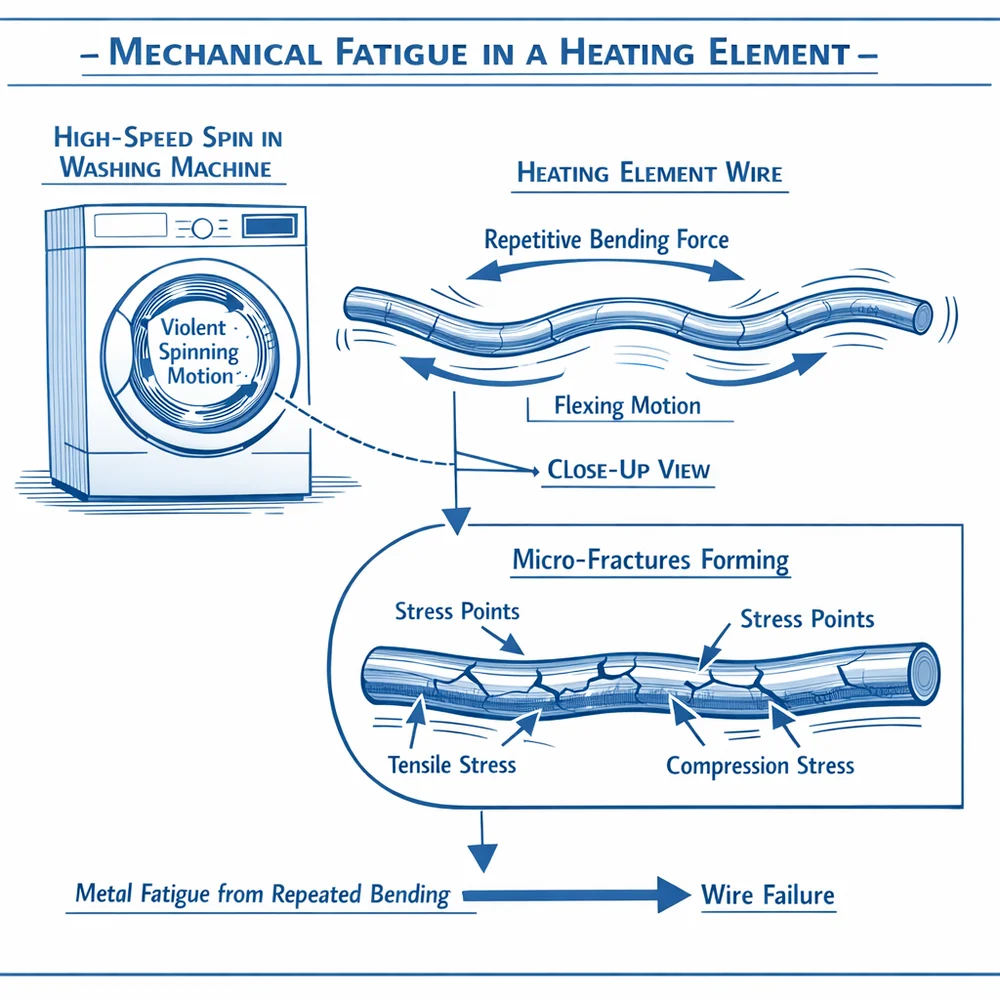
The spin cycle is the kinetic enemy of the heating element. In a standard wash cycle, the final spin can reach speeds of 1200 RPM, generating massive G-forces to extract water. These forces stretch the fabric. Since the internal wires have a different tensile strength than the polyester shell, this difference in elongation causes the wires to snap or fray.
You must manually intervene in the cycle settings. Select Delicate, Gentle, or Hand Wash. These cycles use widespread agitation (rocking) rather than aggressive turnover. Use Cool or Warm water. Never use Hot. Hot water softens the wire insulation, making it more susceptible to stretching damage. Most critically, manually select the Low or No Spin setting. You want the washer to drain the water, not wring the blanket dry.
The Bottom Line High-spin cycles generate centrifugal forces that stretch and break internal heating wires. Always manually select Low Spin or No Spin and use cool water to preserve the wire integrity.
How to Dry an Electric Blanket Safely
Wringing out a wet electric blanket is strictly forbidden. Twisting the fabric functions exactly like twisting a power cord. It kinks the metal wire, creating a weak point that will overheat when powered. Because you used a low spin speed, the blanket will be heavy and sodden.
While air drying flat is the safest method, a soaking wet blanket can take 48 hours to dry, risking mildew. You can use a machine dryer to kickstart the process, but strictly within limits. Set the dryer to Air Only (No Heat) or Low Heat. High heat behaves like hot water. It softens the insulation. Run the dryer for exactly 20 minutes. The goal is not to dry the blanket, but to tumble out the excess bulk moisture and fluff the fabric channels. After 20 minutes, remove the blanket while it is still significantly damp.
Drape the damp blanket over a shower rod or a drying rack to finish drying. Do not use clothespins. The pinching action of a clothespin can crush the wire insulation. Let gravity do the work. Ensure the connector port is 100 percent dry before relying on the blanket again.
The Bottom Line Never wring an electric blanket. Use a dryer on Low Heat for 20 minutes max to remove bulk moisture, then air dry flat. Never use clothespins, which act as crush points for the heating wires.
How to Store an Electric Blanket Without Breaking the Wires
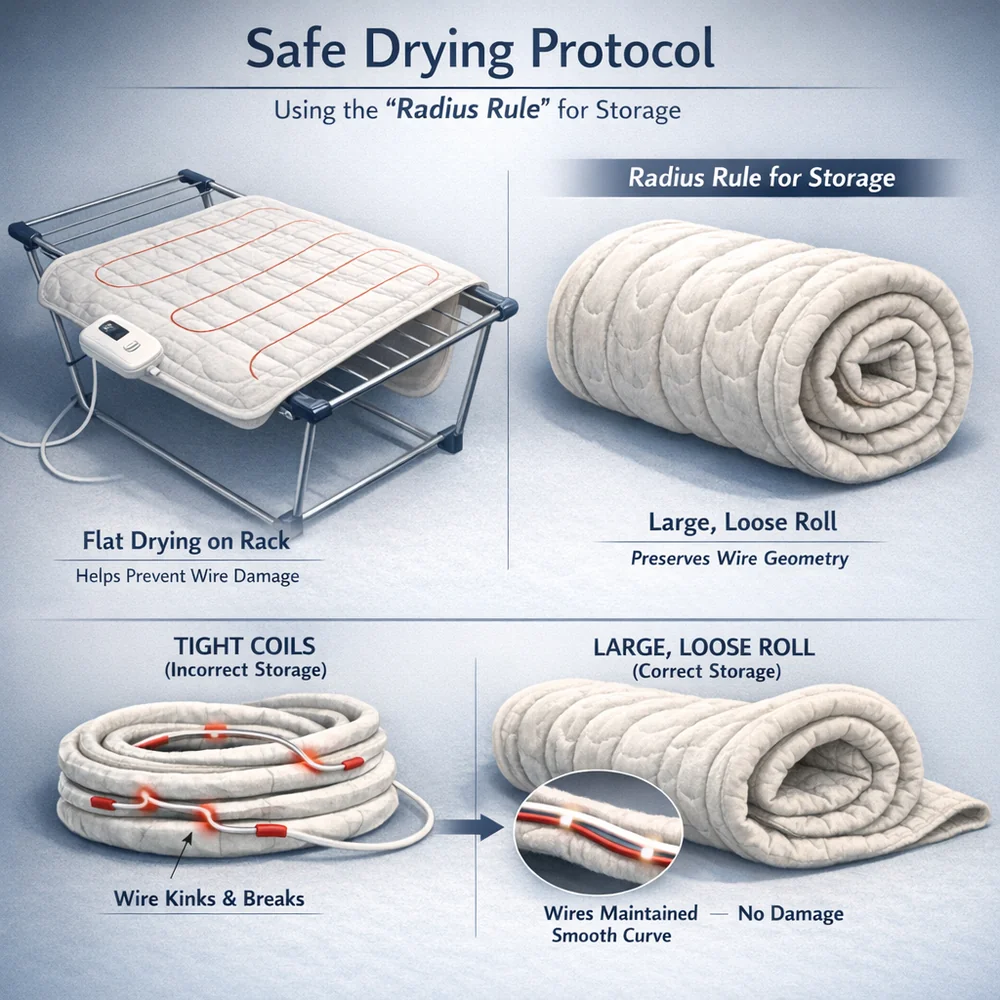
More electric blankets are destroyed in the linen closet during summer than on the bed in winter. The damage mechanism is crease stress. If you fold an electric blanket into a tight square (like a sheet), you create sharp, 180-degree bends in the wires at the fold lines. If the blanket sits under a stack of towels for six months, that heavy, sharp crease fatigues the metal. When you unfold it in November, the wire snaps at the weak point.
The correct storage method is rolling. Lay the blanket flat and roll it loosely, like a sleeping bag or a yoga mat. This maintains a gentle, large-radius curve for all the internal wires. Place the rolled blanket in a breathable cotton bag to prevent dust accumulation. Follow the environmental controls detailed in our seasonal storage guide.
The Bottom Line Sharp folds create stress points that break internal wires over time. Store electric blankets by rolling them loosely (like a sleeping bag) to maintain a gentle radius for the heating elements.
How to Wash Fleece vs. Faux Fur Electric Blankets
Electric blankets are now available in a variety of cover materials, each requiring slightly different handling. Microfleece is the most common material. It is durable but prone to pilling. Always turn microfleece blankets inside out before washing to protect the face fabric from abrasion against the drum. Avoid fabric softeners, as they coat the fibers and reduce the breathability of the fleece, leading to hot spots where heat cannot escape efficiently.
Faux fur and velvet finishes are significantly heavier when wet. The added weight increases the drag on the wires during the spin cycle. For these heavy materials, it is safer to wash them in a bathtub to avoid the G-force stress entirely. If machine washing, use the absolute lowest spin speed available.
The Bottom Line Avoid fabric softeners on microfleece to prevent heat trapping. Wash heavy faux fur blankets in the bathtub to prevent the weight of the wet fabric from stretch-breaking the wires during a spin cycle.
How to Maintain the Controller Unit
While the blanket is drying, devote some attention to the controller unit. The controller is a sophisticated thermostat. Over time, dust can accumulate in the vents, causing the internal relays to overheat. Use a can of compressed air to blow out any dust from the controller housing. Check the cord for any signs of chewing (by pets) or fraying.
Never wrap the cord tightly around the controller. This common habit acts similarly to folding the blanket. It kinks the copper wires inside the power cord. Instead, coil the cord loosely in an oval shape and secure it with a velcro strap. If the controller shows any error codes (like E2 or blinking lights) after washing, do not attempt to reset it. This usually indicates that water has wicked into the connection port or a wire has broken. The blanket is no longer safe.
The Bottom Line Clean dust from the controller vents with compressed air to prevent overheating. Coil the power cord loosely to prevent internal wire breakage. Never use a blanket that displays error codes after washing.
Conclusion
Mastering the care of electric blankets requires a definitive shift from laundry to appliance maintenance. The effectiveness of any protocol rests on the disciplined avoidance of mechanical stress and high heat. By respecting the fragility of the internal circuit and the vulnerability of the connection port, we can maintain a warm bed without risking a short circuit.
This technical approach respects the dual nature of the product as both a textile and a machine. Every safely washed heating blanket is a testament to the synergy between hygiene and electrical safety. Moving away from the wash, dry, fold routine allows for a safety-first preservation strategy. It prevents the silent failure of broken wires and ensures that your winter comfort remains reliable. By treating the blanket as a piece of electronics rather than a rag, you protect both the device and your home.
References
- Journal of Consumer Product Safety. “Failure Analysis of Electric Blankets: Impact of Laundering Stress.”
- American Cleaning Institute. “Laundering Wired Textiles: Safety Protocols.”
- Textile Research Journal. “Tensile Strength of Insulated Heating Wires Under Centrifugal Force.”
- Consumer Reports. “Electric Blanket Safety: Washing Instructions vs Real World Durability.”
- Journal of Fire Protection Engineering. “Ignition Risks of Damaged Electric Bedding.”