Washing Curtains and Drapes: Managing Sun Rot and Pleats
Table of Contents
Things You'll Learn From This Article:
- Curtains can look fine but still fall apart if sun damage has weakened the fabric, so checking their strength matters before any cleaning.
- A simple pinch-and-tug test on sun-facing edges helps you tell if curtains are too fragile to wash.
- If fabric tears easily or sounds like paper ripping, cleaning will destroy it and replacement is the only option.
- Vacuuming curtains while they’re hanging is often safer and more effective than washing them.
- Using a vacuum’s soft upholstery attachment avoids pulling threads or chewing up weakened fabric.
- Water can turn surface dust into permanent stains, which is why washing isn’t always the best choice.
- Blackout and thermal curtains are layered materials, not single fabrics, and their backing is easy to damage.
- Dry cleaning can ruin blackout linings by dissolving the adhesive that holds the layers together.
- A gentle soak in cool water is the safest way to clean blackout curtains without cracking the backing.
- Scrubbing, wringing, or twisting curtains can cause damage that can’t be fixed.
- Simple cotton or polyester curtains can be machine washed, but only on cold, delicate cycles.
- Even small amounts of shrinkage can noticeably shorten floor-length curtains.
- Skipping the dryer and rehanging curtains while damp lets gravity smooth wrinkles naturally.
- Heavy or delicate fabrics like velvet and silk are best cleaned with vertical steam instead of water.
- Holding a steamer slightly away from velvet prevents crushing the soft pile.
- Steaming silk from the back side helps avoid water spots and dull patches.
- Some fabrics and linings shrink at different rates, which can permanently distort curtains if washed at home.
- Professional dry cleaning is the safest option for silk, velvet, and lined luxury drapes.
- Tying pleated curtains into loose bundles before washing helps keep pleats sharp and even.
- Removing the ties only after rehanging allows pleats to set neatly as the fabric dries.
- All removable hooks and rings should come off before washing to prevent rust stains and machine damage.
- Curtains with fixed metal grommets need extra protection, like washing inside a tied pillowcase.
- Gentle cleaning methods extend the life of curtains far more than frequent, aggressive washing.
Curtains are the unintentional air filters of the home, silently trapping pounds of dust, pollen, pet dander, and aerosolized cooking grease over their lifespan. However, unlike an HVAC filter, they are structurally compromised by their very function. Hanging in direct sunlight for years causes a phenomenon known as photodegradation (sun rot), where ultraviolet (UV) radiation breaks down the covalent bonds of the textile polymers.
A curtain that looks perfectly intact to the naked eye may structurally resemble ancient papyrus, ready to disintegrate at the slightest touch. Washing drapes is therefore a risk management exercise rather than a simple cleaning task. The mechanical agitation of a washing machine can shred sun-rotted fibers into lint or dissolve the delicate thermal rubber backing of blackout curtains. For many window treatments, water is an active enemy. Structural assessment MUST precede any cleaning attempt.

How to Test for Sun Rot Before Washing
Before you commit to taking down your curtains, you must scientifically test their tensile integrity. UV damage is not uniform. It is concentrated on the surfaces facing the glass. Go to the vertical edges (the leading edges) and the rear lining of the curtain, as these areas receive the most direct photon bombardment.
Pinch a single layer of the fabric between your thumbs and index fingers, leaving about an inch of slack. Tug gently. If the fabric tears with little resistance, or if it makes a sound like tearing paper, stop immediately. This indicates catastrophic photodegradation. The fiber structure has depolymerized. Any attempt to wash, dry clean, or even aggressively vacuum this material will cause it to disintegrate into ribbons. These curtains cannot be cleaned. They must be replaced or professionally encapsulated by a textile conservator.
If the fabric resists the tug and springs back, the polymer chains are still intact. You may proceed with caution to the cleaning phase.
The Bottom Line UV exposure causes sun rot (photodegradation), weakening fibers invisibly. Always perform a tug test on the sun-facing edge before cleaning. If it tears, the fabric is structurally unsound and will survive neither washing nor dry cleaning.
Why Vacuuming Is Often Better Than Washing
For 90 percent of household curtains, washing should technically mean vacuuming. Dust sits on the surface of the fiber pile. If you introduce water to this dust, it turns into mud. This mud then wicks into the weave, staining the fabric permanently. The safest and most effective maintenance strategy is to remove the particulate matter while the drapes are still hanging.
Use the upholstery attachment on your vacuum cleaner, the small nozzle with a lint strip or soft bristles. Do NOT use the rotating beater bar (turbine tool), as it will chew up the fabric and potentially snag loose threads.
Start at the very top of the pleats and work your way down in slow, vertical strokes. The bristles loosen the static bond of the dust, and the suction removes it. Shake the drapes gently between strokes to dislodge dust from the deep folds. This removes allergens without subjecting the weakened fabric to the mechanical stress of a washing machine or the shrinkage risk of hydration.
The Bottom Line Vacuuming drapes while they hang is safer and often more effective than washing. It removes surface dust without wetting the fabric, preventing mud stains and shrinkage risks. Do this seasonally.
How to Wash Blackout and Thermal Curtains
Blackout curtains are engineering composites, not simple fabrics. They typically feature a traditional face fabric bonded to a pass layer of acrylic foam or a rubberized thermal backing. This backing is chemically unstable and highly sensitive to mechanical and thermal stress.
Do not dry clean blackout curtains unless the label explicitly permits it. The harsh chemical solvents (like Perchloroethylene) used in dry cleaning often dissolve the adhesive binder in the blackout spray. This leaves you with a sticky, peeling mess where the backing separates from the face fabric.
Machine washing is equally perilous. The spin cycle folds the curtain sharply. These creases can crack the rubber backing, creating pinholes of light that ruin the blackout effect.
The only safe method is a passive soak. Fill a bathtub with cool water and a mild, pH-neutral detergent. Lay the curtains in gently or in loose folds without crowding them. Allow the water to penetrate the fabric for 15 minutes. Swish the water gently with your hands to dislodge dust, but strictly avoid scrubbing, wringing, or twisting.
Drain the soapy water and refill the tub. Repeat until the water runs clear. This may take 3 to 4 fills. Finally, lift the heavy, wet curtains and hang them directly over the shower rod or an outdoor line. Let the weight of the water pull them straight as they drip dry.
The Bottom Line Never dry clean or machine wash blackout curtains. Solvents dissolve the glue and spinning cracks the rubber backing. Use a gentle, passive bathtub soak and drip dry to preserve the thermal layer.
How to Machine Wash Unlined Cotton Curtains
Simple, unlined cotton, linen, or polyester curtains can often be machine washed, but shrinking is a major geometric risk. Cotton is hydrophilic and prone to relaxation shrinkage. A standard 96-inch floor-length curtain shrinking by just 3 percent will lose almost 3 inches in length. This results in the high-water look where the drapes awkwardly hover above the floor, ruining the visual proportions of the room.
Always use the Delicate or Hand Wash cycle with cold water wash and cold water rinse. Warm water relaxes the cellulose fibers and encourages aggressive shrinking.
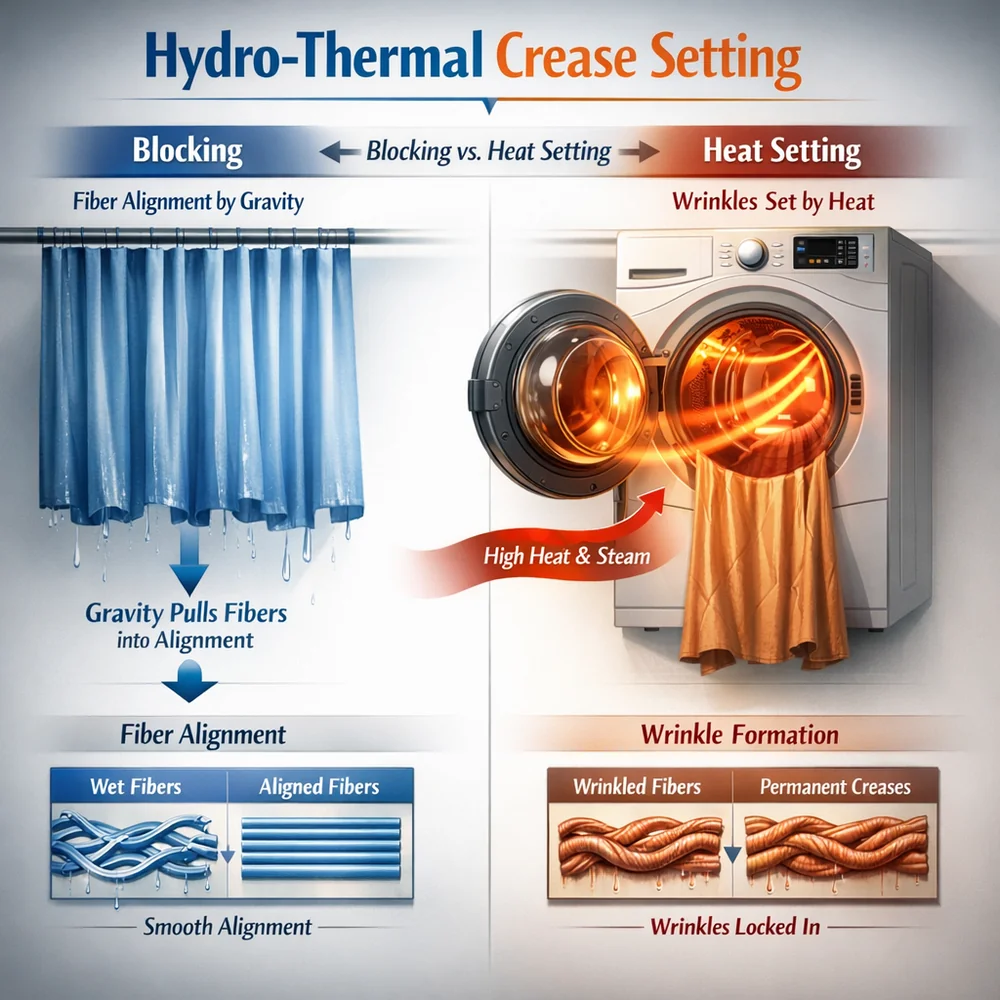
Do not put curtains in the dryer. The tumbling action creates friction (pilling) and heat (shrinkage). Remove them from the washer while they are still damp. Hang them back up on the curtain rod immediately.
As the heavy, damp curtains hang, gravity exerts a uniform downward tension. This natural force pulls the fabric straight, removing wrinkles as it dries. Be sure to place towels on the floor to catch the drip. You can gently steam them once they are dry to finish the pleats.
The Bottom Line Machine wash unlined curtains in cold water to minimize shrinkage. Hang them immediately while damp. Gravity acts as a natural iron, pulling out wrinkles and preventing the length loss caused by dryer heat.
How to Steam Clean Heavy Drapes

For heavy velvet or delicate silk drapes that cannot be washed or taken down, vertical steaming is the professional standard. You do not need to take the curtains down. Use a handheld steamer or a commercial floor unit. Work from the top down. The steam penetrates the fibers, killing dust mites and relaxing wrinkles without physically touching the sensitive pile.
For velvet, never touch the steamer head to the fabric. The pressure will crush the pile, leaving permanent shiny streaks. Hold the steamer 1 inch away and let the vapor do the work.
Silk is susceptible to water spotting. Ensure your steamer is not spitting water droplets. Test a small, hidden area first. Steam from the back side (the lining side) whenever possible to protect the sheen of the face fabric.
When to Use Professional Dry Cleaning
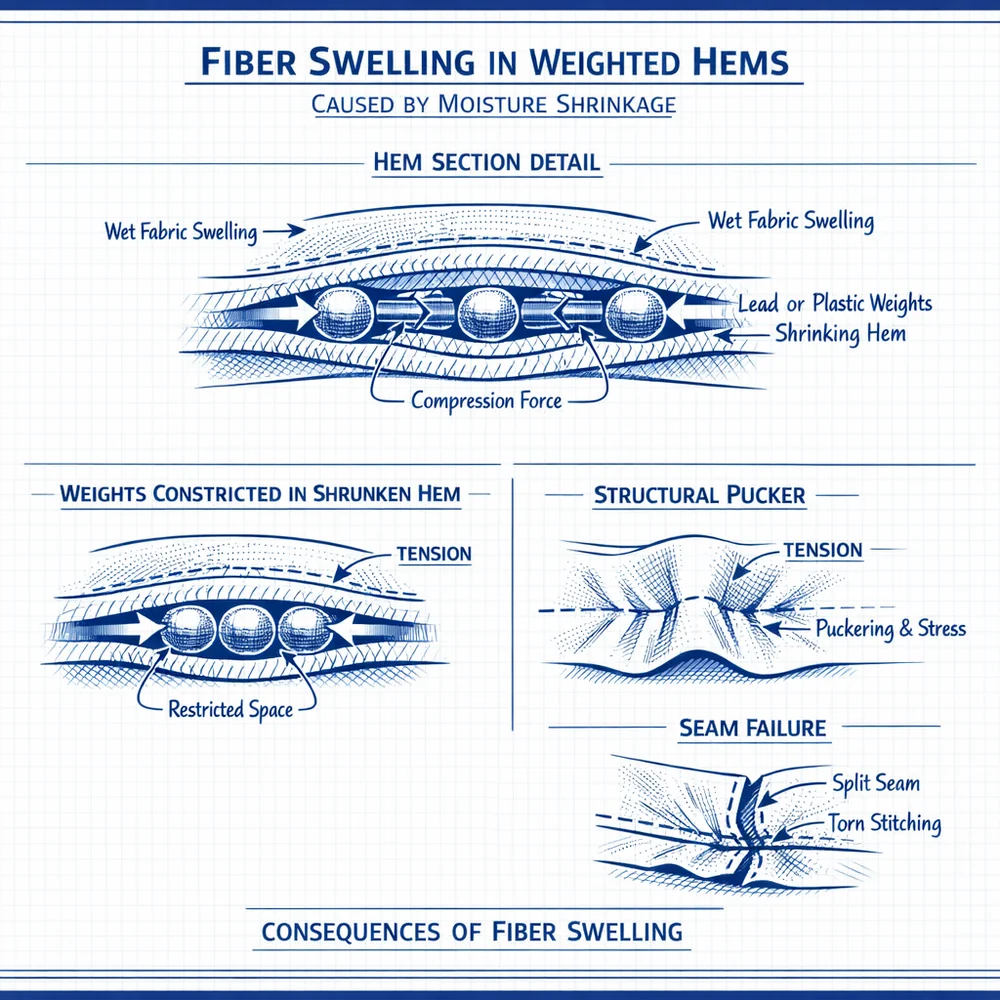
Luxury, high-pile, and protein-based fabrics almost always carry an S code (Solvent only) or Dry Clean Only label. Silk water causes swelling and creates permanent water rings. It also tightens the fibers, changing the drape from fluid to stiff. Velvet water flattens the pile, making the fabric look bald or matted in patches. Lined drapes often have a face fabric and a lining with different shrinkage rates. Washing them causes the lining to shrink more than the face, resulting in a puckered, distorted hem that billows like a balloon.
For these categories, do not attempt home laundering. Vacuum them seasonally, spot clean with extreme caution, and budget for professional solvent cleaning every 3 to 5 years.
The Bottom Line Silk, velvet, and lined drapes are high-risk. Water damages the finish of silk and velvet and causes differential shrinkage in lined drapes (puckering). These must be professionally dry cleaned.
How to Wash Pleated Curtains Without Ruining the Pleats
For curtains with crisp pinch pleats or goblet pleats, the washer spin cycle is a destroyer of geometry. To preserve the sharp folds, you can use the tie-up method. While the curtain is still hanging (before washing), fold the pleats together in an accordion stack. Tie the stack loosely with white cotton string at the top, middle, and bottom.
Wash the curtain while it is tied in this bundle. This prevents the fabric from flailing open in the drum. The water will still penetrate the bundle to clean the dust, but the pleats will remain mechanically set. Remove the strings only after you have hung the damp curtain back on the rod. As it dries, the pleats will set perfectly without the need for difficult ironing.
The Bottom Line Tie pleated curtains into loose bundles with cotton string before washing. This prevents the spin cycle from crushing the pleats and allows them to dry in their original folded shape.
How to Handle Hardware Before Washing
Before any washing or dry cleaning occurs, all hardware must be removed. Leaving metal hooks, grommets, or curtain rings attached during a wash cycle is disastrous. The metal will rust in the water, leaving permanent orange stains on the fabric. Furthermore, heavy metal rings act like flails inside the washing machine drum, chipping the enamel or shattering the glass door.
Curtains with grommets (large metal rings punched directly into the fabric) cannot have their hardware removed. For these, you must hand wash the panel in a bathtub. If you must machine wash them (and the fabric allows), you must tie the top of the curtain inside a pillowcase with a rubber band. This encapsulates the grommets, protecting both the machine and the finish on the metal.
The Bottom Line Remove all hooks and rings before washing to prevent rust stains and machine damage. Encapsulate grommet-top curtains in a pillowcase to prevent the metal rings from chipping the washer drum.
Conclusion
Mastering the care of curtains is about choosing the path of least resistance and maximum preservation. The effectiveness of any protocol rests on the accurate diagnosis of sun damage and the avoidance of harsh mechanical force. By prioritizing vacuuming over washing, utilizing passive bathtub soaks for blackout linings, and harnessing gravity to dry cottons, we can maintain the elegance of our window treatments without risking their destruction.
This technical approach respects the fragility of the display. Every pristine, floor-length drape is a testament to the synergy between gentle care and UV awareness. Moving away from the annual wash habit prevents unnecessary wear on vulnerable fabrics. It ensures that your thermal backings remain intact and your pleats hang true. By treating your curtains as delicate tapestry rather than simple laundry, you preserve the frame of your home and the quality of your indoor air.
References
- Journal of Interior Design. “Photodegradation of Window Textiles: A 5-Year Study.”
- American Cleaning Institute. “Drapery Care Guide: Wet vs Dry Cleaning Risks.”
- Textile Research Journal. “Thermal Stability of Acrylic Blackout Coatings.”
- Consumer Reports. “Curtain Cleaning: Vacuuming vs Washing Efficacy.”
- Journal of Consumer Product Safety. “Flammability and Degradation of Sun-Rotted Fabrics.”