Seasonal Clothing Storage Protocols: Protecting Fibers During Hibernation
Table of Contents
Things You'll Learn From This Article:
- Wash every piece before storing it, even if it looks clean, so invisible sweat or drink stains don’t turn yellow months later.
- Clean clothes are less likely to attract moths because there’s no sweat, skin cells, or food residue left for larvae to eat.
- Breathable storage (cotton bags, fabric boxes, or acid‑free cardboard) helps prevent mold and yellowing by letting moisture and gases escape.
- Sealing clothes in regular plastic bins can trap humidity and cause mildew unless you add moisture absorbers like silica gel.
- Avoid vacuum bags for wool, silk, down, leather, and coats because long-term compression can flatten fibers, ruin insulation, and set hard creases.
- If space is tight, zipper-style compression cubes are safer than vacuum bags because they reduce bulk without crushing the fabric.
- Skip mothballs; they’re toxic and leave strong smells. Physical barriers and clean storage do most of the protection work.
- Cedar or lavender can help repel moths, but cedar needs to be sanded or refreshed with oil each season to stay effective.
- Store clothes inside the living space of your home, not in attics or garages where heat and cold swings damage fibers and elastic.
- Keep storage areas dry; humidity above about 60% can lead to mold, especially in basements.
- Raise bins off basement floors and check humidity with a simple digital hygrometer to catch problems early.
- Fold sweaters, knits, and heavy jerseys so gravity doesn’t stretch out shoulders and necklines over time.
- Use tissue paper between folds to reduce sharp creases and fabric wear during long storage.
- Hang structured items like coats and blazers, but only on wide, padded, or shaped hangers that support the shoulders.
- Button and zip garments before hanging so they keep their shape and don’t twist while stored.
The transition between seasonal wardrobes is not merely a chore of organization. It is a critical phase of textile preservation that dictates the longevity of your assets. When clothing is placed into hibernation for six months, it is subjected to a unique set of accumulation stressors: constant compressive force, thermal fluctuation, humidity shifts, and the potential for keratin-seeking pest infestation.
A garment that looks pristine when packed away can emerge half a year later with permanent yellow necrotic spots, moth holes, or deep-set creases that destroy the fiber alignment. Successful storage requires a sterilize and stabilize mindset. The goal is to create a micro-environment that is chemically neutral, physically supportive, and biologically secure.
This guide details the laboratory-grade protocols for storing natural and synthetic fibers, focusing on the prevention of invisible stain oxidation and the thermodynamics of the storage container itself. Technical preparation today prevents catastrophic fiber failure next season.
Why Invisible Stains Turn Yellow Over Time

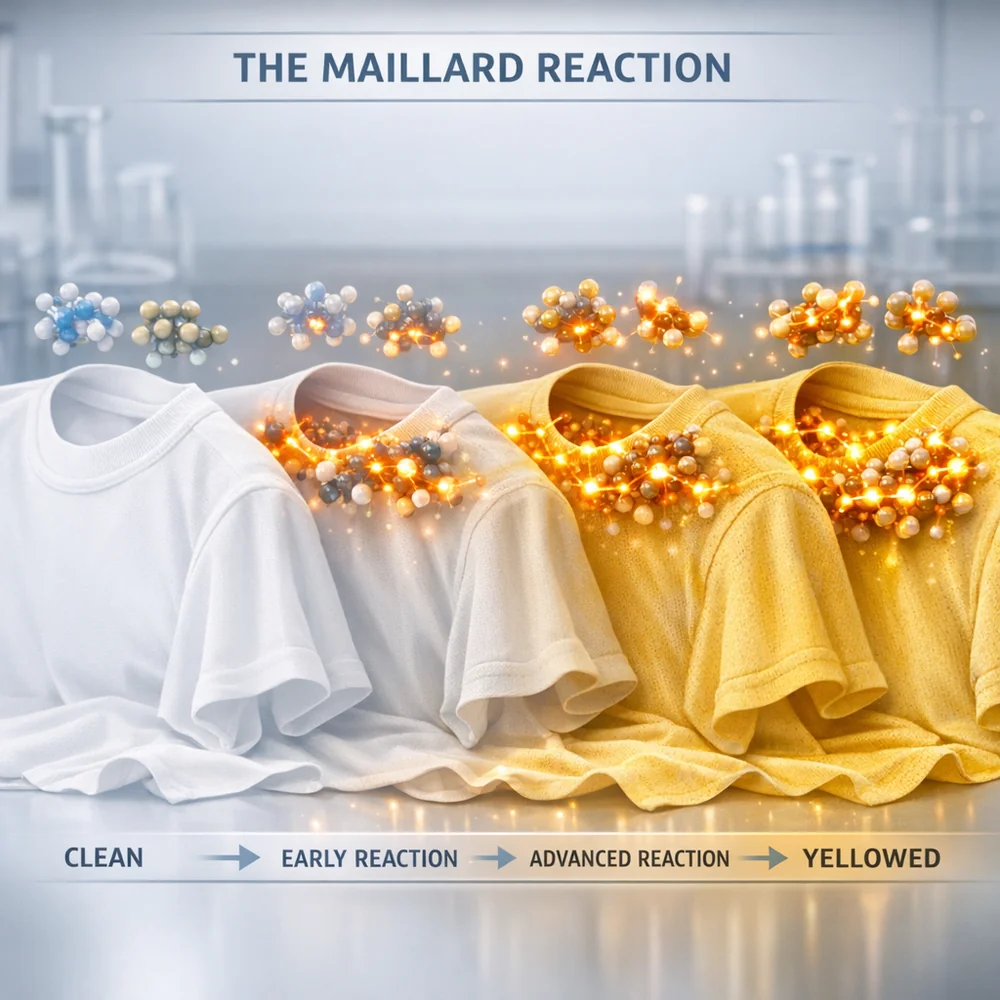
The most insidious enemy of stored clothing is the invisible stain. Spills from white wine, soda, fruit juice, or even trace amounts of perspiration often dry clear and are imperceptible to the naked eye at the time of packing. However, these residues contain reducing sugars, tannins, and lipids. Over time, these organic compounds undergo a slow chemical oxidation process, often referred to as the Maillard reaction or simple caramelization depending on the substrate.
This reaction turns the invisible residue yellow or brown. The process is accelerated by the lack of airflow and the potential heat of unventilated storage areas like attics. Once a sugar stain has oxidized over a period of months, it becomes chemically cross-linked to the cellulose or protein structure of the fiber. It transforms from a simple water-soluble spot into a permanent, rusty-looking discoloration that is nearly impossible to remove without damaging the fabric matrix.
Therefore, the golden rule of storage is to wash everything. Every item must go through a full wash cycle before being packed, even if it was only worn once. This removes the invisible biological food sources that attract moths (like sweat salts and skin cells) and neutralizes any chemical residues. It is the only way to ensure that the garment remains chemically stable during its dormancy.
The Bottom Line Invisible sugars and sweat residues undergo the Maillard reaction over time, oxidizing into permanent yellow stains. Washing every garment before storage is mandatory to remove these latent precursors and the biological scents that attract pests.
How to Choose a Storage Container
The container you choose for storage dictates the atmospheric conditions your clothes will experience for the next 4,000 hours. Plastic storage bins (polypropylene or polyethylene) are popular for their stackability and pest resistance. However, standard plastic is impermeable to water vapor. If there is any residual moisture in the clothing or the air when the bin is sealed, that moisture is trapped inside. This creates a high-humidity chamber that fosters the growth of mildew and mold, which feed on cellulose fibers like cotton and linen.
Furthermore, plastics are chemically active materials. Many plastics release volatile organic compounds (VOCs) as they age. Specifically, the antioxidant BHT (butylated hydroxytoluene), often found in plastic wrapping and bins, attacks nylon and other fibers, causing a phenomenon known as phenolic yellowing. This results in bright yellow patches on white garments that are difficult to bleach out.
The superior technical choice for textile preservation is breathable storage. Heavy-duty cotton canvas bags, unbleached muslin, or acid-free cardboard boxes allow for respiration. This air exchange prevents the buildup of dangerous humidity levels and allows any chemical off-gassing to dissipate into the room rather than concentrating in the fabric.
If plastic bins must be used (for example, in a damp basement), managing the atmosphere is mandatory. Silica gel packets must be included to absorb excess moisture and stabilize the internal humidity. However, for high-value items like wool coats, silk dresses, or heirloom linens, breathable cotton garment bags are the only professional standard. They provide a physical barrier against moths without creating a suffocating micro-climate.
The Bottom Line Impermeable plastic bins trap humidity and off-gas VOCs that cause phenolic yellowing. Breathable cotton storage bags or acid-free boxes are the preferred media, allowing for air exchange while blocking dust and UV light.
Why Vacuum Bags Destroy Natural Fibers
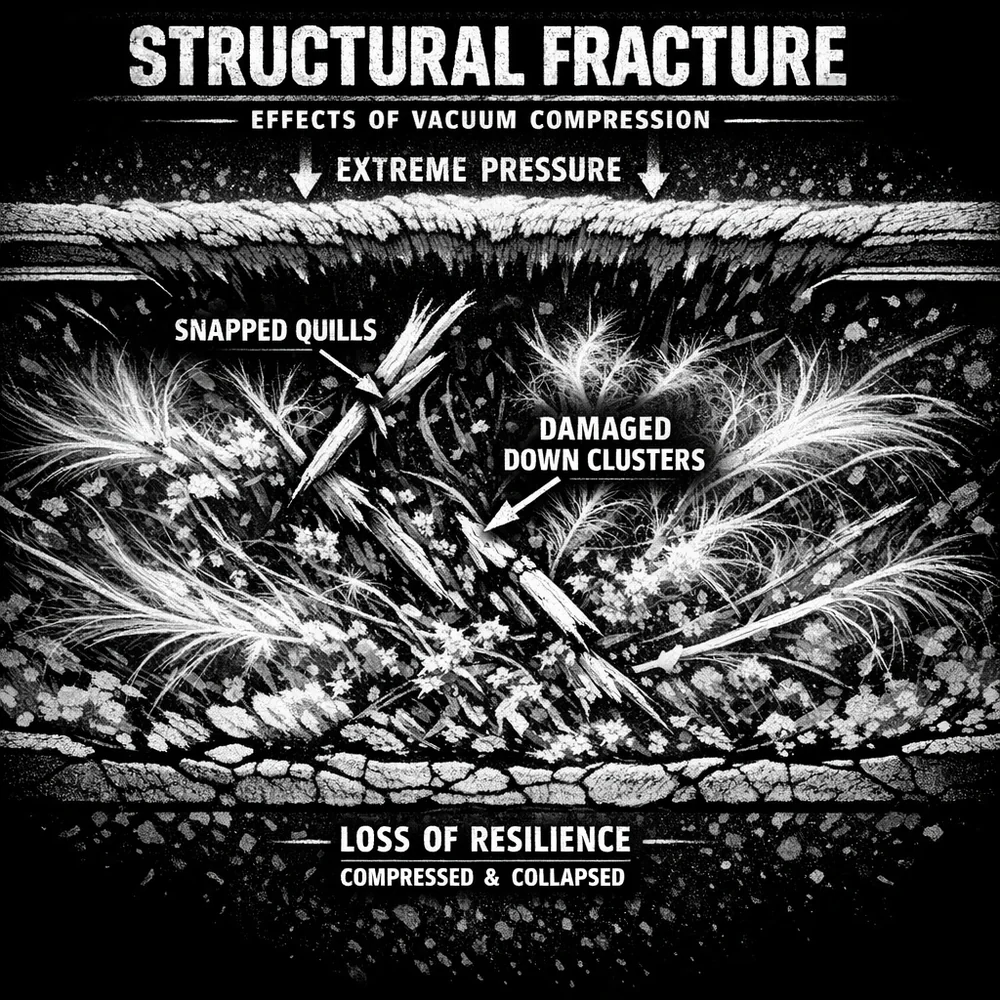
Vacuum seal bags are marketed as the ultimate space-saving solution, but they come with significant structural risks for natural fibers. When you evacuate the air from a bag, you are applying massive atmospheric pressure (approximately 14.7 psi) to the textiles inside. For synthetic pillows or cheap polyester comforters, this is often acceptable as the polymer memory is strong. However, for natural protein fibers like wool, down, and silk, this compression can be destructive.
Wool and down rely on their three-dimensional architecture. Wool has a natural crimp (waviness), and down has loft (expansion) that traps air to provide insulation. Crushing these fibers flat for six months can fracture the keratin structure, resulting in a garment that permanently loses its shape and insulation value (R-value). When removed from the bag, the fibers may be matted and unable to spring back to their original volume.
Furthermore, compression accelerates plasticizing. Under pressure, the folds of a garment can become permanent creases. The pressure forces the fibers to re-align at the bend, effectively setting the crease like a hot iron. These deep-set creases often require aggressive steaming or professional pressing to relax, adding unnecessary wear to the item.
Vacuum bags should be reserved strictly for inexpensive synthetic linens. They should never be used for leather (which needs to breathe), heirloom quilts, or puffy winter coats. If space is at a premium, use compression cubes that use zippers to mechanically compress the stack without removing all the air. This strikes a balance between volume reduction and fiber safety.
The Bottom Line Vacuum sealing applies crushing pressure that fractures the natural crimp of wool and down, permanently destroying their loft and insulation value. These bags should be avoided for natural fibers and reserved only for resilient synthetic linens.
How to Protect Clothes from Moths Without Chemicals
The distinct smell of mothballs (naphthalene or paradichlorobenzene) is the scent of a toxic and obsolete era. Naphthalene is a solid fumigant pesticide that undergoes sublimation, turning directly from a solid into a toxic gas. This gas kills moths but is also a suspected human carcinogen and dangerous to pets. Furthermore, it impregnates fabrics with a chemical stench that is notoriously difficult to remove, often requiring days of airing out.
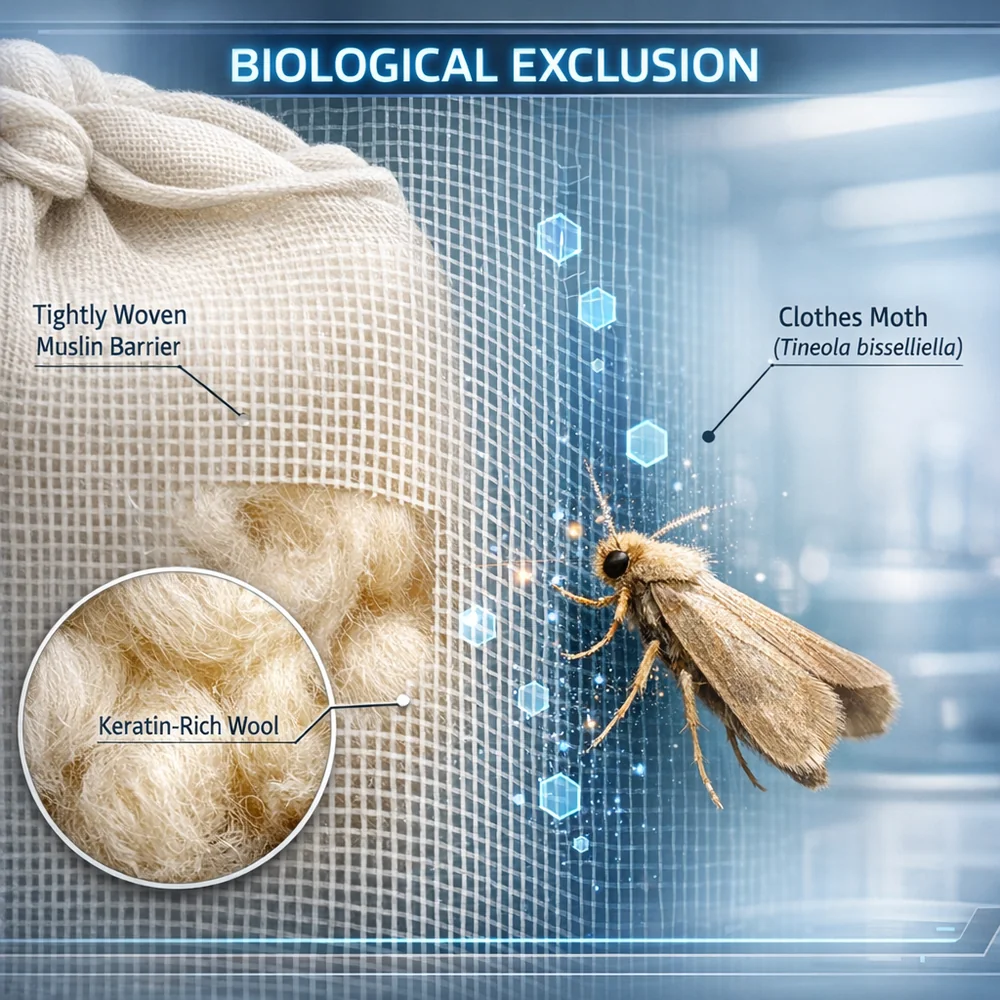
Modern wardrobe stewardship rejects chemical fumigation in favor of exclusion and repellency. The primary defense against clothes moths (Tineola bisselliella) and carpet beetles is physical exclusion. Clean clothes should be stored in zipped cotton bags or tightly sealed bins (with desiccants). If the moth cannot reach the keratin source, it cannot lay eggs on it. The larvae, not the flying adults, are the ones that eat the holes.
For an added layer of security, utilize botanical repellents. Cedar (Juniperus virginiana) contains natural oils (thujone) that disrupt the pheromone receptors of moths, making it harder for them to locate the wool. However, the wood dries out and loses its potency. Cedar blocks or shavings must be sanded or refreshed with cedar oil every season to remain effective, a protocol detailed in our moth prevention guide. Dried lavender sachets function similarly.
The Bottom Line Naphthalene mothballs are toxic and leave permanent odors. Modern pest control relies on physical exclusion (zipped bags) and botanical repellents (cedar and lavender) to disrupt moth pheromones without contaminating the textile.
Where to Store Your Clothes
The physical location of your storage area is just as important as the container. Attics and garages are common storage spots, but they are hostile environments for textiles due to their lack of insulation. An attic can fluctuate from freezing in winter to 120°F in summer. This violent thermal cycling causes fibers and elastic bands to expand and contract repeatedly, leading to brittleness and accelerated dry-rot of rubber components in waistbands.
The ideal storage environment is climate-controlled. This means storage within the insulated envelope of the home. Under-bed storage or the top shelf of a closet provides a stable temperature (65 to 75°F) and humidity range (40 to 50 percent RH). This stability prevents the chemical degradation of dyes and polymers.
High humidity is the catalyst for mold. Basements are notoriously damp. If the relative humidity exceeds 60 percent, mold spores can germinate on even clean cotton. If you must store in a basement, elevation is key. Bins should be placed on shelves, at least six inches off the concrete floor, to prevent moisture wicking and potential capillary action from minor floods. Monitoring the humidity with a cheap digital hygrometer allows you to intervene with a dehumidifier before mold sets in.
The Bottom Line Extreme temperature fluctuations in attics cause thermal fatigue in elastics. High humidity in basements (above 60% RH) invites mold. Textiles should be stored in climate-controlled living areas to maintain a stable thermodynamic environment.
How to Fold and Hang Clothes for Long-Term Storage
The decision to fold or hang a garment for storage depends on its specific weight and tensile construction. Knits, sweaters, and jersey fabrics must absolutely be folded. Hanging a heavy wool sweater for six months allows gravity to act on the loose molecular structure. The weight of the garment pulls on the shoulder seams, stretching them out (creating hanger bumps) and elongating the torso permanently. These items should be folded with acid-free tissue paper placed between the folds to prevent crease abrasion, where the fibers rub against themselves.
Structured garments demand skeletal support. Blazers, winter coats, and crisp linen shirts are best stored hanging. However, standard wire hangers are prohibited. Their thin gauge puts excessive pressure on the shoulder seam, creating dimples. Wide, padded, or contoured wooden hangers distribute the weight of the garment over a larger surface area, preserving the structural silhouette of the shoulder pad and yoke.
Fastening closures provides internal trussing. Before hanging a coat, button every button and zip every zipper. This helps the garment maintain its orthogonal shape and prevents it from twisting or sagging on the hanger. It ensures that the fabric grain remains aligned during the long storage period.
The Bottom Line Heavy knits must be folded to prevent gravitational stretching. Structured coats should be hung on wide, contoured hangers to support the yoke. Fastening all closures provides internal structural support and prevents twisting.
Conclusion
Mastering seasonal clothing storage requires a disciplined shift from packing away to preservation management. The effectiveness of any protocol rests on the foundation of the pre-storage wash and the selection of breathable, pH-neutral containers. By respecting the chemical vulnerability of invisible stains and the physical fragility of natural fibers under compression, we can ensure that our wardrobe survives its hibernation intact.
This technical approach respects the investment in the garment while providing a predictable and safe result. Every successful storage cycle is a testament to the synergy between cleanliness and environmental control. Moving away from the out of sight, out of mind mindset allows for a proactive protection routine. It prevents the heartbreak of unboxing a moth-eaten sweater or a yellowed linen shirt. By treating the closet as an archive and each garment as an artifact, you can maintain your wardrobe at the highest possible standard, ready for deployment the moment the seasons turn.
References
- Journal of Cultural Heritage. “The Effects of Fluctuating Temperature and Humidity on Historic Textile Preservation.”
- American Cleaning Institute. “Combating Invisible Stains: The Chemistry of Sugar Oxidation.”
- Textile Research Journal. “Permeability Analysis of Storage Containers: Polypropylene vs Cotton Canvas.”
- Consumer Reports. “Clothes Storage Solutions: Vacuum Bags vs Bins.”
- Journal of Entomology. “Efficacy of Cedar and Lavender as Repellents for Tineola bisselliella (Webbing Clothes Moth).”