Stripping Cloth Diapers: Eliminating Ammonia and Restoring Absorbency
Table of Contents
Things You'll Learn From This Article:
- A strong ammonia smell right when a diaper gets wet means bacteria are surviving your wash and turning urine into a harsh chemical that can burn skin.
- Simply washing diapers more often won’t fix ammonia; you need a deep strip and sanitizing step to clear bacteria and buildup from inside the fibers.
- Hard water minerals can coat diaper fabric, making it repel liquid and hide bacteria, which leads to leaks and bad smells.
- You can check absorbency at home by pouring water on a dry insert—if it beads up instead of soaking in, there’s buildup.
- Commercial stripping products like RLR are designed to remove minerals and residue safely, while DIY mixes work but need very thorough rinsing.
- Yeast rashes require bleach to fully kill spores; hot water alone isn’t enough, and the water temperature matters for bleach to work properly.
- Extra rinsing is key, especially with high-efficiency washers, because leftover detergent feeds bacteria and causes ammonia to return.
- Seeing suds during the final spin or foam in a bowl test means detergent is still trapped in the diapers.
- Using too much detergent makes diapers less clean by leaving a residue that traps bacteria and repels urine.
- Vinegar can slowly destroy diaper elastic and waterproof layers, so regular vinegar rinses shorten the life of your diapers.
- A dirty washing machine can re-contaminate clean diapers, so the washer itself needs regular cleaning and drying.
- Sunlight removes stains but doesn’t reliably kill bacteria or yeast hiding deep in the fabric.
- If you have to strip diapers often, it’s a sign your regular wash routine needs more water, better rinsing, or less detergent.
Every cloth diaper parent eventually encounters the “Barnyard.” You open the diaper pail or pull a warm diaper off your baby, and instead of the mild smell of urine, you are hit with a pungent, eye-watering chemical stench. It smells like a dirty stable or a bottle of industrial cleaner. This is ammonia, and it is the universal distress signal of a failing wash routine.
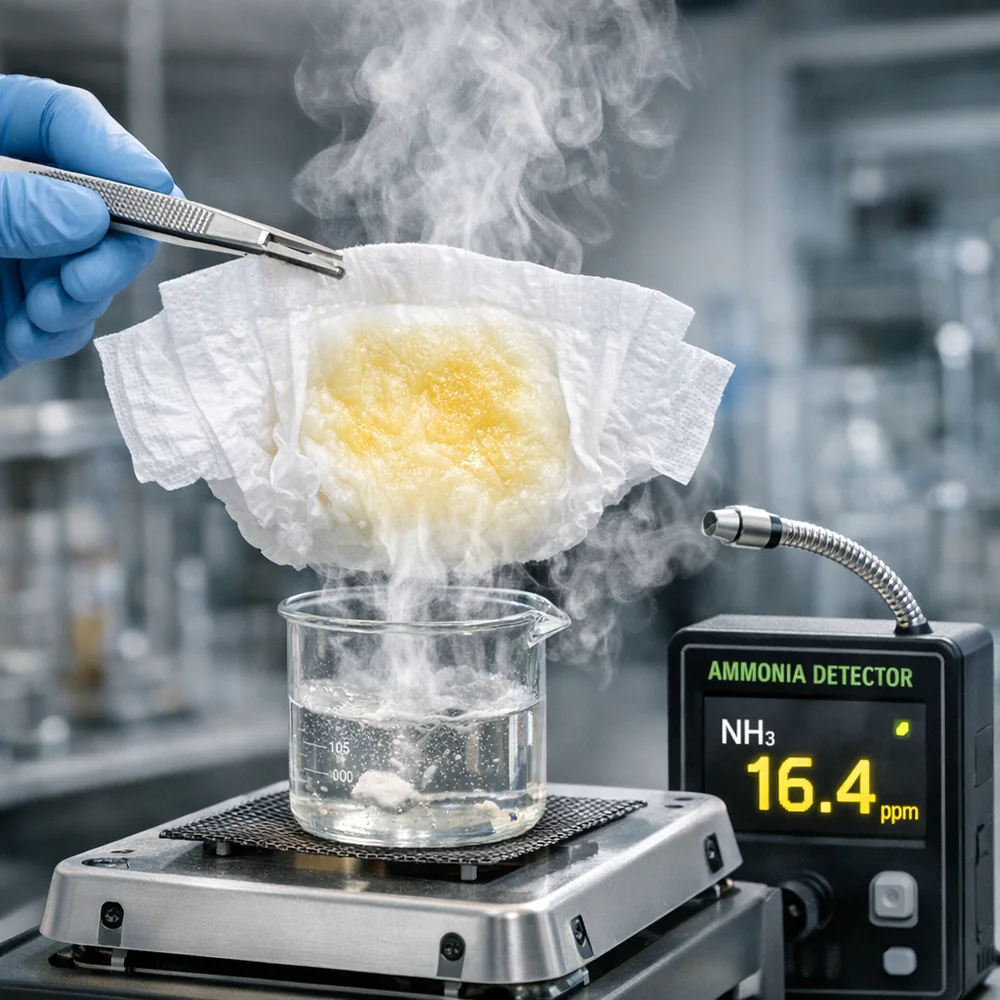
Ammonia is not naturally present in fresh urine; it is a byproduct created when bacteria break down urea. If your diapers smell like ammonia the moment the baby wets them, it means your fabric is hosting a thriving colony of bacteria that survived the wash cycle. These bacteria are feasting on trapped biological residue deep in the fibers, converting new urine into ammonia gas instantly upon contact. The smell is not just unpleasant; it is a chemical burn waiting to happen. To fix it, you cannot just wash more; you have to strip the diapers down to the bare fibers and hit the reset button.
Neutralizing Ammonia Buildup (Barnyard Smell)
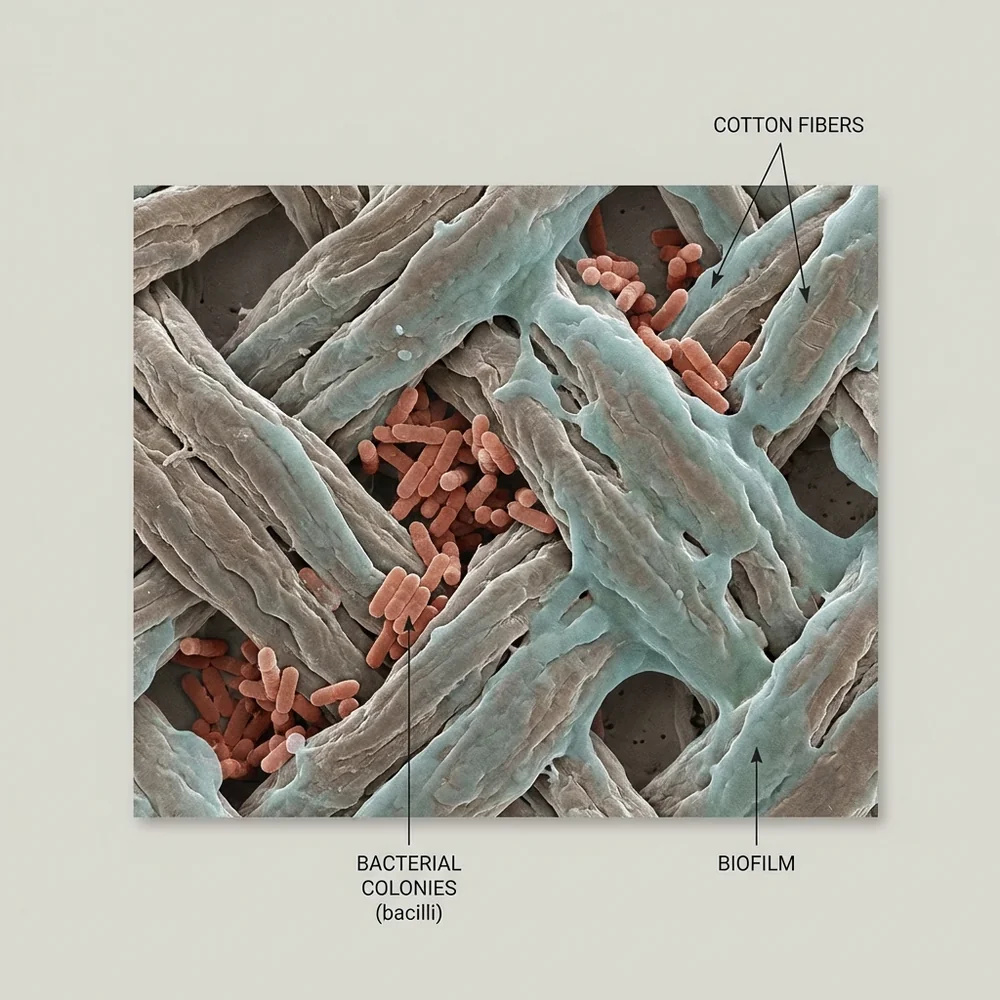
To defeat ammonia, we must think like a chemist. The smell is coming from a “factory” inside your diapers: bacteria (the workers) are turning trapped urea (the raw material) into ammonia (the product). Standard washing is failing because these bacteria protect themselves with a biofilm, a slime-like shield that repels water and detergent.
Your attack must be two-pronged. First, you need to destroy the bacterial colony. This requires a sanitizer like bleach or strong oxygen bleach. Second, you must dissolve the accumulated urea and minerals that are feeding the colony. This requires a “strip”, a long, hot soak with powerful surfactants and mineral-dissolving agents. It is the difference between rinsing a dirty plate and scrubbing it with steel wool. You are not just cleaning the surface; you are extracting the history of the fabric.
The Bottom Line Ammonia means bacteria are living in your diapers. You must kill the bacteria (sanitize) and remove their food source (strip) to stop the smell.
Mineral Stripping for Hard Water Absorbency Issues
Often, the bacteria are hiding behind a wall of stone. If you live in a hard water area, your water is full of dissolved calcium and magnesium. Over hundreds of wash cycles, these minerals precipitate out of the water and bind to the diaper fibers, creating a microscopic layer of limestone scalling.
These mineral deposits are hydrophobic, meaning they repel water. This creates two problems: first, bacteria hide under the mineral scale, protected from your detergent. Second, your diapers stop absorbing liquid. The urine hits the mineral-coated fiber and rolls right off, usually onto your carpet or the baby’s onesie. You can test for this right now: pour a spoonful of water onto a clean, dry diaper insert. If it beads up and sits on top like a drop of mercury, you have mineral buildup. A healthy diaper should drink the water instantly.
The Bottom Line Hard water turns your diapers into waterproof rocks. Stripping dissolves the mineral scale so the fabric can absorb liquid again.
RLR vs Homemade Stripping Solutions
When it comes to the chemical agents for stripping, you have two main paths: commercial products or kitchen chemistry. RLR Laundry Treatment is the gold standard for many because it is a calibrated mixture of chelating agents (which bind minerals) and surfactants. It is essentially a “water softener on steroids” designed specifically to strip buildup without damaging fabric. You drop a packet in the bath, and it does the work.
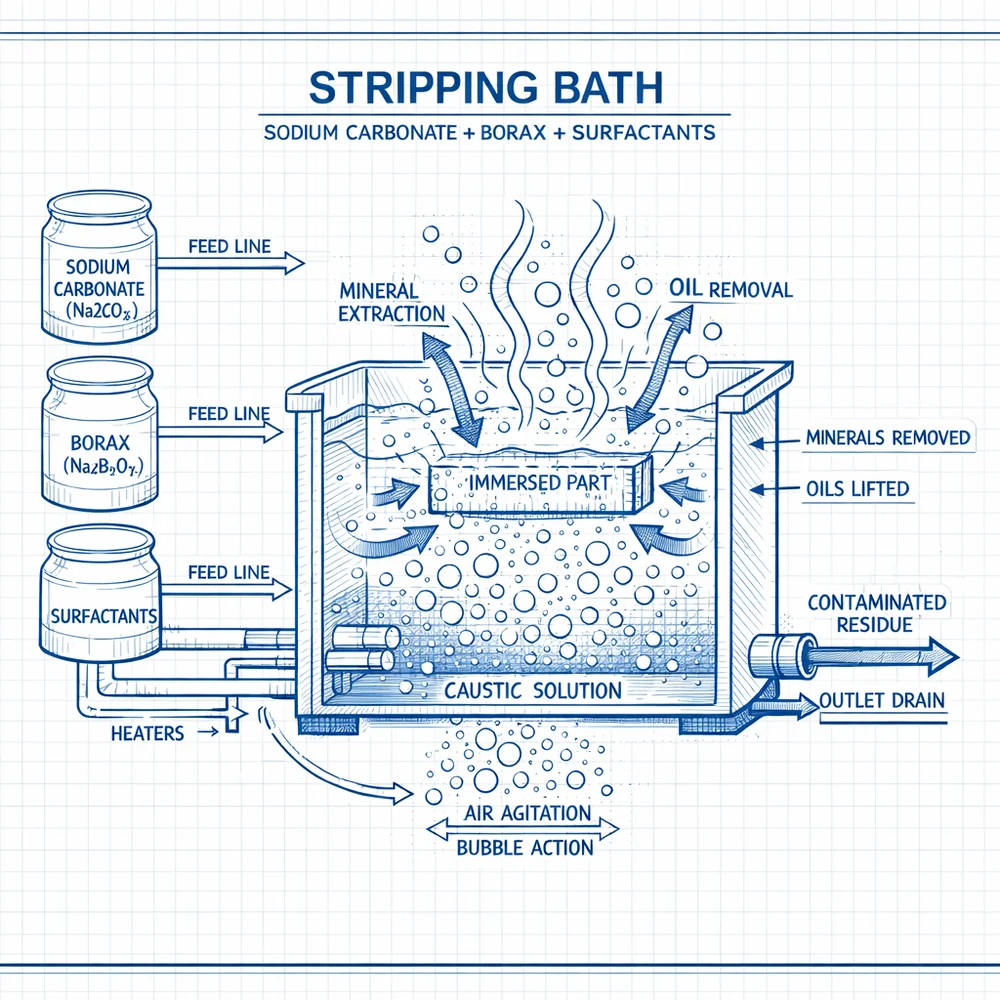
The alternative is a DIY mix, typically equal parts washing soda, borax, and strong detergent (like Tide Powder). This “soup” is highly effective because it creates a high-pH environment that dissolves almost anything organic. However, a word of caution regarding borax: while effective, it is a harsh chemical that can be irritating to skin if not rinsed perfectly. For items that will spend 24 hours a day pressed against a visibly porous mucous membrane (your baby), many parents prefer the safer profile of RLR or simply a washing soda soak.
The Bottom Line RLR is the consistent, safe choice. The DIY Borax/Soda/Detergent mix is cheaper and powerful, but requires aggressive rinsing to ensure safety.
Bleach Sanitization Protocols for Yeast
Sometimes, the invader isn’t bacteria, but fungus. Yeast rashes (Candida) are stubborn, angry red rashes that don’t heal with cream. If your baby has a yeast rash, your diapers have yeast spores. These spores are incredibly resilient; they laugh at hot water and standard detergent. To kill them, you need the “Nuclear Option”: Chlorine Bleach.
This is the one time you want to use bleach on cloth diapers. The protocol is specific: use 1/4 cup of regular bleach in a half-full bathtub of warm water (not hot). Soak the clean diapers for 30 minutes. Why warm water? Because hot water (above 140°F) decomposes bleach too quickly, releasing chlorine gas and losing its killing power. Cold water renders the bleach too slow. The “Goldilocks” temperature of warm water ensures the bleach penetrates the spores and kills them. Rinse immediately and thoroughly to protect the elastic.
The Bottom Line Yeast spores survive normal washing. Use a 30-minute warm bleach soak to sterilize the diapers. Use bleach only when medically necessary.
Rinsing Frequency to Prevent Rash
Once you have stripped and sanitized your diapers, the goal is to never do it again. The most common reason buildup returns is poor rinsing. Modern High-Efficiency (HE) washing machines are water misers. They are designed to wash clothes with a cup of water, but diapers act like sponges, they suck up all the water, leaving a concentrated slurry of dirty soap trapped in the fibers.
To prevent ammonia from returning, you must ensure every molecule of soap is flushed out. This usually means tricking your machine. Add an “Extra Rinse” to every cycle. If you still see suds in the final spin, run a “Rinse & Spin” cycle manually. Ideally, perform the “Bowl Test”: submerge a clean diaper in a bowl of water and squeeze it. If foam appears, your rinse cycle is failing. You need to keep rinsing until the water is clear.
The Bottom Line HE machines struggle to rinse diapers. If you see bubbles in the final rinse, the job isn’t done. Rinse until the water is clear.
Detergent Buildup Repelling Liquid
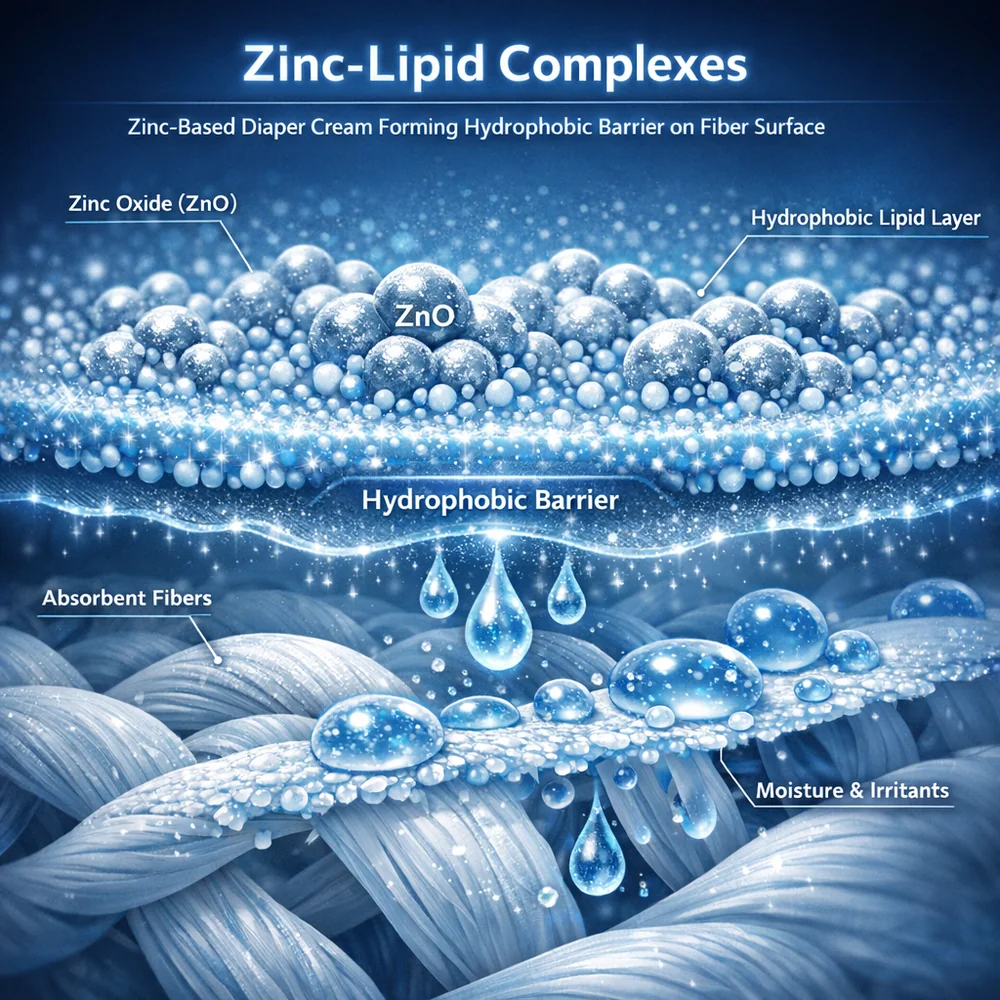
There is a tragic irony in modern parenting: we try to clean heavily soiled diapers by adding more soap, but we actually make them dirtier. Excess detergent creates a waxy, sticky residue that coats the fibers. This residue traps bacteria (leading to ammonia) and repels liquid (leading to leaks).
Detergent is highly concentrated. You likely need far less than the bottle suggests. Start with the recommended amount for a “Normal” load, even if the diapers are “Heavy” soil. Trust the agitation and time to do the cleaning, not the volume of soap. If your diapers feel slimy when wet or stiff when dry, you are using too much detergent. The stripping process described above effectively removes this “soap scum,” but dialing back your dose is the only way to prevent it from returning.
The Bottom Line More soap = More buildup. Excess detergent coats the fibers and traps smells. Use enough to clean, but not enough to coat.
Vinegar Rinse Caution (Elastic Damage)
In the quest for natural solutions, many parents turn to vinegar as a fabric softener or odor killer. It seems harmless, it’s salad dressing, right? The problem is chemistry. Vinegar is acetic acid. Modern cloth diapers rely on polyurethane laminate (PUL) for waterproofing and rubber elastic for leg seals.
Acid eats elastic. Over time, regular exposure to the acidic pH of vinegar breaks down the polymer chains in the rubber and the waterproofing. The elastics become brittle and “crunchy,” losing their stretch, and the PUL can delaminate and crack. While a single vinegar rinse won’t destroy a diaper, using it in every load is a recipe for ruining your expensive stash within a year. If you need to lower the pH or soften water, there are safer ways than acidifying your expensive plastics.
The Bottom Line Vinegar dissolves elastic and waterproofing over time. Avoid it for routine use to prolong the life of your diaper covers.
Washing Machine Cleaning Post-Diapers
We focus so much on the diapers that we forget the vessel. A diaper load introduces a massive amount of biological waste, feces, urine, and skin, into your washing machine. Over time, bacteria and mold can colonize the nooks and crannies of the washer itself, particularly in the rubber door gasket of front-loaders.
If your machine smells musty, it is re-contaminating every load of diapers you run. You need to sanitize the machine monthly. Run a “Self Clean” cycle or an empty hot cycle with bleach. Physically wipe down the rubber gasket, pulling back the folds to remove the trapped slime and lint (often nicknamed “sludge”) that accumulates there. Leave the door open between washes to let the drum dry out. A dry machine is a clean machine; a wet machine is a petri dish.
The Bottom Line A dirty machine can’t clean diapers. Sanitize your washer monthly with bleach and wipe the gaskets to remove hidden sludge.
Sun Bleaching Limitations
Generations of parents swear by “sunning” diapers to remove stains. It works like magic: you put a stained diaper in the sun, and an hour later, it is white. This is due to UV radiation acting as a photochemical bleaching agent. It breaks down the bilirubin yellow pigment in poop stains.
However, do not confuse “white” with “clean.” While the sun is great at fading pigments, it is a relatively weak sanitizer compared to hot water or bleach. The UV radiation that reaches the ground is mostly UV-A and UV-B, which are not efficient at killing bacteria deep in thick fabric layers. Sunning is fantastic for aesthetics, it creates sparkling white diapers without chemicals, but if you have an ammonia or yeast problem, the sun will not solve it. Use the sun for stains; use heat and chemistry for germs.
The Bottom Line The sun makes diapers look white, but it doesn’t deep-clean bacteria. Use it for stains, not for sanitization.
Conclusion
Stripping cloth diapers is not a routine Saturday chore; it is an emergency surgery for your laundry. If you find yourself needing to strip often, your routine is broken. A healthy wash routine, with adequate agitation, sufficient hot water, and thorough rinsing, should keep diapers fresh for years without ever needing a strip.
Think of this guide as a troubleshooting manual. Use the strip to get back to “baseline.” Once the ammonia is gone and the absorbency is restored, focus on the fundamentals: fewer additives, more water, and better rinsing. Your nose will tell you if you are succeeding. Clean diapers smell like nothing at all.
References
-
Centers for Disease Control and Prevention. “Guideline for Disinfection and Sterilization in Healthcare Facilities.” https://www.cdc.gov/infectioncontrol/guidelines/disinfection/
-
Environmental Working Group. “Cleaning Products and Your Health.” https://www.ewg.org/
-
Journal of Applied Polymer Science. “Hydrolytic Degradation of Polyurethane Elastomers.” Wiley Online Library.
-
Textile Research Journal. “Mineral Deposition on Cotton Fibers from Hard Water Washing.” Sage Publications.