Washing Sheepskin and Suede: Lanolin Preservation and Leather Safety
Table of Contents
Things You'll Learn From This Article:
- Sheepskin and suede aren’t fabric, so washing them like clothes can permanently ruin them.
- The biggest danger isn’t dirt, but drying out the leather backing so it turns stiff and cracks.
- Regular laundry detergent strips away lanolin, the natural oil that keeps leather soft.
- Only pH‑neutral, enzyme‑free wool washes are safe, and lanolin-added ones are best.
- Cold or lukewarm water is essential; heat causes the leather to shrink and harden for good.
- Gentle hand washing is safer than machine washing, especially for large rugs.
- Twisting, wringing, or high-speed spinning can tear or warp wet leather.
- Drying slowly in cool air matters more than washing; heat at this stage causes the most damage.
- Stretching and massaging the skin while it’s still damp helps keep it flexible as it dries.
- Brushing dry sheepskin is necessary to bring back fluff; clean but unbrushed wool will look flat.
- Suede boots should mostly be cleaned dry, using erasers and brushes instead of water.
- If suede gets wet, the entire surface needs even dampening to avoid permanent water rings.
- Stuffing wet boots with paper helps them keep their shape and dry evenly.
- Chrome‑tanned sheepskins usually handle washing better than vegetable‑tanned ones.
- Vegetable‑tanned skins almost always harden if washed and are safer to spot clean only.
- Sheepskin needs breathable storage; plastic traps moisture and causes mold.
- Cedar or lavender deters moths without damaging wool, unlike mothballs.
- Faux sheepskin is easier to wash but still can’t handle dryer heat.
- Checking the backing (skin vs woven mesh) quickly tells you if a rug is real or synthetic.
- Patience, low heat, and gentle handling matter more than strong cleaners when caring for leather-based items.
Sheepskin and suede are scientifically classified as identical materials: protein-based leather hides, processed to highlight two different textures. Sheepskin retains the keratin-rich wool fleece, while suede is the underside of the hide (the corium), often buffed to a velvet-like nap.
Cleaning these materials presents a complex thermodynamic challenge because you are essentially washing preserved skin, not inert fabric. The primary risk in laundering these items is not staining, but the permanent hardening of the leather backing, a process caused by the chemical removal of natural oils (lanolin) and heat-induced collagen contraction.
Water is simultaneously the cleaning agent and the enemy. While the wool fiber itself is naturally water-repellent (hydrophobic) due to its cuticle structure, the leather backing is highly absorbent (hydrophilic). When the leather gets saturated and then dries, the internal collagen fibers shrink and hydrogen-bond together, turning a soft, pliable rug into a stiff, brittle board. Successful cleaning requires a protocol that cleans the wool fibers without stripping the leather of its essential emulsifying fats.
Why Regular Detergent Destroys Sheepskin
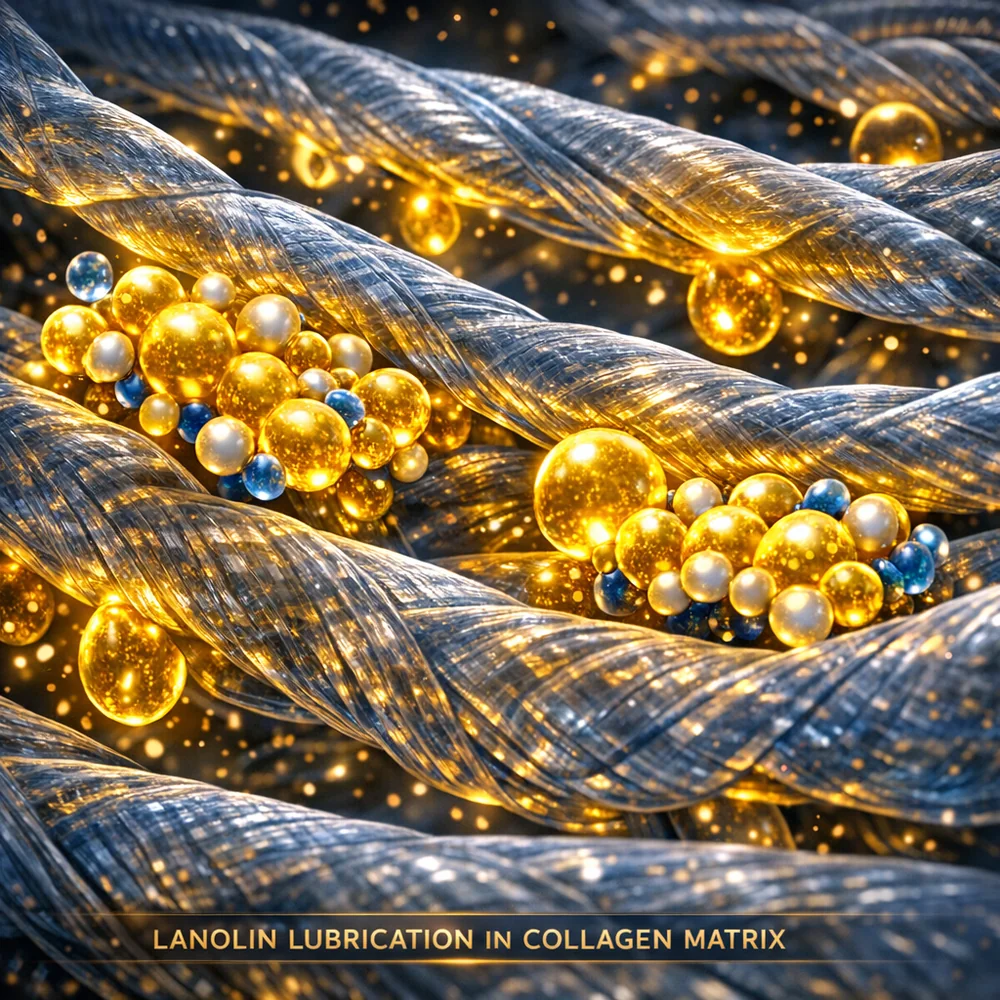
Lanolin is the waxy, sebaceous oil secreted by sheep to waterproof and protect their wool. In a tanned sheepskin, this oil serves a secondary, critical function. It lubricates the collagen matrix of the leather backing, keeping it flexible. Standard laundry detergents contain enzymes (proteases) and alkaline surfactants designed to strip biological grease. If used on sheepskin, they strip the vital lanolin instantly.
The result is a two-fold structural failure. The wool fibers lose their coating, becoming brittle, scratchy, and prone to breaking. The backing chemically dries out, leading to stiffness and eventual cracking.
The only safe reagent for this material is a pH-neutral, non-enzymatic wool wash (such as Eucalan, Kookaburra, or specialized sheepskin shampoo). Ideally, these products contain added lanolin to replenish what is inevitably lost during the wash. They operate at a neutral pH (around 7.0), ensuring that the acid-sensitive protein structure of the wool is not denatured.
The Bottom Line Standard detergents strip the natural lanolin oils from sheepskin, causing the leather backing to crack and the wool to become brittle. Always use a pH-neutral, lanolin-rich wool shampoo (non-enzymatic) to preserve the hide’s flexibility.
How to Wash Sheepskin in Cold Water
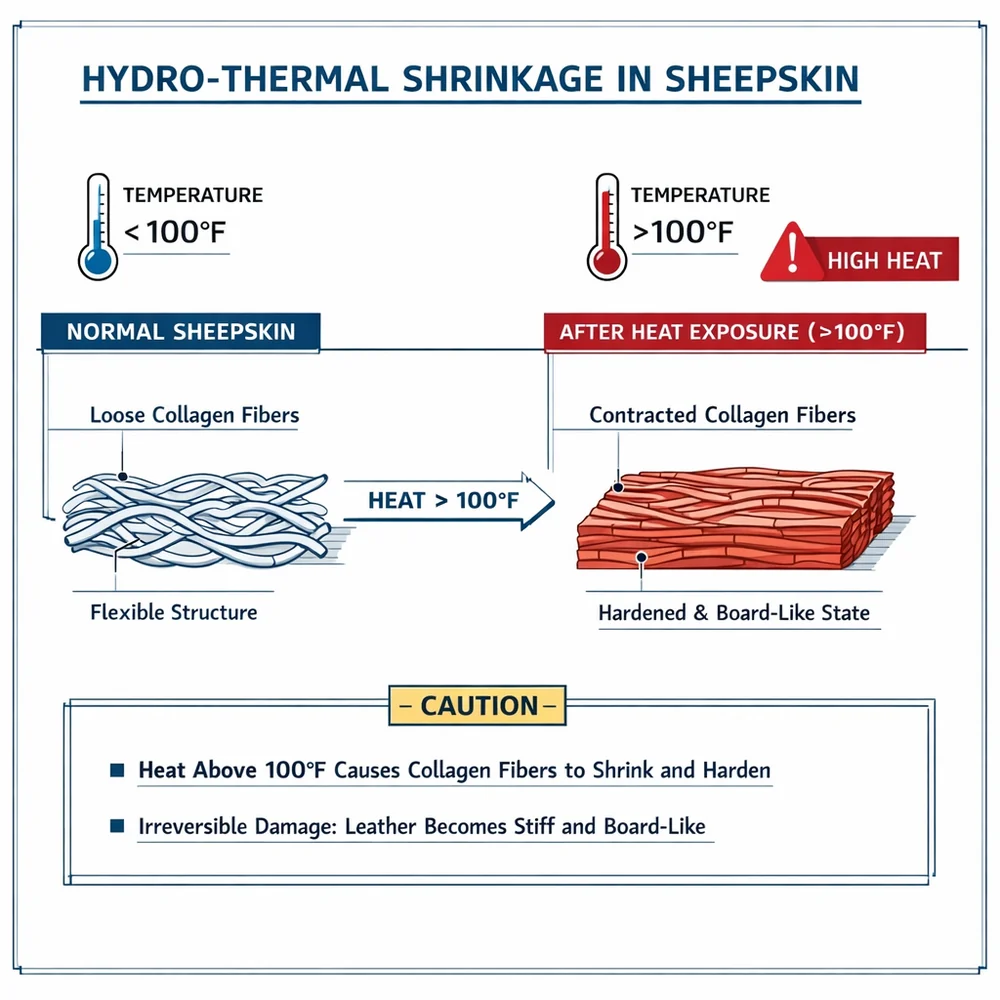
Heat is the accelerator of leather shrinkage. When the collagen fibers in the hide are heated, they contract irreversibly. Therefore, any washing attempt must be conducted with strictly cold or lukewarm water (never exceeding 100°F or 38°C).
For rugs, hand washing in a bathtub is vastly superior to machine washing. Fill the tub with cool water and the specialized wool wash. Submerge the rug and gently squeeze the soapy water through the fibers. Do not scrub aggressively, as this can felt the wool, tangling the fibers into a permanent mat.
If you must use a machine (a risky proposition usually reserved for small pharmaceutical pads or infant rugs), select the Wool or Delicate cycle. Crucially, set the spin speed to the lowest possible setting. The centrifugal force of a high-speed spin can stretch the wet, heavy skin, causing it to warp or tear.
Rinse thoroughly with cold water to remove all traces of soap. Water removal should be passive. Roll the rug in clean, dry towels to press out moisture like a sponge. Never wring or twist it. Twisting breaks the leather fibers and distorts the shape permanently.
The Bottom Line Heat causes irreversible shrinkage of the leather collagen. Wash only in cold water (below 100°F) and avoid vigorous agitation. Use a towel-roll method to extract water without wringing or twisting the hide.
How to Dry Sheepskin Without Ruining It
Drying is the most dangerous phase of the sheepskin laundry cycle. The temptation to speed up the process with heat, placing the rug near a radiator, using a hair dryer, or laying it in direct sunlight, must be resisted at all costs. Rapid drying causes the surface layers of the leather to harden while the inside remains wet, creating differential tension that results in boardiness (stiffness).
The rug must air dry naturally, leather-side up (if possible), in a cool, airy room away from direct heat sources. Placing it on a mesh drying rack allows air to circulate around both sides, preventing mold growth on the damp leather.
As the leather begins to dry (while still slightly damp), it is beneficial to gently stretch and massage the skin. This mechanical action, historically known as staking, helps to pull the collagen fibers apart, keeping the leather loose and pliable. It can take 2-3 days for a thick rug to dry completely.
The Bottom Line Never use heat or direct sunlight to dry sheepskin. Air-dry flat on a rack away from heat sources. Gently stretching (staking) the leather while damp helps prevent it from drying into a stiff shape.
How to Restore the Fluffy Pile
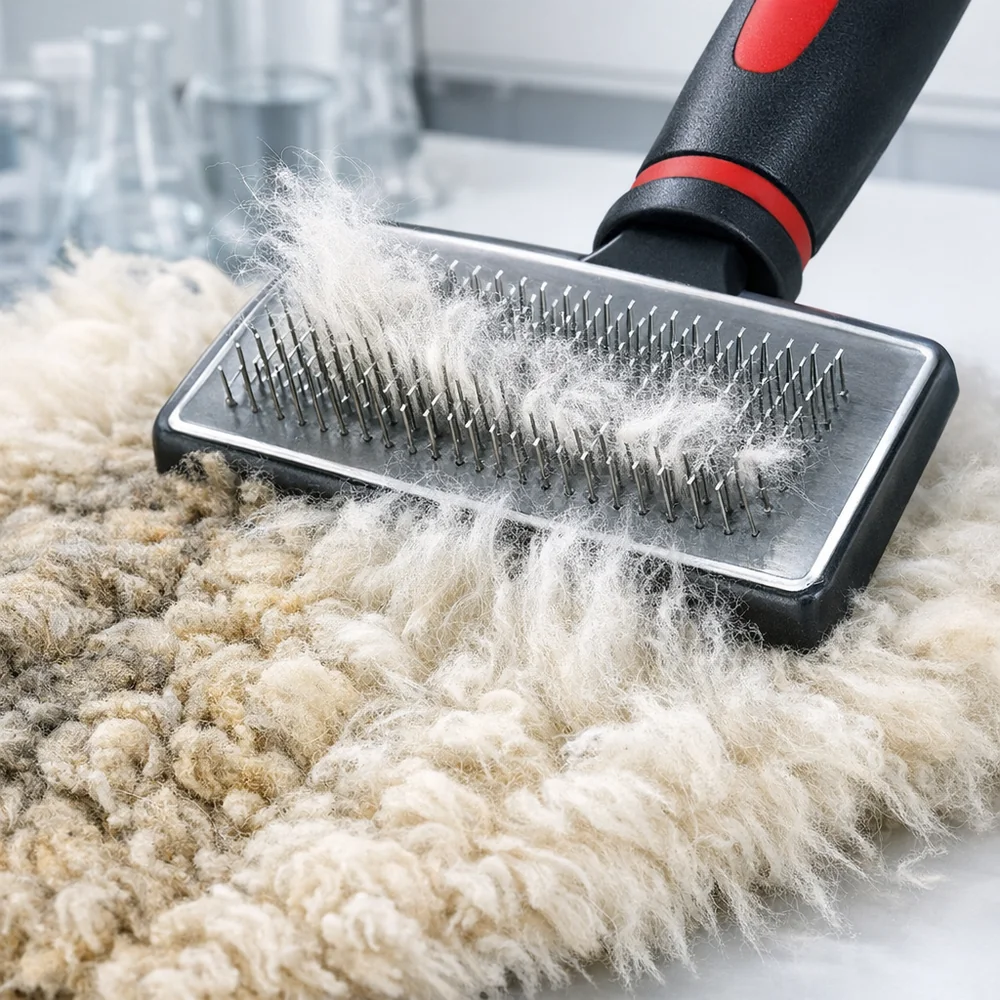
Once the rug is dry, the wool will look matted and clumped, resembling a wet dog. This is chemically normal. The fluff of a finished sheepskin is not entirely natural. It is mechanically created during the tanning process. To restore it, you must card the wool using a pet slicker brush (a brush with fine, bent wire bristles).
Start at one end and brush vigorously against the grain. This action separates the individual fibers that clumped together during drying. It also creates the volume associated with high-quality skins and removes any loose fibers and surface dust. This mechanical action is essential for the aesthetic restoration of the item. Without brushing, even a perfectly clean rug will look old, worn, and flat.
The Bottom Line Wet wool dries into clumps. Vigorous brushing with a wire slicker brush is required after drying to separate the fibers and restore the signature fluffy pile of the sheepskin.
How to Clean Suede Boots
Suede footwear (like Ugg boots) requires a fundamentally different approach because you cannot easily wash the inside of a boot without ruining the structural integrity. For suede, prevention and dry surface cleaning are the primary strategies.
A suede eraser (a block of porous crepe rubber) is used to physically rub away surface dirt and scuffs. The friction lifts the nap and erases the stain without exposing the leather to water.
If wetting is necessary to remove a deep stain, the entire boot must be dampened evenly. Spot cleaning suede with water often results in a tide line, a permanent water ring that outlines the wet area. To avoid this, sponge the entire surface lightly with cold water and a specialized suede cleaner using a high-density sponge.
Stuff the wet boots tightly with paper towels or newspaper to maintain their shape while they air dry. This also helps wick moisture from the inside. Once dry, the suede nap will be flat. It must be lifted with a suede brush (nylon or brass bristles) to restore the velvety texture. Finally, applying a silicone-based waterproofing spray creates a hydrophobic barrier that repels water and mud, preventing future stains from soaking into the leather.
The Bottom Line Spot cleaning suede with water causes rings. Clean the entire surface evenly if wet washing is needed. Rely on suede erasers for dry stain removal and re-apply waterproofing spray regularly to prevent saturation.
How to Tell If Your Sheepskin Is Washable
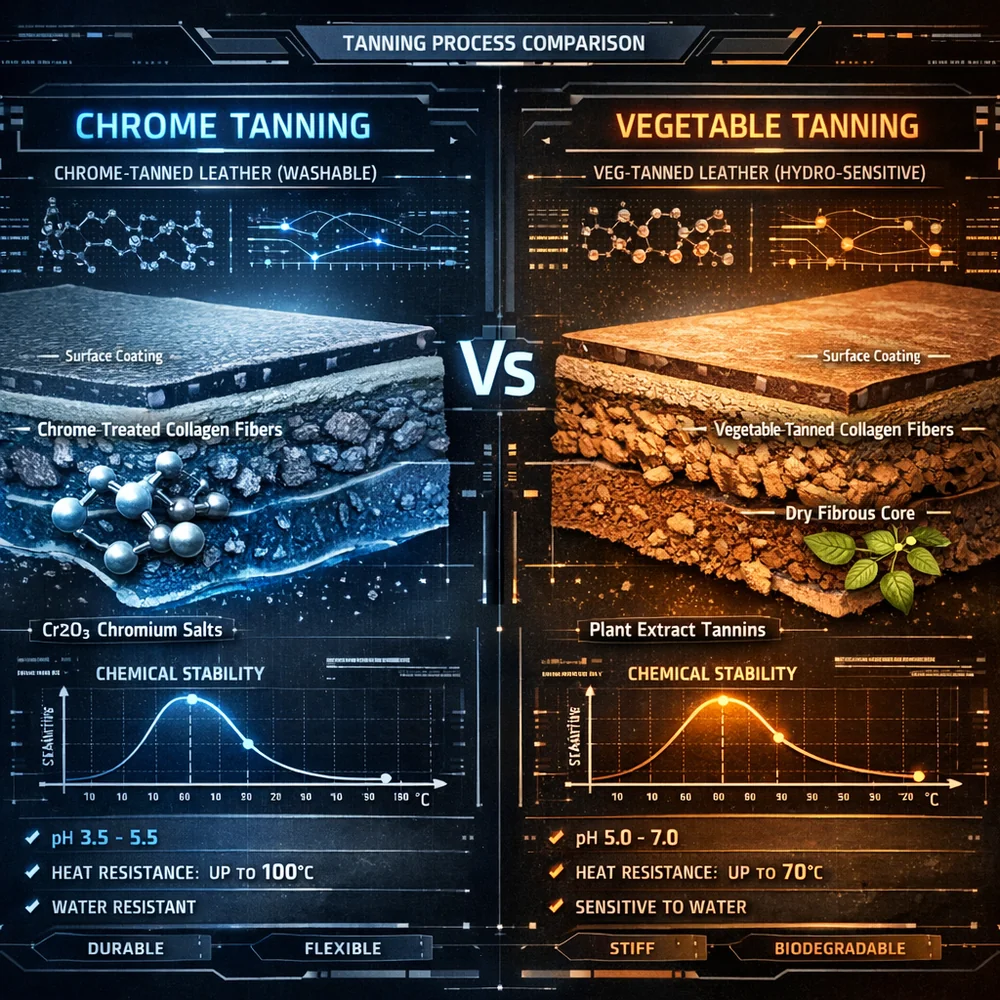
Not all sheepskins are tanned equally. Chrome tanned skins (usually grey-blue on the leather side) are tanned with chromium salts. They are generally more resistant to water and can handle washing better. Most modern washable rugs are chrome tanned.
Vegetable tanned skins (usually tan or brown on the leather side) use natural tannins from tree bark. They are chemically unstable in water. If you wash a vegetable-tanned skin, it will almost certainly ruin the leather, turning it into hard cardboard. Always check the label or the leather color before washing. If in doubt, stick to dry cleaning or spot cleaning.
The Bottom Line Check the tan type. Chrome-tanned skins (greyish backing) are washable. Vegetable-tanned skins (brown backing) are not and will be ruined by water.
How to Store Sheepskin Properly
Long-term storage of protein fibers requires defense against clothes moths and humidity. Never store sheepskin in plastic bags. Leather needs to breathe. Plastic traps moisture, leading to mold growth on the hide. Instead, use breathable cotton bags or wrap the item in an old sheet.
Clothes moths digest keratin. To prevent infestation, include cedar blocks or lavender sachets in the storage container. Do not place mothballs directly on the wool, as the chemical fumes can yellow the fibers. Store in a cool, stable environment. High heat causes the natural fats in the leather to oxidize and harden. Avoid attics or basements with extreme temperature fluctuations.
The Bottom Line Store sheepskin in breathable cotton bags, never plastic. Use cedar for moth prevention and avoid temperature extremes to prevent leather oxidation.
How to Care for Faux Sheepskin
Many modern sheepskin rugs are actually acrylic or polyester (faux fur). To distinguish real from faux, part the fibers to see the base. If it looks like a woven mesh, it is synthetic. If it looks like smooth skin, it is real.
Synthetic sheepskin is much easier to care for. It can be machine washed on a regular cycle with standard detergent. However, never put it in the dryer. The heat will melt the fine acrylic tips, causing them to fuzz and mat permanently (frizzing). Air dry only, then brush vigorously to restore the pile.
The Bottom Line Synthetic sheepskin has a woven mesh backing. It is machine washable but extremely heat-sensitive. Never tumble dry, as the acrylic fibers will melt and frizz.
Conclusion
Mastering the care of sheepskin and suede requires a disciplined respect for the biology of the material. The effectiveness of any protocol rests on the foundation of enzyme-free chemistry and slow, heat-free drying. By respecting the fragile balance of lanolin and collagen, we can maintain these natural luxury items for a lifetime.
This technical approach respects the origin of the material while ensuring it remains soft and functional. Every fluffy rug and clean boot is a testament to the synergy between patience and proper lubrication. Moving away from harmful standard detergents allows for a preservation-focused routine. It prevents the tragedy of shrunken skins and bald patches.
References
- Journal of the Society of Leather Technologists and Chemists. “The Effect of Surfactants and Heat on the Area Stability of Sheepskin.”
- American Cleaning Institute. “Cleaning Natural Hides: A Guide to pH and Enzyme Safety.”
- Textile Research Journal. “Mechanical Properties of Wool Fibers After Repeated Washing Cycles.”
- Consumer Reports. “Sheepskin Rug Care: Testing Wool Wash Efficacy.”
- Journal of Applied Polymer Science. “Hydrophobic Treatments for Suede Leathers: Performance and Durability.”