Washing Canvas Shoes: Glue Safety and Shrinkage Prevention
Table of Contents
Things You'll Learn From This Article:
- Hot water and dryers can loosen the glue that holds canvas shoes together, so cold water is the safest choice every time.
- Shoes bang around hard in a washer, so using a padded mesh bag and adding towels helps prevent damage and sole separation.
- Hand washing is the safest option for pricey, vintage, or delicate canvas shoes, especially to protect their shape and internal supports.
- Scrubbing dry dirt off first keeps mud from soaking deeper and staining the fabric when water is added.
- Removing laces and insoles before washing helps them clean better and protects both the shoes and the washing machine.
- Mixed materials matter: rope soles, suede patches, and special trims can be ruined by water and need spot cleaning or dry methods instead.
- Yellow stains on white canvas usually come from leftover detergent, not dirt, so extra rinsing or a vinegar wipe prevents it.
- Wrapping wet shoes in white paper towels while they dry can pull out residue and keep whites from turning yellow.
- Shoe odor comes from bacteria living in insoles, so washing removable insoles or using vinegar or baking soda targets the real cause.
- Drying shoes in open air with paper stuffed inside keeps them from shrinking, curling, or losing their shape.
- Direct sunlight and heat during drying can weaken glue and cause yellowing, so shade and airflow work better.
- Shoelaces should always be washed in a mesh bag or sock to avoid melting tips or damaging the washing machine.
Canvas shoes are renowned for their durability, but their construction relies on a hidden vulnerability: thermally unstable adhesives. The rubber sole is typically bonded to the canvas upper using heat-activated thermoplastic glues. This assembly method is efficient for manufacturing but disastrous for maintenance if misunderstood.
If you expose these shoes to high temperatures in a washing machine or dryer, you risk reversing the manufacturing process. The glue softens, the bond wavers, and the shoe ultimately delaminates, with soles flapping loose and the canvas upper shrinking away from the toe box. This guide details the safe, cold-water technical protocols for restoring white canvas and preventing the dreaded yellow bleed that ruins rubber trim.
Why Heat Destroys Your Shoes
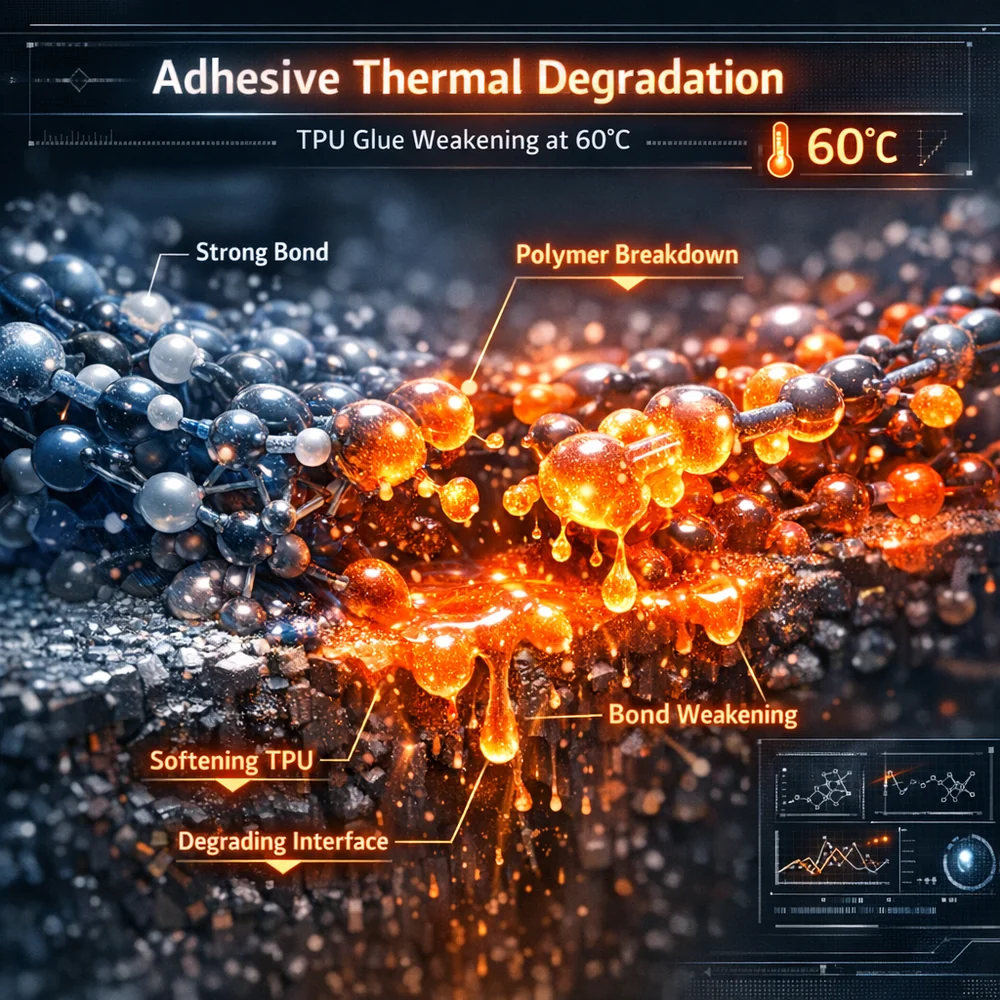
To understand why shoes fall apart, one must understand the polymer chemistry of the bond. Shoe manufacturers utilize thermoplastic polyurethane (TPU) or polychloroprene adhesives. These glues are engineered to have a specific softening point (often around 140°F) to allow for flexible bonding and adjustment during assembly. Unfortunately, a standard Hot wash cycle (130°F+) or a typical dryer cycle (150°F+) sits directly in the activation zone for these compounds.
When the glue softens, the structural integrity of the shoe is compromised. The centrifugal force of a spinning washer drum pulls the heavy rubber sole away from the lighter fabric upper. Once the bond is broken and the glue surface becomes contaminated with detergent and lint, it is nearly impossible to re-glue effectively at home without industrial pressure presses. Therefore, the absolute first rule of shoe laundry is Cold Water Only.
Mechanical agitation must also be buffered. Loose shoes in a washer act like projectiles, damaging the drum paddles and the shoes themselves. They must be washed in a padded mesh bag, cushioned by a load of old towels to prevent violent impact damage that can crack the rubber foxing tape.
The Bottom Line Hot water and dryer heat soften the thermoplastic adhesives holding shoes together, causing delamination. Always wash canvas shoes in cold water (below 80°F) and never place them in a dryer to preserve the structural bond.
When to Hand Wash vs. Machine Wash
For expensive, vintage, or delicately constructed canvas shoes, hand washing is the only zero-risk option. A machine cycle, even on the Delicate setting, subjects the shoe to full immersion and sustained G-forces. This can warp the internal heel counter (the stiff cardboard or plastic insert at the back of the shoe) and fray the raw edges of the canvas tongue.
For hand washing, begin with a dry brush to remove loose surface mud. Wetting mud turns it into a slurry that stains deeper. Mix warm water with a teaspoon of clear dish soap (surfactant). Scrub gently using a soft-bristled toothbrush in circular motions to lift ground-in dirt. Finish by wiping the shoe with a clean, damp microfiber cloth instead of soaking it. This method minimizes water absorption into the mid-sole.
For robust everyday shoes like Converse or Vans, the machine is a viable option if precautions are taken. First, remove laces and insoles and wash these separately in a mesh bag to prevent tangling. Next, place the shoes in a padded mesh sneaker bag and add two or three old towels to the drum to balance the load and act as shock absorbers. Finally, select Cold water and a Delicate or Hand Wash cycle with a Low spin speed. High spin speeds exert massive centrifugal force that can distort the shape.
The Bottom Line Hand washing provides surgical control and prevents deep waterlogging. Machine washing is acceptable for robust shoes if cushioned with towels and run on a cold, low-spin cycle to minimize centrifugal stress.
How to Handle Mixed-Media Trims
Many canvas shoes feature mixed-media trims that react poorly to standard aqueous cleaning. Rope soles on espadrilles should never be machine washed. Jute is a natural fiber that swells when wet and unravels under agitation. The glue holding the rope coil together is also water-soluble. Clean the canvas upper only by spot-dabbing, ensuring no water wicks down into the rope midsole.
Water stains suede permanently, altering its nap and color. If your canvas shoe has suede patches (like the toe cap or heel stripe), machine washing is risky. You must protect the suede with a silicone waterproofing spray before attempting to spot clean the canvas. Alternatively, stick to solvent-based cleaners for the suede areas and avoid water entirely.
To restore bright white rubber walls, detergent is often insufficient. A magic eraser (melamine foam) is superior. The micro-abrasive structure of the melamine acts like extremely fine sandpaper, physically removing scuffs and oxidized rubber that chemical surfactants cannot touch.
The Bottom Line Rope soles (Espadrilles) and suede accents are incompatible with immersion washing. Spot clean the canvas carefully to avoid wetting these delicate components. Use melamine foam to physically abrade scuffs from rubber sidewalls.
Why White Canvas Shoes Turn Yellow After Washing
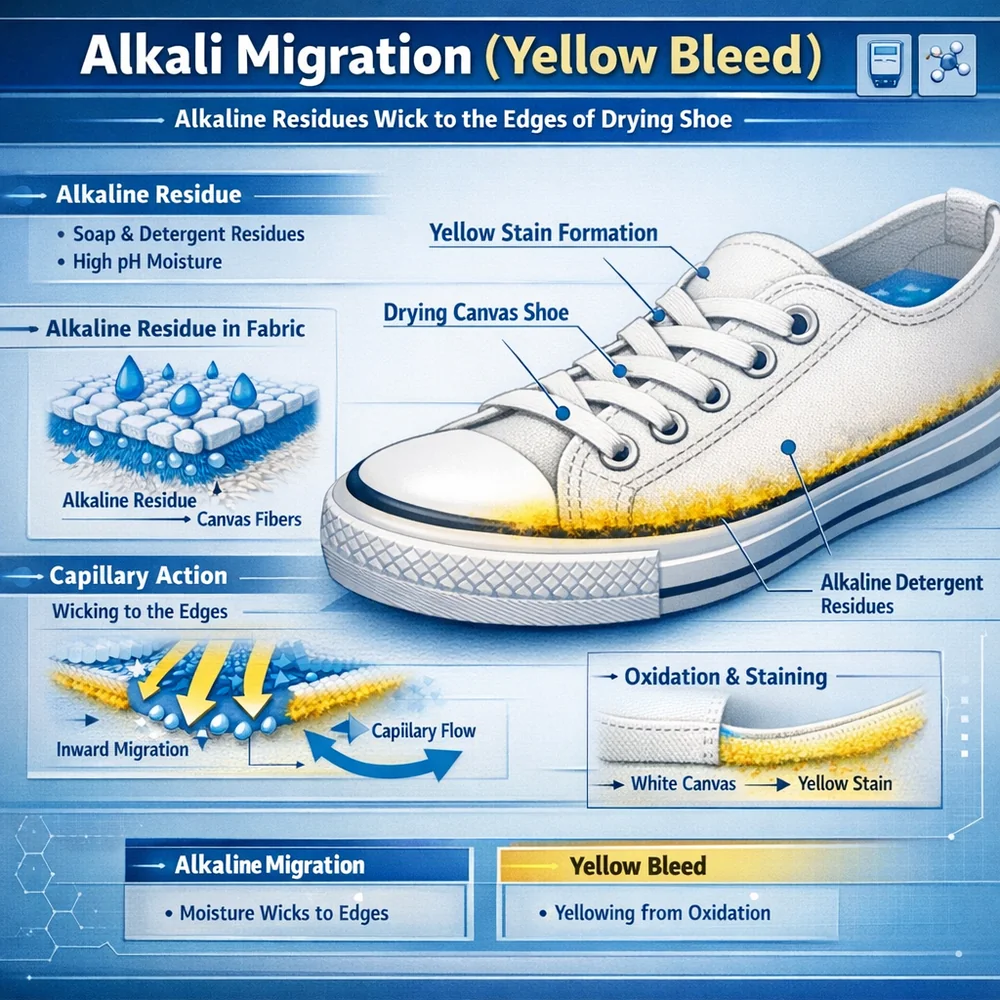
A common tragedy in shoe laundry is the yellow bleed. You wash white shoes, they look clean wet, but as they dry, ugly yellow stains appear along the seams and rubber edges. This is not a dirt stain. It is a chemical reaction caused by residual alkalinity.
Most laundry detergents are alkaline (pH 8 to 10). The canvas fabric wicks this soapy water towards the edges as it dries. When the alkaline residue concentrates at the drying edge and reacts with UV light and oxygen, it oxidizes into a yellow compound. This is essentially a chemical burn on the cellulose fiber.
The cure is thorough rinsing and neutralization. If machine washing, run an extra rinse cycle to flush out all surfactants. If hand washing, dip your final rinse cloth in a solution of 50 percent water and 50 percent white vinegar. The acetic acid neutralizes the alkaline soap residue, preventing the yellow oxidation reaction.
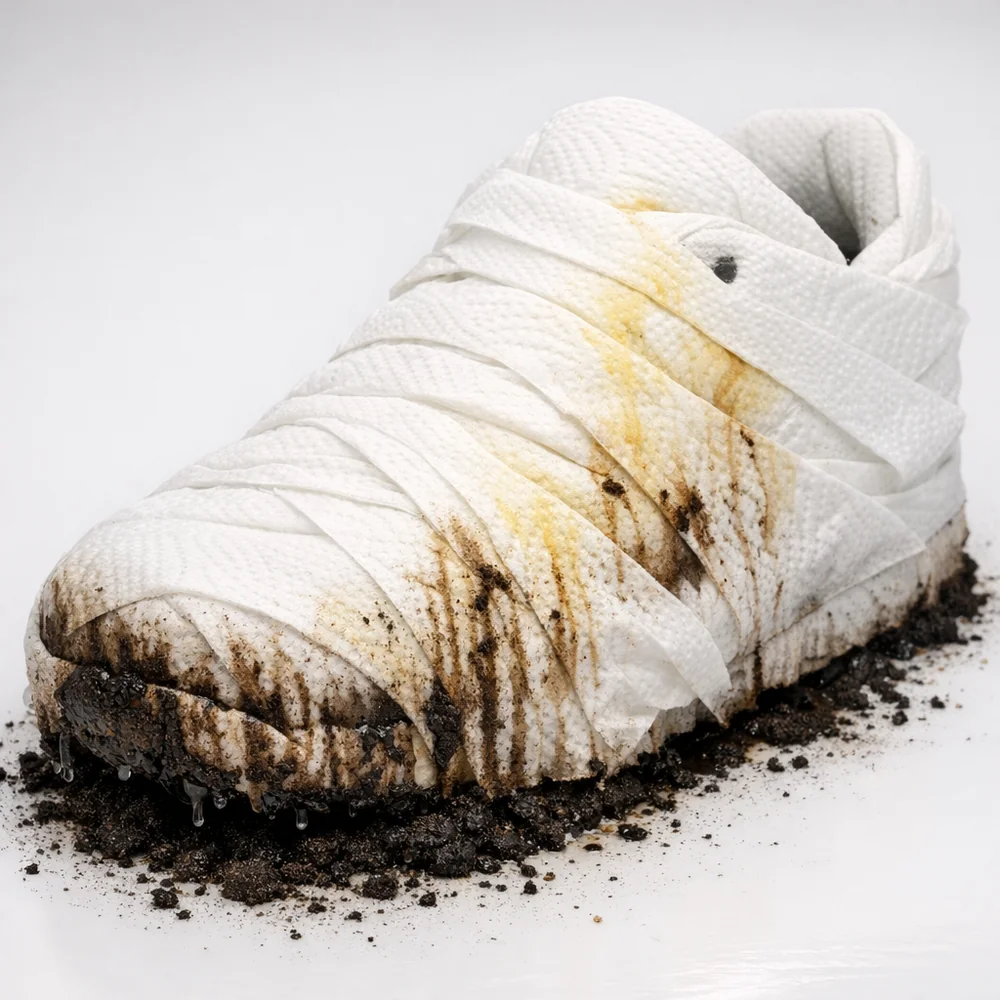
Physical physics can also solve this problem. Wrap the wet shoe tightly in layers of white paper towels while it dries. Ensure the paper makes full contact with the wet canvas. As the water evaporates, it wicks from the inside of the shoe to the outside. The paper towel acts as a sacrificial layer. The yellow residue and dissolved dirt wick into the paper, leaving the canvas underneath pristine. When dry, peel off the yellowed paper to reveal white shoes.
The Bottom Line Yellowing is caused by oxidizing detergent residue concentrating at the drying edges. Neutralizing with a vinegar rinse and wrapping the drying shoe in paper towels forces the residue to wick into the sacrificial paper.
How to Get Rid of Sneaker Smell
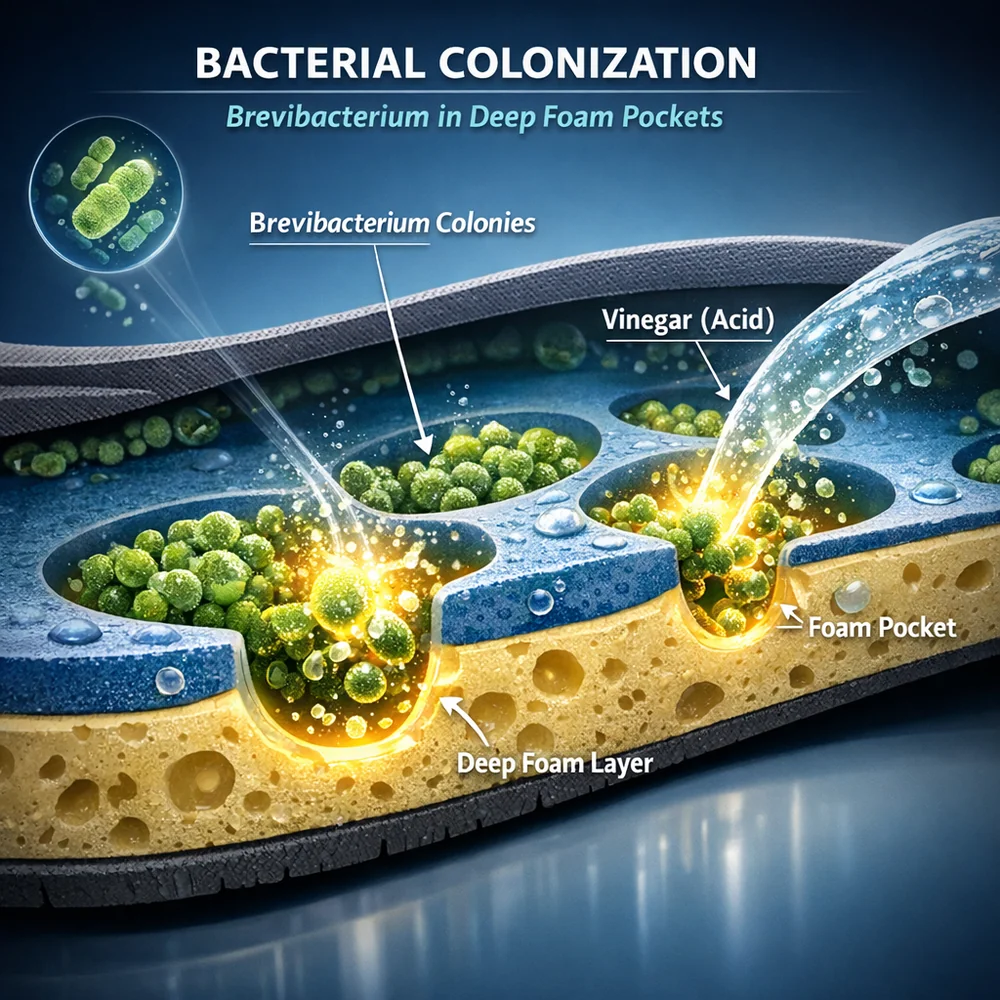
The notorious sneaker smell is metabolic waste. It comes from Brevibacterium and Staphylococcus bacteria feeding on the sweat and dead skin cells trapped in the porous insole. Washing the outside of the shoe often fails to reach this deep-set colony.
If the insole comes out, wash it separately in a bath of warm water and white vinegar. The acid kills the bacteria. Air dry completely before reinserting.
For shoes like Toms or slip-ons where the insole is glued in, liquid washing is difficult. Instead, create a dry, alkaline environment. Sprinkle baking soda (sodium bicarbonate) heavily inside the shoe while it is dry and let it sit for 24 hours. The baking soda alters the pH, making the environment hostile to bacteria, and absorbs moisture. Shake it out thoroughly. For persistent odors, an enzymatic spray is required to digest the organic food source within the foam.
The Bottom Line Odor enters the deep foam of the insole where wash water cannot reach. Treat removable insoles with vinegar. For fixed insoles, use dry baking soda or enzymatic sprays to neutralize the bacterial colony.
How to Dry Canvas Shoes Without Shrinking Them
The drying phase is where most shrinkage and warping occur. Refusing to use a tumble dryer is non-negotiable. The heat shrinks the cotton canvas, pulling it tight against the stitching and potentially tearing it away from the rubber sole.
Wet canvas is limp and prone to collapse. To prevent the shoe from drying in a curled or shriveled shape, stuff the toe box firmly with white paper towels or a clean white rag. This stuffing acts as a last (a shoemaker’s mold), forcing the canvas to dry in the correct ergonomic shape. It also helps absorb internal moisture. Change the stuffing after 2 hours if it is soaked.
Dry in a shady, breezy spot. Direct sunlight acts like a laser on the wet glue line, heating it up and potentially causing delamination. UV rays also accelerate the yellowing oxidation of any remaining soap. A fan in a cool, dry room is the ideal accelerator, moving moist air away without adding thermal stress.
The Bottom Line Stuff wet shoes with paper towels to act as a mold, preserving the toe box shape. Air dry in the shade with a fan. Direct sunlight shrinks canvas and degrades the glue bond. AVOID THE DRYER.
How to Wash Shoelaces
The humble shoelace often ages faster than the shoe itself, primarily due to the failure of the aglet (the plastic or metal tip). Aglets are typically heat-shrunk onto the lace. In a hot dryer, these plastic tips can melt or deform, fraying the end of the lace and making it impossible to thread through the eyelets.
Washing loose laces also poses a mechanical risk. If thrown loose into the washer, a shoelace can migrate through the drainage holes of the drum, getting tangled in the pump impeller or the heating element. This can cause catastrophic machine failure. Always contain laces in a small mesh bag or a knotted sock.
For white laces that are heavily stained, a bleach soak is permissible. Unlike the shoe (where bleach can yellow the rubber), cotton laces can be soaked in a mild bleach solution to restore brightness. Rinse thoroughly before re-lacing to prevent chemical transfer to the canvas tongue.
The Bottom Line Always wash shoelaces in a mesh bag to prevent pump tangles. Avoid heat to preserve plastic aglets. Bleach is safe for isolated white laces but dangerous for the shoe assembly itself.
Conclusion
Mastering the care of canvas shoes requires a disciplined respect for the limitations of engineered adhesives and rubber chemistry. The effectiveness of any protocol rests on the foundation of cold water washing, alkaline neutralization, and patient air drying. By understanding the thermal vulnerabilities of the glue bond and the capillary physics of yellowing, we can keep our sneakers bright white and structurally sound for years.
This technical approach respects the composite nature of the footwear. Every bright, intact sneaker is a testament to the synergy between chemical balance and thermal caution. Moving away from the toss it in the dryer mindset allows for a proactive preservation routine. It prevents the tragedy of sole separation and ensures that your favorite kicks remain comfortable. By treating your shoes as complex engineered objects rather than simple fabric, you extend their mileage significantly.
References
- Journal of Adhesion Science and Technology. “Thermal Degradation of Polyurethane Adhesives in Footwear.”
- American Cleaning Institute. “Cleaning Mixed Media Footwear: Canvas and Rubber Protocols.”
- Textile Research Journal. “Capillary Wicking of Detergent Residues in Cotton Canvas.”
- Consumer Reports. “Sneaker Cleaning Guide: Machine Wash vs Hand Wash Durability Test.”
- Journal of Sports Engineering. “Effect of Laundering on the Structural Integrity of Canvas Shoes.”